REVIEW · TOKYO
Modern Japanese History Tour in Tokyo
Book on Viator →Operated by Japan Awaits · Bookable on Viator
Shockingly human, even in hard history. This Modern Japanese History Tour in Tokyo uses a tight route through Yasukuni Shrine, the Yūshūkan War Museum, and Showa-kan to connect WWII battlefield stories with how Japanese families, civilians, and soldiers experienced the war. You meet at Kudanshita Station, then follow your history expert through sites that are emotionally heavy but also very organized and meaningful.
Two things I really like: first, the focus on how Japan commemorates war dead, including the scale of the 2.5 million victims the shrine honors; second, the way your guide ties in everyday wartime life and explains kamikaze (tokotai) with context rather than just slogans. One drawback to consider: this is a sensitive subject, so you’ll want to bring an open mind and be ready for emotional material that isn’t everyone’s comfort zone.
In This Review
- Key things to know before you go
- A compact 3-hour route through Tokyo’s WWII memory sites
- Kudanshita Station start: easy meeting point, clear start time
- Yasukuni Shrine: remembrance first, not sightseeing first
- Yūshūkan War Museum: military history with an expert translator’s lens
- Showa-kan (National Showa Memorial Museum): civilians and daily life during WWII
- Your guide makes the difference: Shun, Hiro, Izumi, and Yasuhiro Suzuki
- Price, value, and timing: is $204.58 worth it?
- Is this tour right for you? A practical fit check
- Quick itinerary walkthrough (so you know what the morning feels like)
- Before you go: expectations for sensitive content
- Should you book the Modern Japanese History Tour in Tokyo?
- FAQ
- How long is the Modern Japanese History Tour in Tokyo?
- Where does the tour start?
- What time does the tour start?
- Is the tour private?
- Are the museum and shrine entrance fees included?
- Does the tour include a guide?
- What’s included besides the guide?
- Are food and drinks provided?
- Is this topic sensitive for some people?
- Can I change or get a refund after booking?
Key things to know before you go
- A compact 3-hour route through three major WWII-related stops in central Tokyo
- English-speaking expert guidance makes the museums easier to understand (and helps with Japanese-only displays)
- Yūshūkan + Showa-kan give two different angles: military framing and civilian experience
- Yasukuni Shrine’s memorial focus centers remembrance of Japan’s war dead, including victims since 1869
- Kamikaze (tokotai) explained with attention to why it was used and what soldiers told their families
- Tickets and entrance fees are included for the planned museum stops
A compact 3-hour route through Tokyo’s WWII memory sites
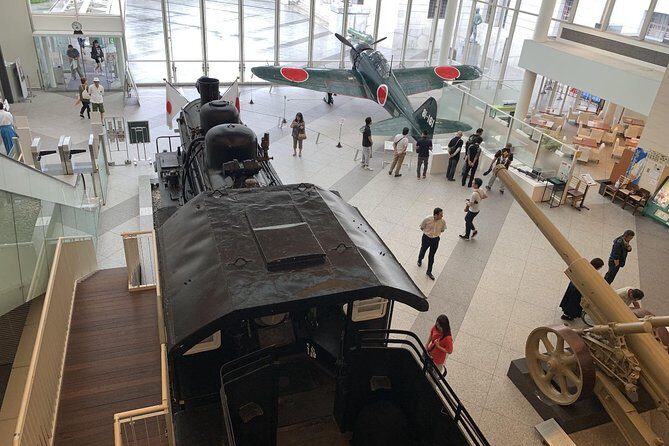
This tour is built for people who want a clear, guided path through Tokyo’s modern history without spending your morning bouncing between random museums. It runs about 3 hours and is scheduled to start at 9:00 am. You’ll also get back to your starting point at Kudanshita Station, which keeps things simple when you’re planning the rest of your day.
At $204.58 per person, it’s not the cheapest option in Tokyo. But you’re paying for three things that matter here: an English-speaking history expert, admission to the key museum sites, and a thoughtful sequence that links commemoration, military history, and civilian life. If you’re the type who likes to understand what you’re looking at (instead of just wandering), this price tends to make sense fast.
One practical note: this tour uses a mobile ticket, so have your phone ready on the day you go. And since the average booking window is around 99 days in advance, popular slots can go early, so don’t wait until the last week.
You can also read our reviews of more historical tours in Tokyo
Kudanshita Station start: easy meeting point, clear start time
Your tour begins at Kudanshita Station (1-chōme-13-19 Kudankita, Chiyoda City). That matters more than you might think. Tokyo has tons of stations, and this one is in a part of the city where getting to your next stop isn’t a huge ordeal.
The start time is 9:00 am, and you’ll typically want to arrive a few minutes early. The tour is private in the sense that it’s just your group, which can make Q&A feel natural—especially when you’re dealing with topics like WWII, memorial sites, and kamikaze history.
Yasukuni Shrine: remembrance first, not sightseeing first
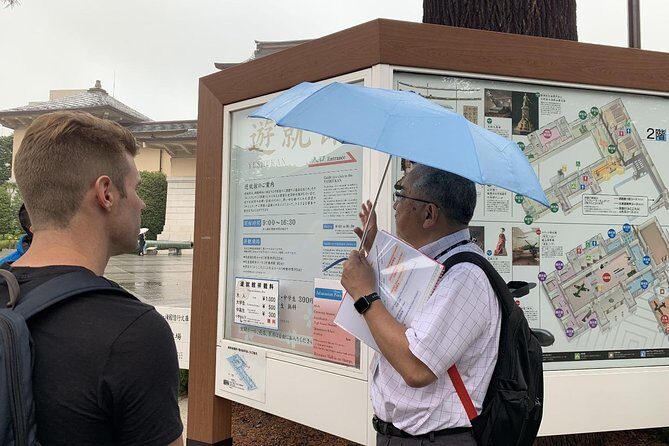
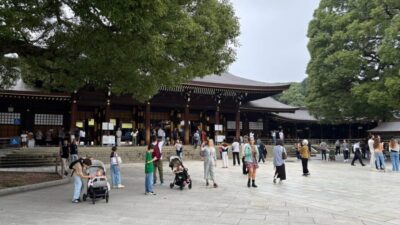
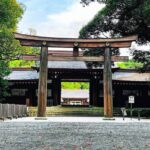
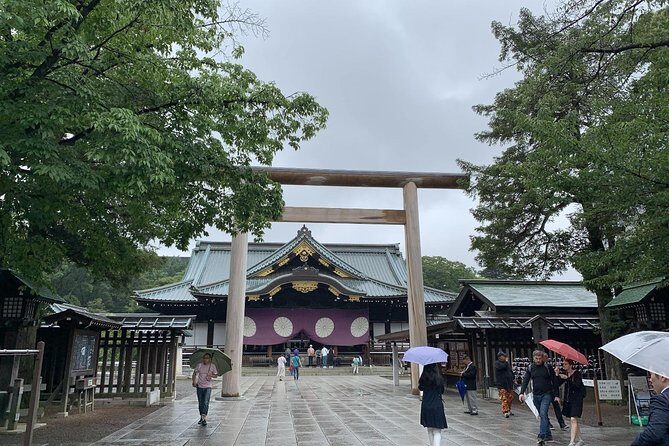
The first stop is Yasukuni Shrine, with about 30 minutes allotted. If you only know Yasukuni from headlines, this is where it becomes real in your hands. The grounds are calm and traditional, and the experience is shaped around remembrance—especially the shrine’s role in honoring Japan’s war dead, including the 2.5 million people commemorated since 1869.
This is also a good moment to slow down. Your guide’s job here isn’t to force agreement or debate. It’s to explain how commemoration works in Japan and what this shrine represents culturally and historically. Even if you’re not religious, the shrine’s “why” lands quickly once you hear the framing.
Photo opportunities are part of the plan, but I’d treat photography as secondary. You’ll get more out of this stop by watching how your guide describes the meaning behind what you see—because what looks like architecture or landscaping is also a memory system.
Yūshūkan War Museum: military history with an expert translator’s lens
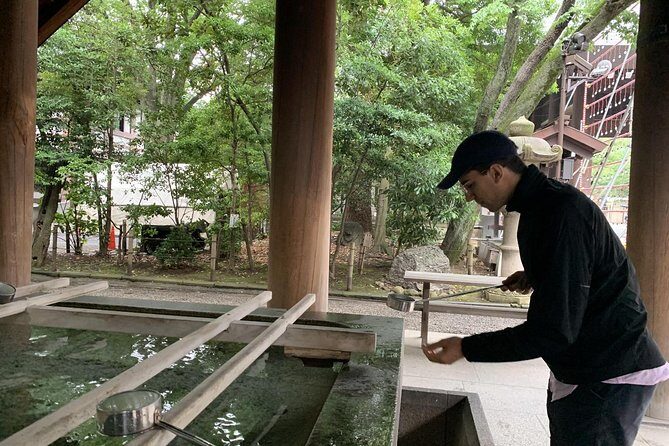
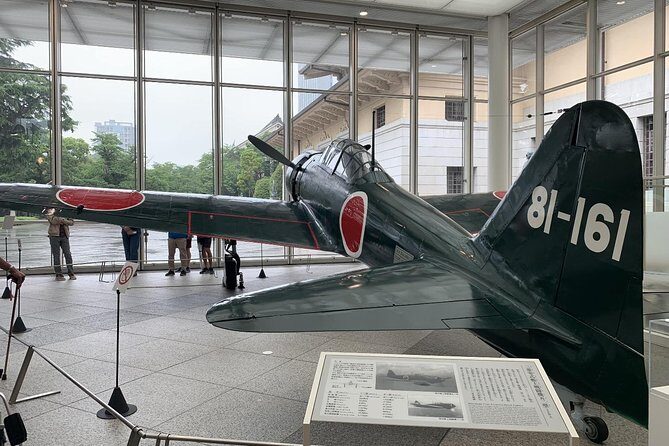
Next comes the Yūshūkan Museum (about 1 hour 30 minutes). This museum sits on the shrine grounds and focuses on Japan’s military history, using exhibits like artifacts, documents, and military equipment.
Here’s why an English-speaking guide is such a big deal: museum labels and exhibit descriptions can be heavy on Japanese, and it’s easy to miss the point when you’re just scanning text. With a guide who can interpret what you’re looking at, you don’t just see objects—you get the story that ties them together.
This museum is also where the tour’s WWII framing becomes very direct. Your expert guide covers military practices including kamikaze (tokotai), explaining not only what it was but why it became prevalent and how soldiers spoke to their families before the war’s outcomes. That’s not light information, so the pacing helps. You’ll be given time to see the exhibits without feeling rushed.
One thing I appreciate about this setup is that it treats military history as more than tactics. It shows how people lived inside the system—how training, duty, and belief could merge into something deadly and irreversible.
Showa-kan (National Showa Memorial Museum): civilians and daily life during WWII
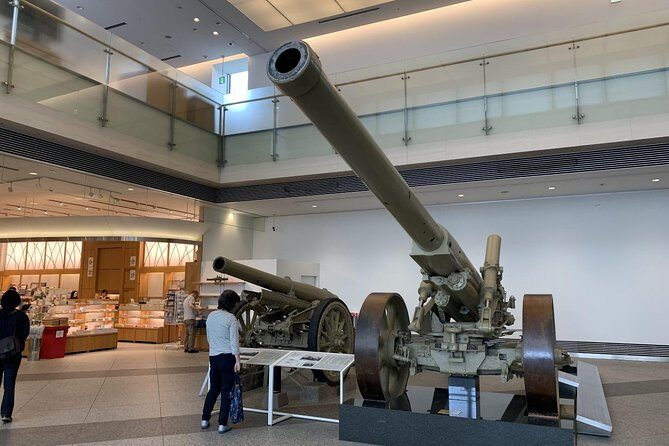
The final main stop is the National Showa Memorial Museum, often called Showa-kan (about 1 hour). If Yūshūkan leans more military, Showa-kan pulls the conversation toward civilians and the everyday experience of war and its aftermath.
This is where you’ll get a different emotional gear shift. Your guide focuses on civilians’ lives during WWII and the period after it, including hardships like starvation—plus personal items and photographs that make the era feel less like a textbook chapter and more like a lived timeline.
It’s also the stop that helps you understand why history can feel complicated. The same war can be remembered through different lenses: official narratives, museum framing, family memory, and survivor experience. Seeing both a military-focused museum and a civilian-focused museum in one morning gives you a fuller picture than either alone.





Your guide makes the difference: Shun, Hiro, Izumi, and Yasuhiro Suzuki
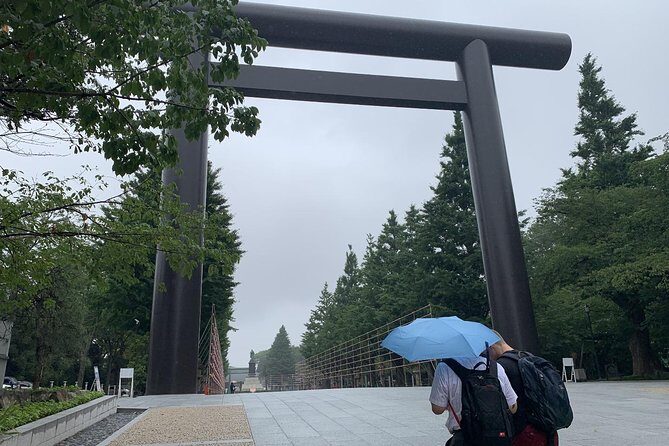
This tour’s strength isn’t just the sites—it’s the people guiding you through them. The guides associated with this experience have been praised for being thoughtful and patient, and several names come up in real feedback: Shun, Hiro, Izumi, and Yasuhiro Suzuki.
What those guides tend to do well (and what you should look for when you’re on your tour) is a mix of factual explanation and human tone. In places like Yasukuni and the museums, you’ll get more out of the experience if your guide:
- explains the meaning of commemoration without turning it into a debate club
- translates museum material into plain language you can follow
- answers questions as they come up, instead of sticking to a rigid script
I also like that the tour is designed as an expert-led experience rather than a “walk-through.” When exhibits are partially in Japanese, translation isn’t just helpful—it’s often what separates confusion from understanding.
Price, value, and timing: is $204.58 worth it?
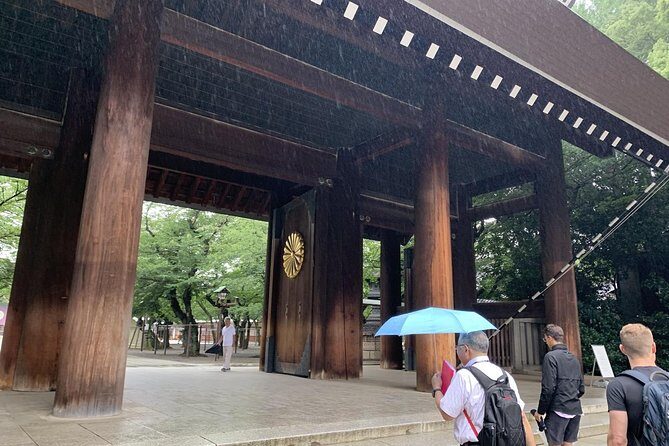
At $204.58 per person for about 3 hours, you’re paying for more than entry tickets. Entrance fees to Yūshūkan and Showa-kan are included, and your private English-speaking guide is part of the package.
That’s the core value equation. If you were to do this on your own, you’d likely spend time figuring out what to prioritize, then you’d lose the context that explains why each site matters. The tour saves you that mental load. It also keeps the order logical: remembrance at the shrine, military framing at Yūshūkan, and civilian perspective at Showa-kan.
This is also a good buy if your group includes anyone who prefers structure. Hard topics can feel overwhelming when you don’t know where to look first. A guide helps you pace the morning so it doesn’t turn into “too much at once.”
Is this tour right for you? A practical fit check
You’ll probably love this tour if:
- you want modern Japanese history through WWII-era sites in a short time
- you like expert context, especially around kamikaze (tokotai) and wartime civilian hardship
- you appreciate comparison—military and civilian stories in the same morning
- your group includes people who would benefit from an English interpreter inside museums
You might want to think twice if you’re likely to struggle with emotionally heavy material. The tour itself is designed to educate and inform about WWII-era experiences and commemoration, and it openly notes that this can be sensitive for some people. The key is respect and openness. If you’re going, treat it like an educational visit, not a battleground.
Quick itinerary walkthrough (so you know what the morning feels like)
Here’s what the schedule typically feels like, stop by stop:
- Yasukuni Shrine (about 30 minutes): calm grounds and remembrance-focused explanation, then time to take in the shrine areas and museum component
- Yūshūkan War Museum (about 1.5 hours): military history exhibits using artifacts and documents, guided translation helps you read the story correctly
- Showa-kan / National Showa Memorial Museum (about 1 hour): civilian life during and after WWII, personal items and photographs that shift the perspective
The total time works well for a morning. You won’t feel like you’re spending the whole day in museums, but you also won’t feel like you barely touched anything.
Before you go: expectations for sensitive content
This tour deals with Japan’s war dead, civilian suffering, and kamikaze practices. That means you should mentally prepare for serious content. You’ll likely encounter difficult descriptions, and the guide’s role is to help you understand historical framing and remembrance.
If your group includes someone who tends to react strongly to WWII-related commemorations, it’s worth discussing expectations before the tour. The experience itself asks for an open mind and respect for the guide and the sites.
Also, because the tour is strictly scheduled around specific stops, it doesn’t sound like it’s set up as a “choose-your-own-adventure” visit. If you want maximum flexibility, you may feel constrained. If you want a guided path with expert framing, this format is a good fit.
Should you book the Modern Japanese History Tour in Tokyo?
Book it if you want an efficient, expert-led look at Tokyo’s WWII memory landscape—Yasukuni Shrine, Yūshūkan, and Showa-kan in one morning—plus clear explanations in English. The value is strongest when you care about context, especially around kamikaze (tokotai), civilian hardship, and how commemoration works in Japan.
Skip it (or swap to a lighter option) if emotionally heavy history will ruin your day. This tour is built for understanding, and it doesn’t hide the hard parts.
FAQ
How long is the Modern Japanese History Tour in Tokyo?
It runs for about 3 hours.
Where does the tour start?
You meet at Kudanshita Station (1-chōme-13-19 Kudankita, Chiyoda City, Tokyo).
What time does the tour start?
The listed start time is 9:00 am.
Is the tour private?
Yes. It’s a private tour/activity, so only your group participates.
Are the museum and shrine entrance fees included?
Entrance fees to the scheduled sites, including Yūshūkan War Museum and Showa Memorial Museum (Showa-kan), are included.
Does the tour include a guide?
Yes. You get a private English-speaking guide who is described as a history expert.
What’s included besides the guide?
Photo opportunities are included, and tickets for the scheduled museums are included.
Are food and drinks provided?
No. Food and drinks are not included.
Is this topic sensitive for some people?
It may be sensitive for some people. The tour is intended to educate and inform, and it asks for an open mind and respectful behavior.
Can I change or get a refund after booking?
This experience is non-refundable and cannot be changed for any reason.