REVIEW · TOKYO
Mt. Fuji Tours to Lake Kawaguchi and Yamanaka Onsen English Guide
Book on Viator →Operated by Scenic Bend · Bookable on Viator
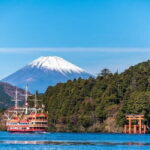
Fuji in one day is the best kind. This tour is interesting because it follows the seasons for Lake Kawaguchi photo stops and keeps the pacing tight with an English guide. I like that you get multiple high-probability Fuji viewpoints without wrestling trains or bus schedules. I also like that the hot spring option at Lake Yamanaka is simple—if you want it, it’s right there. One possible drawback: the hot spring bathing fees are not included, so your day can cost extra.
You’ll also want to plan around the seasonal swap that changes the final scenery. From Oct 1 to Apr 25 you go to Arakurayama Sengen Park; from Apr 26 to Sep 30 you switch to Mount Fuji 5th Station. If you’re hoping for both, check your travel dates before you fall in love with one plan.
In This Review
- Key highlights worth paying attention to
- Why this Fuji day trip feels smarter than DIY
- Price and value: what you’re really paying for at $61.06
- The big seasonal switch: Arakurayama Sengen Park vs. Mt. Fuji 5th Station
- Oct 1 to Apr 25: Arakurayama Sengen Park time
- Apr 26 to Sep 30: Mount Fuji 5th Station time
- Lake Kawaguchiko: 30 minutes to see Fuji, then the seasonal plan
- Lake Yamanaka hot springs: the best rest break on a long day
- Hot spring costs you should plan for
- What’s worth it here
- Arakurayama climb and pagoda photos, or Fuji 5th Station altitude time
- Arakurayama Sengen Park: photo-friendly and climbable
- Mt. Fuji 5th Station: altitude feeling in a short window
- The final Mt. Fuji stop: making sure you catch the mountain twice
- Group size, pace, and the reality of road delays
- Practical tips: luggage, tickets, and how to keep the day smooth
- Tickets
- Luggage
- What to bring
- Audio and communication
- Who should book this tour?
- Should you book Mt. Fuji Tours to Lake Kawaguchi and Yamanaka Onsen?
- FAQ
- How long is the Mt. Fuji tour from Tokyo?
- How much does the tour cost?
- Do I need to print anything for the tour?
- Is the tour guaranteed to run?
- Does the tour visit both Arakurayama Sengen Park and Mt. Fuji 5th Station?
- Is hot spring bathing included?
- How much are the hot spring fees at Yamanakako Hot Spring Red Fuji no Yu?
- Are meals included in the tour?
Key highlights worth paying attention to
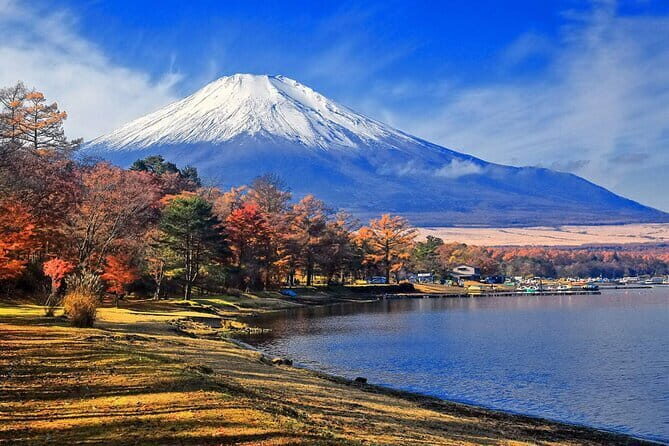
- Seasonal Fuji itinerary at Lake Kawaguchi (Oishi Park, Music Museum, maple corridor, or shibazakura festival depending on dates)
- Lake Yamanaka onsen time with optional pickup/drop-off in the same car
- Arakurayama Sengen Park vs. Fuji 5th Station chosen strictly by season
- Multiple free-admission stops built into the day (not just one lookout)
- Small-group feel for a big trip with a maximum of 45 travelers
- English-guided touring with guides reported speaking three languages (examples include Christy, Damon, Mario, and Mr Sandy)
Why this Fuji day trip feels smarter than DIY
Most Tokyo day trips to Mt. Fuji boil down to one long ride and one quick photo stop. This one gives you more time where it counts, plus a plan for what the mountain looks like throughout the year.
The “magic” here is in the structure. You start at Lake Kawaguchi with a focused Fuji viewing window, then you move through a date-matched circuit designed for the season you’re actually traveling in. After that, you switch over to Lake Yamanaka for hot springs and a second Fuji angle. Even the last part of the route is date-driven: it’s either Arakurayama Sengen Park (Oct 1–Apr 25) or Mt. Fuji 5th Station (Apr 26–Sep 30).
That matters because Fuji can be a mood ring. Clear mornings, clouds rolling in, winter snow contrast—your odds improve when your schedule isn’t just one “maybe” stop.
You can also read our reviews of more guided tours in Tokyo

Price and value: what you’re really paying for at $61.06
At $61.06 per person for an ~8-hour day trip, you’re mostly paying for transportation, driver time, and a certified guide—plus all the planning work someone else does for you. The tour includes vehicle service fees, fuel, tolls/highway tolls, the driver service fee, and the certified tour guide.
Food isn’t included. Hot spring bathing isn’t included. But the attractions themselves are listed with free admission for the main stops, including Lake viewpoints and the Arakurayama Sengen Park or the Fuji 5th Station portion.
So the “value math” looks like this:
- If you want easy logistics from Tokyo + guide context + timed photo stops, the price starts to feel fair fast.
- If you want to skip the hot spring and treat the day like a scenic photo day, you’re mainly paying for the ride and guidance.
- If you’re planning to bathe, budget extra cash for hot spring fees. (More on that below.)
Also worth noting: departures run daily with guaranteed service on your chosen day. That removes the big DIY problem—missing the one bus or train connection that ruins your day.
The big seasonal switch: Arakurayama Sengen Park vs. Mt. Fuji 5th Station
This is the part you should lock in first. Your itinerary isn’t flexible for both—your dates decide the swap.
Oct 1 to Apr 25: Arakurayama Sengen Park time
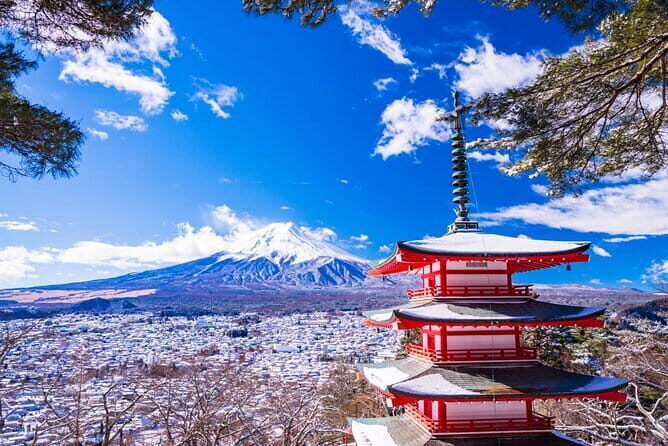
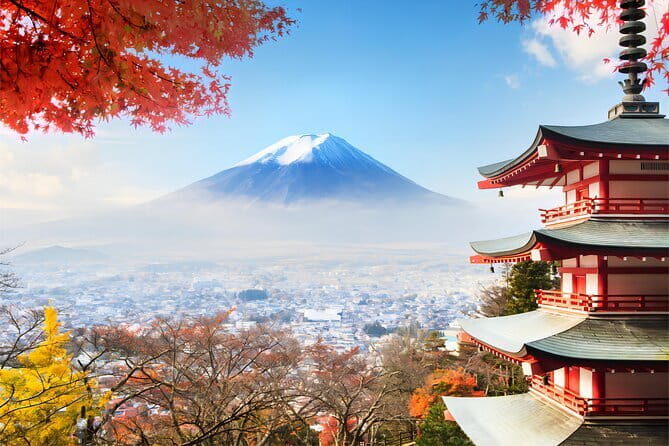
You visit Arakurayama Sengen Park for about an hour. This stop is famous for panoramic Fuji views and a classic photo lineup: the five-story pagoda, Mt. Fuji, and the street scene below. There’s also a short climb—about 397 steps near the main shrine—if you want the best angles.
It also has that season-by-season charm. The park changes with the calendar: cherry blossoms, summer greenery, autumn reds, and winter snow scenery are all part of the appeal. You also get views over Fujiyoshida city, which adds “real life” around the mountain instead of just isolating it in the frame.
Apr 26 to Sep 30: Mount Fuji 5th Station time
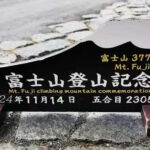
Your schedule switches to Mt. Fuji 5th Station for about 40 minutes. This station sits around 2,305 meters, halfway up the mountain, and the experience is more about scale than postcard distance.
It’s the side of Fuji that can feel bigger than your brain expects. When the weather is clear, you get wide views. When clouds roll through, you can look at the sea-of-clouds effect.
If you’re the kind of traveler who likes “one great climb-adjacent stop,” this is your season choice.
A few more Tokyo tours and experiences worth a look
Lake Kawaguchiko: 30 minutes to see Fuji, then the seasonal plan
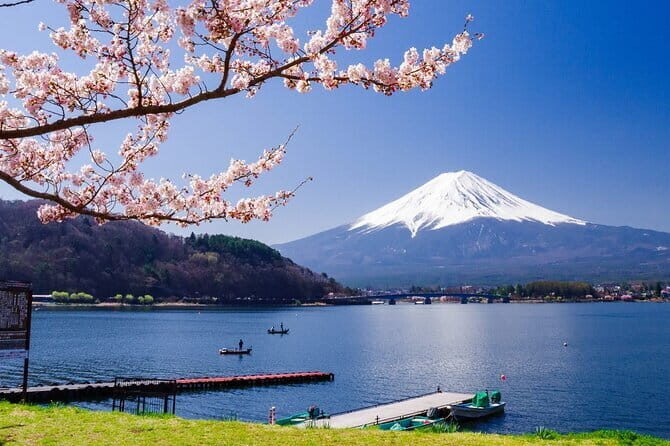
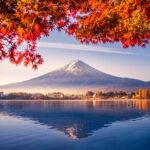
Lake Kawaguchi is where this tour sets its tone. First you get about 30 minutes of free time to view Mt. Fuji—simple, no pressure, just time to find a good angle and adjust to what the mountain is doing right then.
Then the itinerary branches into a seasonal limited plan. Think of it like an upgraded “best of the season” loop, where your stop choice changes based on your travel dates.
Here’s how it typically works:
- Oishi Park (shown in certain date windows like 11/24–4/14 and 5/29–7/10): about 60 minutes.
- Lake Motosu Fuji Shibazakura Festival (roughly 4/15–5/28): about 60 minutes.
- Lake Kawaguchi Music Museum (from 7/11–10/19): about 60 minutes.
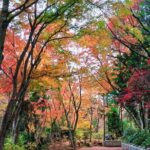
- Kawaguchiko Maple Leaf Corridor (from 10/20–11/23): about 60 minutes.
A note on food: there’s a lunch window, but food and drinks are at your own expense. The tour’s messaging about lunch being “free” can be confusing in translation, so I treat it as this: you’ll have time to eat, but you pay for what you order.
What I like about this structure is that it reduces your decision fatigue. You’re not trying to guess which lake garden is best that week. The tour uses the calendar for you.
Potential drawback: you’ll still be on a fixed-time schedule. This isn’t a “wander for two hours” kind of day. If you’re someone who loves slow traveling, go in knowing your free time is measured.
Lake Yamanaka hot springs: the best rest break on a long day
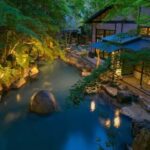
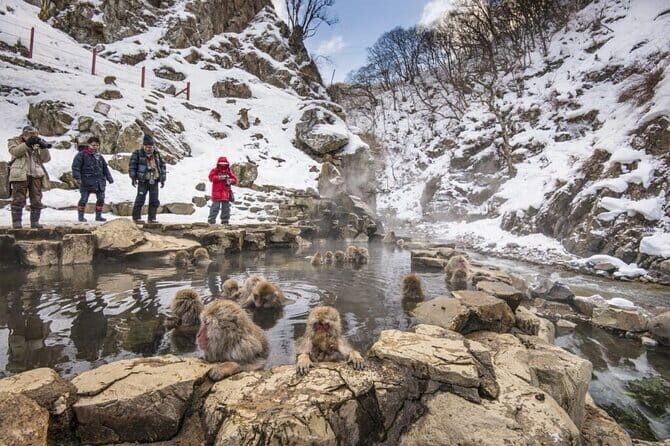
After Lake Kawaguchi, the tour heads to Lake Yamanaka for about 70 minutes. This stop is also where the tour gives you a classic Japan perk: time for hot springs.
There’s a specific reason Lake Yamanaka gets love—it’s the only lake among the Fuji Five Lakes with a natural river outlet, which is one of the things that makes it feel distinct from the others.
If you want the hot spring, the tour provides pickup and drop-off services in the same car. The key catch: hot spring costs are not included.
Hot spring costs you should plan for
One listed option is Yamanakako Hot Spring Red Fuji no Yu:
- 1,120 yen for adults (adult bath fee + towel fee)
- 920 yen for middle/high school students
- 570 yen for elementary students
The tour also notes a second option when Red Fuji no Yu is closed every Tuesday:
- 1,600 yen on weekdays (this is for the recommended alternative where you can still see Mt. Fuji from the lounge)
If you’re doing the math, don’t treat the hot spring as a free bonus. It’s an add-on that can easily become a meaningful part of your budget, especially if you’re visiting on the day you’d want to bathe most.
What’s worth it here
The real value is the timing. After hours on buses and viewpoints, a hot spring stop turns the day from purely scenic into something you’ll actually feel in your body.
And if Fuji is playing hide-and-seek outdoors, being able to soak while looking at the mountain is a pretty good consolation prize.
Arakurayama climb and pagoda photos, or Fuji 5th Station altitude time
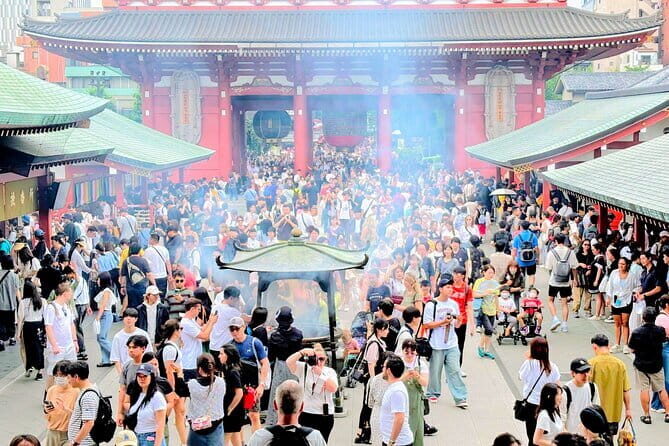
This is where you decide what you want Fuji to feel like.
Arakurayama Sengen Park: photo-friendly and climbable
If your dates fall Oct 1–Apr 25, Arakurayama Sengen Park is about an hour, free admission, and designed for “one place, lots of angles.” The steps near the main shrine (again, about 397) are short enough to do without turning it into your whole workout.
Expect strong photo composition opportunities:
- Five-story pagoda with Fuji framed by distance
- Street view at the foot of the mountain
- A clear view that often includes Fujiyoshida city
One practical tip: if you climb, do it early in your allotted time. That’s when the area is easiest to navigate and when light can be kinder.
Mt. Fuji 5th Station: altitude feeling in a short window
If your dates fall Apr 26–Sep 30, you get about 40 minutes at Mt. Fuji 5th Station. This is a “compressed wow” stop. At 2,305 meters, your senses get the reminder that this isn’t just another viewpoint.
You’ll get different vibes based on weather:
- Clear and cloudless: big views around you
- Cloud cover: the sea-of-clouds look can be dramatic
Short stop time is a feature here, not a bug. The goal is to get the altitude moment without turning the day into an exhausting trek.
The final Mt. Fuji stop: making sure you catch the mountain twice
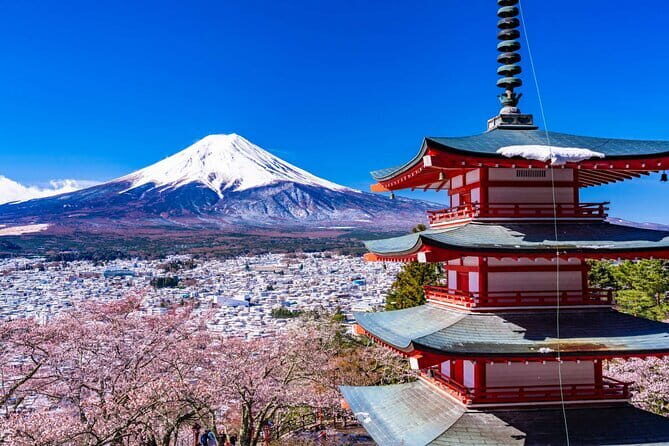
After the seasonal park/station, the tour includes a general Mount Fuji stop for about 1 hour, with free admission listed.
The itinerary doesn’t spell out a single “ticketed attraction” for this final hour, so treat it as time to view, photograph, and soak up the atmosphere around the mountain. The point is simple: you’re not relying on just one distant look. You get multiple bites at the Fuji apple.
In a perfect world, you see Fuji clearly in the morning. In the real world, you might only get flashes. This final block helps your odds.
Group size, pace, and the reality of road delays
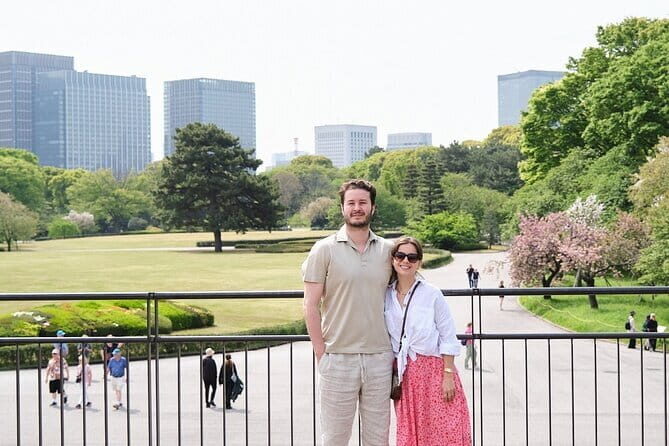
This is a carpooling-style day trip with a maximum of 45 travelers, which is big enough to feel lively but small enough that your guide should be able to keep things moving.
The itinerary also emphasizes fixed stay times at each attraction. That means:
- You’ll likely stick to the schedule your driver and guide set
- You won’t have the freedom to turn a stop into a long personal detour
If you’re traveling on a weekend or a red-day holiday, traffic jams can happen. The day is still doable, but it’s smart to avoid assumptions like It will take exactly X minutes. Build mental slack into your plan.
One logistics detail I really appreciate: the tour provides a set day choice with guaranteed departure on your date. So even if you’re trying to pick the best weather day, you’re not stuck with only one departure option.
Also, the day before the trip, you’ll receive an email with important info like the phone number of the tour guide and the license plate number of the car. Keep your email access and mobile number ready.
Practical tips: luggage, tickets, and how to keep the day smooth
Here’s how to make this kind of day trip feel easy instead of chaotic.
Tickets
You’ll get a mobile ticket. Bring your phone with enough battery for check-in and for any ticket scans.
Luggage
It’s a one-day trip. The tour says it’s not recommended to carry luggage. If you must bring luggage, register it when booking. You get 1 luggage allowed per person, and there’s an extra 100 yuan per piece if you didn’t note it or if it turns out you have more than one.
What to bring
The data doesn’t list a packing list, but for Fuji days I’d treat it like layered sightseeing: light layers, a wind layer, and something for rain. Lake areas can feel chilly, especially outside the summer months.
Audio and communication
In one past trip, the microphone on the bus had issues (cutting in and out). The guide still handled the situation professionally. If audio is important to you, pick a seat near the front so you can catch instructions even if the mic glitches.
Who should book this tour?
This is a strong match if you want:
- A guided day trip from Tokyo with real structure
- Multiple Fuji viewing moments (Lake Kawaguchi, Lake Yamanaka, plus the seasonal park/station and a final Mt. Fuji hour)
- Seasonal variety built into the route rather than a single static viewpoint
- The option to add on hot springs without having to figure out how
This is also a good choice if you’re not interested in hiking all day. The steps at Arakurayama are optional and short, and Mt. Fuji 5th Station is time-limited.
If you want a fully flexible schedule where you can linger whenever you want, this fixed carpool itinerary might feel restrictive. In that case, a different style of charter tour would suit you better.
Should you book Mt. Fuji Tours to Lake Kawaguchi and Yamanaka Onsen?
I’d book it if your priority is a well-paced, guided Fuji day with season-correct stops and minimal planning stress. The price is reasonable for a day that includes guided touring, round-trip transportation from Tokyo, and free-admission viewpoint time at several key places.
I’d hesitate if you’re counting on hot springs being a guaranteed “must-do” included perk, because bath fees are on you. Also, make sure your dates align with the seasonal highlight you care about most: Arakurayama (Oct 1–Apr 25) or Mt. Fuji 5th Station (Apr 26–Sep 30).
If your dates and expectations match, this is one of those day trips that earns its keep fast.
FAQ
How long is the Mt. Fuji tour from Tokyo?
It runs for about 8 hours (approximately).
How much does the tour cost?
The price is $61.06 per person.
Do I need to print anything for the tour?
No. The tour uses a mobile ticket.
Is the tour guaranteed to run?
Yes. There is guaranteed departure on the day of your choice, with daily departures and a minimum of 1 person.
Does the tour visit both Arakurayama Sengen Park and Mt. Fuji 5th Station?
No. Your itinerary depends on the season. From Oct 1 to Apr 25 you visit Arakurayama Sengen Park, and from Apr 26 to Sep 30 you visit Mt. Fuji 5th Station.
Is hot spring bathing included?
No. Hot spring bathing fees are not included. Pickup and drop-off in the same car are offered if you choose to bathe, but you pay the bath cost yourself.
How much are the hot spring fees at Yamanakako Hot Spring Red Fuji no Yu?
Adult bath fee is 1,120 yen (including towel fee). Middle and high school students: 920 yen. Elementary school students: 570 yen.
Are meals included in the tour?
Food and drinks are not included. There is time for lunch, but you pay for what you eat.