REVIEW · HIROSHIMA
Okunoshima Rabbit Island Cycling Tour with Local Guide
Book on Viator →Operated by 竹原DMO · Bookable on Viator
A bicycle ride to a rabbit-filled island that also has a heavy past. Okunoshima is only about 4 km around, yet it carries a story you don’t get anywhere else. I love how the tour mixes wild rabbits with a careful guided walk through what was once hidden from maps.
One more thing I like: you get a tight route and a local expert’s explanations without it turning into a textbook. A possible drawback is that several important places are view-only right now, so you can’t go inside the lighthouse or certain wartime sites.
In This Review
- Key Points You Should Know Before You Ride
- Okunoshima on a Bike: Rabbits, Ruins, and Why the Island Matters
- Getting There and Meeting at Kyukamura Okunoshima
- The 2-Hour Plan: How the Stops Create a Full Island Story
- Stop 1: Okunoshima Lighthouse Views You Can’t Enter
- Stop 2: Cycling the Island Core (About 1 Hour)
- Stop 3: Okuno Shrine and Rabbits Close by
- Stops 4 and 5: Wartime Poison Gas Ruins Viewed from a Distance
- Nagaura Poison Gas Storage Ruins
- Power Plant Ruins
- Stop 6: Northern Cannon Battery Remnants (This One Gets Closer)
- Price and Value: Is $59.12 Worth It?
- Small-Group Feel and What That Means for Your Day
- Weather Reality on Okunoshima: A Place Where Rain Changes Everything
- Who This Tour Suits (and Who Might Want Another Option)
- Should You Book This Rabbit Island Cycling Tour?
- FAQ
- How long is the Okunoshima Rabbit Island Cycling Tour?
- Is this a private tour?
- What is included in the tour price?
- Is the ferry included?
- Is food or drinks included?
- Can I enter the lighthouse and the ruins?
- What happens if it rains?
Key Points You Should Know Before You Ride
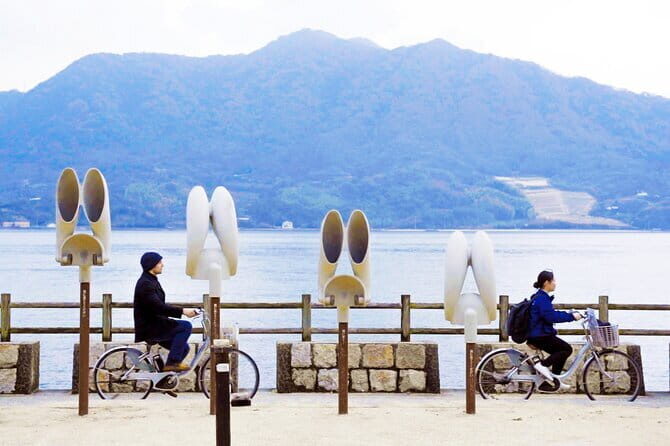
- A rabbit-focused cycle tour on a small island (about 4 km around) that stays calm and easy to follow
- A local guide with a strong focus on the island’s wartime story, not just the cute animals
- View-only stops at the lighthouse and multiple poison-gas-related sites due to safety rules
- Real access to the cannon battery remains, where you can see things more closely than at other stops
- Short, efficient timing (about 2 hours total) with multiple quick stops that add up to a full feel for the island
- Small-group feel with a maximum of 5 travelers, but it’s still a shared group departure
Okunoshima on a Bike: Rabbits, Ruins, and Why the Island Matters

Okunoshima sits in the warm Seto Inland Sea, a region known for its many islands and classic ferry-and-bridge routes. The island is small enough that cycling feels natural—more like exploring a compact park than tackling a big ride. And yes, rabbits really are a big part of the experience. You’ll see them around areas like shrines and open paths, where they seem perfectly at home.
What makes this tour more than just a cute day out is the way it frames the island. Okunoshima was once removed from maps because of a dark wartime history tied to poison gas production. Today, wild rabbits and gentle sea air can make the place feel peaceful. The guided route helps you hold both truths at the same time: the quiet present, and the troubling past that still shows in the ruins.
I also like that the pacing is built for most people with moderate physical fitness. It’s long enough to feel like you explored, but short enough that you aren’t stuck grinding for hours.
You can also read our reviews of more cycling tours in Hiroshima


Getting There and Meeting at Kyukamura Okunoshima

Your tour starts and ends right in front of KYUKAMURA OHKUNOSHIMA (休暇村大久野島) in Tadanoumichō, Takehara. That matters because you aren’t guessing where the activity ends after you return—your guide brings you back to the same spot.
One cost point to factor in early: the ferry isn’t included. The ferry from Tadanoumi to Okunoshima is 360 yen (not part of the $59.12 tour price). If you’re budgeting tightly, add that in from the start so you don’t get surprised at the end.
Good to know: you’ll use a mobile ticket, so have your phone charged and ready.
The 2-Hour Plan: How the Stops Create a Full Island Story
This tour runs about 2 hours total, split into short stops that keep your attention moving. It’s a shared group tour, and there’s a maximum of 5 travelers. That small size usually helps the guide keep things organized, especially when you’re shifting between viewing points and open paths where rabbits might pop up.
The route flows like a story: view the island’s markers, move through the main island area, stop at the shrine, then shift your focus to wartime facilities and defenses. Even when entrances are blocked, the guide’s explanations make the viewing feel purposeful, not like you’re just standing around.
Stop 1: Okunoshima Lighthouse Views You Can’t Enter

You’ll start at Okunoshima Lighthouse. Here’s the key practical detail: entry to the lighthouse is currently prohibited, so you won’t tour inside or go up. Instead, you’ll view it from a short distance.
For some people, that can feel like a letdown if they came for photos. But I actually think it works with the island’s vibe. You get your first reference point on a place that’s easy to misread at first glance. The guide can frame what the lighthouse represents in the broader feel of the island—then you’re off before you start wondering what else you’re missing.
Time is brief here—about 10 minutes—so don’t plan on lingering.
Stop 2: Cycling the Island Core (About 1 Hour)
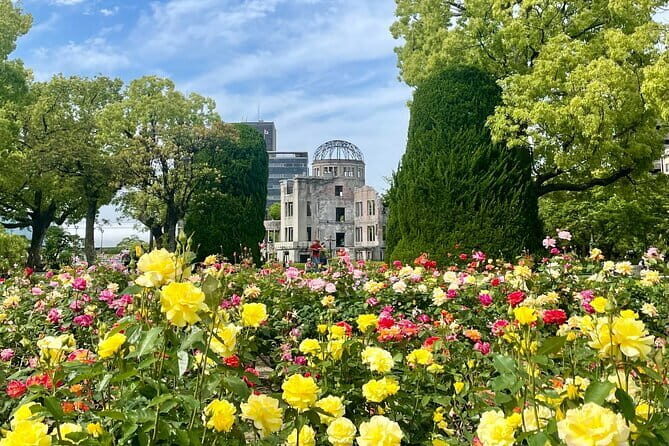
The main portion of your riding time brings you through Okunoshima Island, where you can feel the island’s scale. The tour area is about 4 km in circumference, so you’ll spend the time cycling and letting the environment do its job: sea air, quiet paths, and the regular surprise of rabbits nearby.
This is also where the guided context starts to land. The island sits just west of the Shimanami Kaido, and it’s part of the Seto Inland Sea National Park. That background matters because Okunoshima isn’t just a memorial site or just an animal attraction. It’s a place where nature, tourism, and history all overlap.
If you like travel that mixes calm scenery with meaningful context, this stop is where you’ll probably feel it most. And because it’s about an hour, you’ll get enough time to slow down for rabbit sightings without turning the whole day into a long detour.
You can also read our reviews of more guided tours in Hiroshima



Stop 3: Okuno Shrine and Rabbits Close by

Next up is Okuno Shrine. This stop is only about 10 minutes, but it’s one of the most distinctive moments on the route because it’s described as a shrine area that’s also home to rabbits.
This is the part I’d call the gentle reset. After wartime references and viewing points, the shrine gives you a quieter rhythm. You’re not hunting information; you’re just noticing the island’s present-day character—especially how casually the rabbits share space.
If you love small, specific experiences (one shrine, one island, one tight time window), this is the kind of stop that sticks.
Stops 4 and 5: Wartime Poison Gas Ruins Viewed from a Distance
Then the tour shifts hard into history. You’ll visit two separate viewing areas tied to poison gas production:
Nagaura Poison Gas Storage Ruins
You can view the poison gas storage ruins, but again, there’s a catch: entry is prohibited for safety reasons, so you’ll see them from a short distance. Time is about 10 minutes.
Even with limited access, the value here is in what the guide explains—how a place can become famous for something peaceful while still carrying physical reminders of serious harm.
Power Plant Ruins
You’ll also stop at the power plant ruins, described as used when poison gas was secretly made there. Same issue: entry is currently prohibited, and you’ll view from close range without going inside. Time is about 10 minutes.
These view-only stops are a good reminder to manage expectations. You’re not getting an indoor ruin tour, and you won’t be wandering freely in old structures. But you are getting the guided framework that turns scattered remains into an understandable wartime timeline.
If you prefer fully accessible sites where you can walk in and out freely, this is the biggest trade-off on the itinerary.
Stop 6: Northern Cannon Battery Remnants (This One Gets Closer)
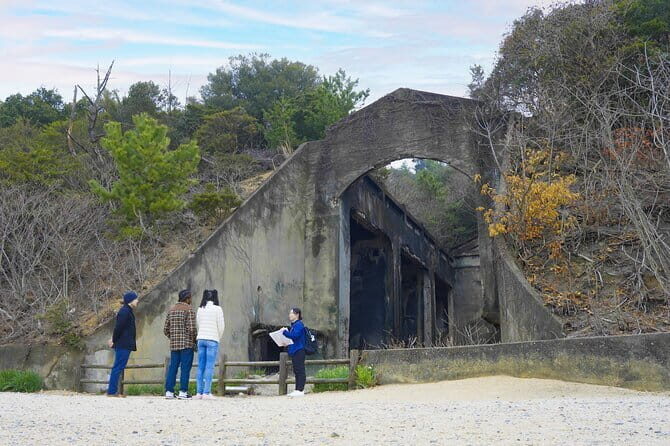
Finally, you’ll reach Northern Cannon Battery Remnants. Unlike some other stops, this is the place you can see more closely. Time is about 15 minutes.
This is where many people will feel the strongest visual impact. Defenses and batteries have a different emotional texture than storage buildings—they look built for action. The guide’s interpretation matters here too, because it helps you connect what you see to why it was there.
With 15 minutes, you get a little more breathing room than the earlier view-only points. It’s long enough to take photos, compare angles, and let the history settle in.
Price and Value: Is $59.12 Worth It?
At $59.12 per person, this tour sits in the “good value if you want guided meaning” category. Here’s why.
You’re paying for:
- Bicycle use
- All fees and taxes
- Travel insurance
- A local guide who connects rabbits, ruins, and wartime context
You’re not paying for:
- Food and beverages
- Ferry travel (Tadanoumi to Okunoshima is 360 yen)
- Anything like a private car or private bike
Since the key stops list free admission, your money mostly goes toward the guide, the bike, and the organized flow of the route. For a 2-hour experience on a small island, that can be a fair trade—especially if you’re the type who gets more out of a place when someone explains what you’re looking at.
One practical tip: because food isn’t included, plan to bring snacks if you need them, or at least budget a meal around the ferry timing. The tour is short enough that skipping food isn’t impossible, but it’s not built around lunch.
Small-Group Feel and What That Means for Your Day
This is a shared group tour with a maximum of 5 travelers, plus a minimum of 2 participants to operate. That small cap usually helps the guide keep the pace manageable, and it can make rabbit sightings less stressful. If a rabbit appears in a spot everyone wants to photograph, you’re not stuck with a huge crowd pushing past each other.
Also, because the stops are short, group size matters less for logistics and more for your comfort. In a big group, view-only spots can feel like traffic. In a small group, you can often find a moment to pause and look without being bumped along.
Weather Reality on Okunoshima: A Place Where Rain Changes Everything
Okunoshima cycling depends on weather. If the Japan Meteorological Agency forecasts a 60% or higher chance of rain by 12:00 PM the day before, the tour is cancelled with no cancellation fees.
That’s actually helpful: it reduces the chance of you arriving for a ride that gets miserable halfway through. If it’s cancelled due to poor weather, you’ll be offered a different date or a full refund.
If you’re deciding between flexible plans, this is a good tour to keep on your “weather-aware” list. On clear days, cycling feels light and quick. On rainy days, you’ll want the option to rebook rather than force it.
Who This Tour Suits (and Who Might Want Another Option)
This is a strong match if:
- you want a bicycle tour with a small-group pace
- you’re interested in wartime history explained clearly while still enjoying nature and rabbits
- you like short stops that add up to a full island story
It might be less ideal if:
- you hate view-only sites and want to enter buildings or monuments
- you’re expecting a purely animal-focused outing with lots of time to wander freely
- you prefer private transportation and a custom itinerary (this is a shared tour)
Should You Book This Rabbit Island Cycling Tour?
I’d book it if your goal is a thoughtful Okunoshima visit that doesn’t treat the rabbits as the whole point. The guided structure, the bike, and the free admission at key points make it feel efficient. And the guide-led interpretation is the big reason it’s worth more than just riding around hoping for sightings.
If you go in expecting view-only access at multiple wartime sites, you’ll be happier. This isn’t a walk-in museum day. It’s a guided ride that helps you see and understand what the island still holds.
FAQ
How long is the Okunoshima Rabbit Island Cycling Tour?
It runs for about 2 hours.
Is this a private tour?
No. It’s a shared group tour, with a maximum of 5 travelers.
What is included in the tour price?
Your price includes bicycle use, all fees and taxes, and travel insurance.
Is the ferry included?
No. The ferry fee from Tadanoumi to Okunoshima is 360 yen and is not included.
Is food or drinks included?
No, food and beverages are not included.
Can I enter the lighthouse and the ruins?
No. The Okunoshima lighthouse is prohibited to enter, and the poison gas storage ruins and the power plant ruins are also prohibited to enter. The Northern Cannon Battery Remnants can be seen more closely.
What happens if it rains?
If the Japan Meteorological Agency forecasts a 60% or higher chance of rain by 12:00 PM the day before the tour, the tour will be cancelled with no cancellation fees. You’ll be offered a different date or a full refund.