REVIEW · KYOTO
One-Day Tour of Kyoto’s Highlights from Osaka/Kyoto
Book on Viator →Operated by LIMON Tours · Bookable on Viator
Trying to see Kyoto in one day is a sprint. You’ll hit four major sights—Fushimi Inari, Kiyomizu-dera, Kinkaku-ji, and Arashiyama—while riding in an air-conditioned bus with free Wi-Fi and getting English commentary along the way. I like the comfort part most, because this route has plenty of walking, hills, and stairs.
The trade-off: the schedule is tight. This is a long day (about 10 hours) and you’ll move pretty quickly between stops, with limited time at each place.
In This Review
- Key reasons this Kyoto highlights day feels worth it
- Why a Kyoto highlights bus tour works from Osaka or Kyoto
- Plan for the pace: how the route fits 10 hours
- Fushimi Inari Taisha: torii gates, and the stories behind them
- Kiyomizu-dera: the nail-free stage and those huge views
- Kinkaku-ji Golden Pavilion: 45 minutes of gold-leaf calm
- Arashiyama bamboo forest: cool shade and the Togetsukyo bridge
- Lunch break: where the included meal helps your schedule
- Guides and English: getting good value from the commentary
- What to pack for temple stairs, hills, and Kyoto heat
- Value check: what you’re really paying for at $66.32
- Should you book this one-day Kyoto highlights tour?
- FAQ
- How long is the Kyoto Highlights one-day tour?
- Where do I meet the tour?
- What are the main stops on the tour?
- Is lunch included?
- Which entrance fees are included?
- Is the tour guided in English?
- What transport do we use?
- Is the tour mostly walking?
- Can I bring a stroller?
- Are there any meal restrictions?
Key reasons this Kyoto highlights day feels worth it
- Air-conditioned bus + free Wi-Fi for a quick reset between temples and crowds
- UNESCO power list in one day without the hassle of planning transport between far-flung areas
- Smart stop order: early torii, then viewpoints, then Golden Pavilion, then bamboo for photos
- Guides like Milo, Maria, Naomi, Hama, and Tet/Ted have a strong track record with first-timers
- Lunch is the easiest upgrade, especially if you don’t want to hunt for food during a fast-moving day
Why a Kyoto highlights bus tour works from Osaka or Kyoto
Kyoto on your own can be fun, but it can also eat your day. This tour solves the hard part for you: you’re transported to Kyoto’s biggest hits with an English-speaking guide, while you sit back in an air-conditioned bus that includes free Wi-Fi.
You’ll board at either Namba (OCAT 1F near Daiso at 8:50 AM) or Kyoto Station (Hachijo Exit Tourist Bus Parking at 9:05 AM). There’s no hotel pickup or drop-off, so it helps to be close to these meeting points. The payoff is that you start early, and you get a full loop of major sights without needing to juggle train connections.
One practical detail I appreciate: you get a mobile ticket. That cuts down on fiddly paperwork when you’re bouncing between terminals and tour groups.
You can also read our reviews of more tours and experiences in Kyoto.


Plan for the pace: how the route fits 10 hours
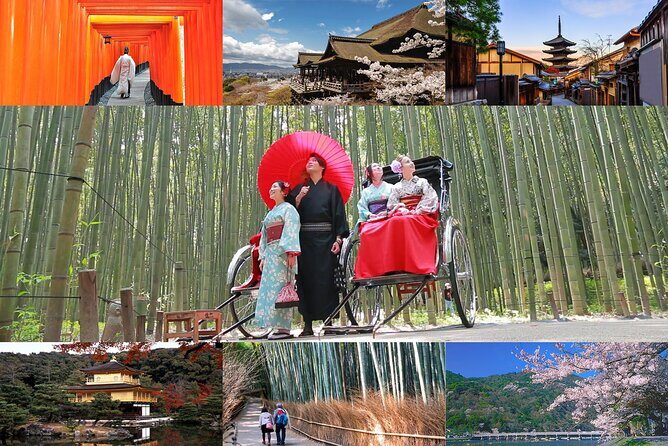
This is an around-Kyoto highlights day with four primary stops and a lunch break. Expect a real walking day: the tour requires walking, includes inclined paths and temple steps, and it can feel heavy in heat.
Here’s the time shape, so you can set your expectations:
- Fushimi Inari: about 1 hour 20 minutes
- Kiyomizu-dera: about 1 hour 40 minutes
- Kinkaku-ji: about 45 minutes
- Arashiyama: about 1 hour 20 minutes
It also helps to know that schedules can shift due to traffic or weather for safety. In summer, that matters. One review even calls out 38-degree weather as a reminder that you’ll want to hydrate and plan for heat exposure.
Also, check in matters. You’re told to arrive about 10 minutes early, because the bus won’t wait for late arrivals. On a tour like this, “almost on time” can turn into “missed start.”
Group size is capped at 42. In practice, that usually means you’ll see the sites at a comfortable walking distance, not packed shoulder-to-shoulder every second—though temple entrances and torii lanes can still get crowded.
Fushimi Inari Taisha: torii gates, and the stories behind them
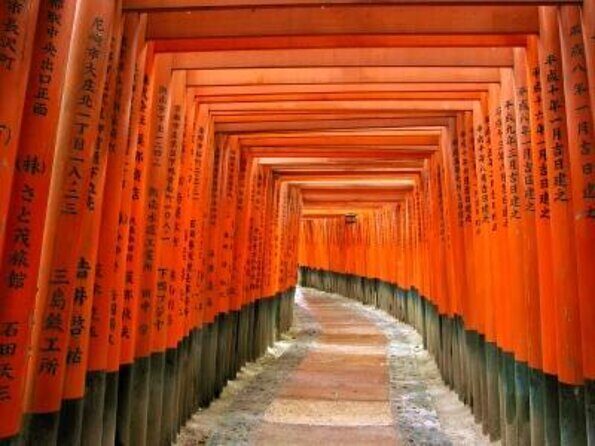
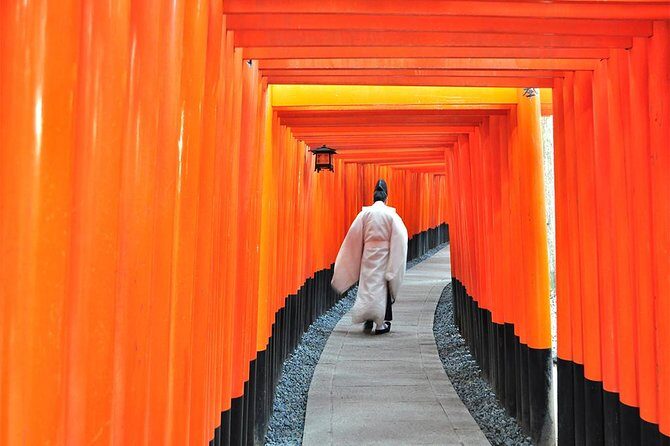
Fushimi Inari Taisha is the reason many people make the trip to Kyoto. You’ll start here for about 1 hour 20 minutes with free admission, then walk the bright vermilion corridors of torii gates.
What I’d focus on during your hour here isn’t just the photos, but the meaning. The shrine is tied to Inari, with connections to agriculture, business, traffic safety, and a bountiful harvest. That gives you a more grounded way to look at the gate-lined paths—this isn’t random decoration, it’s part of a living religious landscape.
Practical tip: you’ll be walking uphill and through dense areas. Wear shoes that can handle stairs and uneven ground. If you hate long climbs, you can still enjoy the main gate views without going as far up as the most ambitious hikers.
This stop is also one of your best “photo ROI” places early in the day. If you want that classic torii corridor shot without waiting forever, aim to move right after your group forms up.
Kiyomizu-dera: the nail-free stage and those huge views
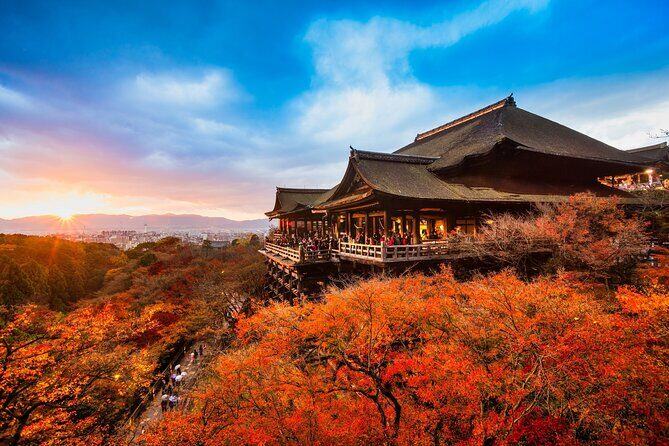
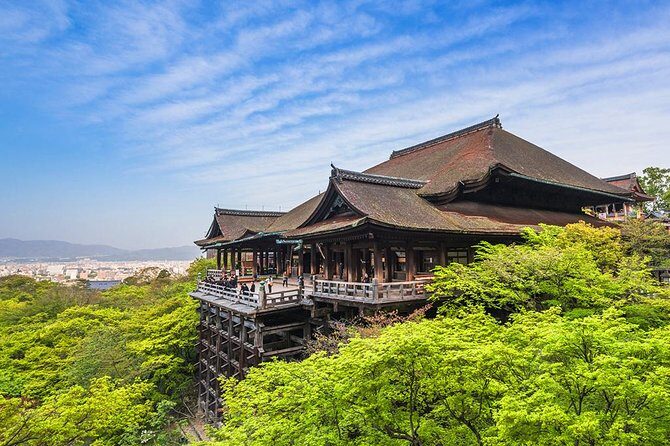
Next up is Kiyomizu-dera, one of Kyoto’s most famous temples, with admission included. You get about 1 hour 40 minutes here, which is a solid chunk for both the main viewing area and the approach through the grounds.
The headline feature is the wooden stage that juts out from the hillside. You’re told it was constructed without a single nail, and the temple is noted for 139 pillars. Even if you’re not into architecture, that detail helps you notice the structure instead of just snapping pictures and moving on.
And yes, the platform views are a big part of the experience. You’ll get a look over the city, which feels special because Kyoto is so layered—rooftops, hills, and narrow lanes stacking up.
Drawback to plan for: this is a temple built into sloped terrain. You’ll likely deal with steps, uneven walking, and crowds. If you’re sensitive to heights or hard climbs, take it slow and use any shaded or resting points you find.
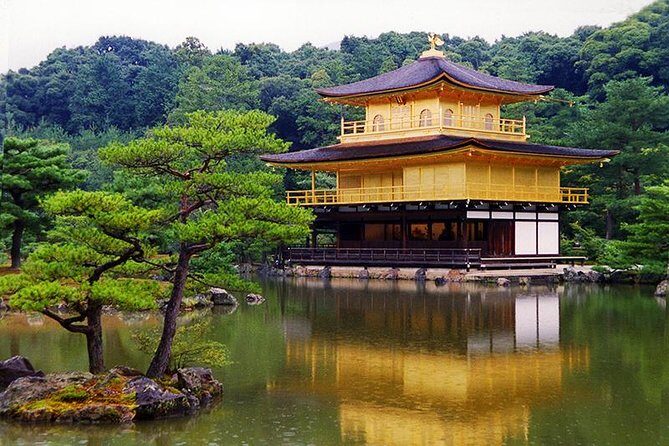
Kinkaku-ji Golden Pavilion: 45 minutes of gold-leaf calm
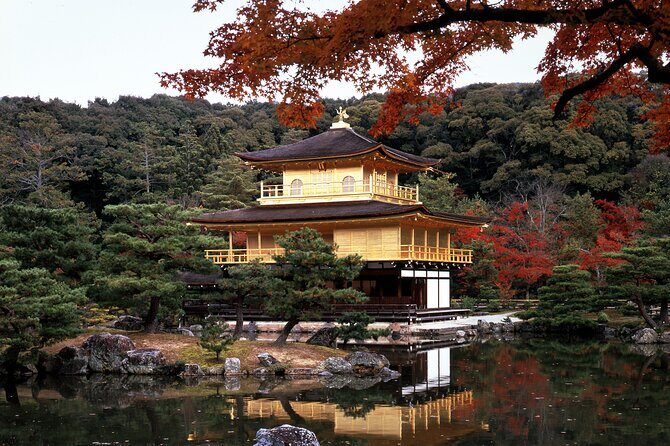
Kinkaku-ji is shorter on the clock—about 45 minutes—but it’s packed. This is the Golden Pavilion complex, covered in gold leaf, and it’s also connected to Zen traditions. You’re told it was once the villa of the Ashikaga Shogun, and it’s a UNESCO Heritage Site.
What I like about a timed visit here is that you don’t lose momentum. The Golden Pavilion is dramatic, and you’ll see it and walk the surrounding area without burning your whole day. If you want a slow, long, soaking-the-gardens visit, you might come back later. But for a one-day highlights plan, 45 minutes is usually enough to get the core experience.
How to make your minutes count:
- Go straight to the main view first, then loop through the gardens
- Don’t over-plan; just pay attention to reflections and the changing angles as you move
- Keep an eye on the steps and paths, since you’ll still be mixing walking and photographing
Some guides are especially good at pointing out photo angles. Several reviews highlight guides who took lots of pictures and helped with photo spots, so don’t be shy about asking where to stand before the best light fades.

Arashiyama bamboo forest: cool shade and the Togetsukyo bridge
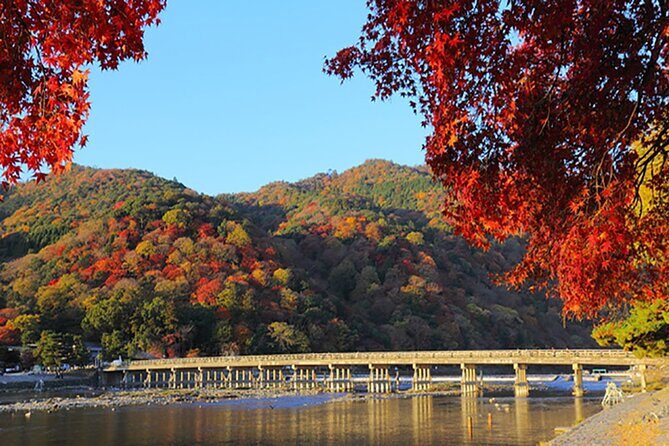
After Kinkaku-ji, you’ll head to Arashiyama, with about 1 hour 20 minutes and free admission. This is where the tour shifts from temple grandeur to nature and atmosphere.
You’ll stroll through the Sagano Bamboo Forest, where the bamboo creates that cool, shaded corridor effect that’s instantly memorable. You’ll also see the Togetsukyo (moon-crossing) bridge, which is a key landmark in the Arashiyama area.
If you’re thinking about why this stop works so well at the end of a long day, it’s because it gives you a sensory break. The walking is still there, but the pacing feels different. You can slow down, look up, and take photos without focusing on ticket lines or formal temple entry steps.
One more practical note: Arashiyama can still be crowded, and bamboo lanes are narrow. If you’re going during hot months, keep water handy and plan for shade where you can.
Lunch break: where the included meal helps your schedule
You’ll have a lunch break during the tour. You can choose the lunch-included option, or bring your own if you’d rather pick something nearby.
This upgrade is usually worth considering because it protects your time. When you’re already moving between four major destinations, meal hunting can steal the energy you need for walking.
A few constraints to know:
- Halal and vegan meals are unavailable
- Vegetarian requests require contacting the operator at least 3 days before the tour
- If you have dietary needs, skipping lunch and bringing your own can be the simplest move
From the reviews, lunch included options often get praised as tasty and even visually great. That said, quality and style depend on what’s available that day, so I’d treat it as a convenience plus, not a guaranteed gourmet meal.
Guides and English: getting good value from the commentary
This tour includes an English-speaking guide, but your experience can vary based on the guide assigned. Most reviews are very positive about guides like Maria, Naomi, Hama, Ma-chan, Milo, Alice, Kenjisan, and Tet/Ted, with praise for clear explanations, helpful instructions, and even photo guidance.
I’d also be honest about what can go wrong. A few reviews mention limited English or minimal narration at certain stops. That’s not something you can fully control, but you can protect yourself by coming prepared.
What you can do:
- Download an offline map and basic info for each site so you understand the big picture even if narration is light
- Ask your guide before you start walking at each stop: what’s the one thing you shouldn’t miss here?
- If you care about history, prioritize the stops where your guide is most animated—often Kiyomizu-dera and Fushimi Inari
The positive pattern is clear in the feedback: guides who explain what you’re seeing and point out good photo spots make the day feel smoother and more meaningful.
What to pack for temple stairs, hills, and Kyoto heat
This is not a sit-and-watch tour. It requires walking, and you should expect hills and steps. Several reviews call out that elderly visitors can find it challenging, and one even notes the walking on hills and inclined paths. If you’re traveling with a stroller, folding strollers are allowed and stored with luggage on the bus, but the ground is still hilly and not always stroller-friendly.
So pack like you’re going to work, not like you’re going to a museum:
- Comfortable shoes you trust on stairs
- Water, especially in summer heat
- A hat or umbrella for sun exposure
- A small rain layer, because weather can change quickly
One review specifically praises guides who kept people in shade rather than baking in direct sun. That’s a good sign—but your best defense is your own sun and heat plan.
If you’re visiting in summer, take the heat warning seriously. One reviewer describes Kyoto in July as intense and says the bamboo forest was the highlight partly because it felt cooler.
Value check: what you’re really paying for at $66.32
At $66.32 per person, the value isn’t just the attractions. It’s the structure: you’re paying for an efficient one-day route that bundles transportation comfort, guide help, and admissions where they apply.
Here’s what the included items cover:
- Air-conditioned bus with free Wi-Fi
- English-speaking guide
- Entrance ticket to Kinkaku-ji and Kiyomizudera
- Lunch if you pick the lunch-included option
Not included: hotel pickup/drop-off, and the other two stops have free admission (Fushimi Inari and Arashiyama). So the tour’s real economic logic is: you pay to reduce the friction of moving between distant areas in a single day.
The main “value risk” is pacing. If you want deep time at one place, 45 minutes at Kinkaku-ji or the limited time at Fushimi Inari might feel short. But if you want a first-hit version of Kyoto’s most iconic scenes, this is a strong deal—especially when the bus keeps you comfortable between stops.
Should you book this one-day Kyoto highlights tour?
Book it if:
- It’s your first time in Kyoto and you want the top sights in one day
- You prefer guided orientation and photo help over self-planning
- You’re okay with a fast pace and lots of walking
Skip it or think twice if:
- You need slow, detailed time at each temple
- You’re not comfortable with stairs and inclined paths
- You have dietary requirements that can’t be handled by the lunch option
My take: this is a practical Kyoto sampler done the easy way. With the right guide—like Maria, Naomi, Hama, Ma-chan, Milo, or Tet/Ted—it turns iconic places into a smooth, photo-friendly day. Without that, it still works as a transport-and-entry package, but you’ll need to rely more on your own planning.
FAQ
How long is the Kyoto Highlights one-day tour?
It runs for about 10 hours.
Where do I meet the tour?
You meet at either Namba (OCAT 1F near Daiso) at 8:50 AM, or Kyoto Station (Hachijo Exit Tourist Bus Parking) at 9:05 AM.
What are the main stops on the tour?
The tour visits Fushimi Inari Taisha, Kiyomizu-dera, Kinkaku-ji, and Arashiyama.
Is lunch included?
Lunch is included only if you choose the lunch-included option. Otherwise, you can bring your own.
Which entrance fees are included?
Entrance tickets are included for Kinkaku-ji and Kiyomizudera.
Is the tour guided in English?
An English-speaking guide is included. (The exact level of English may vary by guide.)
What transport do we use?
You travel by air-conditioned bus with free Wi-Fi onboard.
Is the tour mostly walking?
Yes. The tour requires walking, and it includes temple steps and inclined paths.
Can I bring a stroller?
Folding strollers are allowed, and they are stored with the luggage on the bus.
Are there any meal restrictions?
Halal and vegan meals are unavailable. For vegetarian needs, you must contact the operator at least 3 days before the tour.