REVIEW · KYOTO
Ramen Gyoza Onigiri Japanese Cooking Class in Kyoto
Book on Viator →Operated by Friendship Adventures · Bookable on Viator
Ramen lessons beat the usual Kyoto sightseeing. In 1.5 hours at Manryo Japanese Cooking Class, you learn ramen broth plus wrap-and-shape skills for gyoza and onigiri.
I like that it’s a single session with three Japanese comfort foods, not a scattered sampling of one dish. And it’s built around techniques you can repeat at home, not just a hands-off tasting.
I love the small group size (max 8), which means Chef Nori and the team can actually coach you as you work. I also love that lunch is included after cooking, so the “what’s the point?” feeling disappears fast.
One thing to consider: your options are limited. You can choose Regular or Vegetarian (pork swapped for tofu), but they can’t accommodate vegan, gluten-free, halal, kosher, pescatarian, or anyone under 13.
In This Review
- Key highlights I’d plan around
- A 90-minute plan that actually feels worth it
- Where the class starts: Manryo Japanese Cooking Class in Sakyo
- Ramen broth is the real lesson (and noodles are not made)
- Gyoza wrapping: technique you’ll use again and again
- Onigiri shaping: rice-ball form with Japanese logic
- You eat a full lunch at the end
- Instructor energy: Chef Nori and a helpful team
- Price and value: what $92.47 actually covers
- Vegetarian menu and hard diet limits: plan before you go
- Who this class suits best (and who should skip it)
- Should you book the Ramen Gyoza Onigiri class in Kyoto?
- FAQ
- How long is the cooking class, and what do I make?
- Do you make the ramen noodles in this class?
- What’s the difference between the Regular and Vegetarian menus?
- Can the class accommodate vegan, gluten-free, or halal/kosher diets?
- How big is the group?
- Is lunch included?
- What’s the cancellation policy for a full refund?
Key highlights I’d plan around
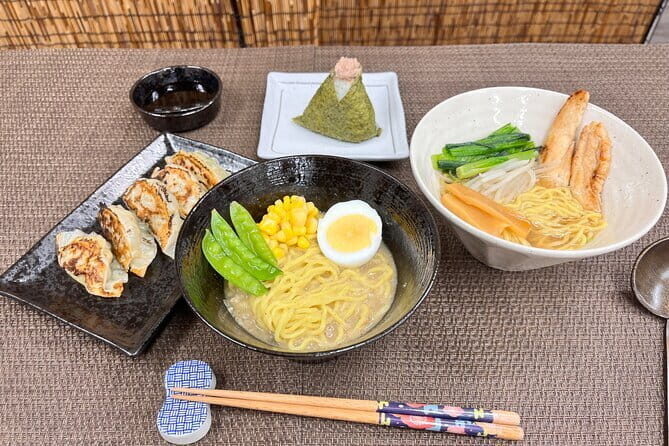
- Three dishes in one session: ramen broth, gyoza, and onigiri
- Broth-focused ramen training: noodles aren’t made, but the soup is
- Hands-on wrapping and shaping: gyoza pleats and rice-ball form
- Small group access: maximum 8 travelers
- You eat what you make: lunch is part of the class
- Two set menus only: Regular or Vegetarian (tofu swap)
A 90-minute plan that actually feels worth it
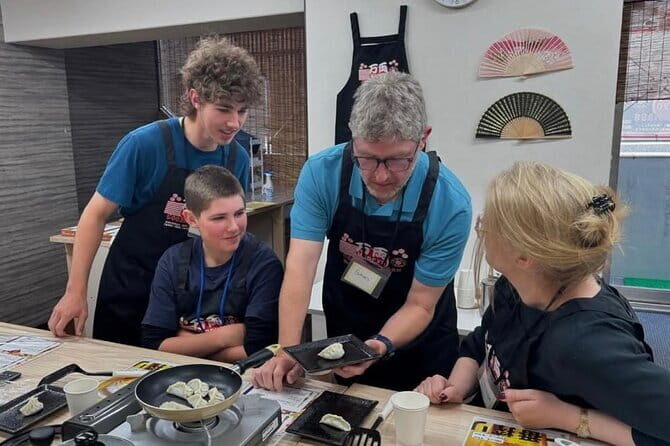
Kyoto can be a “see a temple, take a photo, move on” kind of place. This class is different. You slow down on purpose and put your hands on food that tastes like Japan, not like a restaurant copy.
In about 1.5 hours, you go from ingredients to finished dishes and then sit down to eat. That pace matters. If you’ve got a tight itinerary, this is the kind of activity that gives you a full payoff without eating your entire day.
And because the class teaches multiple items (not just one), you leave with more usable skills. Ramen broth teaches flavor layering. Gyoza teaches technique. Onigiri teaches how Japanese home cooking handles texture and hold.
You can also read our reviews of more cooking classes in Kyoto
Where the class starts: Manryo Japanese Cooking Class in Sakyo
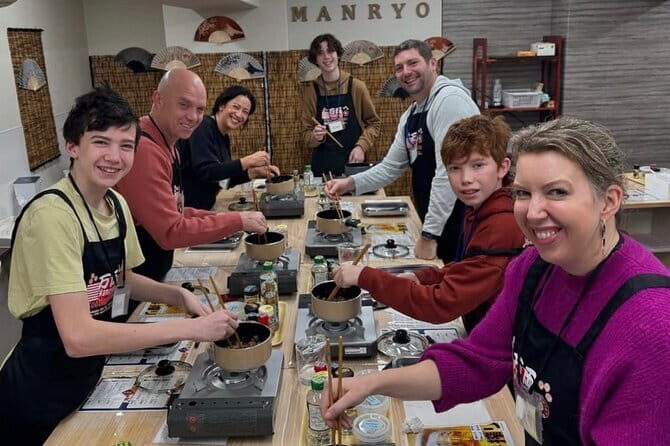
The experience meets at Manryo Japanese Cooking Class in Sakyo Ward, Chōshōji Monzenchō, inside the 8 4 1 Life Building B1. It’s a set location, and it ends back at the meeting point, which keeps the logistics simple.
You’ll want to show up hungry—this isn’t a “watch and snack” class. You’ll cook, and then you’ll eat what you make.
One practical tip: because it’s near public transportation, plan to arrive with a little buffer. Cooking classes run on timing, and the better you sync with the start, the smoother the whole session feels.
Ramen broth is the real lesson (and noodles are not made)
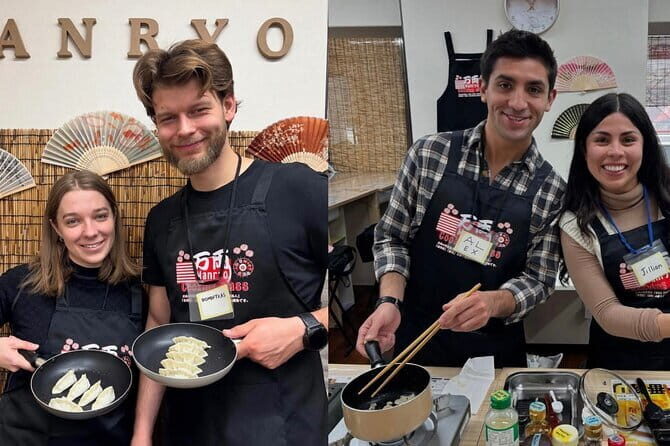
Here’s the clever part: you focus on what’s hardest to recreate from memory—the ramen broth.
You won’t be rolling noodles, because the class is designed around the soup. That might sound like a limitation at first, but it’s actually a value move. Noodles are easy to buy near where you live. Good broth takes real technique, and that’s what you’re taught here.
Expect to work with ingredients and seasonings you can prepare at home. The class places emphasis on broth construction and flavor control—how to build a base that tastes deep without turning complicated.
Also, the class covers broth in a way that lets you learn more than one style. Many people come out knowing they made two different types of ramen broth during the session. That variety helps you avoid the “one sauce, done” problem you sometimes get in cooking classes.
What I’d take from this: learn the logic behind broth, not just the steps. Once you understand that, you can adapt for different flavors at home with what you can actually find.
Gyoza wrapping: technique you’ll use again and again
After the broth work, you shift into gyoza. This part is all about wrapping and shaping with guidance from the instructors.
Gyoza seems simple until you try it yourself: the pleats, the seal, and the right balance of filling distribution. In a short class like this, that guidance is the difference between dumplings that fall apart and dumplings that stay neat.
You’ll learn how to wrap gyoza and how to handle the dough/filling process so it comes out right for cooking. The class instructions are geared for English-speaking participants, and the room is set up for hands-on practice.
If you’re the type who likes making finger food, this is a highlight. And if you’re planning a dinner back home, gyoza is the easiest “wow” dish to repeat because you can scale it for a group.
Onigiri shaping: rice-ball form with Japanese logic
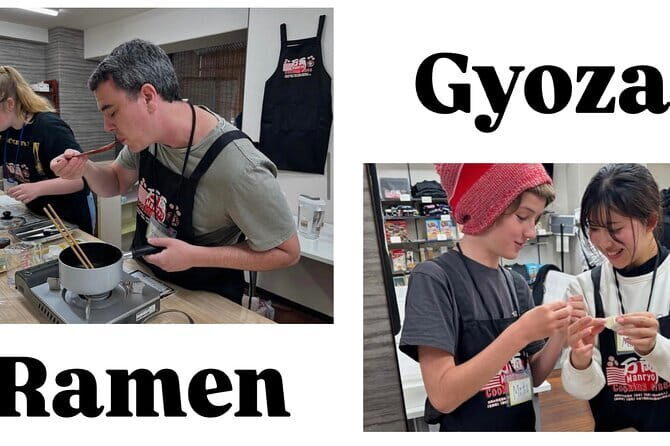
Then comes onigiri, the rice ball that looks straightforward until you realize it’s all about texture and grip.
Onigiri is the perfect follow-up to gyoza because it teaches a different skill set. Gyoza is about filling distribution and sealing. Onigiri is about shaping rice so it holds together and feels right when you bite in.
You’ll master wrapping and shaping in a way that you can repeat for family or friends. The class is clearly designed so the recipes and experience transfer to your home kitchen, not just for this one meal.
One practical takeaway: once you get the form down, onigiri becomes a real “no-stress lunch” option. It’s portable, you can prep ingredients ahead, and it makes leftovers feel intentional.
A few more Kyoto tours and experiences worth a look

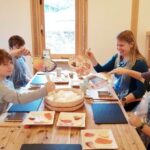
You eat a full lunch at the end
The class includes lunch after cooking. That means you’re not just tasting one bite—you get to feast on what you made.
Several people highlight that there’s a lot of food by the end, and the results are genuinely delicious. If you’re deciding between this and a shorter class that ends in tiny samples, this one wins on meal satisfaction.
Also, you’re getting coached through the work until you can produce dishes that look like they belong on a Japanese table. That’s a confidence builder. And the better you cook, the more fun the eating part becomes.
Instructor energy: Chef Nori and a helpful team
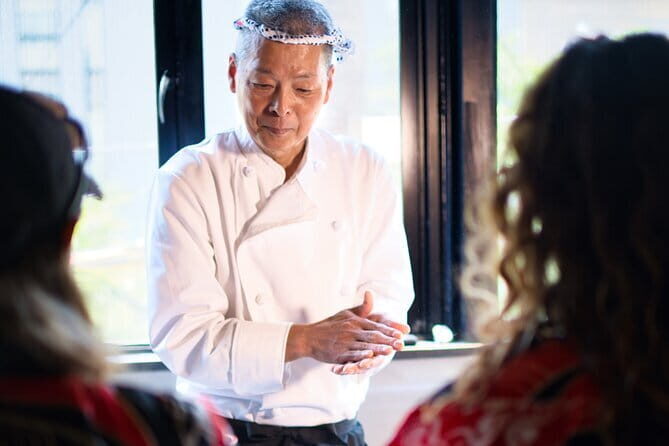
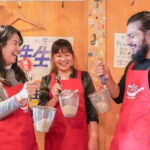
A big part of the experience is the instructor team. Chef Nori shows up repeatedly in the class stories, and people mention that he’s friendly and patient.
There’s also support from the team, with names like Ryho and Minori appearing in the class experience. That matters because in a small group, you don’t want one person handling everything while you wait.
Another detail worth noting: instructions are in English. People also mention that even with jokes and humor, the English stays clear. That’s helpful if you’re nervous around kitchen instruction in a language you don’t speak daily.
Price and value: what $92.47 actually covers
At $92.47 per person, this isn’t a “grab it because it’s cheap” activity. It’s priced as a hands-on class in central Kyoto with ingredients, coaching, and a meal built in.
Here’s what you’re getting for that money:
- An instructor-guided session teaching three dishes
- Focused ramen training on broth (the part most people can’t recreate easily)
- Small-group attention (max 8)
- Lunch included after cooking
- A vegetarian option that’s still structured and consistent
In other words, the cost isn’t just for a meal—it’s for technique and time. If you want a cooking class where you leave with more than one thing and you actually eat your results, it’s strong value.
If, however, you’re chasing a very specific dietary style or you only care about one dish, another option might be a better match. This one is designed as a package.
Vegetarian menu and hard diet limits: plan before you go
You have two menu options: Regular Menu and Vegetarian Menu. For Vegetarian, pork is replaced with tofu, while other ingredients remain the same.
That’s a clear trade. If you eat vegetarian, you can likely enjoy this without stress. If you follow a different kind of eating plan—vegan, gluten-free, pescatarian, halal, or kosher—the class can’t accommodate it based on the provided rules.
They also can’t take anyone under 13. That’s worth knowing if you’re traveling with kids and hoping for a family activity.
My advice: choose the menu option that matches your diet as written. Don’t expect substitutions beyond the pork-to-tofu swap.
Who this class suits best (and who should skip it)
This cooking class fits best if you:
- Want hands-on cooking in Kyoto, not just sightseeing
- Like Japanese comfort food and want to learn more than one dish
- Care about ramen flavor and want broth technique, not store-bought shortcuts
- Prefer smaller groups with real instructor attention
It’s likely less ideal if you:
- Need vegan, gluten-free, or other specialized dietary accommodations
- Are traveling with someone under 13
- Only want to learn one dish and would rather spend less time or money elsewhere
One more good match: if you’re the kind of traveler who likes bringing food home as a memory, this class sets you up with recipes and the confidence to cook again later.
Should you book the Ramen Gyoza Onigiri class in Kyoto?
If you want a memorable Kyoto moment that feels practical—something you can repeat when you’re back home—this class is a very solid choice. You’ll learn ramen broth technique, plus the hands skills behind gyoza and onigiri, and then you’ll eat a real lunch you made yourself.
Book it if your main goal is value through instruction and a satisfying meal. I’d also book it if you’re traveling solo or with a small group and you like direct coaching.
Skip it if you need dietary accommodations beyond the stated Vegetarian option, or if you’re only interested in ramen noodles (since noodles aren’t made here). With those caveats, this is the kind of class that turns Kyoto into dinner.
FAQ
How long is the cooking class, and what do I make?
The class runs about 1 hour 30 minutes. You’ll learn how to make ramen broth, gyoza, and onigiri, and then you’ll eat what you cook.
Do you make the ramen noodles in this class?
No. The class teaches how to prepare the ramen broth and techniques for gyoza and onigiri, but it does not make noodles.
What’s the difference between the Regular and Vegetarian menus?
There are two menu options: Regular and Vegetarian. In the Vegetarian option, pork is replaced with tofu while the other ingredients remain the same.
Can the class accommodate vegan, gluten-free, or halal/kosher diets?
No. The class cannot accommodate vegan, pescatarian, gluten-free, halal, kosher, or other special diets beyond the stated Regular and Vegetarian menus.
How big is the group?
The maximum group size is 8 travelers, so you get good access to the instructor and assistants during the cooking process.
Is lunch included?
Yes. After cooking, you enjoy what you have made as lunch.
What’s the cancellation policy for a full refund?
You can cancel up to 24 hours in advance of the experience start time for a full refund. If you cancel less than 24 hours before, the amount paid will not be refunded.