REVIEW · KYOTO
SHIRAKAWA Japanese Culture Experiences with private English staff
Book on Viator →Operated by Furukawashuzo · Bookable on Viator
A great Kyoto lesson starts at street level. This private, English-guided stop in Furukawacho Shopping Arcade pairs local artisans with hands-on skills like knife sharpening and Kyoto cooking. The only catch is you’ll select two workshops, and availability can affect which two you get.
What I like most is that you’re not just watching from the sidelines. You learn by doing with a real instructor, and you also get to explore the arcade’s retro-meets-modern vibe—lantern light, local shops, and the everyday food culture of Shirakawa. One thing to think about: you’re limited to groups of 2 to 6, and you’ll want to message your choices early.
In This Review
- Key highlights before you go
- Furukawacho Shopping Arcade: Where Kyoto feels lived-in
- Your two-workshop menu: pick what matches your mood
- Knife sharpening with a 26-year artisan: more than making an edge
- Obanzai making with Kyo-gohan Nishimura: Kyoto home cooking, step-by-step
- Calligraphy with tools and real practice: write kanji for your name
- How the private English-speaking staff improves your learning
- Price and time: what you’re really paying for
- Getting there and starting the workshops on the right foot
- Who should book this experience
- Should you book Shirakawa Japanese Culture Experiences with private English staff?
- FAQ
- What workshops can I choose?
- How long is the experience?
- Do I get English support during the workshops?
- Is this a private group activity?
- What is the group size?
- What if the workshop I want is not available?
Key highlights before you go
- Choose 2 workshops from knife sharpening, obanzai making, and calligraphy for a focused, doable 3-hour plan
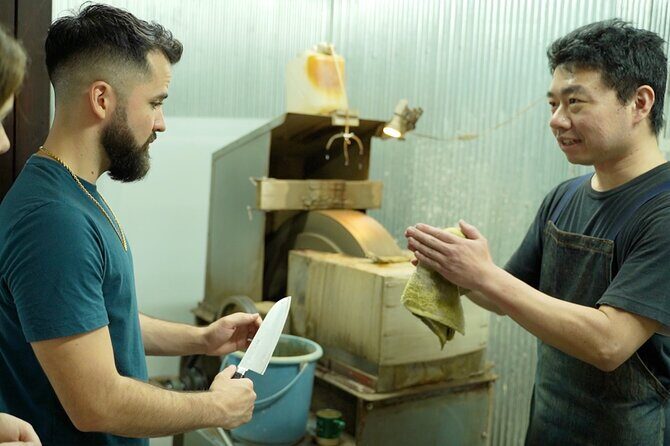
- Knife sharpening with a 26-year pro who teaches correct whetstone technique
- Obanzai at Kyo-gohan Nishimura with family-recipe guidance and ingredient shopping inside the arcade
- Calligraphy includes tools practice (brush, ink, suzuri) and a hanging scroll with kanji for your name
- Private English-speaking staff stays with your group for all workshop time
- Retro and modern arcade atmosphere with lanterns and a true local-kitchen feel
Furukawacho Shopping Arcade: Where Kyoto feels lived-in
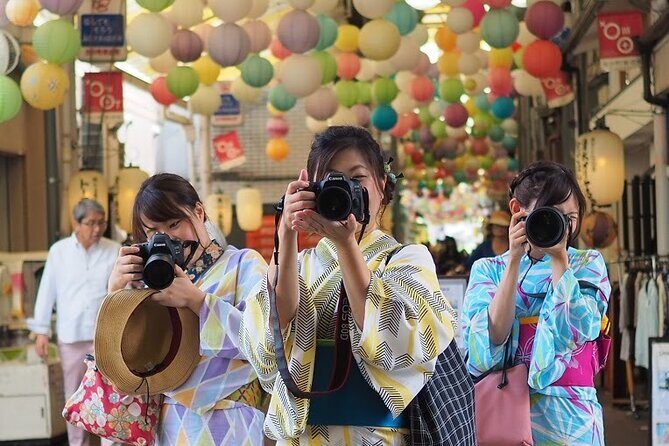
This experience is built around one simple idea: Kyoto culture is easier to understand when you’re standing where people actually work and eat. Furukawacho Shopping Arcade in the Shirakawa area is described as retro and modern, and you’ll feel that mix the moment you arrive. There are lanterns hanging from the arcade roof, and it creates a warm, slightly nostalgic atmosphere that doesn’t feel staged for tourists.
The arcade is also framed as a kitchen of the locals—an everyday base of life. That matters, because the workshops don’t float in isolation. You’re learning knife skills, home-cooking dishes, and kanji writing in the same neighborhood rhythm as the shops around you.
The other quiet win is pacing. You’re not crisscrossing Kyoto for a string of unrelated stops. You’re going deep in one place for about 3 hours, which makes it easier to remember what you learned and keep your brain in lesson mode instead of travel mode.
You can also read our reviews of more private tours in Kyoto

Your two-workshop menu: pick what matches your mood
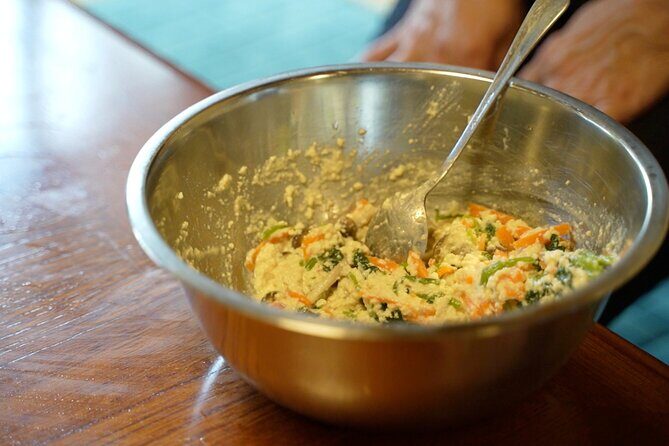
You’ll choose two experiences out of three. An English-speaking staff attends all workshops, so you’re not left translating on your own while you’re trying to remember steps like whetstone angles or brush strokes.
Here are your three options, with the kind of experience each one is best at:
- Knife sharpening (90 min): hands-on technique with a whetstone, taught by an artisan with a 26-year career
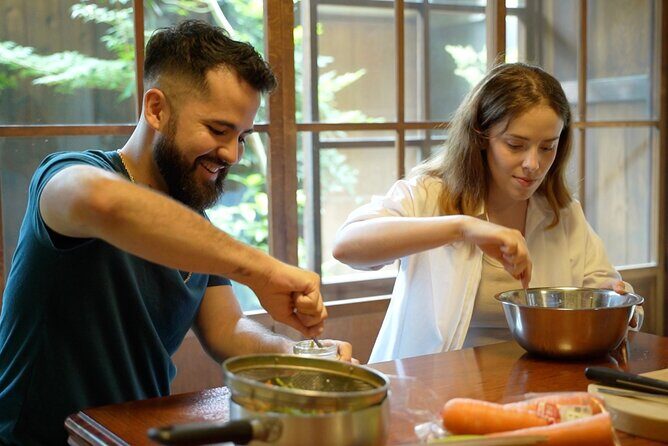
- Obanzai making (70 min): Kyoto home cooking, with ingredients bought at the shopping arcade and cooking guided by the chef-owner
- Calligraphy experience (90 min): kanji practice with brush, ink, and suzuri, ending with a hanging scroll for your name
Because your total time is around 3 hours, the natural pairing is usually one 90-minute workshop plus another 70–90 minute workshop. It keeps the day from stretching out and helps you leave with at least one skill you can use back home.
If you want a practical souvenir, pick calligraphy. If you want a practical kitchen improvement, pick knife sharpening. If you want something that connects to Kyoto family cooking traditions, pick obanzai.
Knife sharpening with a 26-year artisan: more than making an edge
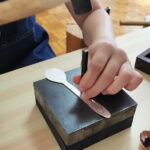
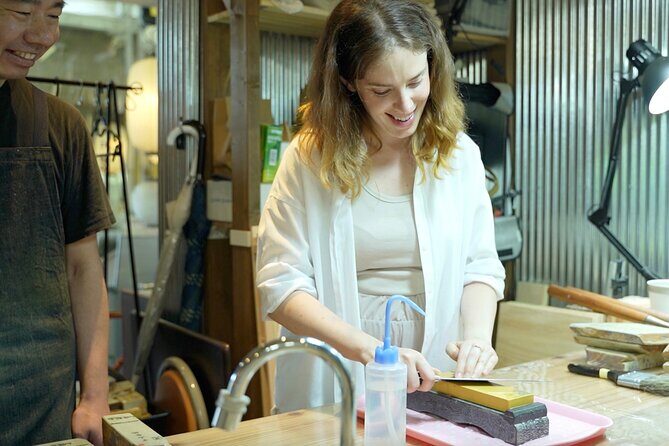
Knife sharpening sounds simple until you try it. This workshop at a store specializing in sharpening cutting tools uses a whetstone, and the key is instruction that’s specific enough to actually change your technique.
What makes it compelling is the instructor background: you’ll learn from an artisan with a 26-year career. That length of experience matters because sharpening is partly feel—pressure, angle, and consistency. With the right coaching, you stop guessing and start understanding what the stone and knife are doing together.
In practical terms, here’s what you’re likely to focus on during 90 minutes:
- how to handle the knife and maintain a stable angle
- how to move across the blade consistently
- how sharpening fits real cooking, not just theory
For me, the value is that a good lesson saves you money and frustration later. If you sharpen at home even occasionally, you’ll notice how much better cooking goes when your tools cut cleanly. And if you don’t cook much, you’ll still leave with a new appreciation for why Japanese kitchens treat knife care seriously.
One consideration: sharpening workshops can get hands-on fast. Wear comfortable clothes and plan to be fully present. You’ll learn best if you ask questions instead of watching quietly.
Obanzai making with Kyo-gohan Nishimura: Kyoto home cooking, step-by-step
Obanzai is described as home-cooked dishes with recipes passed down in each family. That definition is bigger than it sounds. In Kyoto, obanzai isn’t about being fancy; it’s about being correct to the local idea of comfort food and craft.
In this workshop, you go beyond theory. At Kyo-gohan Nishimura, the chef-owner shares a family recipe, and you also buy ingredients at stores inside the shopping arcade. That gives you a built-in cultural context: you’re sourcing what you’ll cook from the same local lanes you started in.
The structure also makes the food easier to understand. By shopping first, you connect ingredients to decisions—what you choose and why it matters in a Kyoto-style dish. Then you cook with the chef-owner, so you’re not stuck with cookbook steps. You can ask, adjust, and learn the rhythm of the meal as you go.
This workshop runs about 70 minutes, which is a sweet spot. It’s long enough to do real cooking, short enough that you’re not exhausted by the time you finish.
Who this fits best:
- you want a cooking experience without needing advanced skills
- you like markets and ingredient selection
- you want something you can talk about later because you were part of the process
Small practical tip: if you’re hungry (and you’ll probably be), pace yourself. Cooking can move quickly, and it’s easier to enjoy when you’re not rushing your own appetite.
Calligraphy with tools and real practice: write kanji for your name

If you’ve ever looked at Japanese calligraphy and wondered how people make strokes look effortless, this workshop is designed to move you from curiosity to technique. The lesson covers the shape of kanji, then shows how to use brush, ink, and the suzuri (ink stone).
After learning the basics, you actually try writing by brush. That’s important. Many calligraphy experiences stay at the demo stage. Here, you get time to do your own writing, and you can ask the instructor how to write kanji for your name.
The workshop ends with you completing a one-of-a-kind hanging scroll. That means your effort becomes a finished object you can bring home, not just a memory of watching someone else’s art.
What I like about this option is the mix of structure and personalization:
- you learn the shapes and tools
- you practice real strokes
- you end with something that’s uniquely yours
One consideration: calligraphy takes patience. If you’re the type who wants instant results, give yourself permission to slow down. The point isn’t perfection; it’s doing it correctly enough to understand the craft.


How the private English-speaking staff improves your learning
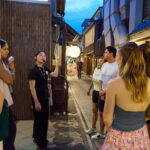
You’re not doing this as a passive class. Each group gets a private English-speaking staff member who attends at all of the workshops. That detail matters more than people expect.
When instructions are clear in your language, you can ask smarter questions. You can also catch small mistakes early—like an incorrect angle on a whetstone, or a brush-hand motion that doesn’t match what the instructor wants you to feel.
The staff presence also helps with the practical side of workshop flow. You’ll be choosing your two experiences, and you’ll let the organizer know through a message. If you care about your workshop order—like doing sharpening before cooking—you’ll want to communicate your preference.
Also, keep in mind that workshop availability can affect which two you’re able to do. If your first choice isn’t available, the prepaid fee is refunded to the credit card used for payment. This is better than showing up and losing time to uncertainty.
Price and time: what you’re really paying for
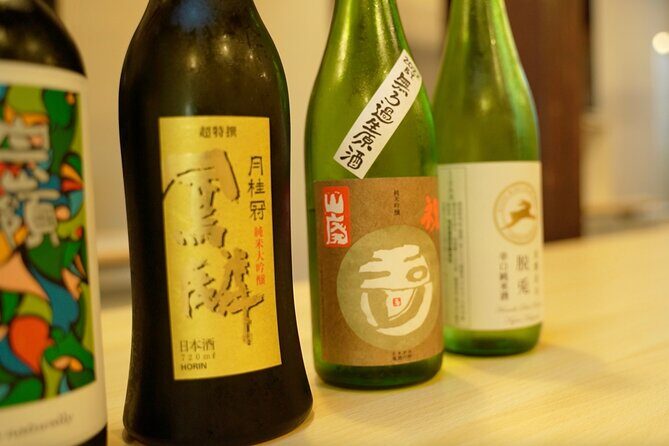
At $98.53 per person for about 3 hours, this isn’t a bargain like a free street activity. It’s priced like a hands-on cultural lesson with real instructors and translation support.
Here’s how the value adds up:
- you get two workshops, not just one short activity
- you have private staffing with English support throughout
- you’re learning from specialists tied to the arcade’s local shops: a sharpening artisan, an obanzai chef-owner, and a calligraphy instructor
Time is part of the equation too. The day is concentrated around one location in Shirakawa. That helps you feel like you’re doing a real “experience,” not a rushed checklist.
If you’re comparing to other Kyoto classes, the big differentiator is the combination of two workshop choices plus private English attendance. You’re paying for accuracy, not just entertainment.
Getting there and starting the workshops on the right foot
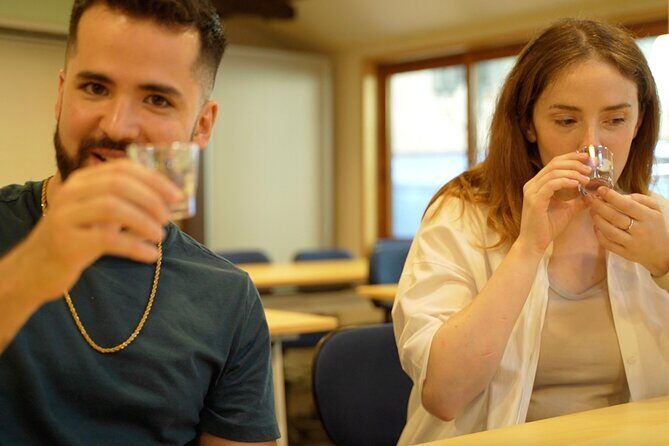
The meeting point is listed as 古川趣蔵 Furukawashuzo / 白川まちづくり会社546-1 in Higashiyama Ward, Kyoto. The good news is it’s near public transportation, so you shouldn’t need a private car or complicated logistics.
Because the activity ends back at the meeting point, you don’t need to plan a separate transit ride for after the workshops. You can also plan your next stop on the same side of Kyoto without stress.
On timing, confirmation is received within 48 hours of booking, depending on availability. The organizer also contacts you within 3 business days after your application/payment. That’s a good moment to message your workshop choices clearly so you don’t end up in the availability shuffle.
Who should book this experience
This is a great fit if you want Kyoto culture that’s practical and local, not just scenic. I’d especially recommend it to:
- Food lovers who like the idea of Kyoto home cooking with ingredient sourcing in the neighborhood
- People who cook at home and want to improve knife technique using a whetstone
- Visitors who want a souvenir with personal meaning, like a kanji hanging scroll
- Anyone who prefers a smaller group setting (it’s designed for 2 to 6 people) and direct instruction
It’s also ideal if you’ve already hit the big-ticket sights and want something quieter, closer to daily life. The arcade approach makes it feel more like a community activity than a performance.
Should you book Shirakawa Japanese Culture Experiences with private English staff?
Yes, if you want a hands-on Kyoto experience with language support and real instructors. The biggest reason to book is simple: you’re choosing two skills—sharpening, cooking, or calligraphy—and you’re doing them in a local setting at Furukawacho Shopping Arcade, where the atmosphere is lantern-lit and everyday.
I’d skip it only if you know in advance you won’t enjoy structured workshop time. This isn’t a casual stroll where you peek into a shop window and move on. It’s a lesson-based experience, and you’ll get the most out of it when you’re ready to participate.
If you’re the kind of traveler who loves learning by doing, this one’s hard to beat for your time and money.
FAQ
What workshops can I choose?
You can choose two experiences from knife sharpening, obanzai making, and calligraphy. The knife sharpening option is 90 minutes, obanzai making is 70 minutes, and calligraphy is 90 minutes.
How long is the experience?
The experience lasts about 3 hours.
Do I get English support during the workshops?
Yes. An English-speaking private staff member attends your group during all the workshops.
Is this a private group activity?
Yes. It is private, and only your group participates.
What is the group size?
The experience accepts people from 2 to 6 only.
What if the workshop I want is not available?
You may not be able to participate in the workshop of your choice depending on reservation availability. If that happens, the prepaid fee will be refunded to the credit card used for payment. The experience itself is described as non-refundable and cannot be changed for any reason otherwise.