REVIEW · TOKYO
Tokyo: 3h Private E-bike Tours, Starting at Your Hotel
Book on GetYourGuide →Operated by Tokyo Bike Bliss · Bookable on GetYourGuide
Tokyo is big, fast, and a little mean to first-timers with Google Maps. This private 3-hour e-bike tour turns that chaos into an easy glide, with stops planned for photos, viewpoints, and actual neighborhood life. I especially like the hotel start and finish, because in Tokyo you waste less time figuring out taxis and meeting points.
Two other things I love: you ride an e-bike with real pedal assistance (so hills don’t bully you) and the route is genuinely flexible because it’s private. The only drawback to keep in mind is practical: you still need basic riding comfort, and there are limits (height, weight, and what you wear) to make the experience smooth and safe.
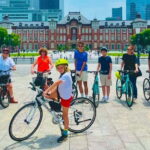
You’ll meet your guide, Kazuma, right at your hotel lobby with a helmet, ride with a focus on safety, and get context along the way—fun, clear, and never boring. Think of it as a smart way to get your bearings fast while seeing Tokyo slices you might miss on your own.
In This Review
- Key things that make this Tokyo e-bike tour worth your time
- Hotel Pickup and Return: Less Tokyo Logisitics, More Tokyo Time
- The E-Bike Makes Tokyo Feel Smaller (and More Enjoyable)
- Private for a Reason: You Control the Route, Stops, and Tempo
- Where You’ll Ride: The Tokyo Stops That Fit Different Moods
- Tokyo Metropolitan Government Building: a guaranteed viewpoint pause
- Shinjuku and back-street Tokyo (from skyscrapers to small alleys)
- Olympic-era Tokyo and iconic avenues
- Aoyama and cherry-blossom style streets
- Shibuya Crossing and the famous Tokyo intersection energy
- Hibiya Park: classic western-style park vibes
- Imperial Palace area: big grounds, slower feeling
- Tokyo Station, Nihonbashi, and “old-meets-new” center Tokyo
- Tsukishima and monja street culture
- Zojo-ji and Tokyo Tower area: one of the most photogenic combos
- Asakusa and Kaminarimon: the classic “start here” Tokyo moment
- Local energy far from the headlines: Kitasenju and rivers
- Tokyo Skytree: seeing the city from the “future skyline” angle
- What Kazuma Adds: Safety, Story, and Real Conversation
- Gear Rules and Safety Limits: What You Need Before You Meet the Helmet
- Price and Value: Why $141 Works Better Than It Sounds
- Who Should Book This Tokyo E-Bike Tour (and Who Might Want Another Plan)
- Should You Book Tokyo Bike Bliss?
- FAQ
- Does this e-bike tour start and end at my hotel?
- How long is the Tokyo e-bike tour?
- Is the tour private?
- What’s included with the price?
- What languages does the guide speak?
- What places will we visit?
- What should I wear or avoid?
- Is the tour suitable for children?
- How do I find the guide at pickup?
Key things that make this Tokyo e-bike tour worth your time
- Hotel pickup and return: you don’t wrestle with directions or lost-meeting-point stress
- Electric assist: you pedal, the bike helps, and you keep your energy for sightseeing
- Private pacing and routing: your guide adjusts stops and timing to your preferences
- A planned photo stop at Tokyo Metropolitan Government Building: a classic view moment
- Frequent short stops: enough time to look, listen, and reset without dragging
- Safety-first guidance with a guide who knows the city: clear instructions and careful riding
Hotel Pickup and Return: Less Tokyo Logisitics, More Tokyo Time
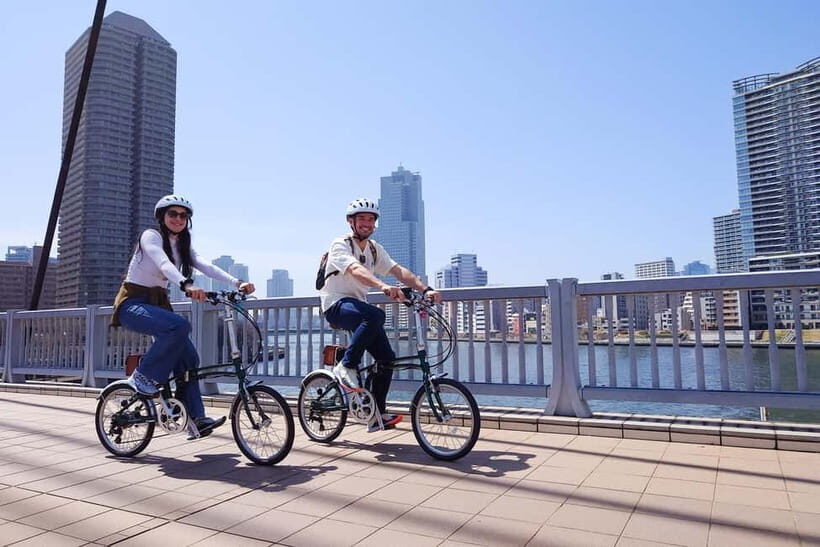
Let’s be honest: Tokyo can be a workout before you even start sightseeing. One of the biggest values here is that your tour starts and ends at your hotel. That means no “find the meeting point near the station” scavenger hunt. For your first day (or any day when you’re tired), this is huge.
When you book, you pick a pickup option from a long list of neighborhoods/cities. If your hotel is outside the service range, you can still discuss a start location—but additional charges may apply. Also, your guide coordinates with you directly through WhatsApp, iMessage, or SMS, so you’re not guessing when they’ll arrive.
On tour day, the meetup is straightforward: look for Kazuma in your hotel lobby about 5 minutes before your scheduled pickup time, and you’ll get helmet fit and safety instructions before you roll. Then you’re off—right from your doorstep—on roads that let you cover serious distance without feeling like you sprinted there.
You can also read our reviews of more cycling tours in Tokyo
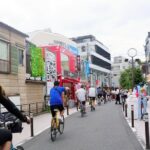
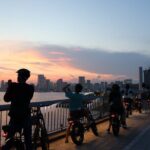
The E-Bike Makes Tokyo Feel Smaller (and More Enjoyable)
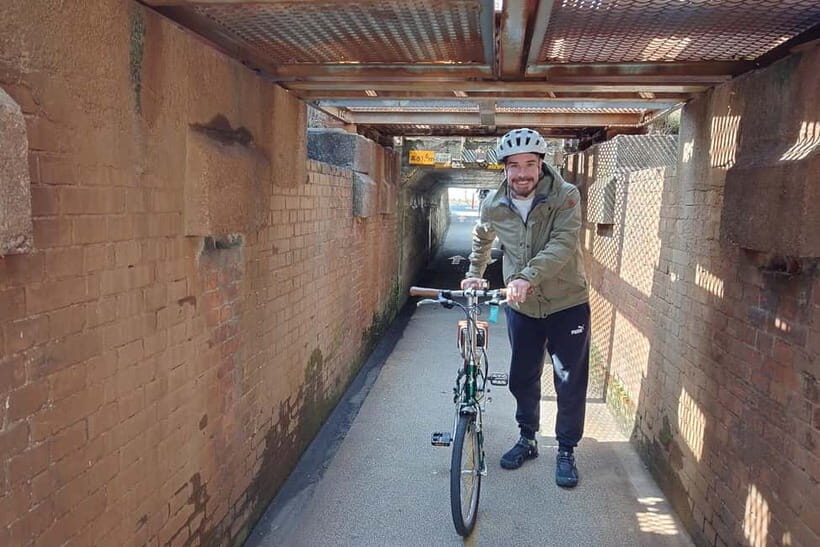
You ride an e-bike, not a normal bicycle, which changes the whole experience. The motor assists you when you pedal, so you can handle bigger distances without arriving at your destination sweaty and wrecked. It’s not just comfort—it’s more sightseeing time with less fatigue, which matters in a city that’s constantly asking you to walk.
The rides typically cover about 15–20 km over the 3 hours (your exact route depends on your customization). That distance is a lot for regular bikes, especially if you’re bouncing between viewpoints, bridges, and busy intersections. On the e-bike, you can keep a steady pace, follow the guide confidently, and still enjoy the ride rather than fighting it.
One more practical benefit: e-bikes help you enjoy Tokyo across different “modes” of streets. You can move from wide areas and iconic landmarks to tighter back-street segments without the mental fatigue of constantly dismounting or slowing down to recover. It’s a smoother way to experience the city in motion.
Private for a Reason: You Control the Route, Stops, and Tempo
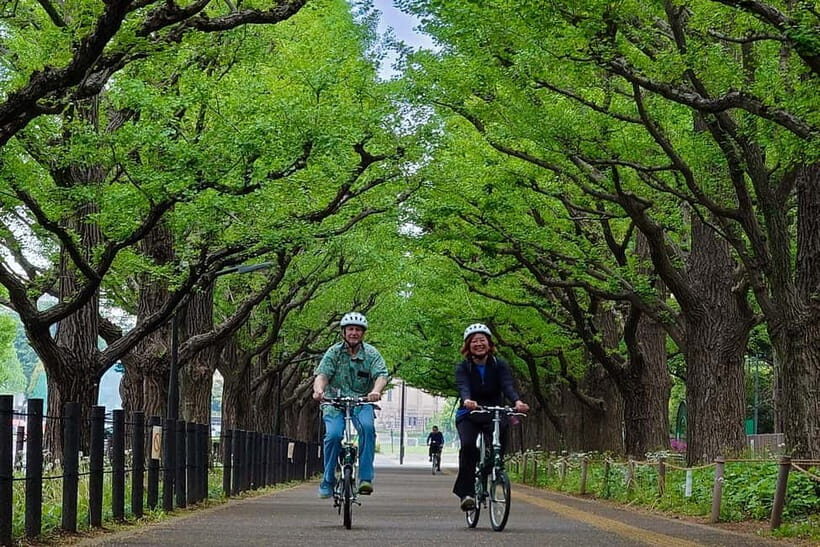
This is a private tour, meaning you’re not working around a big group’s speed or preferences. Your guide proposes a route, but you can go where you want at your pace—within the structure of a 3-hour experience.
Expect multiple short stops along the way for comments and photos. That stop rhythm is important. Tokyo can be overwhelming visually, and short pauses help your brain absorb what you’re seeing instead of just moving past it. You’ll also get water-break planning as needed, especially useful if you’re doing this on a full day itinerary.
Customization is part of the package. You can request changes like a different starting time, a longer duration, or visiting certain spots farther away from the original route. Just know that custom requests may come with additional fees, so if you have a must-see list, it’s worth mentioning it early so your guide can build something efficient.
Where You’ll Ride: The Tokyo Stops That Fit Different Moods
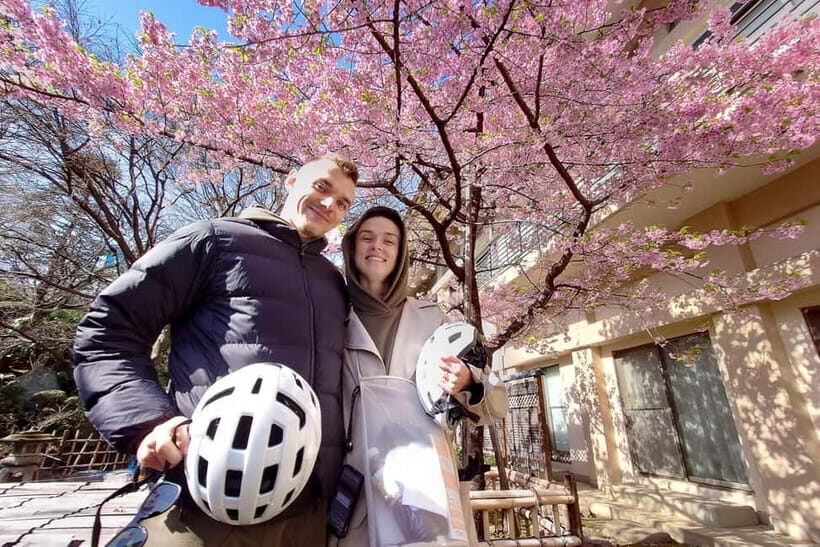
Your route is tailored, so you won’t necessarily see every place listed. But you can expect a mix of landmarks, scenic stretches, and neighborhood texture. Here’s how the most mentioned stops tend to feel, and what to watch for.
Tokyo Metropolitan Government Building: a guaranteed viewpoint pause
One stop is fixed as a photo stop: Tokyo Metropolitan Government Building for about 10 minutes. Even if you’ve seen photos online, the advantage here is timing and context. You’re stopping deliberately, not sprinting past. In a city of angles and towers, this gives you a clean “Tokyo overview” moment.
You can also read our reviews of more private tours in Tokyo

Shinjuku and back-street Tokyo (from skyscrapers to small alleys)
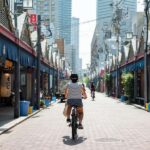
If your route leans toward Shinjuku, you might pass through the urban layer of tall buildings and energy, then cut into older texture. A standout example is Shinjuku Omoide Yokocho (Memory Lane). It’s the kind of place where Tokyo feels human-scaled—narrow lanes, storefront rhythm, and a vibe that’s instantly different from the surrounding streets.
You may also bike past Hatonomori Hachiman Shrine and other shrine stops. Shrines are more than a photo target. The experience is the shift: one minute you’re riding through modern streets, the next you’re near a calmer ritual space. Your guide’s context matters a lot here.
Olympic-era Tokyo and iconic avenues
Depending on your preferences, you may visit the area around National Stadium, a major Tokyo landmark tied to the Olympic story. Another potential highlight is Gaien Ginkgo Tree Avenue, which gives you a classic, scenic street feel—an easy place to slow down, look up, and absorb the city’s planned boulevards.
Aoyama and cherry-blossom style streets
Aoyama Cemetery Cherry Blossom Street is listed as a possible stop. Even if you’re not traveling in peak bloom, these streets are interesting because they’re built for walkers—more atmosphere, less “just pass through.” If your day includes this, consider it a calmer chapter between busier sights.
Shibuya Crossing and the famous Tokyo intersection energy
Shibuya Crossing is the headline stop for a reason: it’s Tokyo’s motion in one place. From your bike, you’ll see it as a system—people streams, signal timing, and the choreography of crowds. Even if intersections can feel chaotic on foot, the bike view gives you a different perspective.
Hibiya Park: classic western-style park vibes
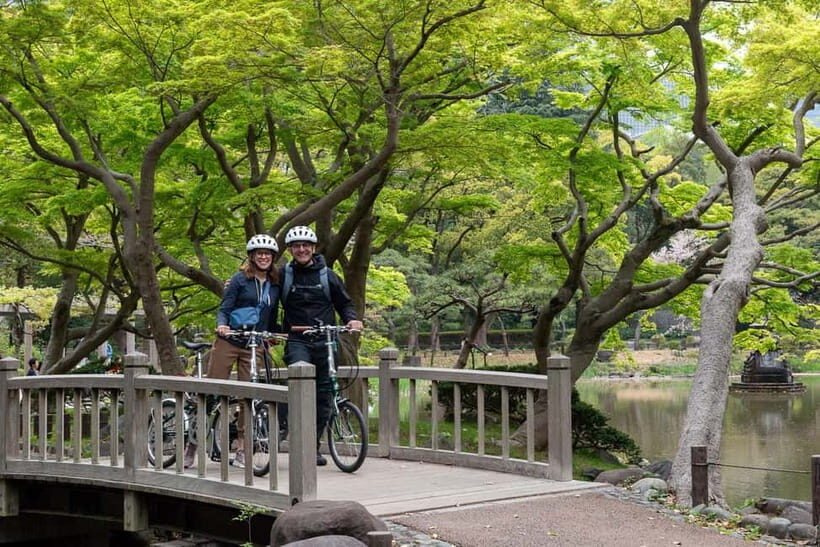
Hibiya Park (noted as the first western-style park in Tokyo) is a nice change of pace. Parks are where you reset: you get open space, cleaner sight lines, and a break from hard edges. In a 3-hour window, that pause keeps the tour from turning into a blur.
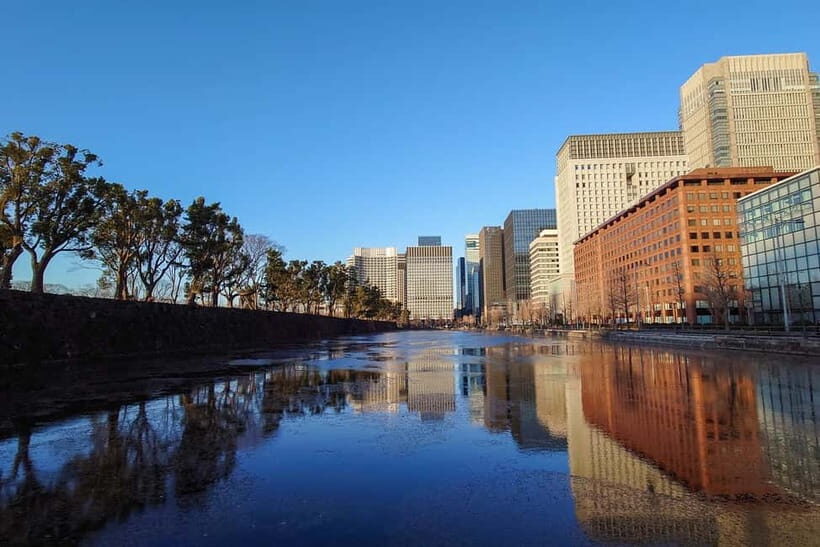
Imperial Palace area: big grounds, slower feeling
Imperial Palace is another possible highlight. You’re not just looking at a point—you’re moving through a broad, ceremonial space that changes your pace mentally. If you like Tokyo that feels formal and spacious, this is your kind of stop.
Tokyo Station, Nihonbashi, and “old-meets-new” center Tokyo
If the route includes Tokyo Station and Nihonbashi Bridge, you’ll get that center-of-the-city feeling where tradition and modern infrastructure overlap. Nihonbashi is especially good for understanding how Tokyo layers its geography—old routes, modern bustle, and that sense that the city has been built on repeat patterns.
Tsukishima and monja street culture
For food-scene texture (without needing to eat during the ride), Tsukuda Island and Tsukishima Monja Street are possible stops. This is where Tokyo’s everyday flavor shows up visually. Even if you don’t plan a meal on the tour, it’s useful for later planning because your guide’s context helps you understand what you’re looking at.
Zojo-ji and Tokyo Tower area: one of the most photogenic combos
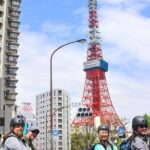
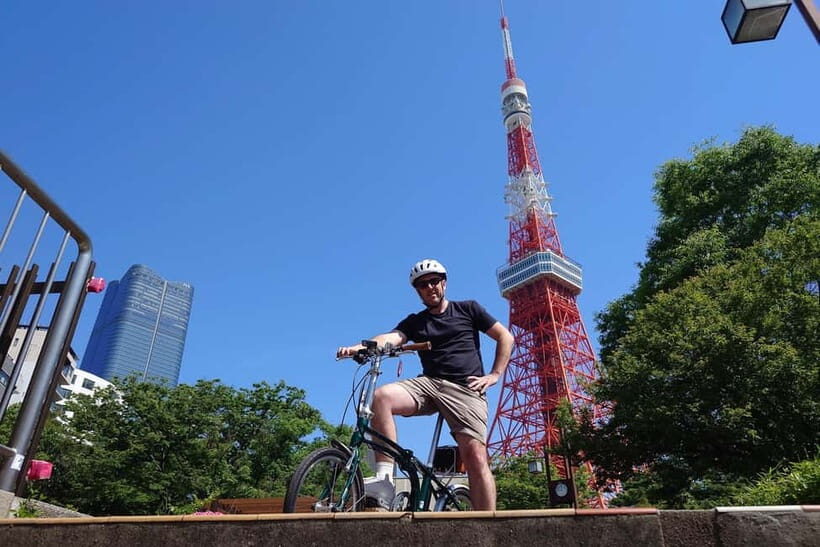
If your route takes you past Zojo-ji Temple and Tokyo Tower, you’ll get that iconic pairing: temple atmosphere with a nearby skyline landmark. It’s a good example of how Tokyo mixes the sacred and the dramatic without much distance between them.
Asakusa and Kaminarimon: the classic “start here” Tokyo moment
Asakusa Kaminarimon Gate is one of the most recognizable entry points for traditional Tokyo. When this stop appears on your route, it usually gives you a strong sense of place fast: crowds, color, and the immediate feeling of stepping into a different era.
Local energy far from the headlines: Kitasenju and rivers
You might also go to Kitasenju, described as a lively local neighborhood—often the type of place you wouldn’t pick by chance. Another possibility is cycling along Arakawa Riverside and Sumidagawa Riverside. River paths give you easier sight lines and calmer breathing room, especially helpful if you want Tokyo without constant tower-to-tower visual pressure.
Tokyo Skytree: seeing the city from the “future skyline” angle
Tokyo Skytree is listed as a possible stop. If it’s on your route, it’s usually a “big wow” moment. Even if you’re not going up into anything, standing near it gives you a clean skyline reference for the rest of your day.
What Kazuma Adds: Safety, Story, and Real Conversation
A tour can have good sights but weak delivery. Here, Kazuma’s impact shows up in the details: safety is clearly prioritized, and he gives context that makes landmarks make sense, not just look pretty. You’ll feel it in how the group moves—calm instruction, careful attention at turns, and steady pacing.
Several people highlighted that Kazuma mixes cultural and historical context with humor and conversation. That combo matters because Tokyo isn’t just a list of photos. It’s layers, and your guide helps you connect the layers while you ride.
You’ll also get practical help for the bike itself. Riders noted that Kazuma adjusts bikes to fit each person. That reduces the “wait, is this uncomfortable?” problem and helps you focus on the ride.
One extra value: he takes photos along the way and can share them after the tour. That’s useful because the rules mean you shouldn’t be filming while you ride, and you might not have the hands-free setup to capture everything.
Gear Rules and Safety Limits: What You Need Before You Meet the Helmet
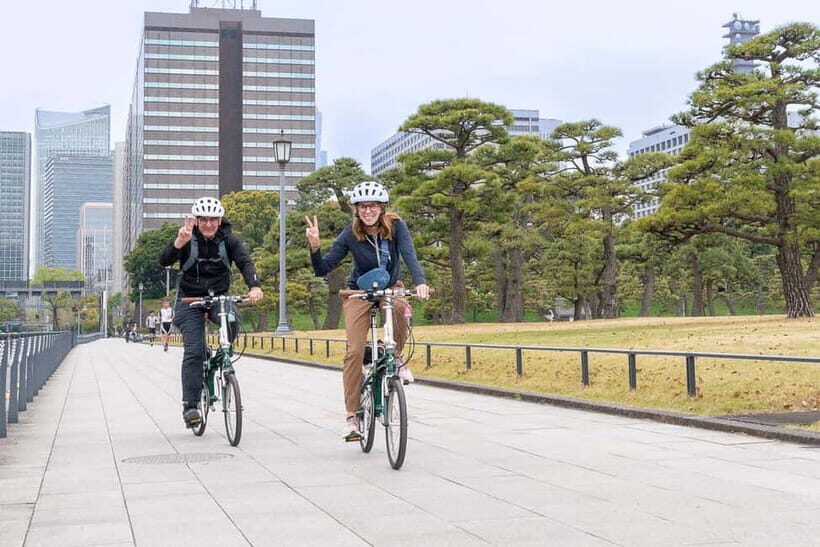
This tour is built for smooth cycling, so the rules are practical. You’ll wear a helmet and get safety instruction before you start.
Before you go, plan your outfit with the restrictions in mind:
- No sandals or flip-flops
- No high-heeled shoes
- No smoking
- No alcohol or drugs
- No skirts
- No alcoholic drinks in the vehicle
Also, the tour has clear physical requirements:
- Best fit: about 145–185 cm tall
- Not good if you are over 100 kg / 220 lbs
- Not suitable for children under 10
Finally, one riding etiquette point: no photo/video shooting while cycling. You’ll still get plenty of photo chances because the tour includes multiple short stops, but you’ll want to treat the ride itself as time to focus and listen.
Price and Value: Why $141 Works Better Than It Sounds
At $141 per person for 3 hours, this isn’t the cheapest way to see Tokyo. But it’s also not trying to be. You’re paying for a private guide, hotel pickup and return, an e-bike, a helmet, insurance, and a safety briefing—all in one package.
Here’s where the value lands for you:
- Hotel pickup/return can save time and taxi hassle, especially in dense areas.
- E-bike assist lets you cover more distance than a walking plan in the same window.
- Private pacing means you don’t miss stops because someone in the group is too slow or too fast.
- Included insurance and live guide reduce risk and decision-making stress.
Food and beverages aren’t included, so treat this as a sightseeing ride rather than a meal tour. If you want lunch built in, you’ll need to plan that separately.
And if you request far-away custom stops or schedule changes, additional fees may apply. So for best value, pick your top priorities ahead of time and let your guide shape a route that hits them efficiently.
Who Should Book This Tokyo E-Bike Tour (and Who Might Want Another Plan)
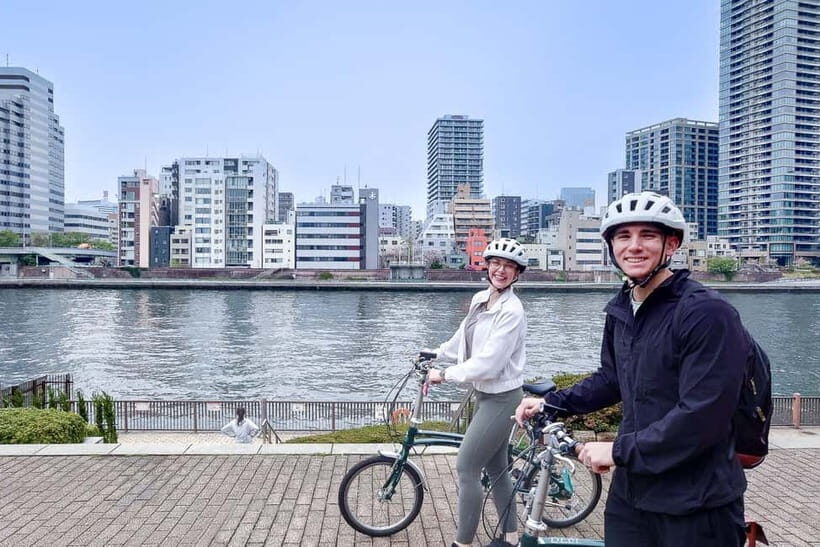
This is a strong fit if you:
- Want a first-time Tokyo orientation that feels easier than public transport chaos
- Like the idea of mixing iconic landmarks with quieter side streets
- Have limited time and want to cover more than walking allows
- Prefer a calmer, safer pace with a guide who watches out for logistics
It’s also great if you’re a beginner rider. People mentioned feeling safe even when they were new to biking, and the e-bike helps a lot.
You might think twice if you:
- Need something fully child-friendly (it’s not for kids under 10)
- Don’t meet the height or weight limits
- Can’t follow the clothing and safety rules (like no skirts, no sandals/flip-flops)
Should You Book Tokyo Bike Bliss?
If you want a practical way to see Tokyo without losing hours to transit logistics, I’d book this. The hotel pickup/return alone makes it feel less stressful than most tours. Add the e-bike assist and Kazuma’s focus on safety and clear storytelling, and you get a 3-hour plan that feels like a smart use of your time.
Book it if your priorities are:
- a personalized route,
- a comfortable ride you can actually enjoy,
- and photo stops with context rather than random hopping.
Skip it if your group needs strict accessibility accommodations beyond what’s listed, if you don’t meet the physical limits, or if you want a tour that includes meals inside the price.
FAQ
Does this e-bike tour start and end at my hotel?
Yes. The tour starts and ends at your hotel. If your hotel is outside the range, you can discuss a starting point, with additional charges applied.
How long is the Tokyo e-bike tour?
The duration is about 3 hours.
Is the tour private?
Yes, it is a private group tour, so the route and pacing can be tailored.
What’s included with the price?
You get hotel start, an e-bike, a helmet, safety instruction, insurance, and a live guide.
What languages does the guide speak?
The live guide speaks Japanese and English.
What places will we visit?
You’ll expect some mix of listed sights, and the route is tailored to your taste. One fixed stop is a photo stop at Tokyo Metropolitan Government Building.
What should I wear or avoid?
Avoid high-heeled shoes, sandals or flip-flops, smoking, alcohol or drugs, skirts, and alcoholic drinks in the vehicle.
Is the tour suitable for children?
No. It is not suitable for children under 10 years old.
How do I find the guide at pickup?
The operator contacts you via WhatsApp/iMessage/SMS. Your guide meets you in your hotel lobby about 5 minutes before your scheduled pickup time, holding a bike helmet.