REVIEW · TOKYO
Tokyo After 5: Local Eats, Drinks & Culture Walk
Book on GetYourGuide →Operated by Intrepid Urban Adventures - Japan · Bookable on GetYourGuide
Yakitori smoke guides you to dinner in Tokyo. You get two standout moments: Yurakucho yakitori in the after-work lanes and hands-on monja-yaki at Tsukishima Monja Town, plus a guided pass through a Depachika food hall and a wagashi stop that explains what seasonal sweets are really about. The one catch: there’s no built-in vegetarian, vegan, or gluten-free option, and the night includes walking and subway travel.
This is an intimate max 8-person experience, led by an English-speaking guide, and names like Tsunematsu Hidenori, Yuki (Snoopy), Kirir, and Meg show up in strong feedback for being both fun and patient. It starts at Mitsukoshi Ginza—look for the life-size sitting lion near the A7 ground exit—then ends back in Ginza, so you’re not juggling your whole night.
In This Review
- Key things that make this Tokyo After 5 walk worth it
- Finding The Lion Outside Mitsukoshi Ginza And Getting Your Bearings Fast
- Depachika 101: How Tokyoites Shop for Dinner-Style Snacks
- Yurakucho After Hours Yakitori: Why the Alleys Matter
- Tsukishima Monja Town: Cook Monja-yaki on the Hotplate
- Wagashi And the Meaning of Seasons in Small-Batch Sweets
- Price and Value for 3.5 Hours: What $89 Really Covers
- Walking, Stairs, And Food Limits: Who This Tour Works For
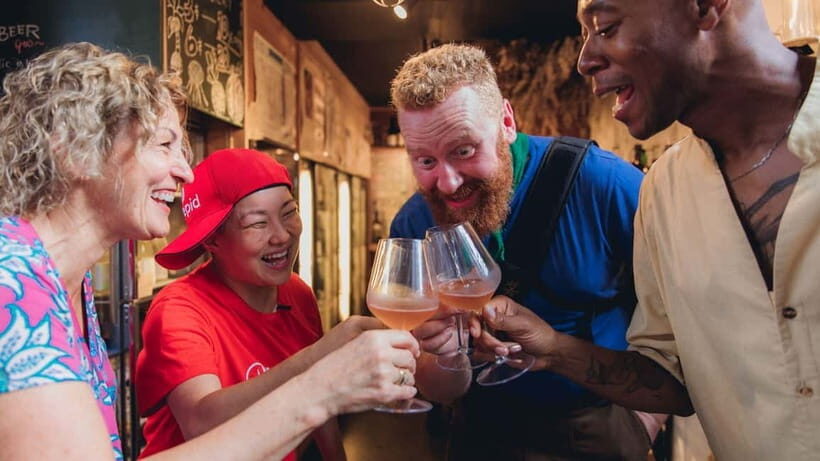
- Drinks, Chef Encounters, And The Small-Group Advantage
- Who Should Book This Tokyo After 5 Tour
- Should You Book Tokyo After 5: Local Eats, Drinks & Culture Walk?
- FAQ
- Where is the meeting point?
- How long is the tour?
- How many people are in the group?
- What food tastings are included?
- Are there any hands-on cooking parts?
- What drinks are included, and can under-20 travelers join?
- Is the tour suitable for vegetarians, vegans, or gluten-free diets?
- Does the price include transportation?
- Is the tour carbon neutral?
- Can I cancel, and is reserve-and-pay-later available?
Key things that make this Tokyo After 5 walk worth it
- Depachika food-hall orientation: Learn how locals shop and snack, not just what to eat.
- Yurakucho after-dark yakitori: Grilled skewers in office-worker lanes, with guidance on how it all works.
- Tsukishima Monja Town hotplate lesson: You cook monja-yaki yourself, right in the action.
- Wagashi with seasonal meaning: You taste sweets like wagashi and understand why seasons matter in Japan.
- Small-group “only locals know” spots: A tight group (8 max) makes it easier to ask questions and move smoothly.
- Guided transport built in: Two subway tickets are included, so you spend less time figuring out trains.
Finding The Lion Outside Mitsukoshi Ginza And Getting Your Bearings Fast
You start at Mitsukoshi Ginza department store, outside the life-size sitting lion statue. If you’re coming through Ginza Station, go up to the A7 exit and then to street level—this is where the landmark makes sense.
The practical upside of this meeting point is that Ginza is easy to reach by multiple subway lines (Tokyo Metro Ginza, Hibiya, and Marunouchi). The downside is simple: if you miss that lion or come out of the wrong exit, it can feel a little annoying to locate your group in the first few minutes.
You can also read our reviews of more walking tours in Tokyo
Depachika 101: How Tokyoites Shop for Dinner-Style Snacks
Before the smoky yakitori alley vibes, you get a guide-led stroll through a Depachika—those basement food halls that are basically Tokyo’s comfort-food headquarters. You’ll learn what to look for beyond the pretty packaging: how flavours are built for the after-work crowd, and how the etiquette around buying and sampling food matters.
You’ll also get a sense of how seasonal sweets fit into daily life. This isn’t just dessert time. It’s a cultural habit: choosing treats that match the time of year, then bringing that seasonal care home.
One thing I like about starting here: it sets you up for the rest of the night. You’re less likely to feel lost when the tour turns into hands-on cooking and sit-down meals, because you already understand the rhythm—buy, taste, compare, and snack like a local.
Yurakucho After Hours Yakitori: Why the Alleys Matter
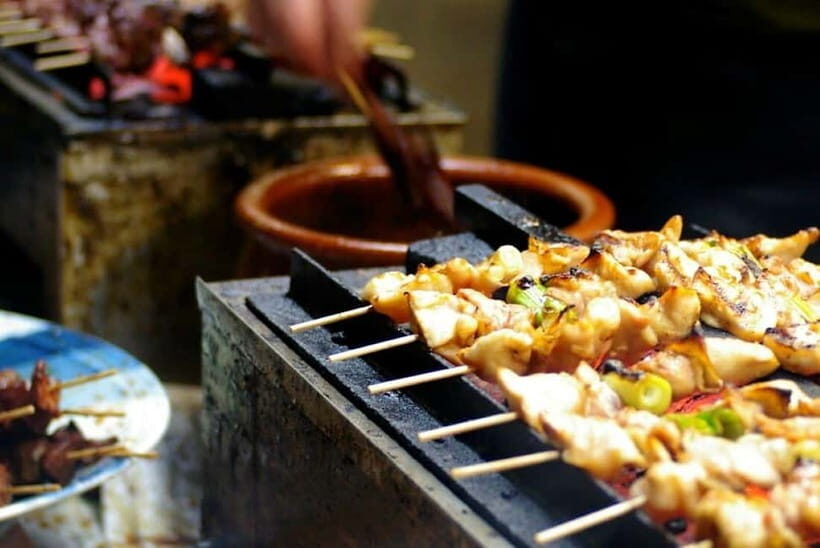
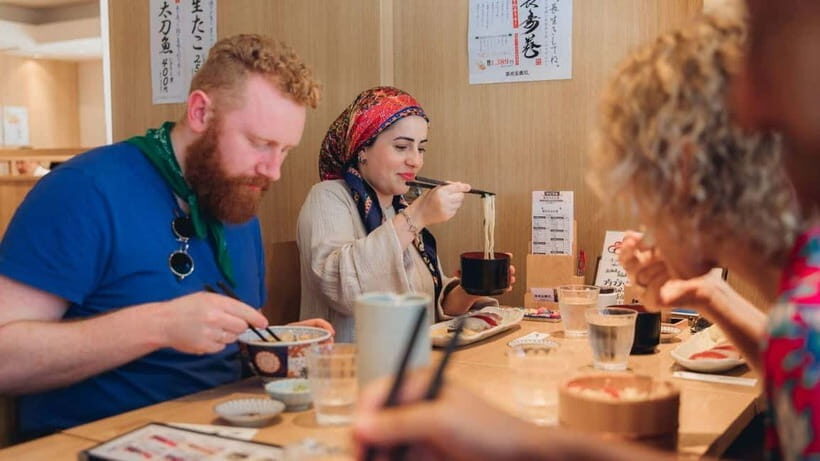
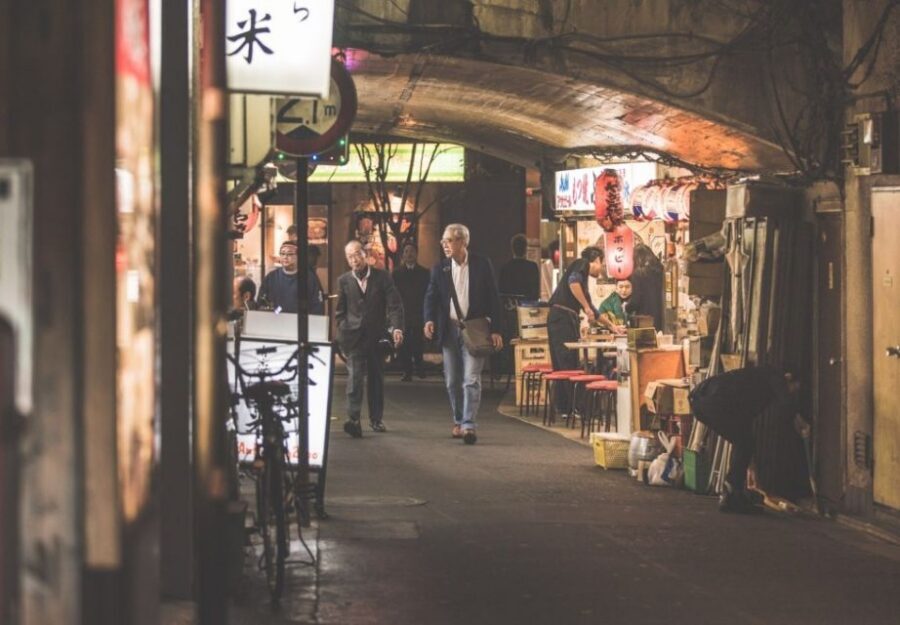
Next comes Yurakucho, famous for lantern-lit side streets where office workers go when the day finally lets up. This is where you taste freshly grilled yakitori, and you’ll learn what goes into skewers beyond the obvious: how they’re prepared, and why the smoky atmosphere is part of the experience.
This stop is a social one by design. The yakitori spots in these lanes tend to be small, and your guide keeps the group moving so you can focus on eating and understanding what you’re tasting. It’s also the kind of place where a guide helps you read the room—what people order, how they pace their meal, and why the alley culture feels so Tokyo.
A fair warning from real-world experience: some of these restaurants can be tight, and noise can happen in small dining rooms. If you’re sensitive to that, keep expectations realistic. You’re choosing flavour and atmosphere over quiet comfort.
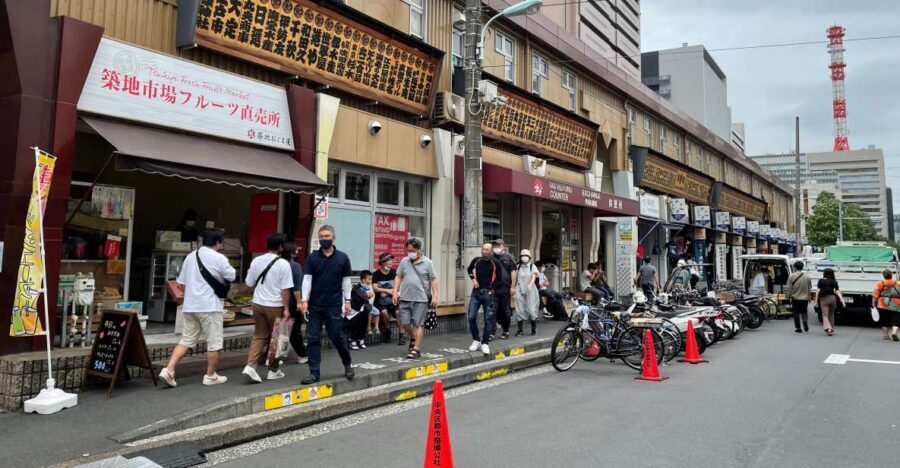
Tsukishima Monja Town: Cook Monja-yaki on the Hotplate
Then you shift from watching to doing. Tsukishima Monja Town is the birthplace area for monja-yaki, and the tour has you sit at the hotplate and cook yourself. This is not just a tasting—it’s a technique lesson, served with a front-row seat to how monja-yaki comes together.
Monja-yaki is famously cooked on a shared, heated surface, so you don’t just “order a dish.” You participate in the process. Your guide explains the method as you go, and that’s what makes it click fast even if you don’t speak Japanese.
You’ll also try yakitori and monja-yaki as part of the food plan. The value here is that you get both sides of the Japanese evening-eating story: skewer comfort food and the scrappy, mix-it-on-the-iron experience of monja-yaki. If you like learning by doing, this is the moment that usually makes people remember the tour.
Wagashi And the Meaning of Seasons in Small-Batch Sweets
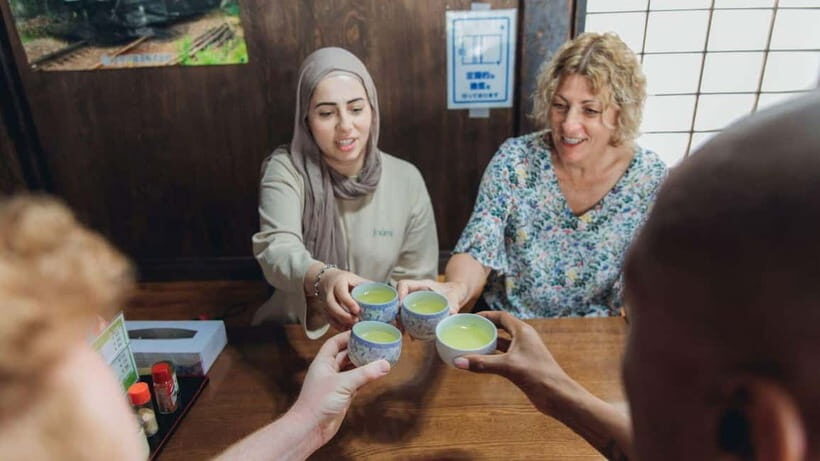
After the savoury hits, the tour finishes sweetly with a traditional wagashi stop. Here, your guide explains how seasons, ingredients, and aesthetics shape what you eat—why a particular sweet shows up when it does, and how it reflects the broader Japanese idea of seasonal awareness.
You’re likely to encounter wagashi made with red bean paste and paired with mochi-style ingredients, which can be a perfect match for some palates and not a favourite for others. That’s not a tour flaw—it’s just the nature of wagashi. If you’re curious, take a bite and let your guide explain what you’re tasting. If you already know you don’t like red bean sweets, you may want to mentally prepare yourself.
Still, this is a worthwhile cultural stop because wagashi isn’t treated as random candy. It’s treated as a seasonal craft, and the guide’s explanation turns the last course into something more than just sugar.




Price and Value for 3.5 Hours: What $89 Really Covers
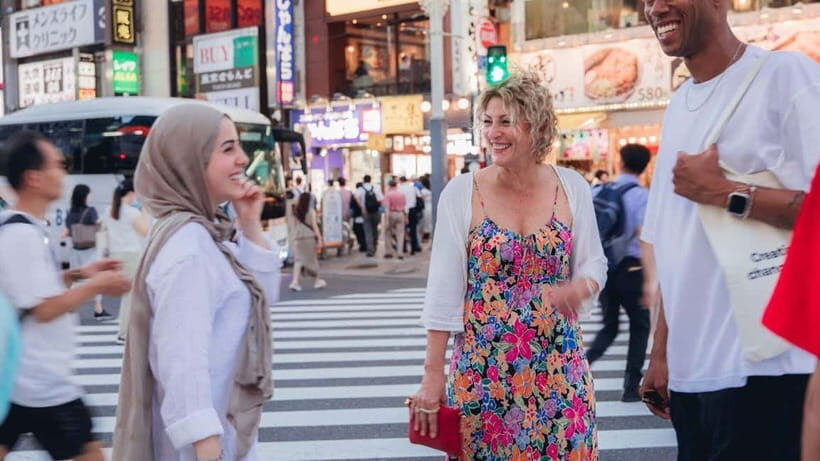
At $89 per person for about 210 minutes, you’re paying for more than the food. You’re paying for three structured tastings, two drinks, hands-on cooking, and guided access to small local spots you’d likely miss without help.
Here’s what that looks like in plain terms:
- Tastings of yakitori, monja-yaki, and wagashi
- Two local drinks (sake, beer, or soft drink)
- Public transportation support (two subway tickets)
- Hands-on monja-yaki and yakitori experience
- A guide who handles timing, questions, and how to order
Is it pricey? Compared to buying snacks solo, yes. Compared to paying separately for a guide plus multiple food stops plus transport plus a cooking experience, it can feel like good value—especially because the group stays small (8 max). You’re not just eating. You’re getting the context so the food actually lands.
One extra positive: this tour is described as carbon neutral and operated by a B Corp certified company. If sustainability matters to you, it’s a nice box checked while you’re eating your way through Tokyo.
Walking, Stairs, And Food Limits: Who This Tour Works For
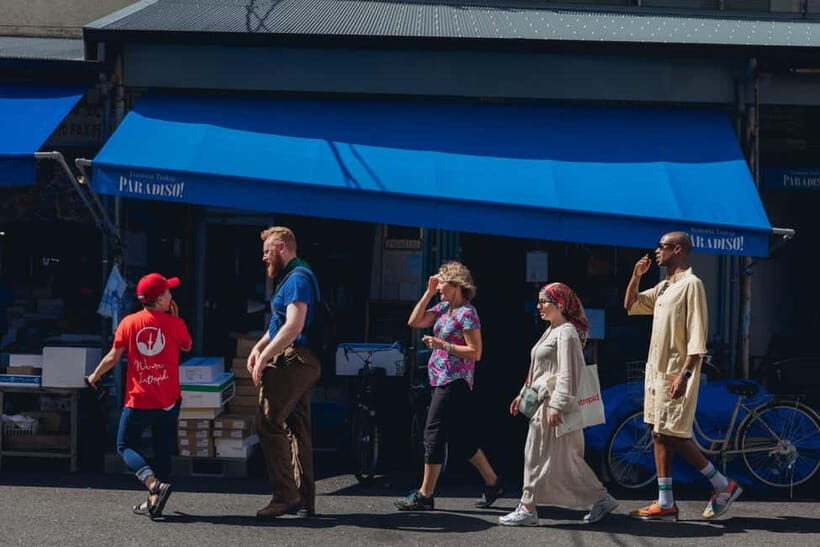
This isn’t a sit-in-a-cozy-café-only night. You’ll walk between neighbourhoods, and you’ll use the subway (with included tickets). That matters because some stations involve stairs, and at least one experienced participant found the walking tough due to distance and stairs.
If you have mobility limitations, plan carefully. The tour moves at a human pace, but it’s still a food-walk style itinerary.
Food-wise, don’t count on substitutions. The tour includes tastings at local places that may not be able to meet all dietary needs, and vegetarian, vegan, or gluten-free options are not available. So if you eat strictly, this likely won’t be your best match.
Alcohol rules are straightforward. The tour is for ages 12 and older, but Japan’s legal drinking age is 20, so people under 20 will be served non-alcoholic drinks only. Good news if you’re traveling with younger teens: you can still join and still get the same structure and tastings.
Drinks, Chef Encounters, And The Small-Group Advantage
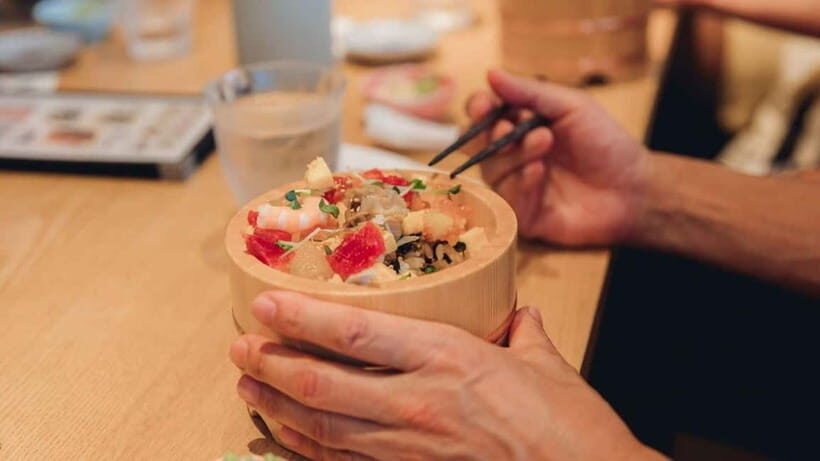
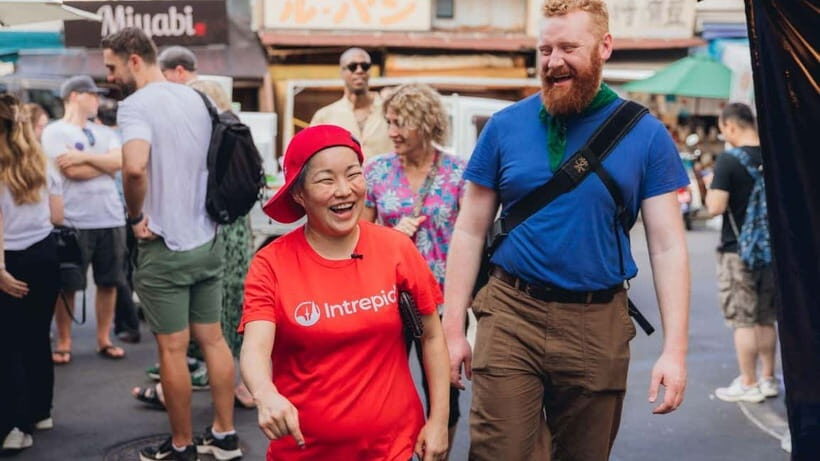
One of the quieter strengths here is the “small group” setup. With a maximum of 8 people, you get time to ask questions without feeling like you’re herding cats. That matters most in places where staff and space are limited.
Your included experience also includes meeting local chefs and exploring Tokyo’s neighbourhood food culture. That “meet the people” angle can turn a tasting into a story: why a dish is made a certain way, what gets ordered most often, and what locals treat as normal after work.
And yes, English guidance is part of the deal. People have praised guides for being patient and fun to talk with, including Tsunematsu Hidenori, Yuki (Snoopy), Kirir, and Meg. It’s a big reason this type of tour succeeds: you’re not just following a route, you’re understanding it.
Who Should Book This Tokyo After 5 Tour
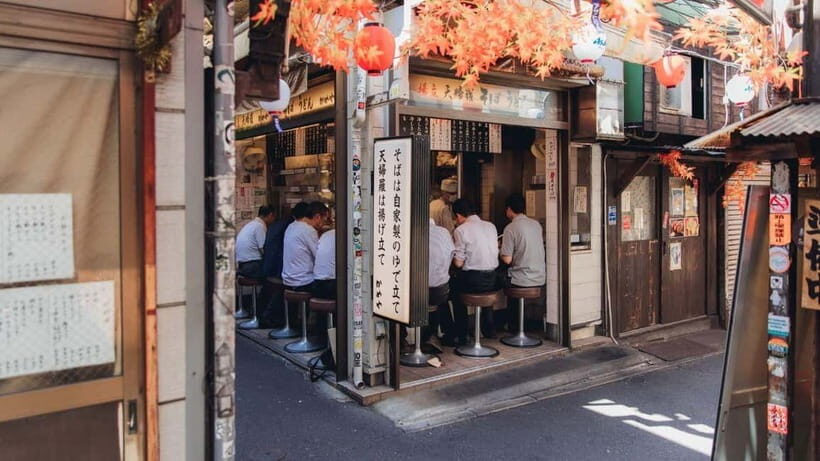
Book this if you want:
- A guided route through Tokyo’s evening food world without language stress
- Hands-on cooking, not just eating bite-sized samples
- A tour that starts with Depachika snacks and ends with seasonal wagashi meaning
- A small group (8 max) so questions are welcome
Skip it (or at least reconsider) if:
- You need vegetarian/vegan/gluten-free meals
- You can’t handle walking plus subway stairs
- You want a very quiet, high-comfort dining pace
- You strongly dislike red bean sweets or wagashi-style textures
Should You Book Tokyo After 5: Local Eats, Drinks & Culture Walk?
I’d book it if your goal is an easy first night in Tokyo where you actually learn how people eat after work. The mix of Depachika education, Yurakucho yakitori, and hotplate monja-yaki gives you variety in the way only a guided food sequence can.
If your diet is restrictive or you need step-free logistics, you’ll probably feel frustrated. If you’re okay with standard Japanese food and a lively atmosphere, this tour is a solid way to turn dinner into a cultural lesson—without overplanning your evening.
FAQ
Where is the meeting point?
You meet at Mitsukoshi Ginza department store in front of the life-size sitting Lion statue outside. Ginza Station’s A7 exit brings you up to street level where you can see it.
How long is the tour?
The tour lasts about 210 minutes.
How many people are in the group?
The group is limited to a maximum of 8 participants.
What food tastings are included?
You’ll taste three local foods: yakitori, monja-yaki, and wagashi.
Are there any hands-on cooking parts?
Yes. The tour includes a hands-on experience with monja-yaki and yakitori.
What drinks are included, and can under-20 travelers join?
The tour includes two local drinks: sake, beer, or soft drink. Travelers must be 12 and older, and since Japan’s legal drinking age is 20, customers under 20 are served non-alcoholic drinks only.
Is the tour suitable for vegetarians, vegans, or gluten-free diets?
No. Vegetarian, Vegan, or Gluten Free options are not available on this tour, and some establishments may not be able to accommodate all dietary requirements.
Does the price include transportation?
Yes. Public transportation is included, with two subway tickets.
Is the tour carbon neutral?
The tour is described as carbon neutral and is operated by a B Corp certified company committed to using travel as a force for good.
Can I cancel, and is reserve-and-pay-later available?
Yes. Free cancellation is available up to 24 hours in advance for a full refund, and you can reserve now and pay later.