REVIEW · TOKYO
Tokyo Deep Inside Cycle Tour~3 Hours E Bike Tour around Tokyo
Book on Viator →Operated by TOKYO ACTIVE TOURS · Bookable on Viator
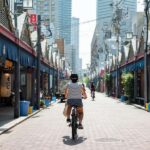
Tokyo changes fast on two wheels. This 3-hour e-bike loop threads the needle between Edo-era history and modern Tokyo, with an easy ride that still gets you far beyond what walking alone can do. You’ll start near Tokyo Station, then glide through neighborhood after neighborhood—snacks included—without the stress of figuring out routes on foot.
What I love most is how much you fit in without wrecking your legs. You get a guided path that hits heavyweight sights like Kanda Shrine and the Imperial Palace area, plus smaller stops that make Tokyo feel real, not staged.
One thing to keep in mind: you’ll want your own bottled water. It’s not included, and with e-bikes you may cover distance faster than you expect, even at an easy pace.
In This Review
- Key Highlights You’ll Feel Right Away
- Tokyo on a 3-Hour E-Bike Loop: What You Really Get
- Price and Value: Why $83.23 Can Work
- Before You Ride: Bikes, Helmets, and the Pace
- Step-by-Step Through Central Tokyo (Stop by Stop)
- 1) Meeting at Tokyo Station, then easing into the “Tokyo” view
- 2) Kanda Bridge Gate stone wall: Edo-era roots under your wheels
- 3) Kanda Matsuya: old-town feel close to skyscrapers
- 4) Akihabara: from postwar black market origins to today’s tech energy
- 5) Kanda Shrine: Edo culture, festivals, and the Kanda Festival angle
- 6) Hijiribashi Bridge and Ochanomizu-area perspective
- 7) Snack break at Kanda Daruma: taiyaki, hot and simple
- 8) Kanda Jinbocho: antiquarian book district energy
- 9) Yasukuni Shrine: big torii, shrine grounds, and a restroom break
- 10) Kitanomaru Park: former Edo Castle site and the Budokan area
- 11) Imperial Palace area: why the old order disappeared
- 12) Sakurada-mon Gate: scenery plus a sense of scale
- 13) Marunouchi Building art stop: a final dose of “time and memory”
- What Makes This Tour Different From a Basic Sightseeing Loop
- Safety and Comfort: How Central Tokyo Fits on Two Wheels
- Practical Tips to Get the Most Out of the Ride
- Who Should Book This Tokyo E-Bike Tour
- Should You Book It?
- FAQ
- How long is the Tokyo Deep Inside Cycle Tour?
- What does the price include?
- What snack is provided during the tour?
- Is the e-bike tour difficult?
- Where does the tour start and end?
- What time does it begin?
- Is bottled water provided?
- Is there a minimum height requirement?
- What happens if it rains?
- How many people are in the tour group?
Key Highlights You’ll Feel Right Away

- E-bike ease for mixed experience levels, so you’re not stuck walking half the day
- A tight route through Tokyo Station, Akihabara, Kanda Shrine, Yasukuni, and the Imperial Palace perimeter
- Taiyaki snack break with your choice of anko or cream to fuel the ride
- Small group (max 4), which usually means more attention and easier photo stops
- Stops are timed for flow—often around 10–15 minutes—so you keep moving, not waiting
- Included bicycle accident insurance, plus helmet for a lower-stress ride
Tokyo on a 3-Hour E-Bike Loop: What You Really Get

This is the kind of Tokyo tour that makes sense on day one—or anytime you want momentum. You’re not just collecting landmarks. You’re getting a guided story of how the city evolved from Edo (the old samurai-era name) into the modern metropolis.
And you do it at a pace that feels humane. E-bikes mean you can pedal without turning it into a workout class. You’ll still do some cycling, plus a bit of walking, but it’s structured so you can enjoy the sights instead of just chasing them.
The ride also hits a smart sweet spot: central Tokyo. That matters because central Tokyo is where neighborhoods overlap, street life is dense, and the details are easiest to miss if you’re traveling solo with a map app.
You can also read our reviews of more cycling tours in Tokyo
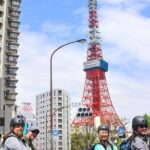
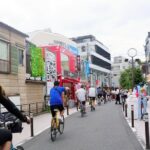
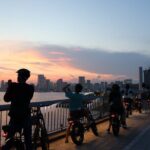
Price and Value: Why $83.23 Can Work

At about $83.23 per person for an approx. 3-hour experience, the value comes from what’s bundled and what’s saved.
You’re paying for:
- the e-bike + helmet
- a guide
- snacks (taiyaki)
- bicycle insurance fee
For a city like Tokyo, the guide portion is the real engine. It saves you from the common solo problem: you end up seeing only the spots that are convenient to reach, then skipping the in-between streets that actually make Tokyo fun.
The route also covers more ground than most guided walking tours in the same time slot. In one account, the ride added up to about 6.8 miles / over 10 km, which is a lot for a short afternoon when you’re also stopping for photos and explanations.
Before You Ride: Bikes, Helmets, and the Pace

The tour is built for people with different comfort levels on bicycles. The e-bike assistance is there for a reason: you’re meant to enjoy the route, not grind your way through it.
You’ll get:
- an e-bike
- a helmet
- bicycle accident insurance (included in the price)
Group size is up to 4 travelers, and the tour is shared. That’s good news if you like quieter tours. It also means your guide may adjust pacing if someone in another group needs extra time, especially if there are less-experienced riders.
One detail I appreciate: you’re not locked into a nonstop speed-fest. The schedule includes short stays and travel segments, with breaks built in—so you can focus on learning and seeing rather than constantly checking your watch.
Step-by-Step Through Central Tokyo (Stop by Stop)

This route reads like a guided walk through Tokyo’s layers—stone walls, merchant alleys, pop-culture streets, major shrines, and the former footprint of Edo Castle. Here’s how the flow feels in practice.
1) Meeting at Tokyo Station, then easing into the “Tokyo” view
You start in the Marunouchi area at the JTB Marunouchi Store, then ride out from the Tokyo Central Railway Station zone. The idea here is simple: get oriented quickly, then move from the modern station skyline into older layers that still shape the city.
Even if you know Tokyo Station well, this is where the guide’s context starts paying off. You begin with a place everyone recognizes, then you learn how it connects to older urban decisions.
A few more Tokyo tours and experiences worth a look

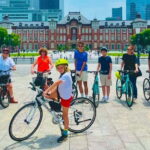
2) Kanda Bridge Gate stone wall: Edo-era roots under your wheels
Next is the remains of the Kanda Bridge Gate stone wall. It’s a short stop, but it’s the kind of place where a guide helps you understand why it matters. You’ll connect the area to the Nihonbashi River and to how Edo town life developed from waterways and trade routes.
This is where the tour starts doing what good guided tours do: turning “I walked past this” into “I get why it’s here.”
3) Kanda Matsuya: old-town feel close to skyscrapers
Then you roll through Kanda Matsuya, a neighborhood framed as a “preserve the old” kind of area. You’ll ride through narrower alleys lined with the sort of everyday texture that doesn’t show up well in quick photo tours.
If you like street-level Tokyo—small shops, tucked-in lanes, and the feeling that real people live here—this is a highlight segment.
4) Akihabara: from postwar black market origins to today’s tech energy
You’ll hit Akihabara, and the tour treats it as more than neon electronics. It ties the neighborhood’s evolution to postwar history and the idea of changing flexibly with the times.
Akihabara can overwhelm your senses if you’re just wandering. On this tour, you get a guided on-ramp into what the place represents, without spending your whole time trying to decide where to look.
5) Kanda Shrine: Edo culture, festivals, and the Kanda Festival angle
At Kanda Shrine (Kanda Myojin) you’ll learn about its Edo-period role and the Kanda Festival connection. This is also one of the longer stops (around 35 minutes), which gives you breathing room to actually absorb shrine atmosphere rather than sprinting for the photo.
If you’ve never done a guided shrine stop, this is a good one to start with. Shrines are more meaningful when you understand their place in the city’s old identity.
6) Hijiribashi Bridge and Ochanomizu-area perspective
Then you pass by Hijiribashi Bridge, with views over Ochanomizu Station. The focus is on the student-town history vibe—how the area shifted into a place associated with study and daily life.
It’s quick (about 10 minutes total stop time), but it helps Tokyo feel like lived-in geography instead of just points on a map.
7) Snack break at Kanda Daruma: taiyaki, hot and simple
This is the moment you’ll probably start looking forward to. At Kanda Daruma, you stop for a snack: taiyaki, where you choose anko (red bean paste) or cream.
It’s not a big fancy tasting. It’s a classic street sweet, which is exactly why it works. Between cycling segments, it gives you a small energy reset and a nice cultural moment without turning the tour into a food crawl.
8) Kanda Jinbocho: antiquarian book district energy
You’ll cycle through Kanda Jinbocho, known for antiquarian books and a long-running secondhand bookstore district. The tour treats it like one of the world’s largest such areas, which is impressive, but the real value is the vibe: narrow lanes, shop windows, and the feeling of browsing history.
This is a short segment (about 10 minutes travel time, with no long stay), so I’d treat it as a “feel it now” stop rather than a deep shopping moment.
9) Yasukuni Shrine: big torii, shrine grounds, and a restroom break
At Yasukuni Shrine, you’ll bike under a major torii gate and experience the grounds. The stop includes a restroom break, and the time here is tight but practical (about 5 minutes stay plus travel).
This is one of those Tokyo sights where the scale hits you. Even if you’re not a shrine expert, you’ll likely feel the change in atmosphere as you move through the grounds.
10) Kitanomaru Park: former Edo Castle site and the Budokan area
Next is Kitanomaru Park, tied to the former site of Edo Castle’s Kitanomaru. You’ll ride through by bicycle, then pass the Nippon Budokan and other buildings.
This segment helps connect the modern city to its old political center. Tokyo loves reinvention, and this is where you see that reinvention in the shape of open space and major civic landmarks.
11) Imperial Palace area: why the old order disappeared
At the Imperial Palace, you’ll hear the story of how this site was originally Edo Castle, plus why Japan’s image of samurai-era identity changed over time.
The stop is around 15 minutes, so you’re not drowning in facts. You’re getting the core story that makes the palace perimeter meaningful, not just scenic.
12) Sakurada-mon Gate: scenery plus a sense of scale
You pass Sakuradamon Gate, described as the largest gate in the Imperial Palace, then take in scenery around the outer perimeter. This is shorter (about 10 minutes travel/ride segment).
It’s a good buffer after the main Imperial Palace introduction—like getting a second look that helps your brain register what you’re actually standing near.
13) Marunouchi Building art stop: a final dose of “time and memory”
After returning bikes at Marunouchi Building, you walk to a floor inside Marunouchi for an art exhibit themed around Time and Memory.
This last stop is a nice way to end without pushing you into heavy museum time. It also works as a mood reset: you’ve been moving through eras on the ride, and the art theme matches that.
What Makes This Tour Different From a Basic Sightseeing Loop

Plenty of Tokyo tours cover similar neighborhoods. This one feels more structured around Tokyo’s decision points: how places changed, why they stayed, and how everyday life evolved alongside grand institutions.
The guide’s role matters a lot. In the feedback I saw from guides, safety and pacing are clearly part of the teaching style. One rider described how a guide was patient and cautious even after knee surgery, which signals that the tour takes real rider comfort seriously—not just “follow me and pedal.”
Also, I like that the tour mixes big-name areas (Akihabara, Imperial Palace perimeter, Tokyo Station) with street-level Tokyo (Kanda alleys, book district browsing vibes). That blend is what helps Tokyo feel less like a checklist and more like a place.
Safety and Comfort: How Central Tokyo Fits on Two Wheels

Central Tokyo looks friendly until you’re actually moving through it. Cars, pedestrians, and crowded crossings can make even calm routes feel intense.
Here’s why I’d feel comfortable recommending this tour to most people: e-bikes reduce the effort and improve control, and the group is small. With only up to 4 travelers, you’re less likely to feel rushed or squeezed into a crowded formation.
Still, you should read the practical notes:
- You can’t join if you’re under 145 cm in height.
- If weather turns unsafe, you may switch plans (rain day option) or get a refund.
- You’ll want to show up on time, because late arrivals can get canceled for the day.
One more practical note: this is a mix of cycling and some walking, and during walking segments the tour uses the subway to connect areas efficiently. That makes the schedule smarter, but it also means you’ll want to be comfortable with quick transitions.
Practical Tips to Get the Most Out of the Ride

- Bring your own bottled water, since it isn’t included.
- Wear something you can move in easily; you’ll cycle enough that you’ll feel better in comfy clothes.
- Have your camera ready, but don’t rush every stop. The best photos are the ones you pause for after you understand what you’re looking at.
- If you like history, lean into it. This tour is strongest when you connect what you see (stone wall, gates, shrine grounds) to how Tokyo formed.
Who Should Book This Tokyo E-Bike Tour

This is a strong match if you:
- want a central Tokyo highlight route without spending the day on trains and walking
- like history, but don’t want a lecture-heavy tour
- want an activity that’s fun even if you’ve already seen some mainstream sights
- want a break from step-counting, especially after long walking days
It’s also a good option for older travelers or anyone returning from an injury, as long as you meet the height requirement and you feel comfortable biking at an easy pace.
Should You Book It?
If you’re trying to maximize a short Tokyo window, I’d book this. The mix of Edo-era context, real neighborhood atmosphere, and efficient sightseeing makes it feel like a smart use of time—not just a novelty bike ride.
I’d only hesitate if you:
- hate cycling, even with e-bike assistance
- need lots of long museum time (this isn’t that kind of tour)
- forget your own water and expect it to be provided
For most people, especially first-timers or anyone who wants a structured intro to Tokyo’s center, this tour is a solid “yes.”
FAQ
How long is the Tokyo Deep Inside Cycle Tour?
It runs for about 3 hours.
What does the price include?
It includes use of the bicycle and helmet, bicycle insurance fee, and taiyaki snacks.
What snack is provided during the tour?
You’ll have taiyaki, and you can choose either anko or cream.
Is the e-bike tour difficult?
It’s designed to be easy for riders of all experience levels, and it’s meant for getting active without much exertion.
Where does the tour start and end?
It starts at the JTB Marunouchi Store near the Marunouchi South Exit of JR Tokyo Station, and it ends at the Marunouchi Building.
What time does it begin?
The start time is 1:00 pm.
Is bottled water provided?
No. Bottled water isn’t included, so bring your own if you want it.
Is there a minimum height requirement?
Yes. People under 145 cm in height are not allowed.
What happens if it rains?
If it can’t be held due to rain, you can choose a Rain Day Limited Walking Route or receive a refund.
How many people are in the tour group?
The maximum is 4 travelers.