REVIEW · TOKYO
Tokyo : Hand-Roll Sushi Class, Skytree view & Asakusa Tour
Book on Viator →Operated by JAPAN TRAVEL STAGE · Bookable on Viator
Tokyo’s skyline meets sushi making today. This is a private 3.5-hour mix of big views and real food time: you’ll hit Tokyo Skytree first, then explore Asakusa’s main sights, and finish with a hands-on hand-roll sushi class at Hand Roll Tokyo Asakusa. Everything moves at your pace with a guide who stays focused on just your group.
I especially like the fast pass style entry to the observation deck at Skytree, which helps you spend your time looking, not waiting. The other big win is the private format—no crowd herding, just your guide steering the stops and keeping the flow smooth. One thing to think about: the experience depends on good weather, and the whole route is tight enough that you won’t have long stretches to wander off-script.
In This Review
- Key highlights and why they matter
- Skytree Observation Deck: Big Views With Less Standing Around
- Asakusa’s Senso-ji in 30 Minutes: The Classics, Not the Confusion
- Nakamise Street (about 250 Meters) for Souvenirs and Snack Culture
- Kappabashi Kitchen Town: Tools, Not Tourist Trinkets
- Hand Roll Sushi at Hand Roll Tokyo Asakusa: The Part That Gets Fun Fast
- How This Two-in-One Private Tour Works for Your Time
- Price and Value: What You’re Really Paying For
- The Best Fit: Who Will Enjoy This Most?
- Booking Smart and Weather Reality
- Should You Book This Tokyo Skytree + Asakusa Hand-Roll Sushi Tour?
- FAQ
- What’s included in the Tokyo Skytree observation deck stop?
- Is the Senso-ji Temple admission included?
- How much time do we spend in Asakusa shopping areas?
- What happens during the hand-roll sushi class?
- Can I choose my sushi fillings?
- Is this tour private?
- What time does the tour start and where do I meet?
- What if the weather is bad?
Key highlights and why they matter
- Skytree observation deck, handled with fast pass entry so you can get your view time quickly
- Senso-ji Temple stops built around the highlights like the five-story pagoda and Hozomon Gate
- Nakamise Street at a manageable length (about a 250-meter shopping/snack corridor)
- Kappabashi kitchenware shopping street where you’ll see tools that food professionals use
- A fun, ingredient-choice hand-roll class with options like salmon and avocado, or tuna and cucumber
- Private tour format for your group only—less friction, more attention
Skytree Observation Deck: Big Views With Less Standing Around
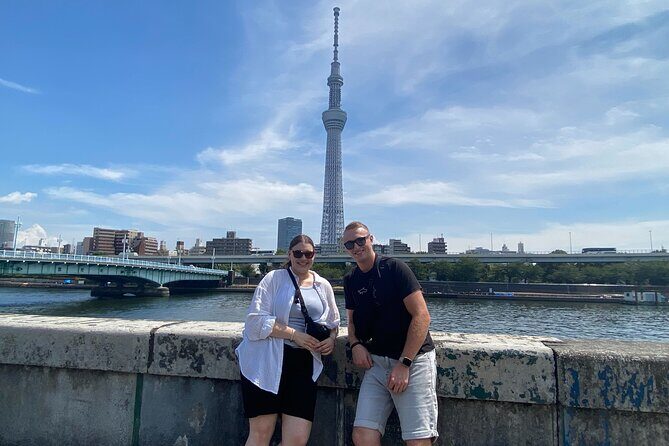
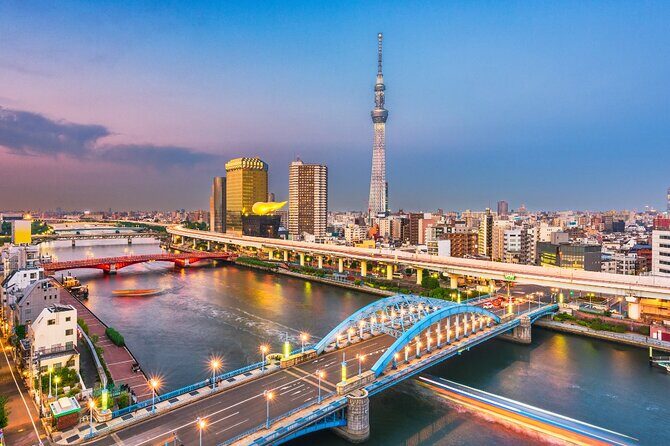
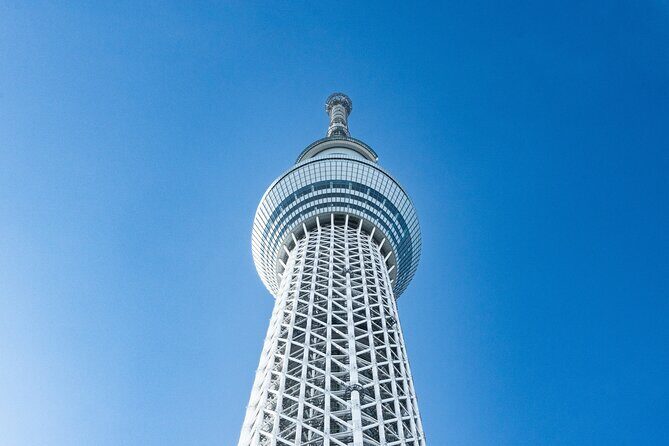
Tokyo Skytree is one of those structures you can feel before you fully see it. As you get closer, the scale jumps from impressive to almost cartoonish—in the best way. Your ticket time is planned so you can use the included fast pass to get up to the observation deck without getting stuck in the slowest part of the process.
Once you’re up there, you get the payoff: the grid of Tokyo stretching out, with neighborhoods stacking into layers. Even if you only spend a short stretch at the viewpoint, it helps you read the city for the rest of the afternoon. You’ll walk through Asakusa after this, and having that “map in the mind” makes the streets feel more connected.
Practical note: your time here is about one hour total, and the observation deck is ticket-included. Wear shoes you’re comfortable in. You’re doing a chain of stops after this, not a single long sightseeing block.
A few more Tokyo tours and experiences worth a look

Asakusa’s Senso-ji in 30 Minutes: The Classics, Not the Confusion
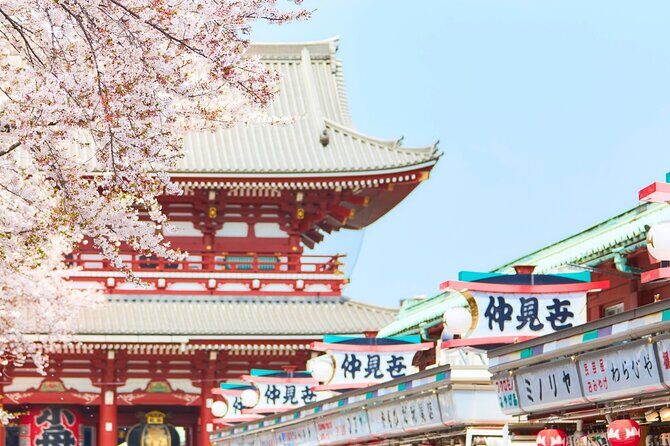
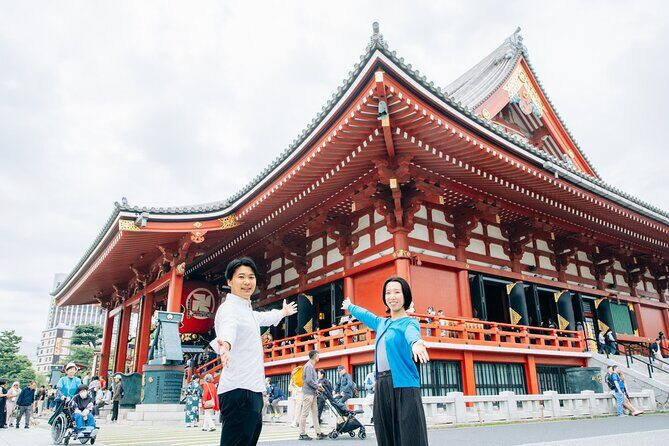
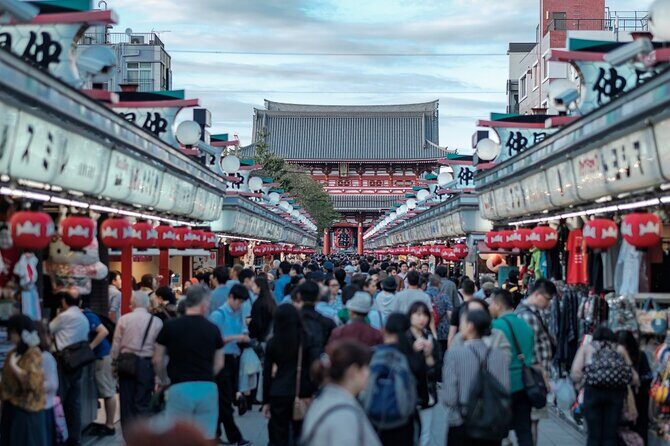
After Skytree, you head into Asakusa, where Senso-ji Temple is the anchor. This temple dates back to 645 AD, so even in a short visit, you get the sense you’re stepping into something that has lasted through countless Tokyo changes. In your guided time, you’ll focus on the main hall area and the key photo-and-landmark pieces—especially the Hozomon Gate and the five-story pagoda.
Thirty minutes isn’t enough to see everything in perfect detail, but it is enough to hit the highlights and understand what you’re looking at. That’s where the private guide helps: you’re not just walking; you’re being pointed to the features that matter, so your time doesn’t disappear into aimless wandering.
If you’re sensitive to crowds, this is also why a private flow can feel calmer. Your guide can keep you moving through the busiest pockets while still letting you stop for photos. That matters in Asakusa, where foot traffic can spike.
Nakamise Street (about 250 Meters) for Souvenirs and Snack Culture
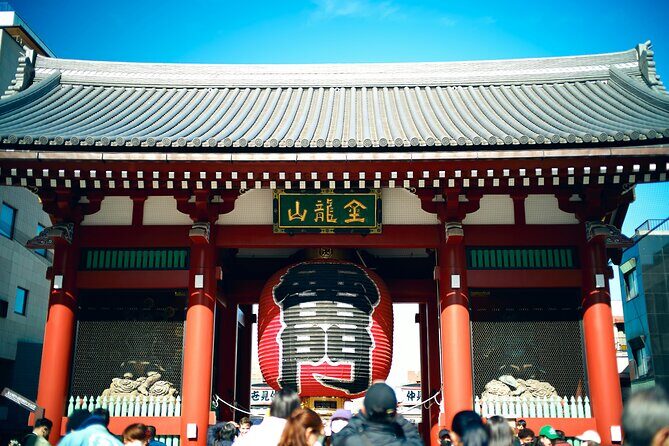
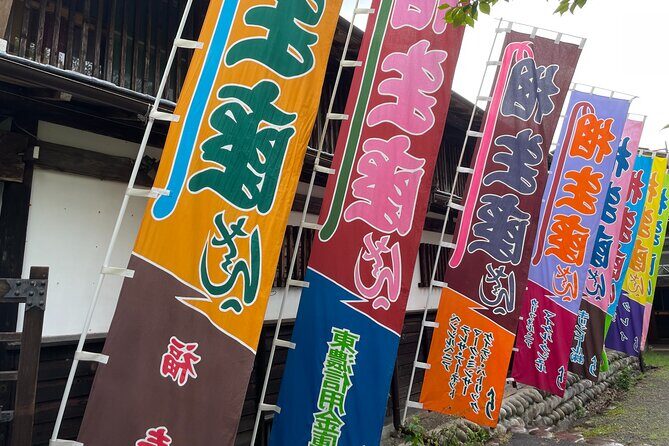
Next comes Shin Nakamise Street, a roughly 250-meter shopping stretch lined with souvenir shops and snack stalls. What I like about this stop is the “small enough to finish” length. You can sample the atmosphere and pick a few things without turning it into a half-day job.
The stalls here have deep roots in the Edo period, so you’ll notice the mix of tradition and modern tourism. Your guide’s job isn’t just to point at shops—it helps you choose souvenirs and understand the local food culture so your choices feel less random.
A good way to use this portion is to treat it like a tasting plan with training wheels: decide what you want before you start paying too much attention to every shiny package. If you want edible souvenirs, aim for a couple you can eat immediately. If you want gifts, pick items that travel well. You’ll thank yourself later when you’re not trying to pack something that melts, crumbs, or leaks.
Kappabashi Kitchen Town: Tools, Not Tourist Trinkets
Kappabashi is Tokyo’s kitchenware lane, and it’s a totally different vibe from the temple-and-souvenir streets. This is the area where professional chefs tend to shop, and you can feel that shift the moment you arrive. Instead of generic souvenirs, you’ll see specialized shops with cooking-related tools and items.
Your guided time here is about 30 minutes, which is short—but it’s long enough to understand the “why” of the street. Kappabashi isn’t just about buying; it’s about seeing how seriously Japan treats the craft behind cooking. You’ll walk past stores that focus on the kinds of items people use every day in a real kitchen, not just for display.
What to do if you’re tempted to buy everything: pick one item you’ll actually use or one “chef-world” object you can bring home without stress. Even if you don’t purchase, it’s still worth it as a sensory change of pace. It makes the sushi class that ends the tour feel more meaningful, because you’ve already spent time around the tools and ingredients mindset.
Hand Roll Sushi at Hand Roll Tokyo Asakusa: The Part That Gets Fun Fast
The tour ends with the best reward: a hands-on sushi-making workshop at Hand Roll Tokyo Asakusa. This is where the experience turns from sightseeing into something you can taste—and where the top feedback really lands.
The class is built around choice. You’ll select ingredients you want for your hand rolls, with example combinations like salmon and avocado, or tuna and cucumber. This ingredient picking matters. It helps you tailor the rolls to your taste rather than accepting a one-size-fits-all menu.
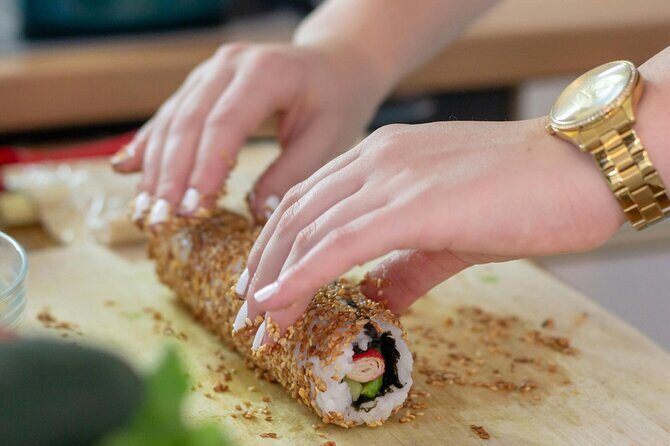
Then comes the rolling. You’ll use a special sushi rolling tool, and you’ll get guided steps so you’re not just watching someone else do the work. If you like the idea of taking photos, this is also naturally photogenic: hands, ingredients, and the finished rolls make better memories than a generic skyline shot. The same point shows up in the feedback—people tend to love the mix of fun, delicious results, and plenty of chances for great pictures.
One more small but important benefit: sushi classes remove decision fatigue. You don’t have to guess what to do next once you leave the temple or shopping street. You follow the process, learn a technique, and you eat what you made. That’s the kind of payoff that makes a 3.5-hour tour feel like more than the sum of its stops.





How This Two-in-One Private Tour Works for Your Time
This experience is built as a shortcut. You get a logical route: Skytree for big-picture Tokyo, Asakusa for cultural and shopping landmarks, then Kappabashi for kitchen tools, and finally the sushi class for food payoff. Because it’s private, you’re not spending your time negotiating with a crowd or waiting on other people’s pace.
You’re also getting a “two skills” arc:
- sightseeing that teaches you what you’re seeing
- cooking that gives you a small skill and a meal you can share
That combo is why it feels satisfying. Many Tokyo tours do either temples or food. Here you get both, and they support each other—especially the way Kappabashi quietly sets the stage for sushi.
Duration-wise, the whole thing runs about 3 hours 30 minutes. That’s not a lot of time, so the stops are intentionally focused. You’ll want to treat the class and main landmarks as your priority, and consider shopping more like browsing with a plan than a full spree.
Price and Value: What You’re Really Paying For
At $123.56 per person, this isn’t an ultra-cheap activity. But you’re also not paying for a vague walking tour that ends with a suggestion to find sushi nearby. You’re paying for a bundled day that includes:
- Skytree observation deck admission
- a guided Asakusa walk that includes Senso-ji and Nakamise Street
- Kappabashi time focused on kitchenware shopping
- a ticketed hand-roll sushi class with ingredient choice and instruction
Several parts of the route are free to enter (like Senso-ji Temple and the shopping street areas), but the paid pieces are the ones people usually struggle with on their own: figuring out timing for Skytree and then lining up a hands-on sushi class that actually works with the rest of your afternoon.
If you were to do this day independently, you’d likely spend extra time planning, searching, and managing transfers. Paying for a private guide plus included admissions is often a good value move when you want the day to run cleanly.
One more value note: there are group discounts mentioned, so if you’re traveling with friends or family and can book together, the per-person cost may feel more reasonable.
The Best Fit: Who Will Enjoy This Most?
This tour suits you if you want Tokyo highlights without turning your day into a stress marathon. It’s also a good fit if you like hands-on experiences and don’t mind that the route is fairly packed.
You’ll probably get the most out of it if:
- you want a private guide and a clear route rather than guesswork
- you’re interested in Asakusa but want a focused approach
- you want to try sushi in a real class setting with ingredient choices
- you care about photos and want an activity that naturally produces them
If you’re the kind of traveler who wants long, free-form exploration of shops for hours, this may feel tighter than you prefer. The upside is that you still get the essentials—just without the marathon browsing.
Also, the start time is 3:00 pm. That’s late enough that you’re not fighting the earliest crowds in the morning, but early enough to still enjoy daylight and evening energy depending on the season.
Booking Smart and Weather Reality
This experience requires good weather. If it’s canceled due to poor weather, you’ll be offered a different date or a full refund. That matters in Tokyo because plans can shift fast. If your schedule is flexible, you can treat this like a weather-smart booking. If your trip is fixed down to the hour, have a backup day in mind.
The tour also uses a mobile ticket and is near public transportation, which helps on the logistics side. And because private time sells out, it’s wise to book ahead—this one is often booked around 50 days in advance on average.
Should You Book This Tokyo Skytree + Asakusa Hand-Roll Sushi Tour?
I’d book it if you want a clean, high-reward afternoon: Skytree for the big view, Asakusa for temple-and-street culture, Kappabashi for kitchen-world flavor, and a hand-roll class that’s actually fun and delicious. The ingredient choice—like salmon and avocado or tuna and cucumber—and the hands-on rolling process are the kind of details that make the experience feel personal, not canned.
Skip it if your travel style is mostly slow wandering, because the stops are intentionally time-boxed. Also, if you’re visiting during a period when weather can be rough and you can’t move dates, keep that weather requirement in mind.
Overall, this is a strong option when you want a memorable food activity attached to real Tokyo landmarks, without the hassle of stitching it together yourself.
FAQ
What’s included in the Tokyo Skytree observation deck stop?
The Skytree observation deck admission ticket is included, and fast pass entry is used to help you smoothly access the deck.
Is the Senso-ji Temple admission included?
Yes. Admission for Senso-ji Temple is listed as free, and it’s part of the tour time.
How much time do we spend in Asakusa shopping areas?
You’ll spend about 30 minutes on Shin Nakamise Shopping Street and about 30 minutes on Kappabashi Street.
What happens during the hand-roll sushi class?
At Hand Roll Tokyo Asakusa, you choose your favorite ingredients and make hand-roll sushi using a special sushi rolling tool, and the class has an included ticket.
Can I choose my sushi fillings?
Yes. The class includes choosing ingredients such as salmon and avocado or tuna and cucumber.
Is this tour private?
Yes. It’s a private tour/activity, and only your group participates.
What time does the tour start and where do I meet?
The start time is 3:00 pm. You meet at Tokyo Skytree, 1-chōme-1-2 Oshiage, Sumida City, Tokyo 131-0045, Japan.
What if the weather is bad?
This experience requires good weather. If it’s canceled due to poor weather, you’ll be offered a different date or a full refund.