REVIEW · TOKYO
Tokyo: Imperial Palace, the history of Japan (ENGLISH GUIDE)
Book on GetYourGuide →Operated by Sunrise Adventure · Bookable on GetYourGuide
Tokyo’s Imperial Palace grounds can feel like a pause button. This guided walk turns that quiet space into a clear story of how Japan changed over time, with stops that explain what’s gone, what remains, and why it matters.
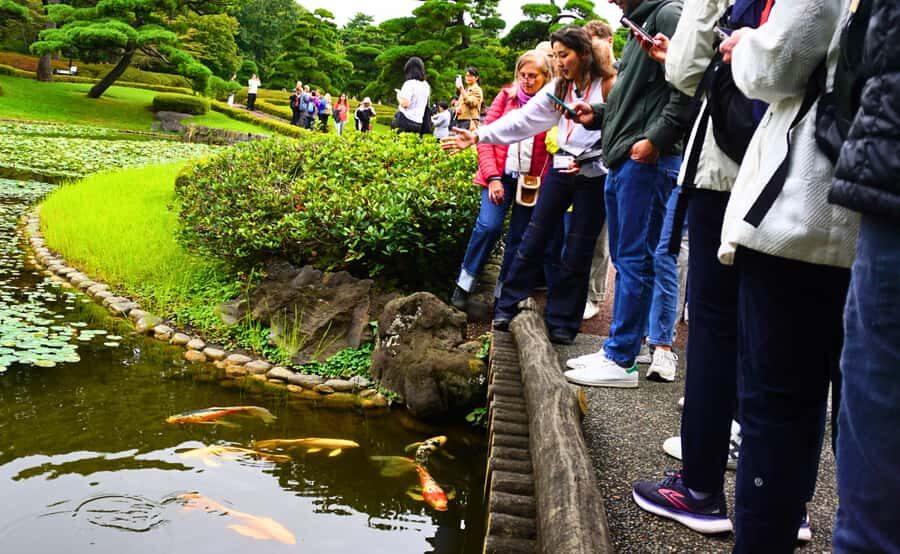
I especially like the way the guide brings the history down to ground level—how the former Edo Palace areas worked, what the ruins suggest, and how the setting shaped daily life. Another highlight for me is the koi fish moment and the photo-friendly garden corners, all planned so you’re not just wandering.
One thing to consider: you’re not entering the inner palace. You’ll see major areas of the grounds, but if your main goal is access to the most restricted spaces, this isn’t the tour for that.
In This Review
- Key moments to look for
- Meeting at Starbucks near Wadakuramon Fountain Park
- Passing through Ot themon: what you can see (and what you can’t)
- Eastern gardens and the calm of a palace that still breathes
- Koi fish, prefecture trees, and small details that make the place feel alive
- Edo Castle footprints: former base, barracks history, and the scale of time
- Why the inner palace is excluded (and how to decide if that’s okay)
- Guide interaction: what made this tour feel special
- Price and value: $40 for a guided palace history walk
- Weather, pace, and rules you’ll actually notice
- Who should book this tour (and who might skip it)
- Should you book this Imperial Palace history tour?
- FAQ
- Where does the tour meet?
- How do I get there from Tokyo Station or Otemachi Station?
- Is the inner palace included?
- What’s included in the price?
- Is this tour offered in English?
- How much does the tour cost?
- What’s the main focus of the tour?
- Does the tour include koi fish?
- Can I bring a drone or take photos with one?
- What happens if I’m late?
- Is the tour canceled in bad weather?
Key moments to look for
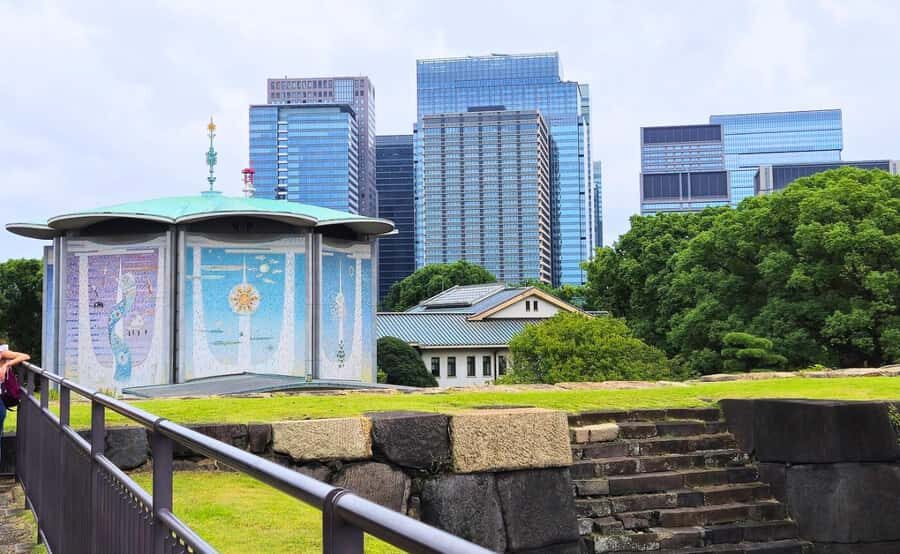
- Ot themon (main gate) to orient fast and understand what you’re seeing before you start walking
- Eastern gardens with quiet paths, scenic viewpoints, and photo spots
- Koi fish only found here that give the whole visit a memorable, local flavor
- Edo Castle links from 350+ years ago, explained through the remaining ground-level traces
- Former soldiers’ barracks area and other palace-adjacent ruins that make the past feel real
- Trees from different prefectures, a living way to notice how Japan connects regions
Meeting at Starbucks near Wadakuramon Fountain Park
This tour starts in a simple, predictable place: Starbucks near Wadakuramon Fountain Park. You’ll take the train to Tokyo Station or Otemachi Station, then walk about 5–10 minutes to the park. In the park, your guide will be holding a sign with the Sunrise Adventure logo.
I like meeting points like this because you don’t spend your trip “solving logistics” instead of enjoying the day. It’s also the kind of start that works even if you’re already a bit jet-lagged, since the area is easy to spot and you can get your bearings quickly.
Two practical notes. First: the tour language is listed as French (and the tour includes a French guide), even though the experience name mentions English—so if you need English, confirm ahead of time. Second: show up within 10 minutes of the meeting time or the tour starts without you.
You can also read our reviews of more guided tours in Tokyo

Passing through Ot themon: what you can see (and what you can’t)
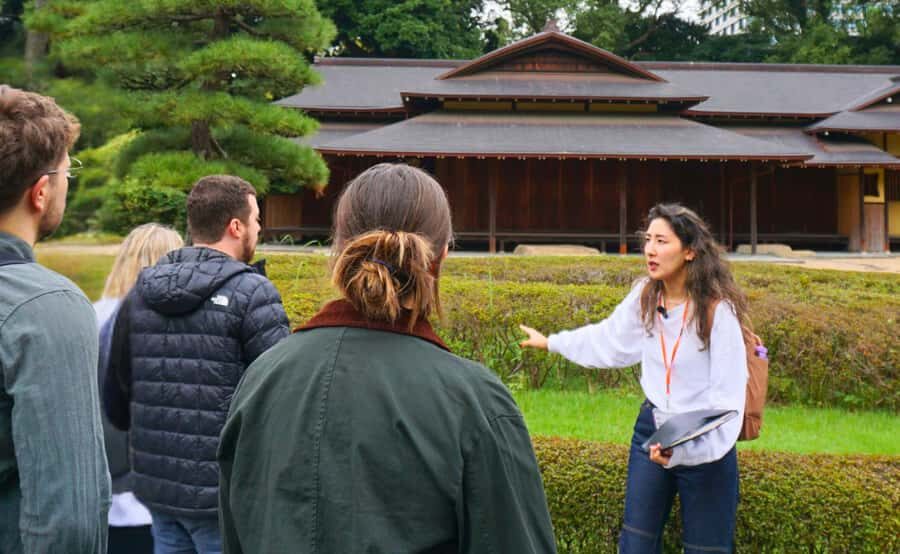
After you meet, you’ll head to the main gate, Otemon, and then follow your guide through the palace grounds. A big part of why this works is that you don’t just walk pretty paths—you get an explanation for what you’re standing next to.
One highlight here is the way the guide handles absence. The main castle no longer exists, and your guide explains the reason for that during the tour. You also get a chance to see a miniature structure representing the former palace, which helps you picture what changed without pretending the site can recreate the past perfectly.
That “explain what’s missing” approach is one of the reasons this tour is so satisfying for history lovers. You end up understanding the logic of the space, not just collecting surface impressions.
Eastern gardens and the calm of a palace that still breathes
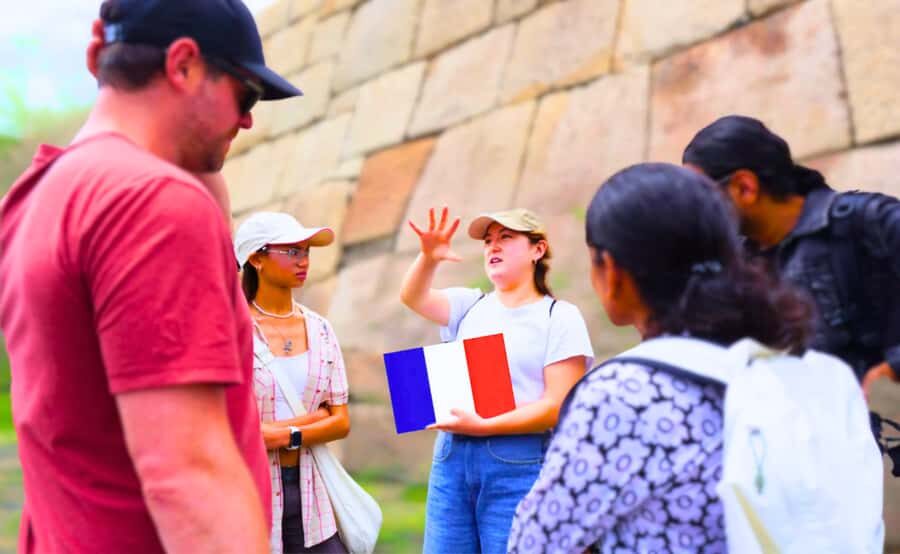
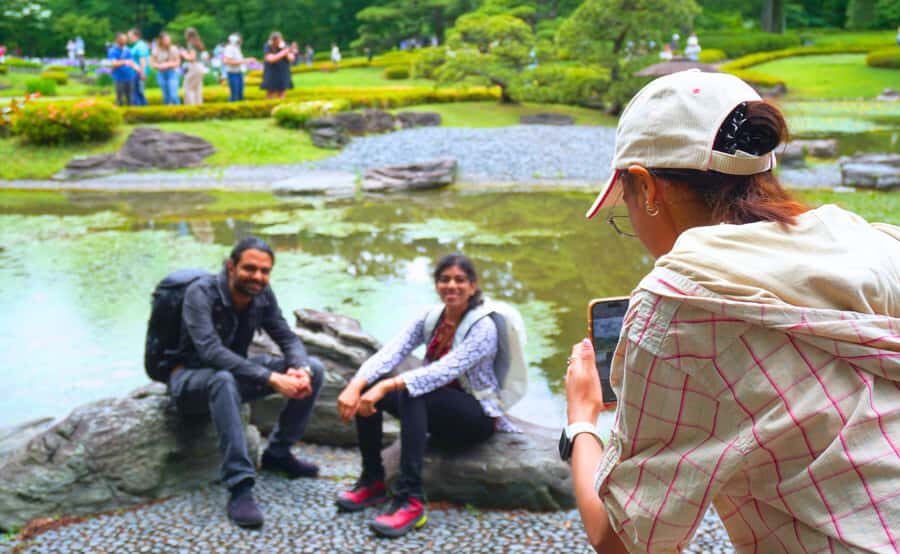
The walk moves into the eastern gardens of the former Edo Palace. This is where the tour shifts from history lecture to walking meditation—with guided context. You’ll stroll through garden areas designed for serenity, and your guide will point out details that most people miss when they’re just taking photos.
You’ll also get guidance on the best spots for pictures. That matters because palace grounds can be huge, and “stand wherever” photo plans often lead to awkward angles or crowds in the wrong place. With the guide’s timing and route, you spend more time making good images and less time backtracking.
Even if you don’t plan to photograph much, the garden pacing is worth it. It gives your brain a moment to connect the story from one stop to the next, instead of absorbing history like a worksheet.
Koi fish, prefecture trees, and small details that make the place feel alive

This tour isn’t only about gates and ruins. It has a couple of living, almost whimsical moments that help the history stick.
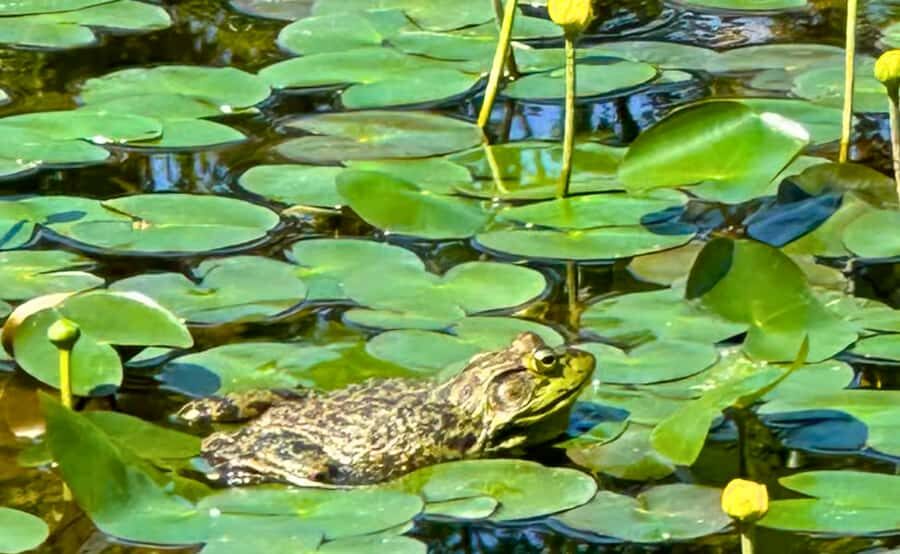
First: you meet a special breed of koi that can only be found at this site. Seeing them makes the palace grounds feel rooted in place, not just memorialized in text. It’s the kind of stop that breaks up the heavier history topics without losing the theme.
Second: you’ll notice trees from different prefectures. The idea is simple—Japan connects regions through people, history, and culture—and the trees become an easy visual way to sense that. You’ll likely start seeing patterns in the planting and arrangement that you’d never guess were intentional.
I like tours that include these “body-level” details. They turn the experience from information into observation, and that’s when it becomes real.
Edo Castle footprints: former base, barracks history, and the scale of time
One of the most important stops is the connection to the former base of Edo Castle, more than 350 years ago. Your guide ties what you see now to the earlier fortress-era presence, so the grounds feel like a timeline instead of a museum room.
You’ll also explore the history of the former soldiers’ barracks. Even without entering restricted areas, this kind of stop matters because it shows you how power and daily routine used to work. Barracks areas tell you there was an organized system behind the symbolism.
What I find useful is the way the guide connects these points to the bigger question behind the whole tour: how Japan became the country it is today. You’re not just learning dates—you’re getting cause-and-effect, from the Edo-era structure to what follows later.
You can also read our reviews of more historical tours in Tokyo
Why the inner palace is excluded (and how to decide if that’s okay)
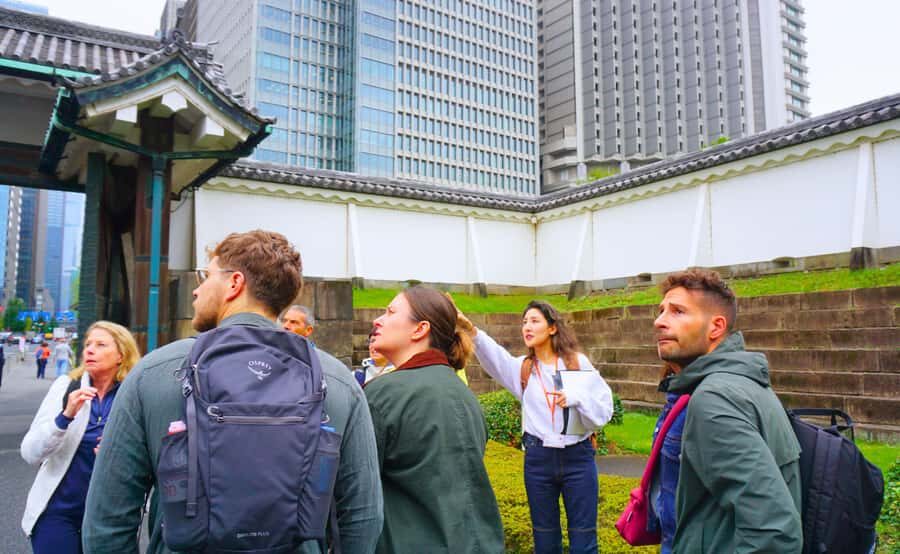
This tour does not include access to the inner palace. That’s clearly stated, and it affects who should book.
If you’re the type who wants the most restricted, high-security interiors, you’ll feel limited. But if you want a guided walk that explains the grounds, ruins, and garden logic, this is a strong fit. Many of the most meaningful “understand Japan’s history” moments happen outside the inner areas, especially when a guide is doing the connecting.
Think of it this way: the inner palace access is about space. This tour is about interpretation—how to read the place you’re allowed to see.
Guide interaction: what made this tour feel special
The tour’s biggest differentiator is the guide. One example I saw highlighted a Franco-Japanese guide named Nicolas, and the focus wasn’t only on facts—it was on conversation. He answered questions on Japanese mythology, Japan in general, the language, and more.
That kind of back-and-forth changes the day. Instead of waiting for the next group pause, you can ask what you actually care about and get a straight answer. If you like learning through dialogue, you’ll likely enjoy this format.
Group size can also matter, and one small-group example was five people. A smaller group usually means more chances to hear the guide clearly and better odds that questions won’t get lost.
Price and value: $40 for a guided palace history walk
At $40 per person, this sits in the “worth it if you’ll use the guide” category. A self-guided palace wander can be pleasant, but it’s easy to feel lost. The value here is that you’re paying for someone to interpret the grounds: what you’re seeing, what’s missing, and how it connects to Japan’s broader changes.
If your travel style is more about atmosphere than explanation, you might decide it’s too structured for the price. But if you want real context while you walk—especially around Edo-era traces, garden details, and koi—you’re paying for the brainpower and route-planning that transforms the experience.
I’d call it a practical value because it’s not long on complexity. You’re getting a history-led walk, not a “maybe you’ll find the story on your own” situation.
Weather, pace, and rules you’ll actually notice
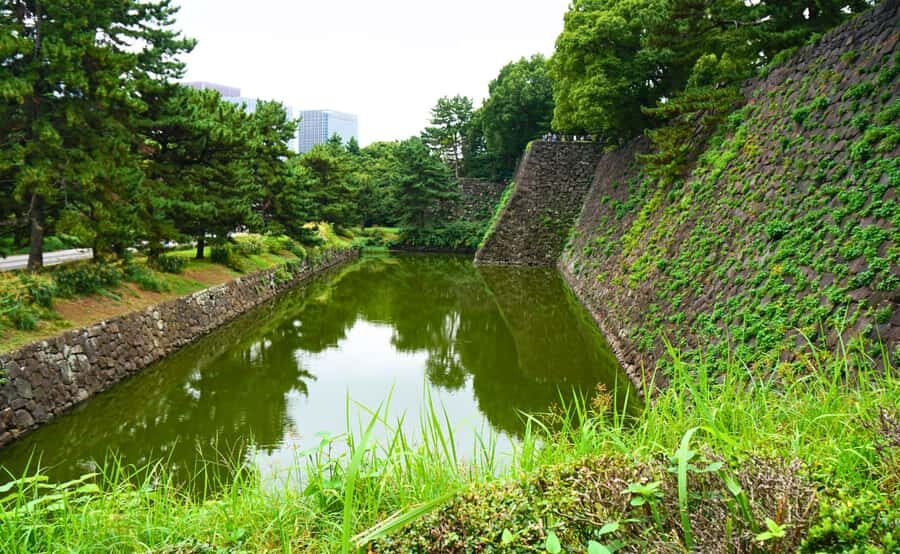
This tour runs in good weather or bad. So you’ll want weather-appropriate clothing and a mindset that Japan’s weather can change fast, even when your plans stay the same.
There are also clear rules: no smoking, no drones, no alcohol or drugs, no littering, and no skateboards. It’s a calm, respectful setting, and these rules help keep it that way.
If you don’t mind walking and you can handle standing on uneven garden paths for photos, you’ll be fine. If you hate walking as a concept, you might find it slower than you expected—but the route is still a straightforward walking tour.
Who should book this tour (and who might skip it)
You should book if you want:
- A guided walk through Imperial Palace eastern gardens with meaningful context
- Edo-era connections you can actually explain after the tour
- Stops that include both history and “alive” details like koi fish and prefecture trees
- A small-group feel where questions are welcome (when group size is small)
You might skip it if you:
- Specifically want access to the inner palace
- Need a tour clearly conducted in English (since the listed tour language is French)
- Prefer to roam on your own without interpreting ruins, gates, and grounds
Should you book this Imperial Palace history tour?
Yes, if you want a guided route that helps you understand what the grounds represent—and if you’re happy staying outside the inner palace. The best part is the guide-driven storytelling: Otemon orientation, garden pacing, Edo Castle traces from 350+ years ago, and memorable living moments like the koi.
I’d book it with confidence if your goal is “understand Japan through this site,” not “see every restricted room.” Just double-check your language needs ahead of time, since the tour is listed with a French guide.
FAQ
Where does the tour meet?
Meet near Wadakuramon Fountain Park at Starbucks. Your guide will be holding a sign with the Sunrise Adventure logo.
How do I get there from Tokyo Station or Otemachi Station?
Take the train to Tokyo Station or Otemachi Station, then walk about 5–10 minutes to Wadakuramon Fountain Park.
Is the inner palace included?
No. This tour does not include access to the inner palace.
What’s included in the price?
The tour includes a French guide and a historical walking tour.
Is this tour offered in English?
The tour language is listed as French, and it includes a French guide. If you need English, check with the operator before booking.
How much does the tour cost?
The price is $40 per person.
What’s the main focus of the tour?
You’ll explore the eastern gardens and learn the history of Japan and how it evolved to the present day, including connections to the Edo era.
Does the tour include koi fish?
Yes. You’ll meet special koi fish that are found here.
Can I bring a drone or take photos with one?
No. Drones are not allowed.
What happens if I’m late?
If you don’t show up within 10 minutes of the meeting time, the tour will start without you.
Is the tour canceled in bad weather?
No. The tour takes place in good weather or bad. Wear clothing appropriate for the weather.