REVIEW · TOKYO
Tokyo: Kintsugi Art Repair Workshop
Book on GetYourGuide →Operated by H.I.S. Co Ltd(TIC) · Bookable on GetYourGuide
Kintsugi turns cracks into something useful. This hands-on Tokyo workshop teaches the traditional gold-lacquer repair process on ceramic, with English guidance in a calm shop setting. I especially liked the chance to actually do the steps myself and leave with a finished take-home piece that looks intentionally beautiful, not accidentally fixed. One thing to plan for: if your object has larger damage, you might not finish the full repair within the 90 minutes.
Set up is pretty smooth. You’re in and out in about 1 to 1.5 hours, the group is small, and the materials are supplied, so you don’t show up hunting for tools. The main trade-off is that the class is limited by size and crack rules, so not every broken item can be repaired in the session.
In This Review
- Key Things To Know Before You Go
- A 90-Minute Kintsugi Break in Downtown Tokyo
- Finding Nihonbashi Mutoh Main Store: Convenient and Not Overly Complicated
- What You’ll Make: Gold-Lacquer Repairs for Ceramics
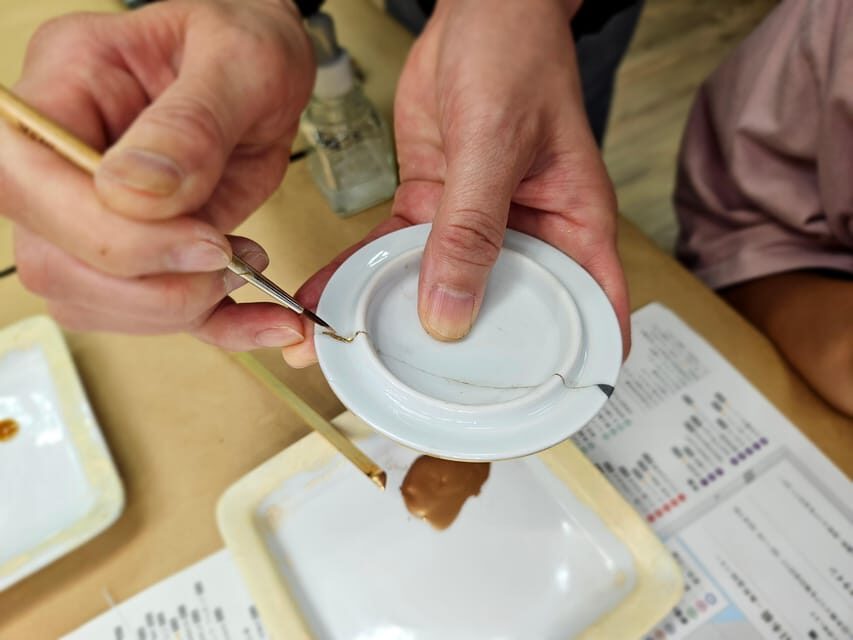
- The Class Flow: From Taping the Break to Metallic Seams
- English Guidance in a Small Group: What Makes It Feel Personal
- Materials Provided, Minimal Fuss: What to Bring and What to Wear
- Price and Value: Why $125 Can Make Sense
- Souvenirs and Aftercare: Taking Your Piece Home Without Stress
- Who This Workshop Is Best For (and Who Should Skip It)
- Should You Book This Tokyo Kintsugi Workshop?
- FAQ
- How long is the Tokyo Kintsugi workshop?
- Is the class taught in English?
- Do I need to bring materials for Kintsugi?
- What is the group size?
- What items can be repaired in this workshop?
- What are the size and crack limits for a repair?
- Can children participate?
- Where do I meet for the workshop?
- What is the cancellation policy?
Key Things To Know Before You Go
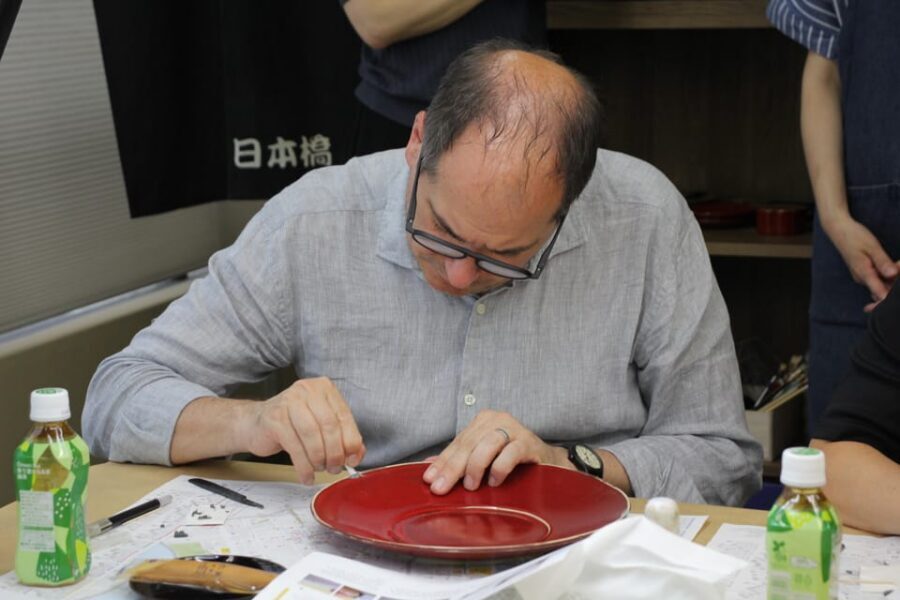
- Small group, English support: limited to 5 participants, with English interpretation during the hands-on process.
- You get everything for the repair: you don’t need to bring supplies; just wear comfortable clothes.
- There are limits on what can be fixed: ceramics only, with size and crack constraints (up to φ15cm and height 15cm; 1–2 cracks).
- You can bring a vessel, but not everything fits the timing: bigger chips/cracks may not finish in 90 minutes.
- It’s mainly decorative, with a practical use: the finished piece can hold dry food items, but it’s primarily for display.
A 90-Minute Kintsugi Break in Downtown Tokyo
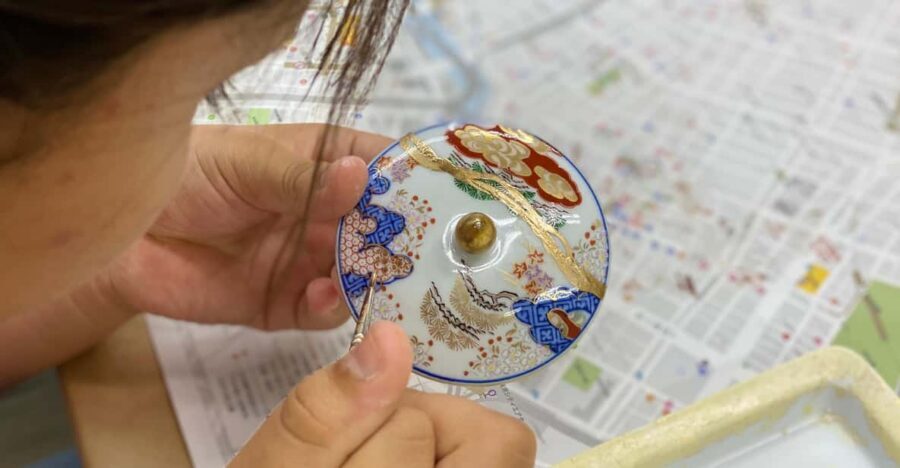
This class is a great choice if you want something cultural that still fits a normal sightseeing day. Kintsugi sounds fancy, but the experience is straightforward: you work with real materials, you learn the logic behind the technique, and you finish with a repaired ceramic item that looks designed.
I like that it’s not a museum lecture. You start with broken lines and gaps, then you learn how those imperfections become part of the final look. In practice, that means paying attention to the exact crack path, handling pieces carefully while they’re taped and aligned, and applying materials so the seam reads clearly as a feature.
The philosophy matters too, but it’s taught through your hands, not just words. Kintsugi is about seeing breakage as part of an object’s story. You’re not hiding damage. You’re transforming it—so a repaired bowl or cup feels intentional, like it always belonged that way.
Time is the biggest factor for expectations. Ninety minutes is enough to complete a typical, small repair, but not every object behaves the same. If your crack is bigger or your chip needs extra filling, the workshop may not be able to finish it in one sitting.
A few more Tokyo tours and experiences worth a look


Finding Nihonbashi Mutoh Main Store: Convenient and Not Overly Complicated
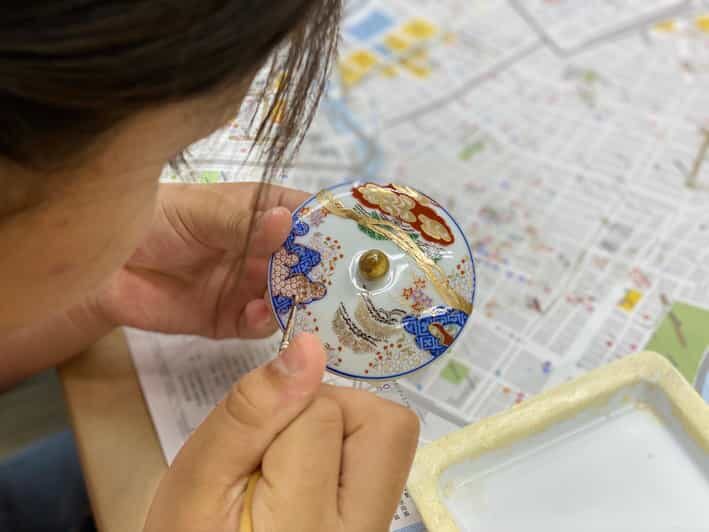
The meeting point is Nihonbashi Mutoh Main Store (日本橋滄浪閣 Bldg.), in central Tokyo. The address is 〒1030023 JP Tokyo 1-8-13 Nihonbashihoncho, Chuo City, and it’s a practical base for pairing with other nearby sights.
Location-wise, it’s a solid pick if you’re already doing the Asakusa area. The workshop is described as about 15 minutes by subway from Asakusa, which is exactly the kind of commute that keeps the day from getting swallowed by transit.
Downtown Tokyo can feel overwhelming, but this setup is manageable because you’re not dealing with a hidden location across multiple train changes. Show up a few minutes early—this starts promptly—then you’ll have time to get settled before the instructor begins.
Once you’re inside, you’re in a shop environment, and that matters. It’s not just a classroom with folding chairs. The setting is quiet and focused, so you can concentrate on the delicate work. I found that kind of atmosphere makes a big difference when you’re applying fine materials and working on a seam-by-seam repair.
What You’ll Make: Gold-Lacquer Repairs for Ceramics
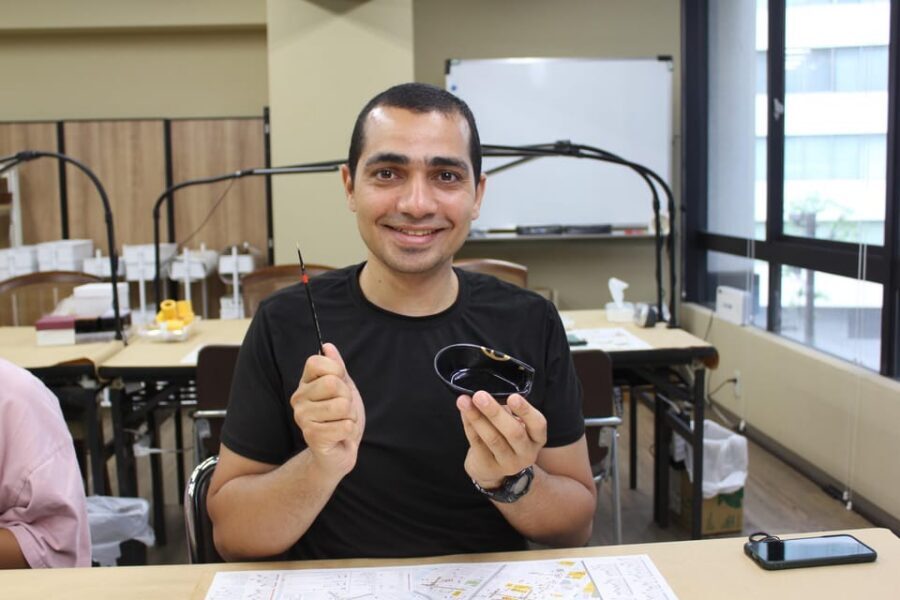
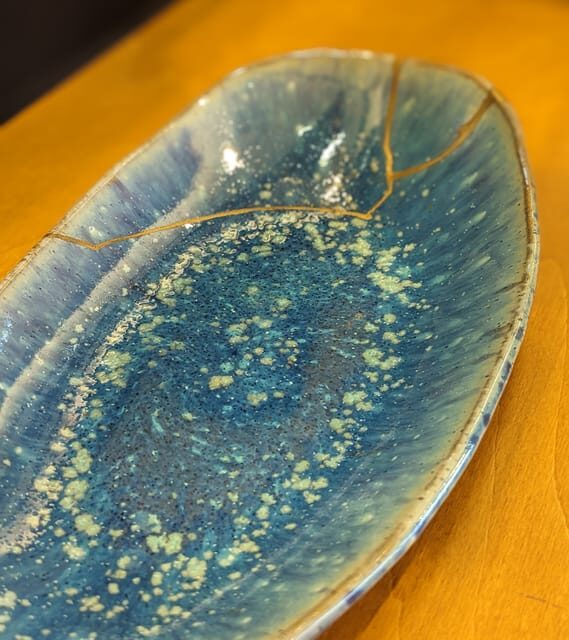
The workshop is built around repairing ceramic vessels with the traditional style of Kintsugi: lacquer and metallic gold used along the cracks to create a visible, beautiful seam. The end result is meant to be kept, not tossed back into the cabinet like a failed craft project.
Your take-home piece becomes a memorable souvenir because you’re not just watching someone else do the art. You make decisions during the process—how the pieces align, how the filling is smoothed, and how the seam is finished so it looks clean rather than messy.
Size and damage type also help define what you’ll produce. The class is designed for items up to φ15cm in diameter and up to 15cm height, and the repair scope is limited to 1–2 cracks. That’s good news because it keeps expectations realistic for a 90-minute session.
There are also hard rules on what can’t be repaired. The workshop is for ceramic vessels only, and chipped or cracked mug handles aren’t repairable. That’s important if you’re thinking of bringing a favorite broken mug with a bad handle. Save that plan for another kind of fix, because this specific workshop can’t complete it.
Finally, while the finished item can be used to hold dry food, it’s primarily meant for display. So treat it like art you can lightly use—not like a heavy-duty functional mug you’ll toss into a backpack.
The Class Flow: From Taping the Break to Metallic Seams
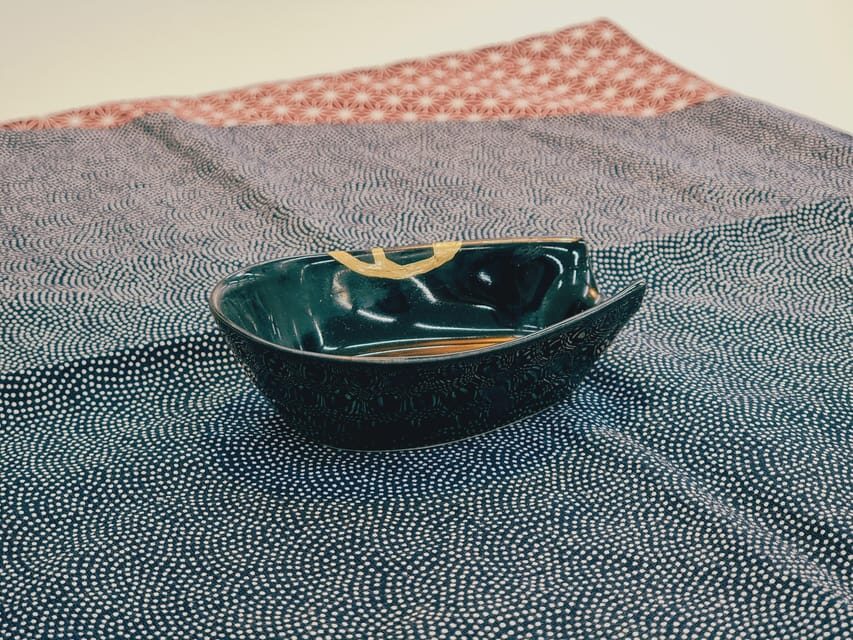
What makes Kintsugi satisfying is the step-by-step logic. You’re essentially rebuilding structure and then finishing it so the repair becomes part of the design.
A typical flow looks like this:
- Align the broken pieces and stabilize them so the crack line sits right.
- Apply materials to bond the ceramic and fill any gaps created by chips.
- Smooth and refine the surface where needed so the seam line looks intentional.
- Finish with metallic paint or gold-toned lacquer along the repaired lines.
You’ll notice that the process is a mix of careful assembly and visual finishing. The bonds and fillers get you back to a usable form. The metallic finish is what turns the repair into Kintsugi style—where the crack becomes an aesthetic element.
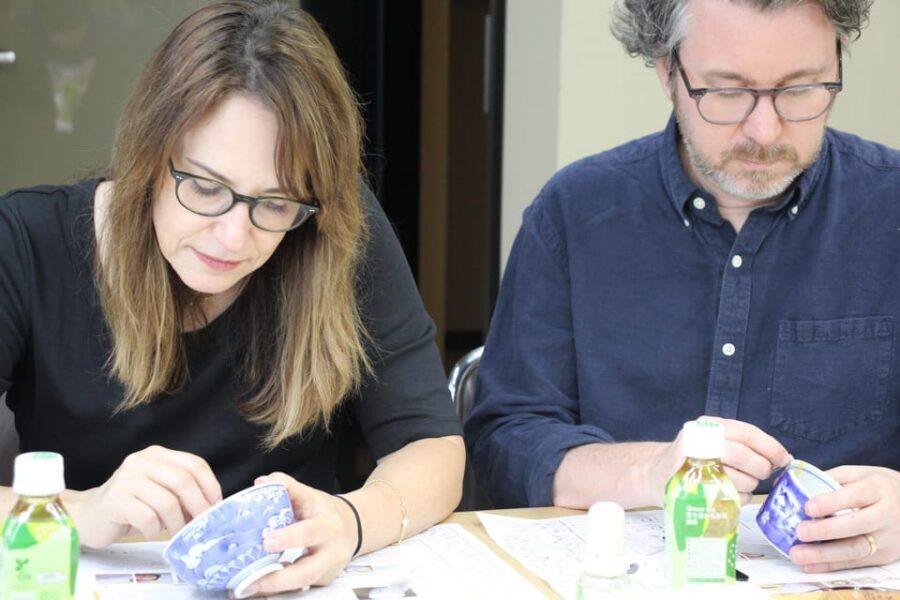
I like that instructors guide you hands-on, which is exactly what you want for a craft like this. You can copy the technique correctly instead of guessing. With a small group, you also get real attention at the table.
English support helps a lot. The instruction is in English, and interpretation is available, so you can understand both the steps and the meaning behind them. One person’s main goal might be a great souvenir. Another might want to learn for future repairs. In both cases, the best value comes from learning the sequence you can repeat later.
There’s also a gentle pacing to avoid wasted materials. You’re not dumping globs of stuff everywhere. Instead, the process is managed so you use what you need at each stage—another reason the session fits into 90 minutes.
English Guidance in a Small Group: What Makes It Feel Personal
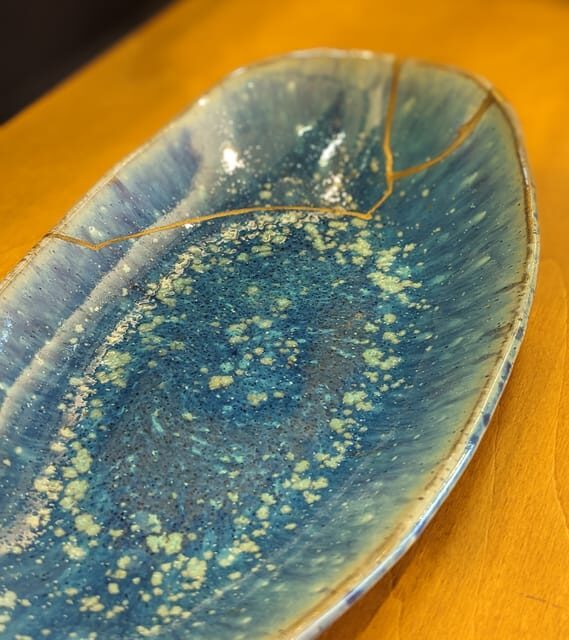
The group is kept small—up to 5 participants—and that’s a big part of the experience quality. Craft workshops get frustrating when you’re watching the instructor from across the room. Here, you’re working at your own station, with guidance close enough to fix small errors before they become big ones.
I really appreciated the patient tone. People are taught step-by-step with encouragement, and the pacing stays calm. That matters in Kintsugi because the work is delicate, and rushing can turn a clean seam into a streaky mess.
The class also tends to be flexible about how you approach your piece. If you’re working on a vessel, you’ll get options on what to do next based on your break line. That flexibility shows up in the way instructions are delivered—less one-size-fits-all, more tailored to what you brought (when applicable).
For some people, the highlight is the end result. For others, it’s what they learn along the way: how to think about broken pieces as parts that can be recombined, how to handle gaps, and how the finishing step creates that gold-lined Kintsugi identity.
If you’re new to Kintsugi, I’d treat this as a first practical lesson. Then, if you want deeper theory or the longer traditional curing cycle, you can build on what you learned here.





Materials Provided, Minimal Fuss: What to Bring and What to Wear
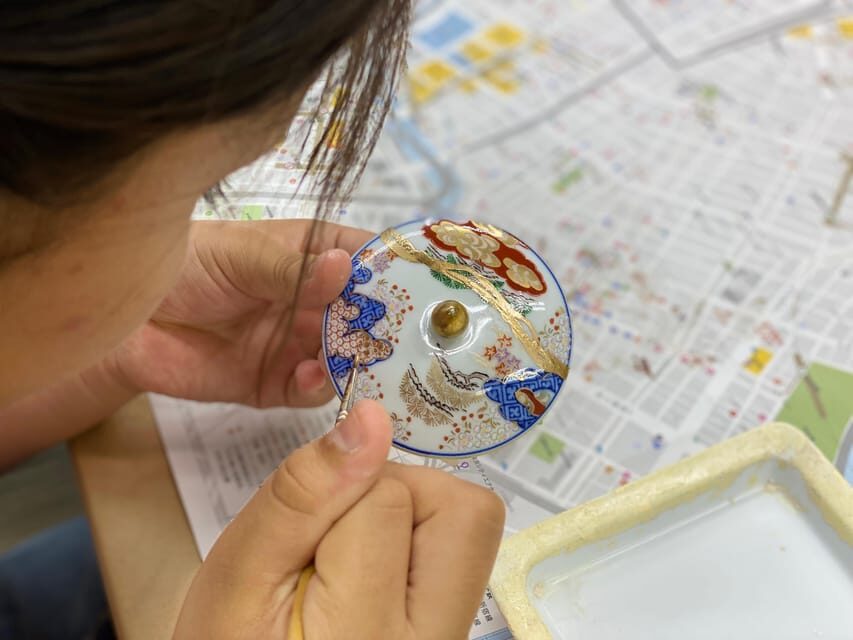
You don’t need to bring tools or special supplies. The workshop includes the necessary materials, and you’re expected to show up with comfortable clothes. That’s it.
That minimal prep is one of the best value points. Craft classes in Tokyo can sometimes require extra purchases—special adhesives, abrasives, or kits. Here, you can focus on learning and making, not sourcing.
Still, dress smart. You’ll be working at close range with hands-on materials, so wear something you don’t mind getting a little paint or lacquer on (even if the shop keeps things controlled). Closed-toe shoes can also make you feel steadier, especially if the studio area is compact.
If you plan to bring your own ceramic, check the fit first. It needs to be a ceramic vessel, within the size limits, and the repair scope should be 1–2 cracks. And remember the handle rule: chipped/cracked mug handles aren’t repairable here.
Also, the shop begins on time and won’t extend the session for anyone who hasn’t finished. That’s why arriving early is worth it. If the instructor starts promptly, you want to be ready to concentrate from minute one.
Price and Value: Why $125 Can Make Sense
At $125 per person for about 90 minutes, this isn’t a bargain class. It’s not priced like a quick “try-it” experience. But the value is more than the time slot.
You’re paying for:
- Professional instruction, including English guidance and active help while you work.
- Materials provided, so you don’t add extra costs and don’t waste time searching for gear.
- A take-home souvenir at the end, which is tied to the work you did yourself.
- A small-group setting, which gives you attention while you handle delicate repair steps.
When you break it down, the price feels more reasonable because this is a specialized craft. Kintsugi materials and finishing steps aren’t just decorative glitter; they require careful handling and enough control to produce a clean seam.
Another value point: this workshop helps you learn a repeatable sequence. Even if you never become a full-time craft person, knowing how to approach cracks, align pieces, and finish seams can turn future breakage from stressful to manageable.
The one consideration is mismatch risk. If you bring an object that doesn’t fit the size or crack limits, you might not get the outcome you want within 90 minutes. So pick your object carefully—or choose the workshop piece they set up for you if you want the smoothest experience.
Souvenirs and Aftercare: Taking Your Piece Home Without Stress
The big win is that you leave with a repaired ceramic piece. That’s the moment everything clicks: the small careful steps become a finished object you can actually keep.
The workshop includes souvenirs, and the experience is designed so you don’t need to wait for a later pickup. That said, Kintsugi materials can require time to set fully depending on the exact approach and how much repair work was done.
If you bring your own vessel, you might find the shop handles timing thoughtfully. In at least some cases, pieces have needed extra time to cure, and staff can box and protect your item for later. That’s a good sign operationally: they’re thinking about the reality that repair materials don’t become perfect instantly.
For day-to-day use, plan around the intent. The finished item can hold dry food items, but it’s primarily decorative. Use it like a display piece you can occasionally serve from, not like something that gets slammed into a dishwasher routine.
Also, consider how you’ll pack it. Even if it’s protected, you’ll want careful handling on your way back to your hotel. This is art-level fragility, even when the seam has been repaired.
Who This Workshop Is Best For (and Who Should Skip It)
This Tokyo Kintsugi workshop is best for you if you want a cultural activity that:
- is hands-on, not just viewing
- fits within a tight schedule
- gives you an actual take-home craft souvenir
- includes English interpretation
It’s also a good match if you like calm, focused settings. The atmosphere tends to be quiet and supportive, which makes it enjoyable even if you’re not a “craft person.”
You might want to skip or reconsider if:
- you’re under 13 (the experience is recommended for ages 13+)
- you plan to bring a ceramic with a handle that’s broken
- you’re hoping to repair something larger than the workshop limits or with more complex damage than 1–2 cracks
- you need the item finished instantly and don’t have any flexibility for curing time
If you’re pairing this with sightseeing, it works well as a morning or early afternoon stop, then you can head back out while the rest of Tokyo is doing its thing.
Should You Book This Tokyo Kintsugi Workshop?
Book it if you want a genuinely hands-on way to experience Kintsugi in Tokyo, with materials included and a finished ceramic piece to bring home. The small group size, English guidance, and practical step-by-step instruction make it a smart use of time, especially when you can’t spare a half-day to a multi-stage craft.
Hold off if you’re bringing a big, heavily damaged piece, because 90 minutes and crack limits are real. In that case, either choose a smaller repair scope or plan for another option.
If you’re on the fence, my advice is simple: choose this when you can follow the constraints (ceramic vessel, limited cracks, within size). That’s when the workshop delivers the best payoff—beautiful seams, a calmer experience, and a keepsake you’ll actually want to live with.
FAQ
How long is the Tokyo Kintsugi workshop?
The experience lasts 90 minutes.
Is the class taught in English?
Yes. The instructor provides English instruction, and English interpretation is available.
Do I need to bring materials for Kintsugi?
No. All materials are provided, so you just need comfortable clothes.
What is the group size?
It’s a small group limited to 5 participants.
What items can be repaired in this workshop?
Restorable objects are ceramic vessels only. Mug handles that are chipped or cracked are not repairable.
What are the size and crack limits for a repair?
The workshop covers items up to φ15cm in diameter and up to 15cm in height, and repairs are limited to 1–2 cracks.
Can children participate?
The experience is for ages 13 and up, and minors must be accompanied by a guardian.
Where do I meet for the workshop?
The meeting point is Nihonbashi Mutoh Main Store (日本橋滄浪閣 Bldg.), at 〒1030023 JP Tokyo 1-8-13 Nihonbashihoncho Chuo City.
What is the cancellation policy?
Free cancellation is available up to 3 days in advance for a full refund.