REVIEW · TOKYO
Tokyo: Mochi-Making Class in a Private Studio
Book on GetYourGuide →Operated by Simply Oishii Wagashi School · Bookable on GetYourGuide
Mochi feels magical the first time you shape it. This Tokyo class is hands-on from start to finish, with a small group and an instructor-led walkthrough of how mochi fits into Japanese culture. I particularly love the step-by-step guidance plus the fact you don’t just watch—you make and taste five different mochi dishes yourself.
I also really like the way the class ends: your mochi comes with a hot or cold green tea pairing, and you get a downloadable recipe so the experience doesn’t disappear the moment you leave. A small drawback to plan around: it’s not suitable for wheelchair users, and the minimum age is 4, so it can be a tighter fit for some families.
If you’re lucky enough to land with an instructor like Owa, Kiyoko, Michiko, or Ayumi, you’ll get clear English support and a warm, personal tone. One recent group even had an extra cultural touch with calligraphy from Owa, which made the whole session feel more than just cooking.
In This Review
- Key Things That Make This Mochi Class Worth Your Time
- Entering the Private Studio World of Mochi
- What You Pay ($82) and Why It Can Still Feel Like a Good Deal
- The 2-Hour Flow: From Basics to Five Finished Mochi Treats
- Five Kinds of Mochi You Make and Taste (Not Just One)
- Green Tea Tasting: The Simple Pairing That Ties It Together
- The Cultural Context: Mochi as More Than a Sweet Bite
- Dietary Notes That Matter: Gluten-Free and Non-Dairy Options
- Finding the Meeting Point (So You Don’t Waste Time Wandering)
- Small Group Energy: Why Up to 8 Participants Changes Everything
- Photos and the Downloadable Recipe: Your Take-Home Memories
- Who Should Book This Tokyo Mochi Class
- A Quick Note on Booking Flexibility
- Should You Book This Tokyo Mochi-Making Class?
- FAQ
- How long is the mochi-making class?
- What is the minimum age to join?
- How many mochi dishes will I make and taste?
- Is the class gluten-free?
- What languages do the instructors speak?
- Where do I meet, and how do I enter the building?
Key Things That Make This Mochi Class Worth Your Time
- Small group (up to 8) means you can actually ask questions while your hands are busy.
- Five mochi dishes from scratch gives you variety, not just one repeatable trick.
- Green tea, hot or cold turns your tasting into a proper food moment, not an afterthought.
- Downloadable recipe helps you repeat the results at home with less guesswork.
- English plus Japanese support keeps the class comfortable for non-Japanese speakers.
- Photo session included, so you have something to remember besides the taste.
Entering the Private Studio World of Mochi
This experience is built around doing, not just learning. You’ll step into a studio space where mochi is front and center, and you’ll get hands-on time touching and shaping the dough into different dessert forms. Since it’s only 2 hours long, the pace stays focused: enough time to learn, make, taste, and still leave before you feel rushed.
What I like here is the balance between skill and joy. You’re learning a technique, but you’re also making edible souvenirs you can eat right away. And because the class allows participants from age 4, it can work for multi-generational trips, as long as everyone can follow along with the hands-on format.
One more good sign: the class is designed to be gluten-free, and it can offer a non-dairy option. That means the experience is structured with substitutions in mind, not tacked on as an afterthought.
You can also read our reviews of more private tours in Tokyo



What You Pay ($82) and Why It Can Still Feel Like a Good Deal

At $82 per person, this isn’t a cheap “snack workshop.” But you’re paying for a guided, interactive class where you make multiple items and leave with useful take-home material. You don’t just get one mochi bite—you make and taste five kinds of mochi dishes, plus you get green tea and a downloadable recipe.
Also, the “private studio” feel matters. With a limit of 8 participants, you’re not competing for attention. In practice, that means you spend more time figuring things out with the instructor close by, and less time waiting your turn.
Finally, the class includes a photo taking session. That’s small, but it’s real value on a trip—especially if you’re going with family and want everyone to capture the results.
The 2-Hour Flow: From Basics to Five Finished Mochi Treats
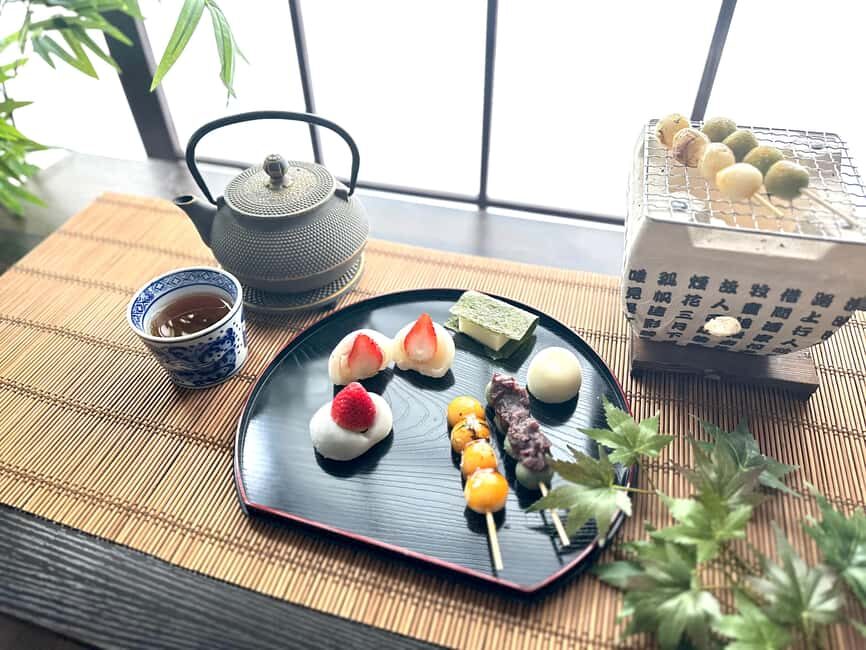
Here’s how the session typically feels when you join: it starts with instruction and context, then moves quickly into making. You’ll learn how to make mochi and also hear about its cultural background in Japan, so the food has meaning beyond sweetness. The instructor provides guidance in English and Japanese, which is helpful if anyone in your group is more comfortable with one language.
Then comes the practical part. You’ll work directly with mochi, shaping it into different dessert styles as you go. The key here is that it’s interactive in the literal sense: you’ll touch the ingredients and do the forming yourself, not just watch someone else do it.
By the end of the class, you’re not standing around. You’ll taste the mochi you made with hot or cold green tea. And if strawberries aren’t available, the class uses other fruit, so the tasting stays on track even when ingredient availability changes.
Five Kinds of Mochi You Make and Taste (Not Just One)
The headline is five kinds of mochi dishes made from scratch. That variety is what makes this class satisfying. If you only learned one method, you’d leave with one flavor memory. Here, you get multiple textures and presentation styles within the same 2-hour session.
You also get to practice the process repeatedly enough to feel confident about how the mochi behaves. Mochi can be subtle: it’s soft, elastic, and forgiving in some ways but tricky in others. Making several different versions helps you understand the basics rather than walking away with one lucky result.
The tea pairing adds another layer. Hot green tea suits the softer warmth of the mochi, while cold green tea brings contrast that can be really refreshing. Either way, it turns your tasting into a proper finish, with a drink that’s part of the experience, not just something on the side.
Green Tea Tasting: The Simple Pairing That Ties It Together
Green tea is one of those foods-and-drinks pairings that doesn’t need a big explanation to work. In this class, you’ll taste your mochi with hot or cold green tea at the end, which makes the last stretch feel like a meal moment rather than a class conclusion.
It also helps you evaluate your work. When you eat a mochi dessert with tea, you can more easily notice how sweet it is, how chewy the texture lands, and whether the flavors feel balanced. It’s a practical way to learn, not just a nice extra.
A few more Tokyo tours and experiences worth a look



The Cultural Context: Mochi as More Than a Sweet Bite
You don’t just get a cooking lesson. You also get a cultural background talk about mochi and why it’s beloved in Japan. That matters because mochi isn’t just a dessert; it has a specific place in Japanese food culture, and hearing that context gives your hands-on work more meaning.
One highlight from recent sessions is how instructors bring the topic to life. For example, Michiko was noted for sharing an overview of the history and cultural significance of mochi, which made the whole event feel warm and personal. Another recurring theme is instructors taking time to listen to why people are visiting Japan, which makes the discussion feel less like a lecture and more like a story shared with your group.
I’d treat this cultural piece as part of the value. It helps you understand what you’re making and why people care about it, so you’re more likely to remember the experience after the sugar settles.
Dietary Notes That Matter: Gluten-Free and Non-Dairy Options
This class is gluten-free, which is a big deal if you’re traveling with food restrictions. It means the core approach is built to avoid gluten, so you can join without constantly worrying about hidden ingredients.
There’s also a non-dairy option available. The exact substitution isn’t spelled out in the info provided, but you can plan around the fact that the class can adapt. If you have strong dietary needs, I’d message ahead to confirm what non-dairy means for the specific recipes used in your session.
And if strawberries are unavailable, you’ll get other fruit instead. That’s smart planning by the school and helpful for anyone who has a preference or concern around specific fruit toppings.
Finding the Meeting Point (So You Don’t Waste Time Wandering)
Logistics matter, especially in Tokyo. The meeting point is in a building to the right of a Family Mart convenience store. On the ground floor, you’ll see a drug store and a hair salon. Once you locate the building, follow the signs and get to the entrance via stairs or the ramp in front of the school’s sign.
There’s also an entry code detail: press 303 + enter at the bottom to get in. Do this before you assume the door is locked. It’s one of those small instructions that can save you stress.
One practical tip: plan to arrive a few minutes early. With a small group, they’ll want to get everyone into the classroom smoothly so the 2 hours start on time.
Small Group Energy: Why Up to 8 Participants Changes Everything
A cap of 8 participants is not just a number. It’s why the class can stay interactive and personal. When you have fewer people in the room, it’s easier to:
- ask questions while you’re working,
- get help quickly if your mochi looks different than expected,
- and keep the pace steady so everyone finishes and tastes together.
The instructor support also helps. The class runs with instructors who speak English and Japanese, and the experience is set up for clear step-by-step communication. If you’re traveling solo or with friends who don’t speak Japanese, that language support can turn an intimidating food activity into something you actually enjoy.
Photos and the Downloadable Recipe: Your Take-Home Memories
This is one of those classes where the souvenir is useful. Included in the experience are a photo taking session and a downloadable recipe you can use later at home. The recipe matters because it gives you a path to recreate what you made without relying on memory alone.
The photo session is worth it if you want to share what you did (or just keep a record for yourself). In a hands-on class, it can be hard to document everything while you’re working. Having photos included means you leave with more than just an empty plate in your mind.
Who Should Book This Tokyo Mochi Class
This experience fits best if you want:
- a hands-on food activity that lasts 2 hours,
- a small-group setting with instructor attention,
- mochi-making without needing prior cooking skills.
It also works well for families, since the minimum age to enter is 4. That said, it’s not suitable for children under 4, and it’s not suitable for wheelchair users, based on the class information provided.
If you’re in Tokyo looking for something more authentic than a typical guided tour stop, mochi-making is a smart pick. It’s practical, tactile, and tied to Japanese culture in a way you can actually taste.
A Quick Note on Booking Flexibility
The experience offers free cancellation up to 24 hours in advance and a reserve now & pay later option, which is helpful if your Tokyo schedule might shift. Since the class has specific start times, it’s worth checking availability sooner rather than later, especially if you’re traveling during busy seasons.
Should You Book This Tokyo Mochi-Making Class?
If you want an activity that’s hands-on, culturally connected, and genuinely shareable when you get back home, I’d book it. Five mochi dishes, green tea pairing, photos, and a downloadable recipe for $82 is strong value for a small-group class in Tokyo. The fact that it’s gluten-free and can offer a non-dairy option also makes it easier to say yes if you have dietary limits.
The only real reason to skip is if accessibility or age limits are an issue for your group. Otherwise, this is the kind of experience where you leave with both a full stomach and a skill you can repeat.
If you’re choosing between mochi classes, this one stands out because it’s not one-and-done. It’s variety, instruction, tasting, and a take-home recipe all wrapped into a tight, enjoyable 2-hour session.
FAQ
How long is the mochi-making class?
The class lasts 2 hours.
What is the minimum age to join?
The minimum age to enter the class is 4 years old.
How many mochi dishes will I make and taste?
You’ll make and taste 5 kinds of mochi dishes.
Is the class gluten-free?
Yes. The experience is gluten-free. A non-dairy option is also available.
What languages do the instructors speak?
The instructor supports both English and Japanese.
Where do I meet, and how do I enter the building?
Meet at a building to the right of a Family Mart. The ground floor has a drug store and hair salon. Enter via the stairs or ramp, and press 303 + enter at the bottom to get in.