REVIEW · TOKYO
Tokyo: Real Ramen & Dumpling Cooking with Master Chef
Book on GetYourGuide →Operated by LLC en · Bookable on GetYourGuide
Real ramen is built, not guessed. In Tokyo, this hands-on class shows you how ramen and dumplings actually come together, with clear English teaching from Yoshi and Amo in a small group. I like that you do the work step by step, from making semi-soft nitamago to folding gyoza, and I like the focus on practical technique you can repeat at home.
One thing to plan for up front: vegetarian ramen needs notice in advance, and if you arrive late the class time can shrink. That said, if you show up early and tell them what you need, this is a very satisfying way to spend two hours in real Japanese home-style cooking mode.
In This Review
- Key highlights you’ll care about
- Why this Tokyo ramen class feels more real than show-and-tell
- Price and value: what $99 buys you in real cooking time
- Getting to Ekoda (Egota) Station without stress
- Meeting Yoshi and Amo: English teaching in a small-group format
- What you’ll cook in the first half: nitamago, toppings, and gyoza folding
- Chashu, sizzling gyoza, and learning what actually changes flavor
- The ramen payoff: soup, noodles, drainage technique, and assembly
- What’s included in your meal (and what to expect on your plate)
- Vegetarian ramen: how to make it happen without last-minute stress
- Take-home value: recipes by email and a few fun add-ons
- Who this ramen-and-gyoza class is best for
- Should you book this Tokyo ramen & dumpling class?
- FAQ
- FAQ
- How long is the class?
- Where is the meeting point in Tokyo?
- Is pickup included?
- What train should I take to get there?
- What language is the instruction in?
- What do we make during the lesson?
- What’s included with the meal?
- Can I request vegetarian ramen?
- What are the booking options and cancellation rules?
Key highlights you’ll care about
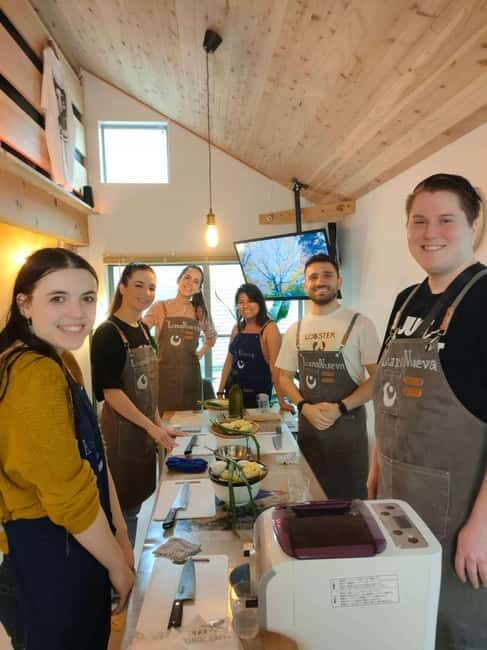
- Yoshi and Amo teach in English and answer questions patiently while you cook.
- Small group format (up to four people) makes it feel personal rather than rushed.
- You’ll make nitamago, gyoza, and ramen instead of just watching.
- Technique matters: you’ll learn the noodle-draining method and how to assemble ramen cleanly.
- Advance notice for vegetarian ramen is required to make it happen.
- Take-home recipes by email plus menu details sent after the class.
Why this Tokyo ramen class feels more real than show-and-tell
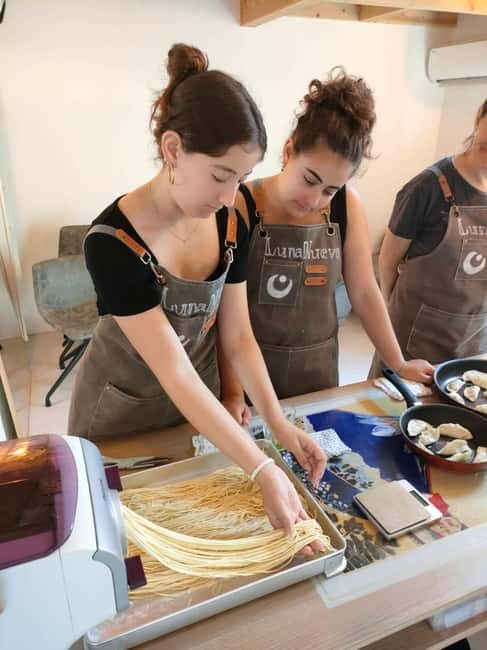
Tokyo has no shortage of food tours, but this one leans hard into the craft side. You’re not just eating ramen. You’re shaping it: eggs first, then toppings, gyoza folding, chashu flavoring, and finally soup, noodles, and assembly. That process is where the real payoff is, because you end up understanding why each step exists.
I also like the way Yoshi and Amo work with you. The class is set up so the main components are ready to go, but you still handle the key moves that make ramen taste like ramen. In a city where people often assume you already know what to do, this kind of guided teaching feels generous.
The group size can be small (up to four), so you get more back-and-forth than you’d get in a big group workshop. If you like asking questions, this format helps. And if you like cooking more than talking, it still stays lively.
You can also read our reviews of more cooking classes in Tokyo


Price and value: what $99 buys you in real cooking time
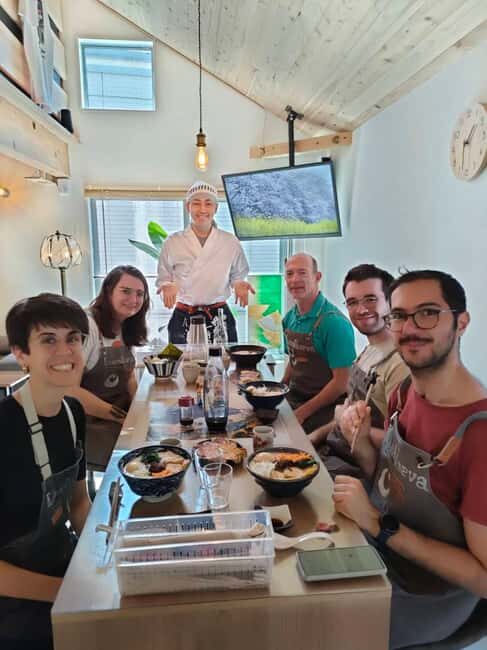
At $99 per person for two hours, you’re paying for three things: instruction, a full portion meal, and take-home materials. The class includes ramen plus gyoza (5 pieces), and the ingredients aren’t treated like snacks. You build a full bowl with toppings and side items that match the ramen you’re making.
The value gets better because the “after” part is included. You receive recipes and menu details after the lesson, which means you’re not left wondering how to reproduce the results. If you’ve ever eaten a dish you loved and then couldn’t recreate it, this is the part that saves you later.
Also, the instructor background is a practical advantage. Yoshi runs cooking with restaurant experience, including time working with Japanese ramen-style cooking and experience abroad. That matters, because technique is only half the story. The other half is knowing what small adjustments make a difference when you cook at home.
Getting to Ekoda (Egota) Station without stress
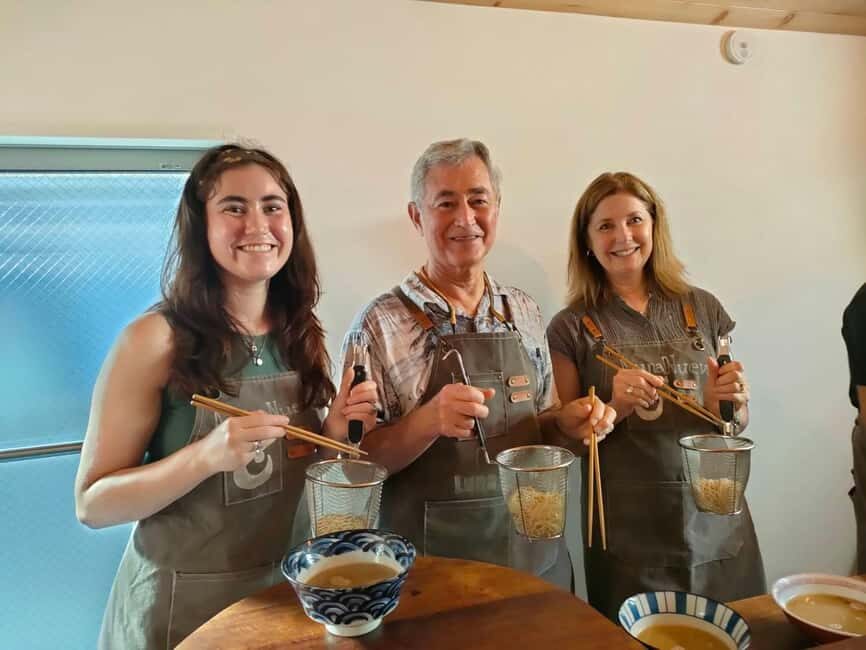
Logistics are usually the weak spot in Tokyo classes, so I pay attention here. Your meeting point is Ekoda Station in Nerima City, with the address listed as 1 Chome-78 Asahigaoka, Nerima City, Tokyo 176-0005. The pickup is handled at the station: they wait 15 minutes at the out of the ticket gate in Ekoda (Egota) Station.
Two practical notes matter. First, you should arrive at least 15 minutes early to get settled. Second, you should take the Seibu Ikebukuro Line and avoid the rapid train. Rapid trains may skip Ekoda (Egota), which is exactly the kind of small mistake that causes a late arrival.
If you’re using spotty public Wi‑Fi, it helps to be ready to contact them. The phone number is +818072621175, and it’s smart to add it to WhatsApp so you can call when you’re out of connection.
Meeting Yoshi and Amo: English teaching in a small-group format
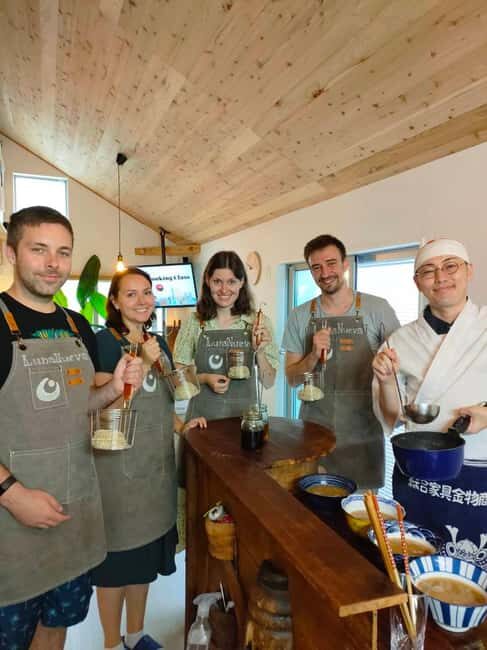
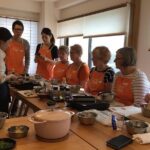
This class runs with an English instructor and support from Amo, so you can follow along even if your Japanese is zero. The teaching style is hands-on with explanations at each stage, which is what you want in a cooking class. Ramen is detail-heavy, and if you miss one step, it shows.
The class size can be small—up to four participants—so you’re not competing for attention. In practice, that means your questions are more likely to get answered on the spot. It also means you can move at a normal pace without feeling like you’re on a schedule.
One more detail I appreciate: the instructor shares stories and anecdotes about the ramen world. That doesn’t replace technique, but it makes the time feel like a living kitchen, not a scripted demo.
What you’ll cook in the first half: nitamago, toppings, and gyoza folding
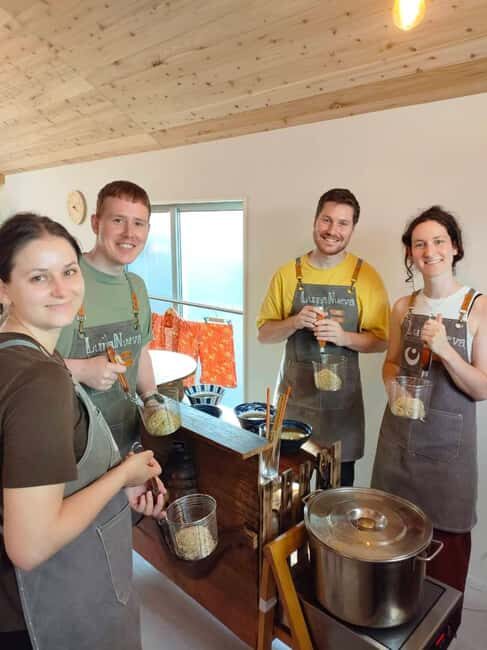
The timing starts with eggs. You’ll make semi-soft boiled eggs—the runny yolk style nitamago. This step matters because eggs add richness and contrast to ramen broth. If you nail the boil, the topping feels intentional instead of random.
Next comes toppings prep. You’ll handle ingredients for ramen toppings and start working through the sequence that leads into gyoza. For gyoza, you’ll slice and combine ingredients, then fold them. Folding gyoza sounds simple until you try it, so having an instructor there is the difference between decent dumplings and dumplings that look and cook correctly.
By this point, you’ll have a clearer sense of how ramen shops think: ramen is a system. Each component has its own job, and your workflow reflects that.






Chashu, sizzling gyoza, and learning what actually changes flavor
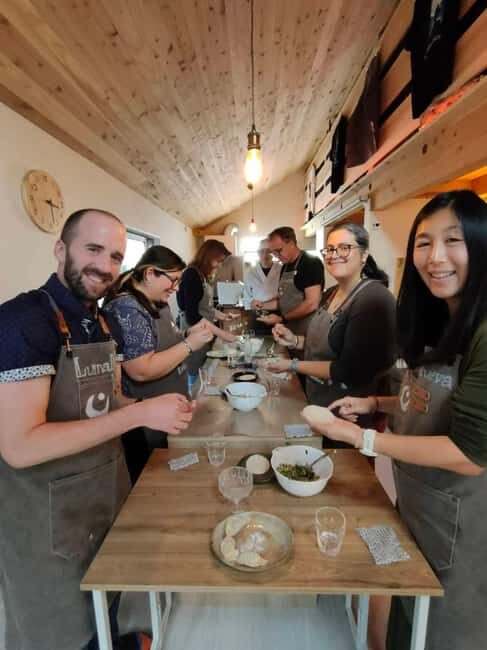
Then you get into chashu. The class includes chashu (slow cooked chicken), and part of your lesson is learning how it’s flavored and handled so it works in the bowl. Even though chashu is already part of the meal plan, the teaching focus is on understanding the flavor role it plays.
At the same time, you’ll sizzle up the gyoza to finish them. This is where the class becomes especially fun, because you see the transformation from prepared filling and folded shapes into dumplings ready to eat.
If you care about cooking at home, this phase is useful because it’s not just about ramen. You’re learning how dumplings go from raw prep to cooked texture, which is valuable beyond this class.
The ramen payoff: soup, noodles, drainage technique, and assembly
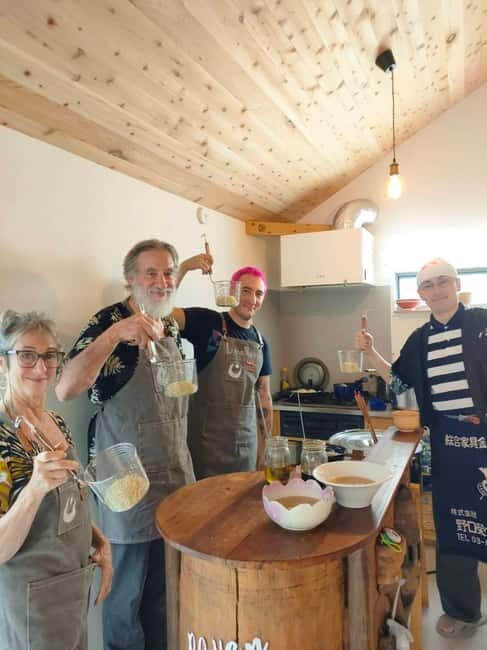
Now for the main event: soup, noodles, and assembly. You’ll craft the soup and boil the noodles, then learn a noodle draining technique that people usually underestimate. That step affects how the noodles behave in the bowl and how they pair with the broth.
After the noodles are boiled and handled, you assemble. You’ll layer toppings on the ramen thoughtfully, using the ingredients provided: seaweed, sliced spring onion, and wood ear fungus. This is where it becomes obvious that toppings aren’t just decoration. They add texture, aroma, and bite.
The final effect is more than just food. It’s a mental map of ramen construction. Once you’ve built it once, the next bowl you eat in Tokyo will make more sense, because you’ll be able to spot which part is doing what.
What’s included in your meal (and what to expect on your plate)
Here’s what’s included with the class portion:
- Ramen and 5 gyoza pieces
- Ramen topping components
- Nitamago (seasoned runny yolk egg)
- Chashu (slow cooked chicken)
- Seaweed
- Sliced spring onion
- Wood ear fungus
You also get key ramen elements prepared for your class experience, including soup and ramen sauce, fragrant oil, and chashu as part of the overall setup. That means you spend your energy on the steps that make the biggest difference rather than on guesswork with every single component.
Also note: you’ll receive recipes after the lesson. The menu and instructions are sent afterward, so you’re not relying on memory for the next attempt at home.
Vegetarian ramen: how to make it happen without last-minute stress
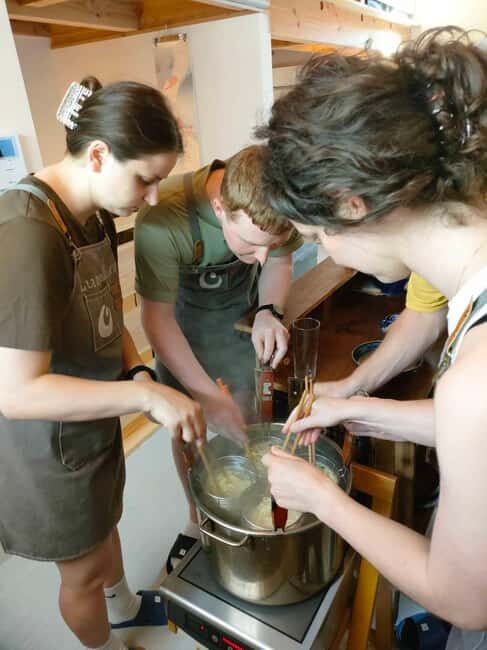
Vegetarian ramen is available, but there’s a clear rule: you need to inform them in advance. They can’t accommodate vegetarian requests on the same day without prior notice.
So if you’re vegetarian, plan your booking message early and be specific. The class will still be the same core format—eggs, toppings, noodles, and assembly—just adapted for a vegetarian ramen version. If you’d rather not handle communication under time pressure, send the vegetarian request immediately after reserving.
Take-home value: recipes by email and a few fun add-ons
This is one of those classes where the learning doesn’t end when you wipe your hands. You get recipes and menu details after the appointment. That’s a big deal for ramen because small ratios and timing choices matter.
The class environment also includes the kind of extras that make it feel like a real local kitchen. In the feedback I’ve seen, people mention complimentary merchandise and the chance to buy custom items like an apron or t-shirts. If you like cooking gear and want something to remind you of the day, this is a nice touch.
Who this ramen-and-gyoza class is best for
This fits you if:
- You want a hands-on Tokyo food experience with real technique.
- You enjoy cooking and want recipes you can use at home.
- You like small-group interactions where English support is built in.
- You want ramen knowledge beyond just tasting.
It may not fit as well if:
- You arrive late or don’t want to follow a strict meeting time.
- You need vegetarian ramen but you haven’t arranged it in advance.
- You’re hoping for a full ramen shop tour with lots of sitting and eating only. This is work time.
Should you book this Tokyo ramen & dumpling class?
I’d book it if you want the best kind of souvenir: a skill. In two hours, you’ll learn multiple steps that add up to a bowl you can actually recreate later. The small-group structure and English teaching by Yoshi and Amo make it feel welcoming even if ramen feels complicated.
If vegetarian ramen is a requirement, treat that as your main decision point. Arrange it before you go. If you can do that and you show up early for pickup at Ekoda (Egota) Station, you’re set up for a smooth, rewarding class.
FAQ
FAQ
How long is the class?
The ramen and dumpling cooking class lasts 2 hours.
Where is the meeting point in Tokyo?
You meet at Ekoda Station, 1 Chome-78 Asahigaoka, Nerima City, Tokyo 176-0005, Japan.
Is pickup included?
Yes. The host will wait for you 15 minutes before at the out of ticket gate in Ekoda (Egota) station.
What train should I take to get there?
Use the Seibu Ikebukuro Line, and do not ride the Rapid train. The local train stops at Ekoda (Egota) station.
What language is the instruction in?
The instructor speaks English.
What do we make during the lesson?
You’ll make semi-soft boiled eggs (nitamago), prep ramen toppings, prepare and fold gyoza, flavor chashu, cook the gyoza, then craft the soup, boil the noodles, learn the noodle-draining technique, and assemble the ramen.
What’s included with the meal?
Included are ramen and gyoza (5 pieces), ramen topping, nitamago, chashu (slow cooked chicken), seaweed, sliced spring onion, and wood ear fungus.
Can I request vegetarian ramen?
Yes, but you must inform the team in advance. They can’t accommodate vegetarian ramen requests on the same day without prior notice.
What are the booking options and cancellation rules?
You can reserve now and pay later (book and pay nothing today). You can cancel up to 24 hours in advance for a full refund.