REVIEW · KYOTO
Kyoto Private Tea Ceremony at a Japanese Inns
Book on Viator →Operated by ZEN: Tea Ceremony Experience in Kyoto (茶道体験所 禅) · Bookable on Viator
Night in Kyoto turns quiet fast. This private tea ceremony in a candlelit ryokan setting is one of the simplest ways to feel Japanese culture after dark, even when big temples go dark. I really liked the fact that this is held in a 20-tatami hall that’s normally closed to the public, so the whole evening feels special from the start.
The second thing I loved is the hands-on matcha part. You don’t just watch and nod, you whisk your own bowl, with guidance so you know what you’re aiming for. One possible drawback: the experience is only about an hour, so if you’re expecting a long, slow, deeply instructional class, you may wish it lasted a bit longer.
In practice, it’s a smooth, welcoming setup. The translator devices mean you can follow along without scrambling for Japanese, which matters when the ceremony gets technical.
In This Review
- Key things to know before you go
- A candlelit 20-tatami hall in Kyoto’s after-dark rhythm
- Kimono dressing and the photo session that actually feels like part of the ritual
- The mini Zen meditation: a four-minute pause with real payoff
- Tea ceremony demonstration: learning by being treated like a guest
- Whisk your own matcha: the 20 minutes that make it stick
- Translation devices and asking real questions without the awkward pause
- Price and value: what you’re paying for (and why it’s not just the tea)
- Timing, group size, and how to make the most of the hour
- Who should book this Kyoto private tea ceremony?
- Should you book it?
- FAQ
- How long is the Kyoto private tea ceremony?
- What is the group size for this experience?
- Is Japanese required?
- Do I get to wear traditional clothing?
- What happens during the ceremony?
- What’s included in the tea ceremony?
- Can I take photos during the activity?
- What’s the cancellation rule?
Key things to know before you go
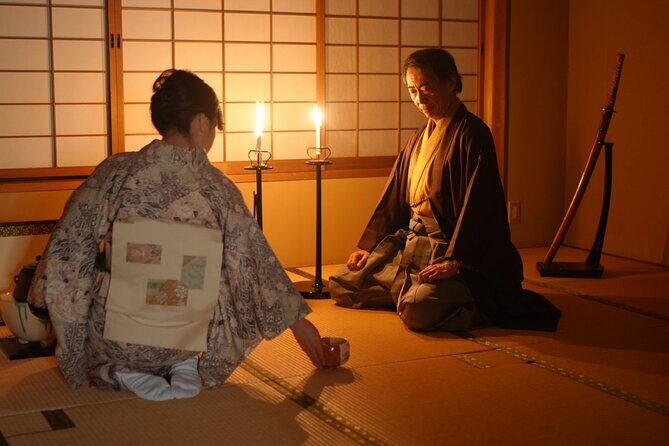
- A private 20-tatami room in a long-established inn that’s typically off-limits to the public
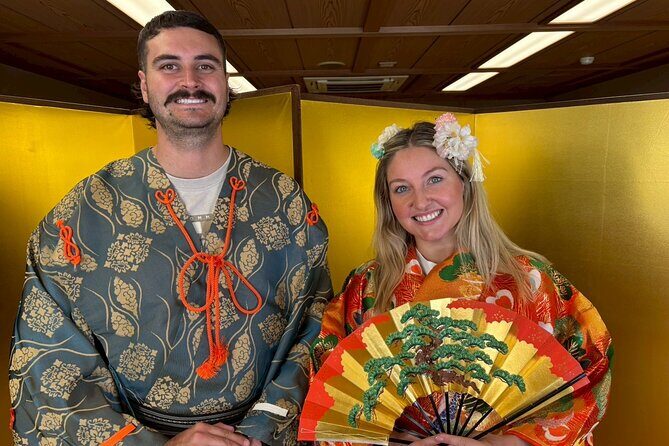
- Kimono dressing plus photos using a bridal uchikake or men’s haori with props and pro lighting
- Zen meditation (about 4 minutes) before the tea, to slow your brain down
- Tea ceremony demonstration (about 20 minutes) including matcha tasting as a guest
- Matcha whisking (about 20 minutes) so you make your own bowl and practice the motions
A candlelit 20-tatami hall in Kyoto’s after-dark rhythm
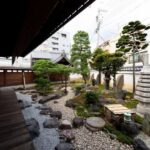
This is not a cookie-cutter show. The ceremony happens in a traditional Kyoto inn (ryokan) in a 20-tatami banquet hall, normally closed to the public. That detail changes the vibe. You’re not squeezed into a generic storefront. You’re stepping into a real, lived-in space where the walls and timing feel intentional.
The atmosphere is especially good at night. The setting is described as candlelight flickering in a dark room, which is exactly the kind of sensory cue that makes a tea gathering feel like a ceremony, not a performance. Even if you’ve been sightseeing all day, this gives you a reset.
One more practical point: the whole activity runs about 59 minutes. It’s short enough that it won’t hijack your Kyoto schedule, but long enough to include dressing, a mini Zen moment, the tea gathering, and your own whisking. If you like experiences that are focused rather than drawn out, this is a win.
You can also read our reviews of more private tours in Kyoto


Kimono dressing and the photo session that actually feels like part of the ritual
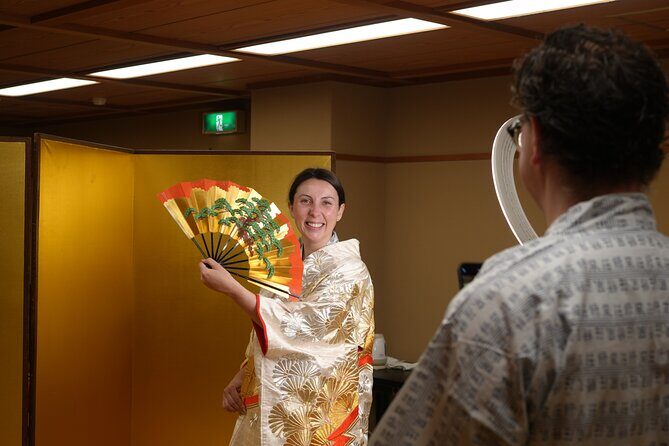
Right away, you shift gears from tourist mode to ceremony mode. The session begins with kimono dressing and a photo shoot for about 15 minutes. You’ll wear a bridal uchikake (for women) or a men’s haori (for men), and the setup includes props like folding fans and swords.
The most helpful detail here is the professional lighting. Kimono photos can look stiff when the lighting is wrong. With the right lighting, you’ll get images that look like you belonged in the scene, not like you were randomly handed a costume and told to smile.
I also like that photos are welcome throughout. That means you can document the moment without feeling like you’re constantly asking permission. Staff also help with photography, which reduces the stress of figuring out angles while you’re still getting dressed and adjusted.
If you’re worried about posture or comfort, don’t be. A lot of the charm of this experience is that it’s guided, not solo. You’ll get help so you can focus on the look and the mood.
The mini Zen meditation: a four-minute pause with real payoff
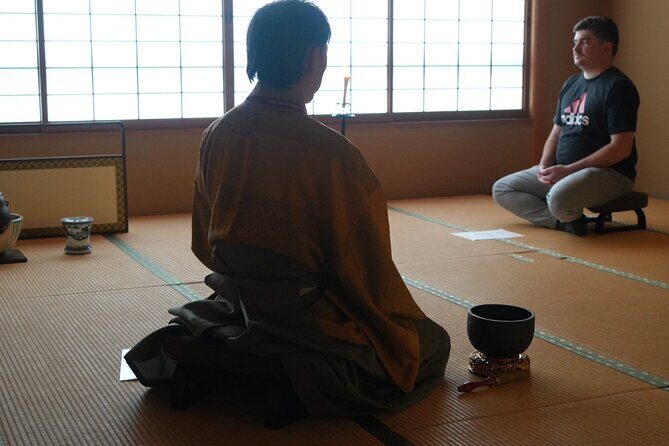
After you’re set, there’s Zen meditation for about 4 minutes. It’s brief, but it hits the right timing: before the tea demonstration, when your brain is still “switching.”
This part matters more than it sounds. Tea ceremonies can get slow and subtle, and if you walk in keyed up from the street noise, you’ll miss the point. The meditation is a gentle handbrake. Even if you don’t follow Zen like a lifestyle, you’ll feel the difference once the room quiets down.
And it’s not just blank silence. You’re in a serene space, and then the host guides the next steps into the tea flow. That structure is what makes the experience feel coherent instead of chaotic.
Tea ceremony demonstration: learning by being treated like a guest
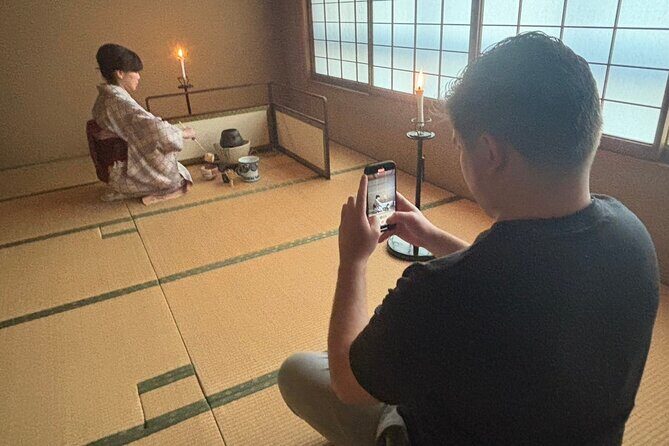
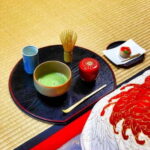
Next comes the tea ceremony demonstration (about 20 minutes). You’re welcomed as a guest, and you’ll receive a bowl of matcha. The host walks you through the flow of a traditional tea gathering, with the pacing that makes it possible to actually follow along.
This is where the translator devices shine. If you don’t speak Japanese, you can still understand what’s happening at the moments that matter: how the bowl is handled, how the gestures connect, and what you should notice in the taste. You’re not stuck at the surface level.
One thing I appreciate is that this part isn’t just explanation. It’s designed around experiencing. You’re not watching from the outside. You’re participating as someone being served, which makes the etiquette feel more natural.
Also, because it’s private, you’re less likely to feel rushed or like you have to compete for the host’s attention. Your group can ask questions in a way that matches your comfort level.
Whisk your own matcha: the 20 minutes that make it stick
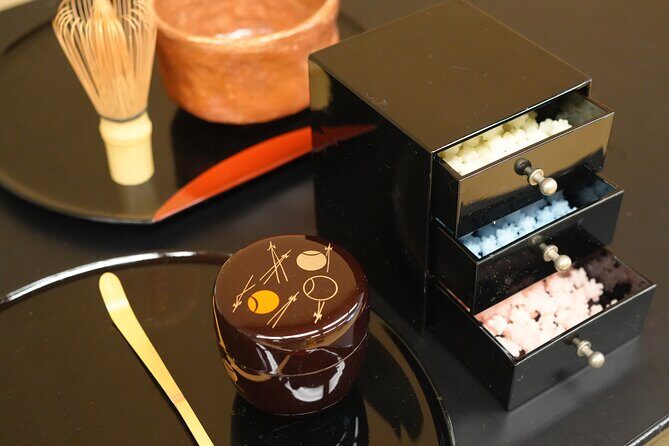
Then it’s your turn for the practical part: matcha whisking (about 20 minutes). This is the section that turns “interesting” into “I remember this.”
When people try matcha at home, they often get a thin, frothy, or uneven bowl. Here, you get to practice the motions and feel how the process changes the result. Even if your first attempt isn’t perfect, you’ll understand what the host is aiming for—because you’re physically doing it.
Taste is part of the training. You’ll have your own bowl, so your brain pays attention. You can compare your whisking with what you noticed earlier in the demonstration, then adjust in real time with guidance.
This is also a good moment for photos. You can capture the whisking steps and the finished bowl, but the real value is that you leave knowing how the ceremony’s gestures connect to the tea in your hand.

Translation devices and asking real questions without the awkward pause
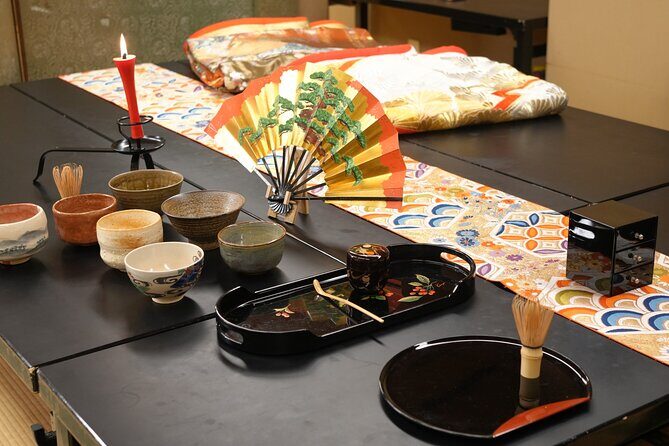
The experience explicitly provides latest translation devices, so no Japanese is required. That’s a big deal in Kyoto, where a lot of cultural activities assume you can either read the room or speak at least a little language.
In a private 20-tatami setting, language can either make you feel included or isolate you in silent observation. Here, you can ask questions using your own language and get answers in a way that makes sense.
The vibe from the hosts (Matsuda and Mayumi) is also important. The reviews point to friendly hosts who explain details and bring joy to the evening. That combination—good translation tech plus a welcoming tone—means you’re not just receiving information. You’re participating.
If you have kids, this matters even more. When a child can ask in their own language, the experience becomes shared, not adult-only.
Price and value: what you’re paying for (and why it’s not just the tea)
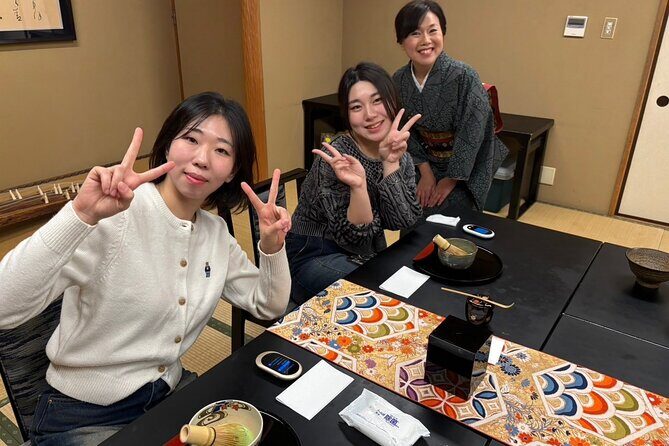
The price is ¥15,000 for adults (and ¥3,000 for children under 15). A US-dollar price is also listed as $97.98 per person. Either way, this isn’t the cheapest thing you can do in Kyoto.
So what are you paying for?
- A private session for 2 to 6 people only your group participates
- A historic ryokan setting with a 20-tatami hall typically closed to the public
- Kimono dressing (bridal uchikake or men’s haori) with props, plus professional lighting for photos
- A bilingual-feeling experience via translation devices
- The structure that includes a Zen pause, a demonstration, and hands-on whisking
If you compare it to a generic tea tasting with no guidance, no etiquette teaching, and no photo session, the value becomes clearer. You’re buying access, coaching, and time in a room that changes the whole tone of your evening.
Also, this is a great “after temple hours” plan. Once major sights close at night, Kyoto can feel quiet and hard to navigate. This turns that quiet into something meaningful.
Timing, group size, and how to make the most of the hour

You’re looking at about 59 minutes, in a private format with your group of 2 to 6 people. That private size is ideal: large enough to share the moment, small enough that the hosts can adapt to questions and pace.
Here’s how to get the most out of the hour:
- Go in ready to be a guest, not a spectator. When you receive the bowl, take your time with it.
- Lean on the translation device. Ask one or two questions instead of trying to absorb everything at once.
- Use the photo opportunities intentionally. Photos during dressing and whisking capture the transformation, but the calmer moments are usually the best for a simple shot.
One small consideration: because the ceremony is candlelit and low-light by design, photos may look better if you follow the host’s guidance rather than trying to freestyle camera settings. The staff’s photography help is there for a reason.
Who should book this Kyoto private tea ceremony?
This works especially well for:
- Couples or small groups who want a quieter night with an authentic-feeling cultural activity
- Families with kids who need communication support and a welcoming environment
- People who like hands-on experiences, not just demonstrations
- Visitors who want something meaningful after daytime sightseeing
It might be less ideal if:
- You want a long, textbook-style explanation over multiple hours
- You’re extremely time-pressed and can only handle quick, walk-in activities
- You’re uncomfortable with wearing a kimono or being guided through an etiquette-focused setting (though the dressing is assisted)
Should you book it?
If you want a Kyoto evening that’s calm, guided, and actually interactive, I think you should book this. The combo of kimono dressing with photos, a short Zen pause, a proper tea demonstration, and then making matcha yourself creates a full arc in under an hour.
The best part is that it’s private, it’s held in a real ryokan hall, and it removes the language barrier with translation devices. That’s a rare mix, and it makes the experience feel respectful instead of scripted.
If your schedule allows, it’s the kind of cultural moment you’ll remember long after you’ve walked past the famous daytime spots.
FAQ
How long is the Kyoto private tea ceremony?
The activity runs about 59 minutes.
What is the group size for this experience?
It’s a private activity for your group, with 2 to 6 people.
Is Japanese required?
No. Translator devices are provided so you can communicate during the ceremony.
Do I get to wear traditional clothing?
Yes. You’ll do kimono dressing (bridal uchikake or men’s haori).
What happens during the ceremony?
The experience includes kimono dressing and photos (about 15 minutes), Zen meditation (about 4 minutes), a tea ceremony demonstration (about 20 minutes), and matcha whisking (about 20 minutes).
What’s included in the tea ceremony?
It includes matcha green tea and sweets. You’ll also have tea ceremony utensils and costumes provided, plus staff assistance for photography and a licensed guide.
Can I take photos during the activity?
Yes. Photos are welcome throughout, and staff will assist with photography.
What’s the cancellation rule?
You can cancel for free up to 24 hours in advance for a full refund. Within 24 hours of the start time, the amount paid is not refunded.