REVIEW · TOKYO
Tokyo Tsukiji Fish Market Food and Walking Tour
Book on Viator →Operated by Traveling Tokyo · Bookable on Viator
Fish markets teach fast. This Tokyo walk gets you into Tsukiji with admissions included and a small group capped at 10 people.
I like how the tour begins at Tsukiji Hongwanji Temple instead of sprinting straight to seafood. I also appreciate that you get digital photos taken during the walk, so you’re not constantly fighting your camera while you’re trying to eat and learn.
One thing to plan for: food and drinks are not included, so you’ll want a real budget if you want to taste lots of what you see.
In This Review
- Key things to know before you go
- Tsukiji in Two Hours: A tight walk with real structure
- Start at Tsukiji Station Starbucks: the meet-up that keeps things easy
- Tsukiji Hongwanji Temple stop: customs before the seafood rush
- Tsukiji Fish Market: the history lesson you can actually walk through
- Tsukiji Jogai Market: street shops, 400 vendors, and where your food questions go
- Food isn’t included, so think “tasting budget,” not “tour meal”
- Digital photos included: a small feature that saves time
- The guides: local perspective and vendor know-how
- Price and value: why this cost can make sense
- Who this tour suits best (and who should rethink it)
- Should you book this Tsukiji Fish Market Food and Walking Tour?
- FAQ
- How long is the Tokyo Tsukiji Fish Market Food and Walking Tour?
- Where do I meet for the tour?
- What stops are included in the itinerary?
- Is admission to the markets and temple included?
- Are food and drinks included in the tour price?
- Can I cancel for a full refund?
Key things to know before you go
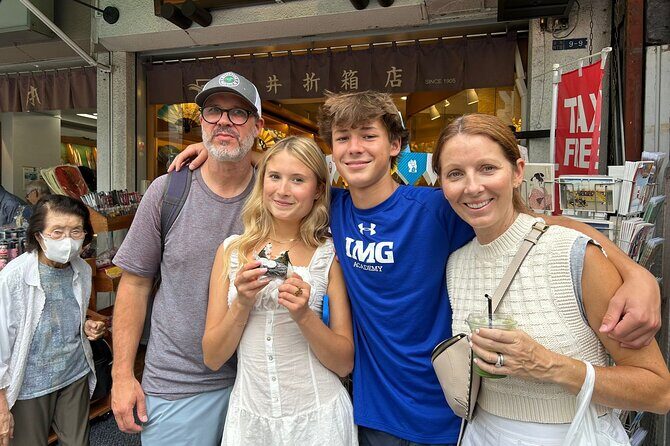
- Small group of 10 max keeps the pace human and questions actually get answered
- Temple first at Tsukiji Hongwanji Temple gives context for customs before you hit the market
- Market entry is included for Tsukiji Fish Market and Tsukiji Jogai Market
- You get digital tour photos to remember the best stops without extra work
- Jogai Market street shops means lots of vendor variety in a focused route
Tsukiji in Two Hours: A tight walk with real structure
This tour works because it’s built like a short morning story: temple, fish market, then the street-shop side of Tsukiji. You’re not wandering for hours trying to figure out what matters. You get a guided route that keeps the time punchy and the information useful.
At about 2 hours, it’s also a solid “market primer.” Even if you plan to return on your own later, you’ll come away knowing where you are, what you’re looking at, and how locals think about buying and eating seafood.
The small-group cap (max 10) matters more than you might expect. Tsukiji is busy, but it’s also a place where you’ll feel better when you can hear the guide and move as a group without constantly getting split up.
You can also read our reviews of more walking tours in Tokyo
Start at Tsukiji Station Starbucks: the meet-up that keeps things easy
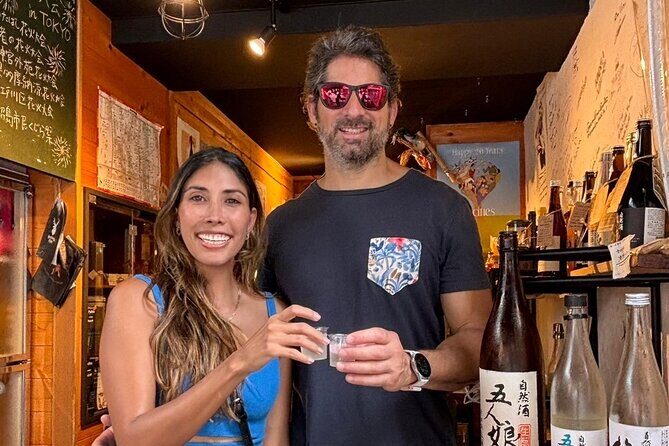
You’ll meet at Starbucks Coffee – Tsukiji Station (2-chōme-128 大広ビル 1F, Chuo City, Tsukiji). It’s a straightforward landmark, and it’s also a practical choice because you’re near public transportation.
The mobile ticket is another plus for a place where you don’t want extra steps. Scan, show up, and get going.
If you’re the type who hates standing around, you’ll like this format. The tour moves from the meeting point into a quick temple stop, then straight into market territory.
Tsukiji Hongwanji Temple stop: customs before the seafood rush
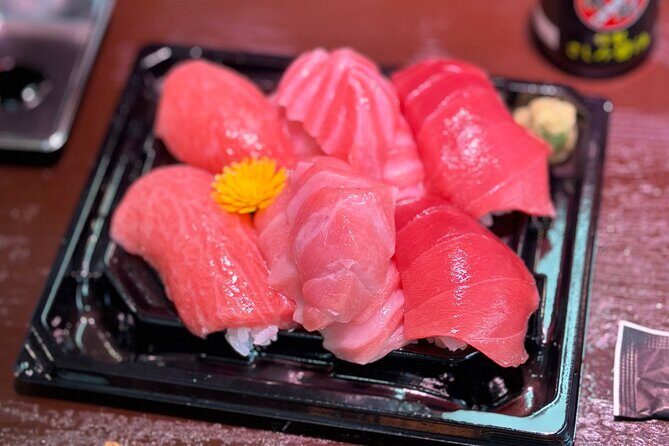
Before you touch the fish market energy, you spend about 15 minutes at Tsukiji Hongwanji Temple. The temple has been around for more than 400 years, and that age isn’t just trivia. It changes how you read the neighborhood.
You’ll learn basics about customs and practices there. That matters because markets like this are not just about commerce. They’re also about routine, etiquette, and respect for the flow of work around you.
Even if you’re not a temple person, I’d still treat this stop as part of the “why Tsukiji feels different” package. It gives you a cultural lens so the market stops aren’t just sensory overload.
Tsukiji Fish Market: the history lesson you can actually walk through
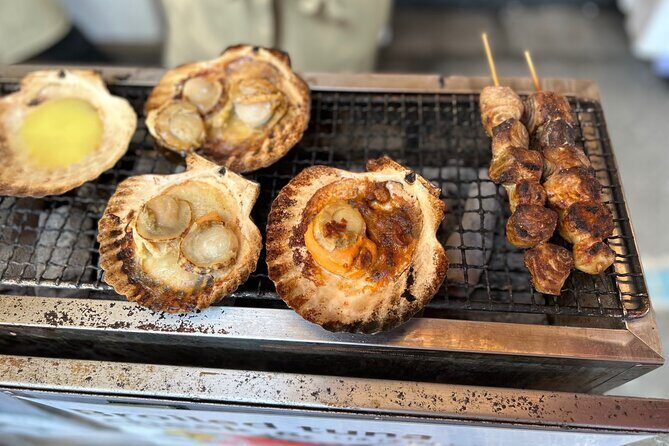
Next comes the main Tsukiji Fish Market visit, around 50 minutes with admission included. You’ll get the story of Tsukiji’s roughly 80-year history as the biggest fish market in Japan and the world.
What I find useful here is the way the guide turns history into practical sight lines. You don’t just hear dates; you learn what to notice as you walk. That makes the market feel less random and more like a system.
You’ll also get insider tips on what’s special and how to approach the stalls with the right mindset. Local culture and customs show up in small ways, like how people interact with vendors and how the market rhythm shapes what’s available when.
Tsukiji Jogai Market: street shops, 400 vendors, and where your food questions go
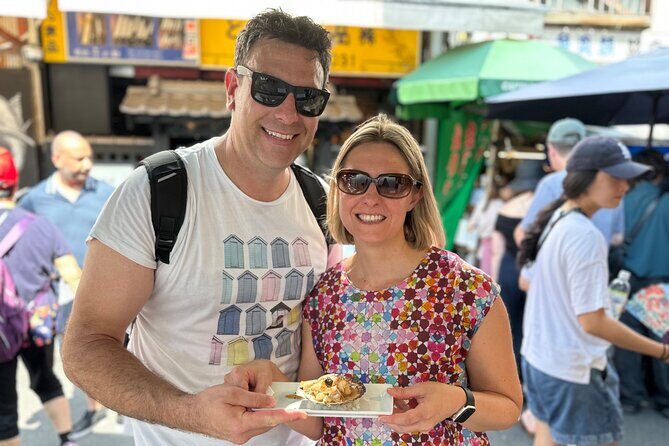
After the main market section, you shift to Tsukiji Jogai Market for about 50 minutes. This area is described as having around 400 street shops and vendors, so the key isn’t trying to see everything. It’s learning where the good options cluster and how to ask for what you want.
This stop is where the tour really earns its “food and walking” label. You’ll be in the kind of place where you can spot tuna and seafood references everywhere, but you still need guidance to pick shops that are worth your time and money.
Because food and drinks aren’t included in the tour price, your guide’s value shows up in recommendations rather than a free feast. The difference is huge. Without guidance, you might end up guessing. With a guide, you can make smarter choices faster.
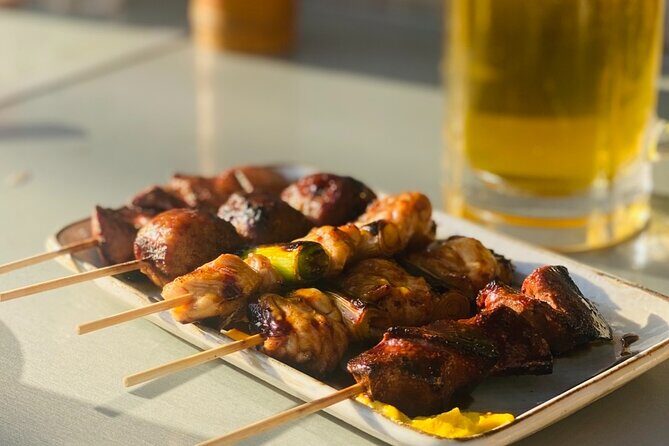
The best part is that you’re not stuck with one “set menu.” Instead, you can target what looks best to you—whether you care most about sushi, grilled items, shellfish, wagyu-type beef, or sweet snacks.
You can also read our reviews of more food & drink experiences in Tokyo


Food isn’t included, so think “tasting budget,” not “tour meal”
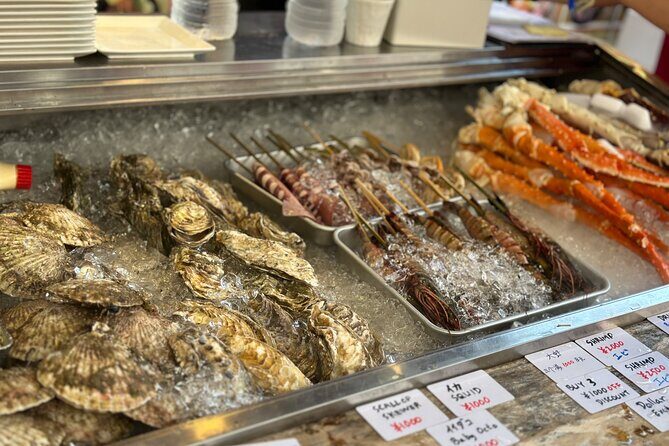
Here’s the part that can surprise people: food and drinks are not included. You’re paying for the guide, the structured route, the market/temple admissions, and the photo coverage—not for all the food you’ll want to buy while you’re there.
Still, that doesn’t mean you’ll leave hungry. It means you control the bill. If you want to sample more, you can. If you’re picky, you can keep it simple.
A practical approach:
- Decide your budget before you go so you don’t get emotionally hijacked by everything smelling amazing.
- Go with a loose plan. Pick one or two “big wants” (like sushi or grilled seafood) and add one snack item.
- If you skipped breakfast, you’ll likely feel the reward more. Some people find that starting light makes the whole market experience easier on the stomach.
One pro tip I’d keep in mind: someone shared that you can head toward the back of the market to buy food and rent a grill on top of the market for a more hands-on, unusual experience. It’s not something every tour mentions, so if that sounds fun, it’s worth asking the guide what’s possible on the day.
Digital photos included: a small feature that saves time
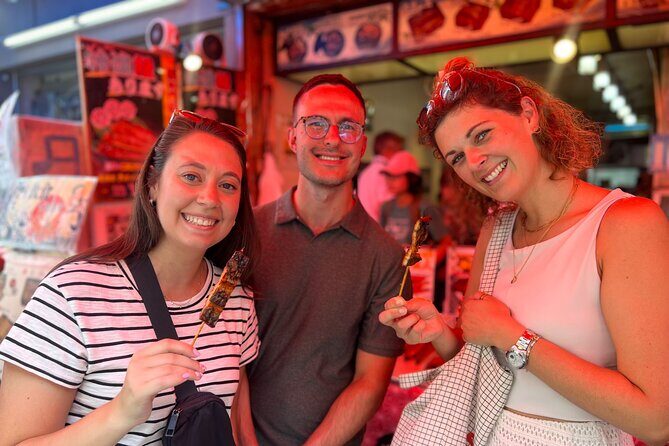
You get photos taken during the tour, and they’re included as part of the experience. That sounds minor until you’re standing in a busy market with limited patience for awkward photos.
Instead of stopping every minute, you can keep moving and let the guide’s process handle the memory part. It also helps if you’re traveling with people who have different pacing needs. You can focus on the food and the sights while still leaving with something to look back on later.
The guides: local perspective and vendor know-how
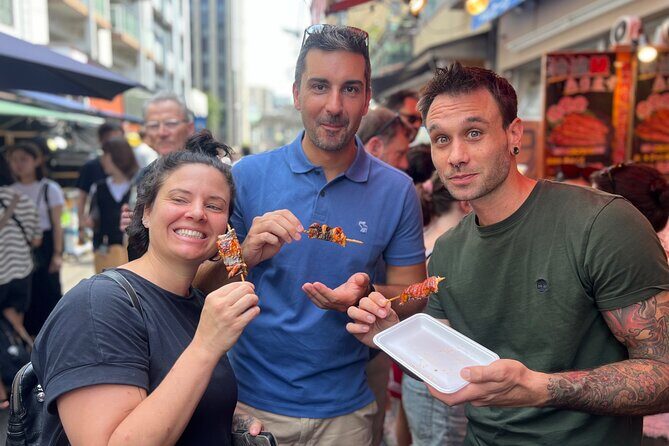
The tour is run with a local professional guide, and the results show in how people describe the experience. Names that have popped up include Yayoi, Shino, Jim, Shingo, and Nao—each credited with making the market easier to navigate and tastier to explore.
Even when the personality varies, the pattern is consistent: you get context plus practical recommendations. That’s the difference between seeing Tsukiji and understanding Tsukiji.
It also helps that the group stays small. In a place like this, a guide’s ability to answer questions and steer you away from dead ends is what turns a walk into a real experience.
Price and value: why this cost can make sense
At $21.14 per person, this isn’t a “free-for-all food tour.” It’s more like a paid orientation plus included admissions and photo coverage.
Here’s why that can be worth it:
- Admissions are included for Tsukiji Fish Market, Tsukiji Jogai Market, and the temple. That reduces surprise expenses.
- You’re paying for time you’d otherwise spend figuring things out alone.
- Small group size helps the guide’s recommendations actually land, instead of getting lost in crowd-management mode.
Is it the cheapest way to see Tsukiji? Probably not. But it can be one of the best value ways to do Tsukiji correctly in a short window—especially if you want the food guidance without spending your whole morning wandering in circles.
Who this tour suits best (and who should rethink it)
This is a great fit if you:
- Want a structured route through Tsukiji without spending hours researching
- Like learning about local customs before you hit the market
- Want vendor recommendations so you can spend your money where it counts
- Appreciate small-group pacing and easy conversation with your guide
It might be less ideal if you:
- Expect the tour price to cover most or all food. It doesn’t.
- Want maximum flexibility to roam independently for the whole time. This is a guided path with planned stops.
If you enjoy planning, this tour can also pair well with a self-guided follow-up later. You’ll know where to go and what to look for once the guide has given you the basics.
Should you book this Tsukiji Fish Market Food and Walking Tour?
I’d book it if your goal is a smart, guided Tsukiji experience that saves time and adds context. The combination of a temple start, included admissions, small group size, and photo coverage makes it more than just a walk-by.
Go in with one mindset: budget for food. If you want to taste around, you’ll enjoy the ride. If you only want included snacks, look elsewhere.
If you want the quickest route to Tsukiji that still feels personal, this one is a strong choice.
FAQ
How long is the Tokyo Tsukiji Fish Market Food and Walking Tour?
The tour lasts about 2 hours.
Where do I meet for the tour?
You meet at Starbucks Coffee – Tsukiji Station, Japan, 104-0045 Tokyo, Chuo City, Tsukiji, 2-chōme 128 大広ビル 1F.
What stops are included in the itinerary?
The tour includes Tsukiji Hongwanji Temple, Tsukiji Fish Market, and Tsukiji Jogai Market.
Is admission to the markets and temple included?
Yes. Entry/admission to Tsukiji Fish Market, Tsukiji Jogai Market, and Hongwanji Temple is included.
Are food and drinks included in the tour price?
No. Food and drinks are not included.
Can I cancel for a full refund?
Yes. You can cancel for a full refund if you cancel at least 24 hours before the experience’s start time, and cancellation is free.