REVIEW · TOKYO
Traditional Antiques Market Tour Tokyo
Book on Viator →Operated by Sayuki · Bookable on Viator
Tokyo’s shrine markets make shopping feel like a treasure hunt. With geisha guide Sayuki, you’re not just browsing stalls—you’re learning what matters and how to spot value. I especially like the bargaining help, because it turns awkward price-hunting into a smoother, fairer deal-making experience.
You’ll also get a day focused on antiques and curiosities, including items people often look for like kimono-style goods, and the kind of showpiece souvenirs that don’t feel mass-produced. One consideration: a past customer reported the market wasn’t operating on the week their tour ran, and the operator was hard to reach, so it’s smart to plan with that risk in mind.
If you want a hands-on Tokyo shopping experience that goes beyond malls, this is a solid fit. The tour runs about 2 to 3 hours, stays near public transport, and keeps groups relatively small (up to 20). Wear comfy walking shoes—you’ll be on your feet.
In This Review
- Key things to know before you go
- Why Sayuki as your guide changes the whole experience
- Meeting at Tomioka Hachiman Shrine: an easy start, a traditional setting
- How the market time works in a 2–3 hour shopping block
- Bargaining help: what you should expect and how to use it
- What kinds of antiques and souvenirs you can hunt for
- Price and value: $170.60 per group up to four
- Pacing and logistics that actually matter on a shopping day
- The one risk to take seriously: market timing can be unpredictable
- Who this tour fits best (and who might want something else)
- Should you book the Traditional Antiques Market Tour Tokyo?
- FAQ
- FAQ
- How long is the Traditional Antiques Market Tour Tokyo?
- Where do you meet, and what time does the tour start?
- Who is the guide, and what do they do during shopping?
- What is included in the price?
- Are there market entrance fees?
- Is the tour refundable if I cancel?
Key things to know before you go
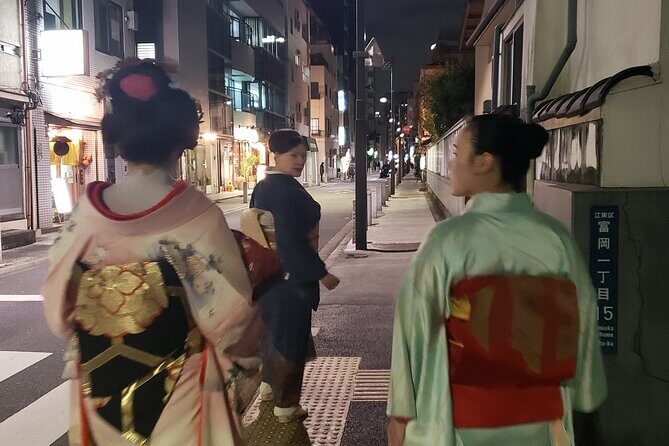
- Sayuki’s bargaining support: you bargain with help, not guesswork.
- Shrine-area antique markets: outdoor stalls tied to Tokyo’s traditional spots.
- Souvenir targets are specific: kimono robes-style finds and classic curios.
- Short, workable time window: about 2 to 3 hours in the daytime.
- Small-group feel: a maximum of 20 people keeps it practical.
Why Sayuki as your guide changes the whole experience
Tokyo has endless shopping options, but the antiques side can be confusing fast. Prices vary wildly, descriptions can be vague, and the seller’s expectations may be different from what you’re used to. That’s where a geisha guide like Sayuki can be a practical advantage.
The core idea is simple: you’re shopping with someone who understands the culture around these markets and can translate that into shopping moves that work. The tour is also built around the assumption that bargaining matters. Even if your Japanese is decent, bargaining in a market setting is its own skill—tone, pace, and what “fair” looks like can all be hard to read. Having Sayuki handle the negotiation removes a lot of friction.
One more thing I like: the tour isn’t framed as formal museum talk. It’s more like, here’s what people buy, here’s how stalls work, and here’s how to leave with something that feels connected to Tokyo rather than just purchased.
You can also read our reviews of more shopping tours in Tokyo



Meeting at Tomioka Hachiman Shrine: an easy start, a traditional setting
The tour starts at Tomioka Hachiman Shrine in Koto City (1-chōme-20-3 Tomioka, Tokyo). That matters because shrine markets feel different from indoor antique shops. Outdoor stalls around traditional areas tend to have a more casual, hand-to-hand rhythm. You’ll be moving between storefront-like tables and vendor setups, not touring a curated showroom.
Starting near a major shrine also helps with flow. You’re already in a place where people expect to browse and buy small cultural items. The day’s vibe is naturally aligned with the purpose of the tour: finding Japanese curiosities and souvenirs that don’t look like the same five products you see everywhere.
If you like your Tokyo mornings efficient, this start time helps. Tours like this begin at 9:00 am, which is early enough to beat the worst crowds on the streets while still leaving you time later for dinner, neighborhoods, or another attraction.
How the market time works in a 2–3 hour shopping block
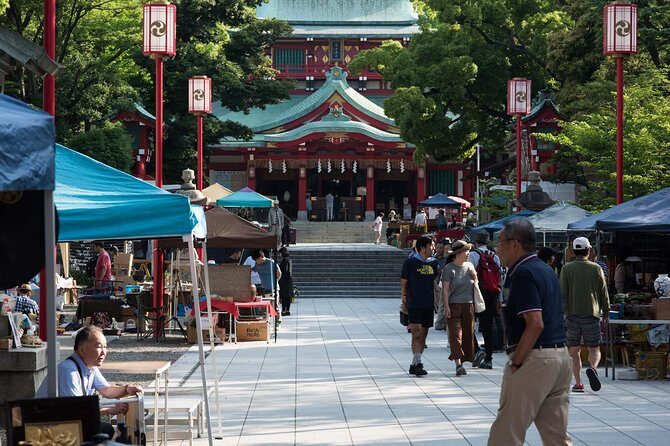
This experience runs about 2 to 3 hours, which is a good length for two reasons. First, it’s long enough to actually shop and compare. Second, it’s short enough that you don’t feel trapped if you’re not finding what you want.
In the tour flow, the big focus is the outdoor shrine market area—described as antiques and collectibles—where you can browse, ask questions, and let Sayuki guide you. After that, the tour’s design is clearly centered on additional flea-market-style shopping around Tokyo shrine areas.
What that means for you: don’t show up thinking you’ll come out with a full suitcase of bargains. This is more like a targeted hunt. You’ll likely find a few high-value items or a handful of smaller gifts if you keep your focus narrow and ask the right questions as you go.
Bargaining help: what you should expect and how to use it
The tour includes the most important service for market shopping: your guide bargains for you. The listing-style promise is that this can help you get a fair price and avoid overpaying. In practice, this means you’re not trying to wrestle down a number with limited context.
Here’s how to make bargaining support work in your favor:
- Be ready with a simple target. Instead of asking for everything, pick one or two “types” of items you want (for example: something kimono-related, or a particular category of collectible).
- Ask for fair rather than cheap. A good deal in these markets often depends on condition, materials, and authenticity cues—not just the starting price.
- Move at the speed of the negotiation. If the vendor is engaged and Sayuki is talking, don’t rush the process just because you see another stall.
- Decide what you’ll do if the price is above your comfort zone. With negotiation support, you can pivot quickly to the next option.
A small practical note: bargaining is easier when you’re confident in what you’re buying. If you’re unsure about what something is, ask before your final decision gets locked in.
What kinds of antiques and souvenirs you can hunt for
This tour is designed for people who want Japanese curiosities with personality. The tour description points to traditional items you might see in shrine and flea settings, including things like samurai sword-themed souvenirs and decorative items such as geisha pillows. Those are the kinds of items that instantly read as “Japan” on a shelf back home.
You’re also specifically guided toward shopping for kimono-related goods, including kimono robes. That’s a useful clue: the tour isn’t only about small trinkets. It’s built for buyers who want wearable or giftable textiles too.
What should you expect when you’re shopping? In these markets, sellers might offer a mix of:
- older-looking decorative pieces
- modern souvenirs designed to resemble traditional style
- small antiques and collectibles
- refurbished or repurposed items
Your best move is to treat the tour like a guided browsing session with negotiation. Let Sayuki point you toward stalls that match what you’re trying to buy, and use her help to confirm that what you want is realistic for that stall.
A few more Tokyo tours and experiences worth a look



Price and value: $170.60 per group up to four
The total price is $170.60 per group, for up to 4 people. That structure is crucial for value. If you travel as a couple, you’re paying more per person than a group of four. If you’re traveling solo, it can still be worth it if the bargaining support would save you enough to feel it made a difference.
A quick way to think about it:
- For 4 people, it’s about $42.65 per person.
- For 2 people, it’s about $85.30 per person.
So who gets the best deal? Small groups. Two friends or a family of four usually get the most “market-shopping with a guide” value for the money.
Also, remember what’s included: negotiation support and an admission ticket at the shrine market stop (at least at Stop 1). It’s not pitched as a museum-style ticket-heavy day. This is a shopping tour, so the real value comes from reducing wasted shopping time and helping you negotiate with less stress.
If you’re the type who would spend hours bouncing between stalls alone, trying to confirm what’s authentic and hunting for price clues, paying for Sayuki’s help can be a smart trade.
Pacing and logistics that actually matter on a shopping day
This tour keeps things practical. You’ll want to plan for walking, because the market experience is outdoor and stall-based. The guidance is straightforward: wear comfortable walking shoes.
It’s also a small-group setup. With a maximum of 20 travelers, it’s usually easier to keep track of the guide and move between stops without constant bottlenecks.
A couple more practical perks from the tour info:
- Mobile ticket for access
- Near public transportation
- Most people can participate
- Service animals allowed
- The activity ends back at the meeting point
That last part—returning to the start—makes it easier to plan the rest of your day. You don’t need a complicated return route or worry about catching transit from a far-flung location.
The one risk to take seriously: market timing can be unpredictable
Here’s the honest part. There is at least one documented complaint that the market didn’t operate on the day the tour was scheduled. The concern wasn’t just that prices were high or items were limited—it was that the market itself wasn’t there.
If you’re planning this for a specific window, I recommend you treat the morning as a flexible plan, not a guaranteed shopping haul. Since the cancellation policy says the experience is non-refundable and cannot be changed for any reason, you don’t want to bet everything on one morning if your schedule is tight.
Your best defense:
- Build in backup shopping options nearby (Tokyo always has alternatives).
- If you need the market to happen, double-check timing close to departure through the booking channel you used.
- If something goes wrong at the site, move fast with help from your booking platform.
This doesn’t mean you shouldn’t book. It means you should book with eyes open.
Who this tour fits best (and who might want something else)
This is a great match if you:
- want a daytime shopping experience built around Tokyo shrine markets
- like the idea of bargaining but don’t want the stress
- want Japanese souvenirs that feel personal and traditional
- prefer a guide-led hunt over wandering aimlessly
It can be less ideal if you:
- want a long, stop-and-learn cultural lecture
- hate bargaining and don’t want negotiation at all
- need a guaranteed market setup on a specific day for a specific deadline (because market timing can be an issue)
If you’re a group, especially up to four, the pricing model is also a big plus. The guided portion becomes more cost-effective, and you can split purchases or compare choices in real time.
Should you book the Traditional Antiques Market Tour Tokyo?
I’d book it if your goal is to shop smart with a real market helper and you’re okay with the natural uncertainty of outdoor flea-style settings. The combination of Sayuki’s bargaining help and the shrine-market focus is exactly the kind of Tokyo experience that feels more authentic than a standard shopping circuit.
But I wouldn’t book it as a make-or-break plan. There’s a real-world risk that the market may not run on a scheduled week, and the experience is non-refundable, so keep your expectations flexible. If you treat it as a guided hunt for great finds rather than a guaranteed shopping appointment, you’ll likely enjoy it.
If you do book, come prepared to walk, decide what you want before you get overwhelmed, and let Sayuki do what she’s hired to do: negotiate and steer you toward stalls worth your time.
FAQ
FAQ
How long is the Traditional Antiques Market Tour Tokyo?
The tour lasts about 2 to 3 hours.
Where do you meet, and what time does the tour start?
You meet at Tomioka Hachiman Shrine (1-chōme-20-3 Tomioka, Koto City, Tokyo 135-0047) and the start time is 9:00 am. The tour ends back at the meeting point.
Who is the guide, and what do they do during shopping?
The tour is led by Sayuki, a geisha guide. The guide may be an apprentice geisha and will bargain for you on your behalf.
What is included in the price?
The price includes the bargaining help and an admission ticket at the shrine market stop.
Are there market entrance fees?
The tour information lists no fees to enter the market.
Is the tour refundable if I cancel?
No. The experience is non-refundable and cannot be changed for any reason.