REVIEW · TOKYO
AKEMI’s SUSHiKiTCHEN: A fun sushi cooking lesson in Tokyo
Book on GetYourGuide →Operated by Blue-J ~ AKEMI's SUSHiKiTCHEN · Bookable on GetYourGuide
Sushi gets real when it’s made at home. At AKEMI’s SUSHiKiTCHEN, Akemi Castellano teaches you in a relaxed Tokyo house setting, starting with vinegar rice and working through four classic sushi styles. I love the calm, at-home pace and how they explain the technique and background of sushi, not just the how-to. One thing to consider: the class uses a set menu, so you do not pick which sushi pieces you’ll make, and the kitchen can’t accommodate people with food or animal allergies.
I also like how practical the session feels. You get hands-on instruction from an English- and Japanese-speaking chef in a small group of up to six, plus you finish by eating what you made, with sake and dessert. Plan for a 3-hour block, and choose morning (lunch) or afternoon (dinner) depending on what fits your Tokyo schedule.
In This Review
- Key takeaways before you book
- A Tokyo home kitchen where sushi feels personal
- The 3-hour flow: vinegar rice to four sushi types
- Vinegar rice: the lesson’s real backbone
- Fish prep, seafood handling, and why it matters
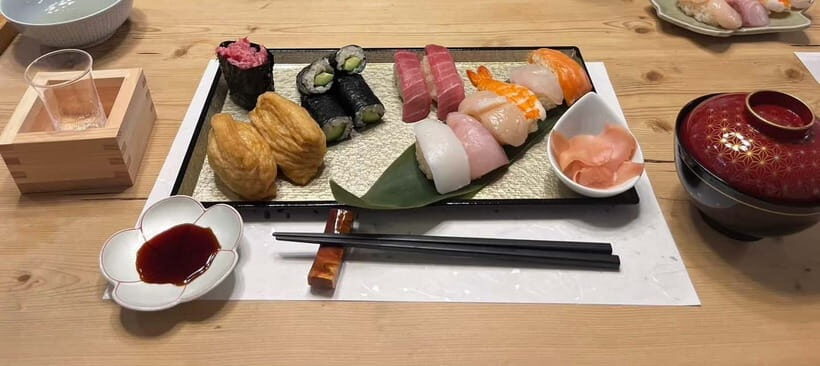
- Your sushi lineup: Nigiri, Maki, Gunkan, and Inari
- Nigiri-zushi (hand-pressed sushi)
- Maki-sushi (rolled sushi)
- Gunkan (battleship sushi)
- Inari (fried tofu pockets)
- A note about choosing what you make
- Lunch or dinner: eating what you made, plus sake and dessert
- Price and value: what $103 gets you in Tokyo
- Logistics from Shinjuku or Shibuya: how you actually get there
- Who this sushi lesson is best for
- Should you book AKEMI’s SUSHiKiTCHEN?
- FAQ
- What sushi types will I learn to make?
- How long is the lesson?
- How big is the group?
- Is there a vegetarian option?
- Can I choose which sushi I make?
- Do they accommodate allergies?
Key takeaways before you book
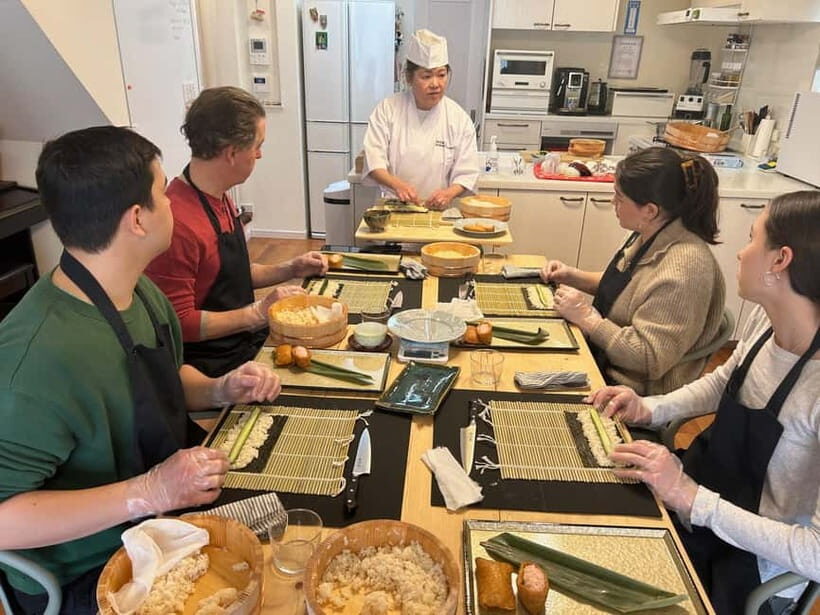
- A small-group home lesson: Limited to 6 participants, so you get personal coaching.
- Four sushi types in one sitting: Inari, Gunkan (battleship), Maki-sushi, and Nigiri.
- Vinegar rice is the anchor: You’ll learn how to prep and treat the rice properly before shaping anything.
- Fish prep gets explained: You’ll see how seafood is handled for sushi-level eating.
- You eat right away: Lunch or dinner is included, with sake for adults and dessert.
- Easy access from Shinjuku and Shibuya: Then a short local walk, or they can meet you at the nearest station.
A Tokyo home kitchen where sushi feels personal
There’s a big difference between learning sushi in a restaurant classroom and learning it in someone’s home kitchen. Here, the vibe stays simple. You’re not stuck behind a counter watching someone else work. You’re standing where the food happens, asking questions while the rice cools to the right feel and texture.
Akemi Castellano leads the lesson, and the tone is friendly and guided. You’ll also spend time learning why certain steps matter, especially around rice. Sushi lives or dies by rice quality and seasoning, so it makes sense that vinegar rice gets the spotlight from the start. If your goal is to understand sushi beyond ordering it, this format helps a lot.
I also like that the lesson stays grounded in Japanese food culture. You get context on the history of sushi and where sushi-style habits came from, not just a list of ingredients. It makes your meal at the end taste more meaningful, because you’re not eating something random. You’re eating something you built, step by step.
One more practical point: this is not a hands-off demo. You’ll be making sushi yourself. That’s a lot of people’s favorite part, because you’ll leave with a clear mental model for how sushi is assembled and how it should behave.
You can also read our reviews of more cooking classes in Tokyo
The 3-hour flow: vinegar rice to four sushi types
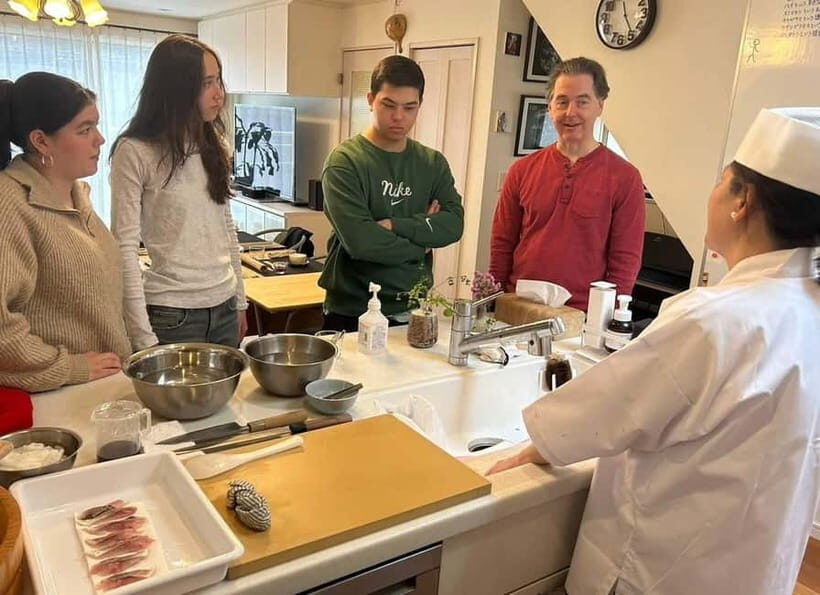
The class runs for 3 hours, and the pacing is designed around timing. Sushi rice can’t sit around forever. It needs to cool and be used while it has the right warmth and stickiness. That’s why the lesson starts with the rice process, not with shaping.
You’ll move through the lesson in a sequence that mirrors how sushi gets made in practice:
- preparation of vinegar rice
- how the chef thinks about seafood pieces for sushi
- hands-on making of multiple sushi styles
By the time you get to shaping, you already know how the rice should look and feel. That matters for both Nigiri and Maki. When rice preparation is solid, the rest gets easier and more forgiving. If you’ve ever tried to make sushi at home and found that your rolls won’t hold together, this kind of start usually fixes the biggest problem.
The class covers four kinds of sushi:
- Nigiri-zushi (hand-pressed sushi)
- Maki-sushi (rolled sushi)
- Gunkan (battleship sushi)
- Inari (fried tofu pockets)
You’ll also get instruction on how fish is prepared for sushi, so you’re not just learning how to assemble. You’re learning how sushi ingredients get handled to meet that clean, well-seasoned, bite-ready standard.
Another nice touch: there’s no confusing schedule of stops. It’s one home base, one kitchen rhythm, and you finish when you’re done eating. That’s a relief in Tokyo, where half the fun can also be half the stress.
Vinegar rice: the lesson’s real backbone
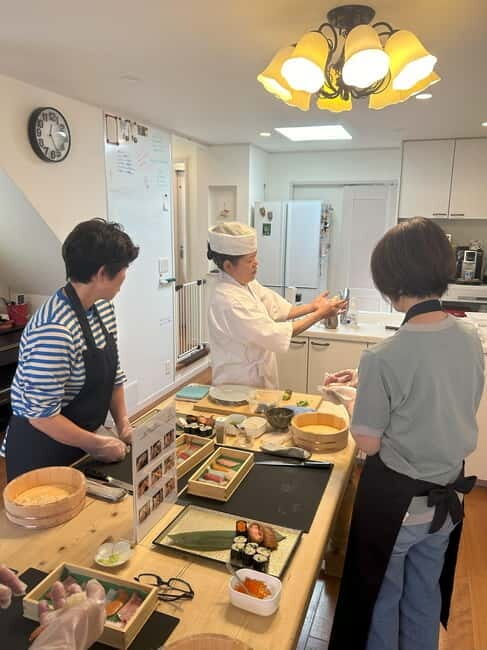
If you remember one thing from this experience, make it vinegar rice. Everything else ties back to it. The rice provides the correct bite, seasoning balance, and the stickiness needed to form sushi without falling apart.
During the class, Akemi walks you through how to prepare and season the rice. You learn how vinegar seasoning works and how to handle the rice so it doesn’t turn gummy or dry out. It sounds simple, but rice behavior is the difference between sushi that feels light and sushi that feels heavy.
If you’re a cook, this part will feel satisfying because it’s measurable and repeatable. You can take what you learn here back to your own kitchen and adjust it in future attempts. Even if you’re not a cook, rice technique is still the practical skill you’ll want because it directly affects every sushi you eat afterward.
Also, the way they teach it is part of the value. You’re not handed a bowl and told good luck. You’re coached while you’re doing it, and that reduces the usual beginner mistakes.
Finally, vinegar rice is a cultural thing too. Sushi isn’t just raw fish on rice. It’s seasoned rice with a specific purpose. Understanding that makes the rest of sushi preparation feel like a system, not a set of unrelated steps.
Fish prep, seafood handling, and why it matters
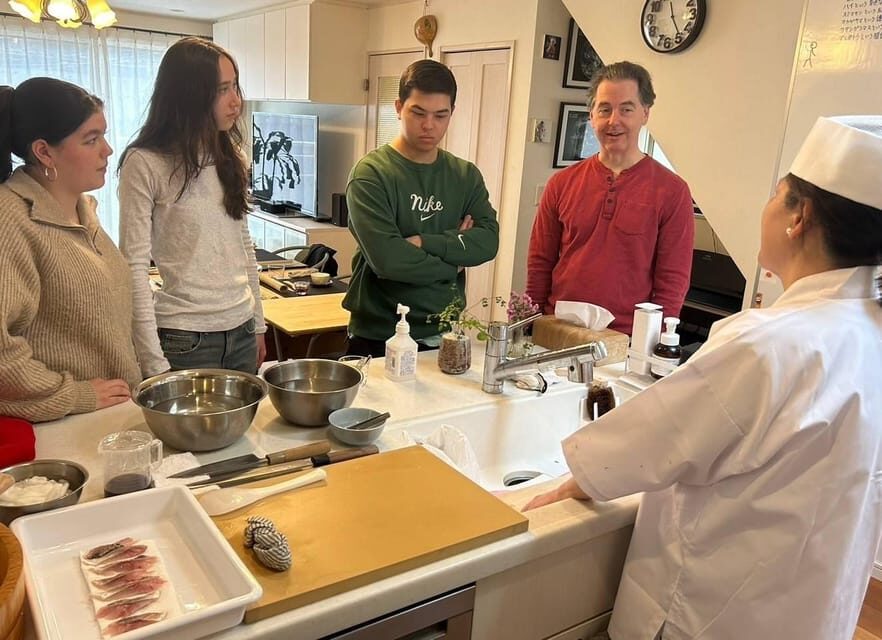
Sushi lessons can sometimes skip the hard parts. This one doesn’t. You get a demonstration of how fish is prepared for sushi. That’s useful because most visitors see fish in packaged form and assume the chef’s role is only assembly.
Here, you learn that preparation is part of quality control. Seafood handling affects texture, flavor, and eating experience. Even if you don’t end up becoming a fish expert overnight, you’ll understand why chefs care so much about the details.
This also helps your dining brain. When you eat Nigiri later, you’ll notice how the seafood piece sits, how it balances the rice, and how the bite feels clean instead of messy. That’s exactly the point of learning sushi in a structured way.
One more thing: the lesson includes context on the history of sushi, especially sushi Edo origins. That cultural framing pairs with fish prep and rice technique. It turns what could be a casual cooking class into a real food education moment.
Your sushi lineup: Nigiri, Maki, Gunkan, and Inari
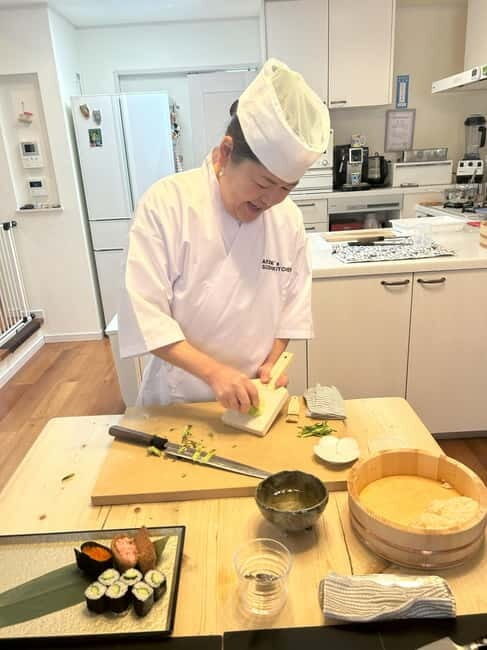
This class is built around variety, but the variety isn’t random. Each sushi type teaches a different skill.
A few more Tokyo tours and experiences worth a look



Nigiri-zushi (hand-pressed sushi)
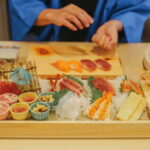
Nigiri is often the hardest to fake. Rice needs to be pressed with the right amount of firmness. The seafood piece needs to sit correctly so the bite feels balanced. In this lesson, you practice hand-pressed sushi directly, with coaching that helps you avoid over-packing the rice.
When you get it right, Nigiri tastes like precision: a clean bite where fish and rice feel like one unit. When you get it wrong, it can feel too dense. That’s why learning rice first helps so much.
Maki-sushi (rolled sushi)
Maki is all about structure. You need the right mat-rolling technique and a consistent spread so the roll holds together when sliced. You’ll learn the basic method and work your way toward rolls you’re proud to serve.
Maki also helps you understand how sushi rice behaves differently when it’s spread thin. The rice still has to be seasoned correctly, but it can’t be sloppy or uneven.
Gunkan (battleship sushi)
Gunkan sushi is fun because it’s playful and visually distinctive. The shape teaches you how to create a bowl-like base with rice and then dress it so it stays intact. It’s a good reminder that sushi isn’t just about rolls and hand-pressed pieces.
You’ll get hands-on instruction that makes gunkan feel less mysterious and more like a technique you can repeat.
Inari (fried tofu pockets)
Inari is a great curveball if you mostly associate sushi with fish. It’s also where you learn that sushi culture includes multiple styles, not only raw seafood. Inari uses fried tofu pockets, and you’ll assemble them as part of the lesson.
If you’ve never had Inari before, expect a different texture and a different kind of satisfaction. It’s often a surprise for first-time sushi learners.
A note about choosing what you make
This experience uses a set menu. You cannot select the sushi types you’ll prepare. That’s not necessarily a bad thing, because you do get a full spread of four classics. Still, if you have strong preferences, keep that in mind so you’re choosing it for the learning experience, not for custom control.
Lunch or dinner: eating what you made, plus sake and dessert
One of the best parts of this lesson is the payoff meal. You don’t just make sushi and pack it away. You enjoy it as lunch or dinner that you prepared yourself.
Adult drinks include sake, and dessert is served after. That matters for value because it turns the session into an actual meal experience, not just instruction. You also get Japanese food culture context while you’re still in the learning mood, which helps everything stick.
Timing also changes the mood. A morning lesson with lunch tends to feel energetic and clean, like you’re starting your day with food focus. An afternoon session with dinner can feel more relaxed, like you’re closing out your Tokyo day with something hands-on.
You can also choose a vegetarian option. You indicate your preference when you place your order. That’s a good move if you eat plant-based or just want to reduce seafood.
In practice, some sessions have included extra drinks and dessert details beyond the basic meal, like matcha tea or ice cream. Don’t assume you’ll get every extra, but it’s worth knowing that the hosts pay attention to the full experience.
Price and value: what $103 gets you in Tokyo
At $103 per person for 3 hours, this is not a cheap add-on. But you’re not paying for a quick taste of sushi. You’re paying for:
- a trained instructor (Akemi Castellano)
- a small group limited to 6
- hands-on coaching while you make four sushi styles
- instruction on vinegar rice and fish prep
- the meal you eat afterward, plus sake and dessert
In Tokyo, cooking classes range from casual to very polished. What makes this one feel closer to the polished end is the combination of rice technique, seafood handling demonstration, and the fact that you leave with a full meal you made yourself. Many restaurant meals cost roughly the same or more, but you don’t learn how to recreate anything.
So the value question is simple: do you want skills, or do you want food only? If you want skills, $103 starts to make sense quickly, especially with the small group size. If your goal is just to eat sushi and move on, you might feel this costs more than you want.
Also remember the set menu point. You’re paying for a planned lesson flow. You’re not paying for customization.
Logistics from Shinjuku or Shibuya: how you actually get there
This is easy to plug into a Tokyo itinerary because the location has good access from Shinjuku and Shibuya. Once you arrive in the area, there’s typically a short walk through the neighborhood.
Many people find the house on their own using Google Maps. If you’d rather not figure out the last stretch, you can request to be met at the nearest train station. That’s a nice option if your Japanese is limited or you’re arriving with tired feet.
Here’s a practical tip: travel in with buffer time. Homes and quiet streets can feel simple or complicated depending on time of day and your station exits. If you’re meeting at a station, give yourself time to find the pickup point before the lesson starts.
Because the class is 3 hours long, punctuality helps the rice timing and the work schedule. Treat it like a real dinner appointment, not just a casual class.
Who this sushi lesson is best for
This experience suits you if you fall into one of these groups:
- You’re serious about sushi and want technique, not just a meal.
- You like hands-on cooking lessons in a smaller setting.
- You want Japanese food culture context alongside the practical skills.
- You want to eat dinner or lunch that you made yourself, with sake and dessert.
It may not be the right fit if:
- You have food or animal allergies. The kitchen cannot accommodate customers with food or animal allergies, so it’s safer to look elsewhere.
- You’re traveling with very young kids. It’s not suitable for children under 10.
- You only want customization. You can’t choose what sushi you’ll make because the menu is set.
If you’re traveling solo, this can still be enjoyable because the group stays small, and the atmosphere feels like a shared lesson rather than a factory. If you’re traveling as a couple or small group, it can feel like a private cooking night with a knowledgeable chef guiding you.
Should you book AKEMI’s SUSHiKiTCHEN?
If you want to learn sushi in a way that feels grounded and repeatable, I think you should book it. The best reason is simple: you’re trained on vinegar rice and taught how sushi types come together, then you eat the results as a real meal. For the price, the value is in skills plus food, in a small group, led by Akemi Castellano.
The decision hinge is not the sushi. It’s the constraints. This is a set-menu lesson, so don’t book if your priority is choosing exactly what you eat and make. Also, if you have any food or animal allergies, this is not the right choice.
If you’re okay with those limits, this feels like one of the more memorable ways to learn sushi in Tokyo: you get technique, culture, and a calm home-kitchen experience that sticks with you long after the last bite.
FAQ
What sushi types will I learn to make?
You’ll learn to make four kinds of sushi: Nigiri-zushi (hand-pressed sushi), Maki-sushi (rolled sushi), Gunkan (battleship sushi), and Inari (fried tofu pockets).
How long is the lesson?
The experience lasts 3 hours.
How big is the group?
It is limited to a small group of up to 6 participants.
Is there a vegetarian option?
Yes. A vegetarian option is available, but you should indicate your preference when you place your order.
Can I choose which sushi I make?
No. The lesson uses a set menu, so guests are not able to select the sushi they will be making.
Do they accommodate allergies?
The activity cannot accommodate customers with food or animal allergies. If you have any allergies, you should let them know beforehand. The class is also not suitable for children under 10.