REVIEW · KYOTO
Arashiyama’s Best Vegan Ramen & Gyoza Class
Book on Viator →Operated by Kyoto green cuisine · Bookable on Viator
Arashiyama ramen without the compromise. What makes this class different is the secret umami broth approach, plus the hands-on clear instruction that keeps you cooking instead of watching. One thing to think about first: the host has a dog at home, so if you have a pet allergy, this may not be a good fit.
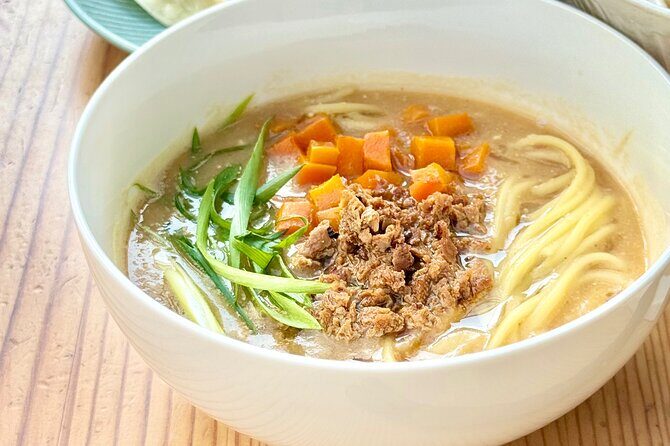
I like that the goal is not just vegan food, it is ramen you would happily eat even if you love meat. The broth is 100% plant-based and described as dashi-free, built from kombu (kelp), shiitake, and local Kyoto vegetables until it hits that deeply satisfying Japanese comfort-food feel.
This is a private session (just your group) near public transit, starting at Arashiyama Station, with an English-speaking instructor and cooking recipes included. You’ll get a mobile ticket, aprons and towels, and a chance to cook and eat together (either lunch or dinner depending on your reservation time).
In This Review
- Key highlights you’ll care about
- Arashiyama Vegan Ramen That Aims for Real Umami
- From Arashiyama Station to a Home Kitchen Setup
- What You’ll Cook: Two Broths and Crispy Gyoza
- The broth mission: “Secret umami” without meat stock
- Inside the Broth: Kombu, Shiitake, and Kyoto Vegetables
- Gluten-free options you can plan around
- Crispy Gyoza: A Hands-On Skill, Not Just a Side
- Eating Together: Lunch or Dinner, Either Way You Leave Full
- Price and Value: What $65.15 Buys You in Kyoto
- Timing, Group Comfort, and Questions That Matter
- Dietary Notes: Pet Allergies and Food Allergies
- Who This Class Is Best For
- Should You Book Arashiyama’s Vegan Ramen & Gyoza Class?
Key highlights you’ll care about

- Dashi-free vegan ramen broth made from scratch, using kombu, shiitake, and Kyoto vegetables
- Two types of ramen broth plus crispy gyoza from scratch in about two hours
- English-speaking instructor with clear step-by-step guidance (and time to ask questions)
- Meals included so you don’t leave hungry: you cook and then eat together
- Private group format for a more relaxed, personal pace
- Gluten-free options available if you need them
Arashiyama Vegan Ramen That Aims for Real Umami
If you’ve tried vegan ramen that tasted like a sad apology, this class is designed to fix that. The pitch is straightforward: the hosts aren’t trying to make something that only works for vegans. They’re trying to make ramen that works for everybody, including people who usually order pork-bone tonkotsu.
The core idea is umami you can taste. Instead of leaning on meat stock or classic dashi, they build richness layer by layer with kombu (kelp), shiitake, and fresh Kyoto vegetables. That matters because umami in Japanese cooking isn’t just one ingredient—it’s balance, extraction, and timing. You’re not just getting a meal; you’re learning why the broth tastes deep.
Still, keep your expectations grounded. This is not a restaurant menu handed to you. It’s a hands-on class. If you’re looking for a quick snack stop with zero cooking, you might find the pace more involved than you want. But if you enjoy cooking and want food you can recreate at home, the structure makes sense.
A few more Kyoto tours and experiences worth a look


From Arashiyama Station to a Home Kitchen Setup
The class starts at Arashiyama Station (Arashiyama Higashiichikawacho, Nishikyo Ward, Kyoto). You end back at the meeting point, which is helpful if you’re also planning Arashiyama sightseeing that day. It’s near public transportation, so you’re not stuck with a complicated route.
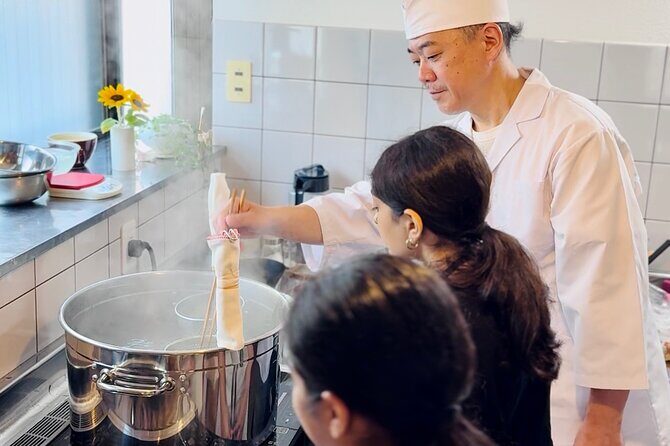
It’s also a private tour/activity, meaning you’re not cooking in a big crowd with strangers. That changes the experience. In a smaller group, you can get more direct attention when something is unclear, and you can move at a comfortable rhythm. For a cooking class, that’s huge.
You’ll bring a mobile ticket on the day and you’ll have basic comfort items ready: aprons and towels are provided. Water and tea are available freely. If you’re planning on drinking alcohol, that’s worth noting ahead of time—alcoholic beverages aren’t included, and soda/pop isn’t included either. So plan accordingly if you like to pair meals with drinks.
What You’ll Cook: Two Broths and Crispy Gyoza
This is a ramen + gyoza class built around making flavor from scratch. The headline is two types of rich ramen broth and crispy gyoza, both prepared from the ground up. You’re not just assembling toppings. You’re learning the building blocks that make ramen taste like ramen.
The structure is simple and practical: learn the broth method, make the gyoza, then cook and eat together as part of your session. The whole thing runs about two hours, so it’s compact. It’s long enough to do real cooking, but short enough that you won’t feel like you’re tied up all day.
What I think you’ll appreciate most is the focus. So many food classes end up being a blur of steps. Here, you’re working on two big components—broth and gyoza—so your takeaway is clear. And since cooking recipes are included, you’re more likely to recreate what you made rather than only remembering that it was delicious.
The broth mission: “Secret umami” without meat stock
The hosts describe their goal like this: they went back to their kitchen because many vegan broths were missing depth and umami. Their solution is to layer flavors using kombu, shiitake, and Kyoto vegetables until the broth is rich enough to rival meat-based soup.
That’s a great learning style for you at home. Once you understand the logic behind the flavors, you can adapt. You can tweak the vegetables, adjust thickness, and scale the broth up or down. You’re not locked into a restaurant-style product that only works the one way.
Inside the Broth: Kombu, Shiitake, and Kyoto Vegetables

The broth part is where this class earns its reputation. The method is described as dashi-free, which is a big deal if you’re used to Japanese soup relying on dashi stock. Instead, they’re extracting and concentrating umami from kombu (kelp) and shiitake, then rounding it out with local Kyoto vegetables.
Why should you care? Because “dashi-free” often sounds like a compromise, but here it’s positioned as the path to depth. If you’ve ever tasted plant-based broth that felt thin, you know why this matters. Rich ramen isn’t just about salt. It’s about mouthfeel, savory depth, and a broth that feels satisfying even before you add noodles and toppings.
And the class isn’t just teaching one broth. You’ll work on two types of ramen broth, so you’ll get a better sense of how small changes in technique or ingredients can shift flavor and texture. That gives you flexibility for home cooking.
A few more Kyoto tours and experiences worth a look





Gluten-free options you can plan around
If you need gluten-free options, the class notes that they’re available. That helps a lot, because ramen is usually where gluten shows up first. If gluten is a concern for you, ask ahead so you can plan your meal and avoid surprises on the day.
Crispy Gyoza: A Hands-On Skill, Not Just a Side
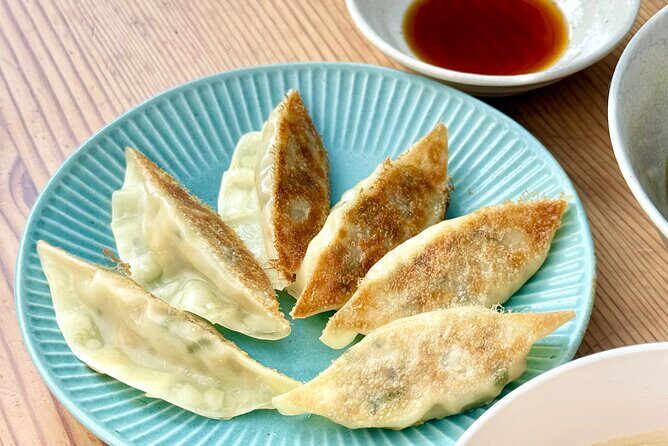
Gyoza is the perfect partner to ramen because it adds crunch and contrast. This class includes crispy gyoza from scratch, so you’ll practice the part that most people struggle with at home: getting a wrapper that cooks up well and a filling that stays flavorful.
You’ll likely focus on three things during the process:
- Getting the filling mixed and seasoned properly
- Shaping the gyoza so they hold together
- Cooking for crispness, not just boiling
Even if you don’t cook often, gyoza is approachable because it’s repeatable. Once you understand the basics here, you can run the same process with different fillings. And yes, eating your own gyoza while it’s still fresh adds a lot of satisfaction. It’s not a “you cook, then it’s done” situation.
Eating Together: Lunch or Dinner, Either Way You Leave Full
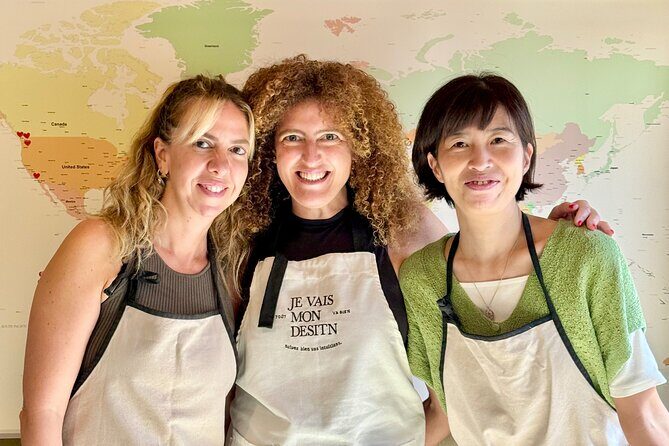
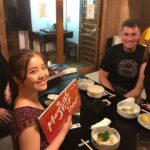
You cook and eat with the hosts, with lunch reservations and dinner reservations handled by time slot. That’s a practical setup. It means you’re not paying for the class and then going on a hunt for food afterward.
The included meal matters because ramen is a heavy-leaning dish. If you’re spending time in Arashiyama that day, you want a meal you can plan around. Having lunch or dinner built into the experience can save you money and decision fatigue.
The setting is also part of the positive energy. One standout detail from past experiences with this host: people have noted that they welcome you into a beautiful, clean home with a friendly, relaxed atmosphere. It sounds like the team keeps the session organized and not stressful—clear steps, good timing, and room to ask questions.
Price and Value: What $65.15 Buys You in Kyoto
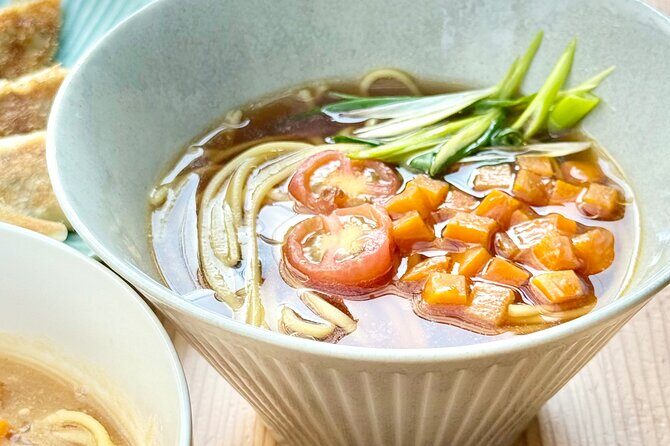
At $65.15 per person for about two hours, the price is in the “you’re paying for instruction + a meal” category. It’s not cheap like grabbing noodles at a stand. But you’re also not just buying food—you’re paying for:
- An English-speaking instructor
- In-home, hands-on cooking
- Two ramen broths and gyoza you make yourself
- Recipes you can use later
- A full lunch or dinner (not just samples)
For a lot of visitors, that’s the point. A cooking class becomes value when you leave with skills you can repeat and a meal that feels personal. The fact that the hosts are aiming for “the best ramen” style results—while still staying 100% plant-based—also helps the value feel earned.
One more planning detail: this kind of class is often booked ahead (on average 11 days in advance). If you’re traveling during peak seasons or on a tight schedule, book early so you’re not stuck choosing a backup time.
Timing, Group Comfort, and Questions That Matter
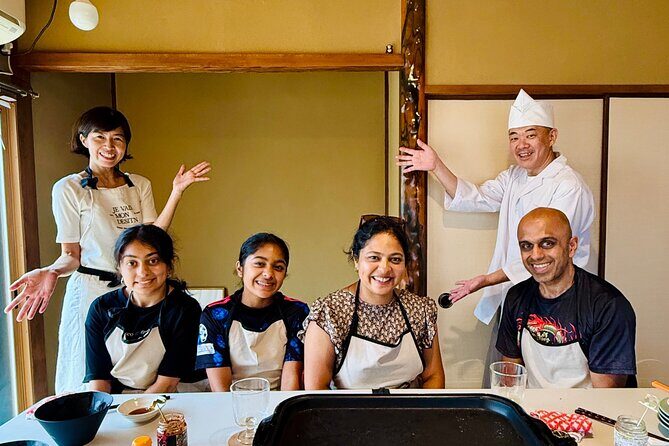
With a two-hour class, pacing is everything. Here, the session is described as well organized with clear instruction and good timing. That’s what keeps it fun instead of frantic.
I also appreciate that this is set up as a private group. In a smaller group, it’s easier to ask questions and get specific help. And if you’re the type who likes to understand the why behind the food—why one broth ends up thicker, why umami builds—you’ll likely enjoy the way the hosts guide you.
Also, since bottled water and tea are available, you can focus on cooking rather than hunting down beverages mid-class.
Dietary Notes: Pet Allergies and Food Allergies
There’s one important caution: the host indicates they have a dog. If you have animal allergies, you should skip this class or message the provider to confirm details. It’s a clear “not recommended” note.
Food allergies are also a practical concern. The class instructions ask you to tell them ahead of time if you have a food allergy. That’s smart, because Japanese cooking relies on specific savory ingredients. If you want a safe experience, communicate early.
Who This Class Is Best For
This class makes the most sense if you fall into one of these groups:
- You love Japanese comfort food and want a ramen skill, not just a one-off meal
- You follow a vegan or vegetarian diet, but you still want depth and satisfaction
- You’re an omnivore who’s curious and wants a seriously flavored plant-based broth
- You want gluten-free options and are booking a class that can accommodate them
It also fits couples and small groups because the format is private and relaxed. If you’re traveling with a friend and want one memorable “Kyoto day story” beyond temple photos, this is a strong choice.
If you don’t like cooking, or you want a completely passive experience, you may find the time and hands-on nature too much. But if you’re game to roll up your sleeves for real broth work and gyoza crisping, you’ll get a lot out of it.
Should You Book Arashiyama’s Vegan Ramen & Gyoza Class?
I’d book it if your ideal Kyoto day includes one practical skill and one meal you can recreate. The best part is the philosophy: the goal is ramen with real umami, not a vegan compromise. The dashi-free approach using kombu, shiitake, and Kyoto vegetables is exactly the kind of technique that can change how you cook at home.
Book it especially if you want a private, friendly home-kitchen experience with clear steps and included recipes. And if you’re gluten-free, note that options are available.
Skip or think twice if you have a pet allergy (dog in the home) or if you’re expecting alcohol or soda to be part of the included experience. Also, because it’s popular and booked ahead, try not to leave decisions until the last moment.
If you’re planning Arashiyama anyway, this class can turn your time there into something more than sightseeing. You’ll leave with hands-on ramen and gyoza knowledge, plus a flavor baseline for what good vegan ramen can taste like.