REVIEW · KYOTO
Kyoto: Geisha Dinner & Gion Cultural Walk
Book on Viator →Operated by Travel Japan Together · Bookable on Viator
A candlelit dinner in Gion can feel like a movie scene. What makes this one worth your time is the pairing of a Gion cultural walk with a proper kaiseki dinner and long, guided interaction—not just a quick photo stop.
I especially like the time balance: you get set up in the historic lanes first, then you settle into the meal with geisha entertainment for about two hours. Second, the group stays small (up to 10), so the evening feels easier to manage and more conversational.
One thing to consider: the operator says geiko/maiko attendance depends on availability, and if the group doesn’t reach the minimum of 4 people, the tour may not run.
In This Review
- Key highlights you’ll feel right away
- A Kyoto geisha dinner is about story, not spectacle
- Price and timing: what $274.35 buys you (and what it doesn’t)
- Meeting at Cacao Market: where the night starts clean and easy
- Stop 1: Gion Shirakawa and the Kyoto you picture from postcards
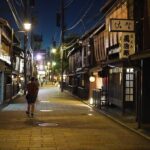
- Stop 2: Hanamikoji Street at night—lantern time in Gion
- The kaiseki dinner: what’s included and what it feels like
- Geiko or maiko attendance: why availability matters
- Small group size: the underrated reason this feels good
- How the walk supports the dinner (instead of stealing focus)
- What to watch for during the performances
- Value check: when this is a great deal and when it isn’t
- Who should book this Kyoto geisha dinner and Gion walk?
- Should you book it or skip it?
- FAQ
- What’s included in the dinner on this Kyoto geisha experience?
- How long is the tour?
- How many people are in the group?
- Is geiko or maiko attendance guaranteed?
- Where does the tour start and end?
- What are the main areas you visit during the walk?
- What’s the cancellation policy?
Key highlights you’ll feel right away
- Gion Shirakawa canal area for that classic Kyoto streetscape mood, with no ticket cost for the stop
- Hanamikoji Street at night for the real setting where you might see maiko/geisha moving between appointments
- Kaiseki course meal included, not a generic dinner
- Geisha accompany for 2 hours with performance and elegant conversation
- Unlimited drinks included during the dinner portion
- Small group size (max 10) for a calmer, more personal feel
A Kyoto geisha dinner is about story, not spectacle
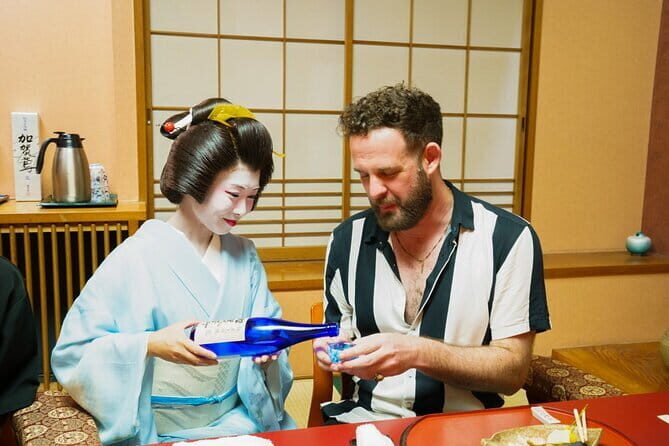
In Kyoto, geisha culture isn’t just about the look. It’s also about discipline, training, and etiquette—how someone performs, how they speak, and how they guide a room without ever rushing it. This tour does a nice job framing that, so the night reads like a living tradition rather than a staged act.
The value here is that you’re not only watching. You’re also getting an explanation—about geisha life and customs, plus the wider context of Kyoto and why these neighborhoods matter.
And because your evening is built around a meal, you get to experience Kyoto’s pacing. Kyoto tends to reward patience: calm streets, careful details, and then a dinner that unfolds course by course.
You can also read our reviews of more walking tours in Kyoto


Price and timing: what $274.35 buys you (and what it doesn’t)
This experience costs $274.35 per person and runs about 3 hours. That’s not “cheap,” but it is in the ballpark of what a guided, dinner-based cultural evening costs in Kyoto—especially when live performers are involved.
Here’s the smart way to judge the price: you’re getting (1) a kaiseki dinner course, (2) unlimited drinks during the included dinner, and (3) about two hours of geisha accompaniment with entertainment and conversation, all guided by someone who explains what you’re seeing.
What’s not included is extra food and extra drinks beyond what’s covered by the unlimited-drink setup. So if you love to keep sipping or want to add more dishes, you’ll want to budget for that.
One more timing reality: the tour can require a minimum of 4 participants. If the group doesn’t meet that number close to departure, it may not proceed. Also, the operator notes that they may not always be able to arrange the attendance of geiko and maiko depending on availability.
Meeting at Cacao Market: where the night starts clean and easy
You start at CACAO MARKET by MARIEBELLE KYOTO (165-2 Tokiwachō, Higashiyama Ward). It’s a practical meeting point because it’s near public transportation, and it puts you on the right side of the city for getting into Gion’s evening rhythm.
The tour ends at FamilyMart (573-4 Gionmachi Minamigawa, Higashiyama Ward). I like this kind of finish—one less hunt for landmarks after a late dinner. It also lines up with the idea that the group stays close to where you’ll spend time during the evening.
The tour uses a mobile ticket, and you should receive confirmation at booking.
Stop 1: Gion Shirakawa and the Kyoto you picture from postcards
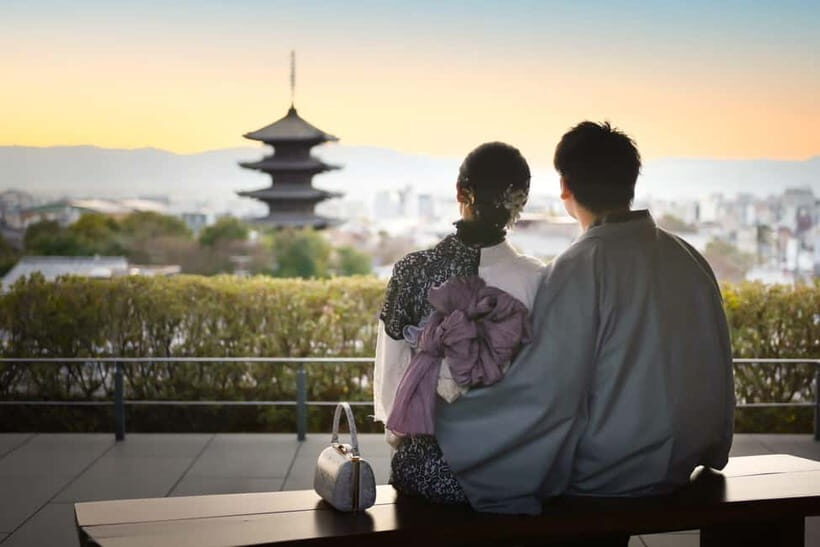
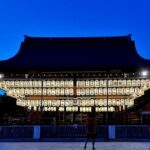
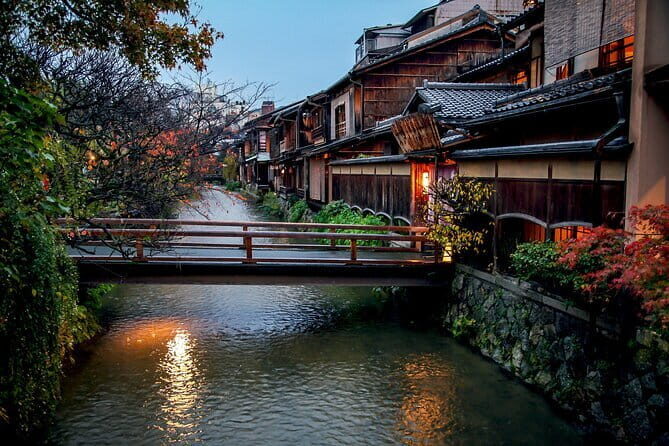
Your first stop is Gion Shirakawa, centered on the Shirakawa Canal. You’ll see the willow-lined waterway and traditional machiya houses, with tea houses tucked into the background. The street feel here is the “Kyoto look” many people want—cobblestones, preserved architecture, and a softer atmosphere than the bigger, busier corridors.
You spend about 30 minutes here, and that stop is free of admission. In practice, that means you get a short, high-impact flavor of the neighborhood without burning your whole evening on one single photo spot.
Also, if your timing lands near cherry blossom season, the canal area is especially pretty. The tour’s focus on Gion means you’re not just sightseeing Kyoto—you’re experiencing one of the city’s signature cultural zones.
Possible drawback: 30 minutes can feel short if you love lingering in one place. If you’re the type who likes to wander slowly and read every storefront, you might want to extend your walk after the tour ends.
Stop 2: Hanamikoji Street at night—lantern time in Gion
From Shirakawa, you head into the Gion district area around Hanamikoji Street (running from Sanjo-dori toward Kenninji Temple). This is one of Kyoto’s best-known historic lanes, famous for its preserved wooden machiya houses and the way it lights up at night.
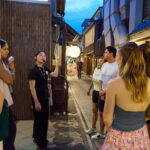
This is where the evening starts to feel like you’ve stepped into the real machine of Gion culture. You’re walking a street where geiko and maiko sometimes move between appointments. Even when you don’t spot anyone, the setting still does the work: the street layout, the lantern glow, and the architecture all point to why Gion is so strongly associated with this tradition.
Your second stop is the longer one (about 2 hours 30 minutes). The key detail is that this is also where you go to the restaurant—so the street walk transitions naturally into dinner rather than turning into separate, disconnected activities.
Practical tip: keep your phone use respectful. In this kind of setting, low light makes photos tempting, but you’ll enjoy the atmosphere more if you save your camera moments for when you’re not disrupting anyone.
A few more Kyoto tours and experiences worth a look

The kaiseki dinner: what’s included and what it feels like
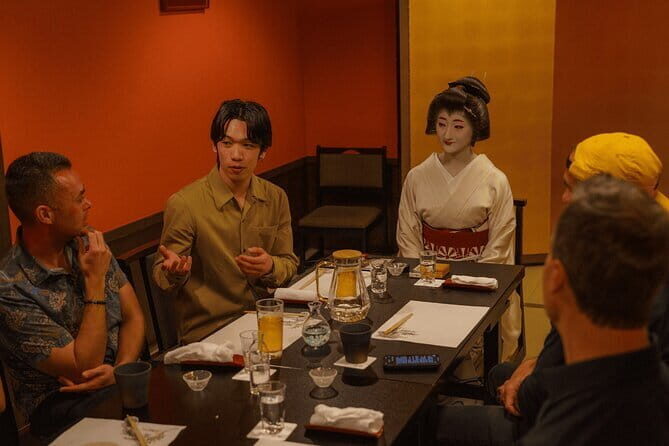
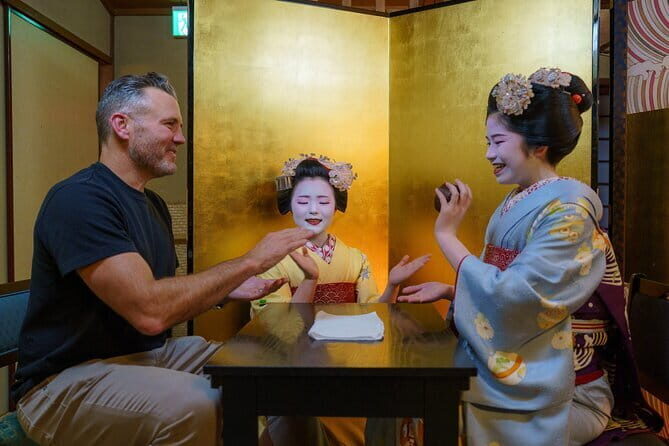
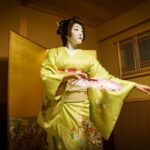
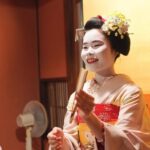
The heart of the night is the kaiseki course meal with geisha accompaniment for about two hours. Kaiseki isn’t a buffet-style “dinner and done.” It’s a course meal that typically unfolds in stages, and that matters because it gives the entertainment room to breathe.
You’ll also get unlimited drinks as part of the included package. That’s a genuine quality-of-life feature: it means you’re not constantly checking what’s extra while you’re trying to enjoy conversation and performances.
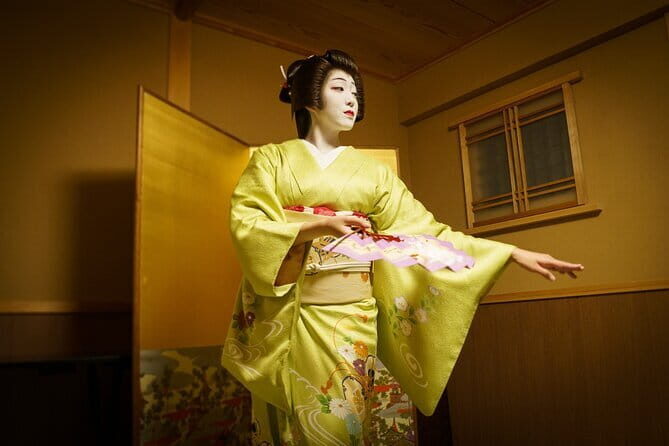
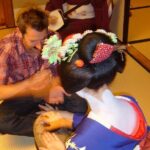
Most important: you’re not just sitting quietly while someone performs. The format includes traditional dances, musical instruments, and elegant conversation. That conversation piece is where the tour earns its keep, because it turns the night from viewing into understanding.
The guide is also there with context—explaining the historical significance of geisha and how the artistry is shaped through training and performance. That background changes what you notice. You start seeing details that you would otherwise miss, like the discipline behind the movements and how the interaction is part of the art.
Geiko or maiko attendance: why availability matters
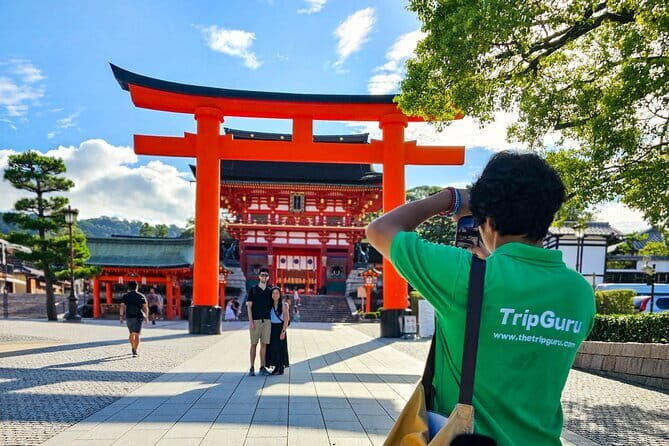
One honest point: the operator states that they may not be able to arrange attendance of geiko and maiko depending on availability. If that’s the case, you’ll be notified in advance.
So what should you do with that information? Plan for the possibility that you’ll get something slightly different than the ideal version in your head. The cultural walking parts still happen, and the dinner structure and guidance still sound designed to deliver meaning, not just a name.
Still, I’d treat performer availability as part of the cost of planning a living tradition. Live performers have schedules. And in Kyoto, schedules are a big deal.
If you want to maximize your odds, booking earlier helps. The tour is commonly booked about 55 days in advance on average, which tells you demand runs steady. If you’re traveling in peak season or on a weekend, I’d book earlier rather than later.
Small group size: the underrated reason this feels good
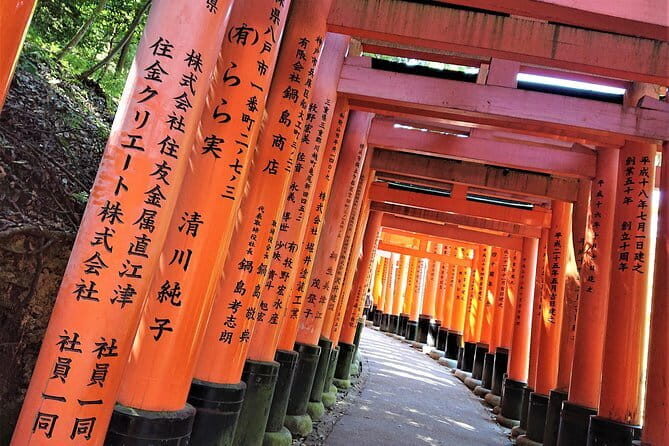
This tour caps at 10 travelers. For a geisha dinner, that’s a big deal.
Smaller groups usually mean:
- easier coordination in a tight neighborhood
- more comfortable conversation during the dinner
- less feeling like you’re part of a large “performance watching” crowd
It also helps explain why this experience is described as smooth by people who needed extra arrangements. One highlight from the information you’re given: the operator coordinated well with a wheelchair user, and staffer Sayaka handled arrangements and communication politely and clearly. That suggests they take practical needs seriously, not as an afterthought.
If you have mobility concerns, I’d message ahead and be direct about what you need. You’ll likely get a clearer answer faster this way.
How the walk supports the dinner (instead of stealing focus)
Some cultural tours do the walk part as filler. This one feels designed to prepare you.
Gion Shirakawa sets the visual tone: canals, willow trees, and carefully preserved streets. Then Hanamikoji Street places you right where Gion’s identity is concentrated—historic buildings and the evening ambiance that makes geisha culture such an enduring Kyoto association.
Then dinner happens. That means when the performances begin, you’ve already been placed inside the right environment. You’re not mentally switching gears from “tour groups” to “traditional arts.” You’re staying in the same mood the whole night.
That cohesion is what makes it feel worth paying for.
What to watch for during the performances
Because the entertainment includes traditional dances, musical instruments, and conversation, you’ll get a full mix of geisha arts rather than one single act.
Here’s how to make the most of it:
- Pay attention to pacing. The “elegance” is in timing as much as movement.
- Ask yourself what’s being explained—not just what’s being shown.
- If conversation is part of the format where you’re seated, be ready with a few simple questions in your own way (name, interest, or what you want to understand about the training).
You won’t be expected to know everything going in. The guide is there to connect dots—historical significance, training, and the customs behind what you see.
Value check: when this is a great deal and when it isn’t
Let’s talk value honestly.
This is a good value if you want:
- a guided, structured night with cultural context
- a real Kyoto dinner style meal (kaiseki)
- geisha entertainment that runs long enough to feel like an evening, not a quick cameo
- unlimited drinks included, which reduces extra spending during the experience
This is likely not the best fit if you:
- only want a casual photo-and-stroll night
- hate the idea of performer availability possibly changing
- expect a “budget evening” price
Also remember: the tour is non-refundable and cannot be changed. So it’s best for plans you’re confident about.
Who should book this Kyoto geisha dinner and Gion walk?
Book this if you’re a history-and-culture person who likes being guided through meaning, not just scenery. It’s also a strong fit for couples and small groups who want an evening that feels special without needing to figure out reservations, etiquette, and logistics on your own.
It can work well for first-time visitors to Kyoto because it concentrates into three hours what many people spend days trying to piece together: Gion streets, a classic neighborhood atmosphere, and a dinner-format cultural experience.
And if you’re traveling with a mobility need, the operator’s track record of arranging for a wheelchair guest is a promising sign—just make sure you ask clearly ahead of time.
Should you book it or skip it?
If your goal is a Kyoto night where Gion isn’t just a backdrop, I’d say book it. The combination of kaiseki, unlimited drinks, and about two hours of geisha accompaniment is the core reason it’s worth considering.
My one hesitation is the human reality behind live performers and group minimums. If your schedule is rigid or you’ll be devastated by a change in attendance, you’ll want to plan backup options for the evening.
Otherwise: this is the kind of cultural evening that’s built to make sense of what you’re seeing, right in the heart of Gion.
FAQ
What’s included in the dinner on this Kyoto geisha experience?
You get a kaiseki course meal, geisha accompaniment for about 2 hours, and unlimited drinks. Extra food and extra drinks are not included.
How long is the tour?
The experience runs for approximately 3 hours.
How many people are in the group?
This activity has a maximum of 10 travelers. A minimum of 4 participants is required for the tour to proceed.
Is geiko or maiko attendance guaranteed?
Attendance can depend on availability. If geiko and/or maiko cannot be arranged, the operator will notify you in advance.
Where does the tour start and end?
It starts at CACAO MARKET by MARIEBELLE KYOTO (165-2 Tokiwachō) and ends at FamilyMart near Gionmachi Minamigawa (573-4 Gionmachi Minamigawa).
What are the main areas you visit during the walk?
You visit Gion Shirakawa around the Shirakawa Canal and then Hanamikoji Street in the Gion district.
What’s the cancellation policy?
This experience is non-refundable and cannot be changed for any reason.