REVIEW · KYOTO
Private Dinner with a Geisha
Book on Viator →Operated by WaRaiDo Guide Networks · Bookable on Viator
A geiko-or-maiko dinner is Kyoto’s best kind of hush. This private evening pairs a guided walk through Gion with a full-course kaiseki meal and in-room entertainment by a geiko (licensed) or maiko (apprentice). It’s one of the few ways to see the culture up close without feeling like you’re watching from behind glass.
What I love most is the one-on-one conversation element—real questions, real answers, and a guide who helps translate the nuance. I also like that the evening isn’t just dinner: you get the emotional core of the performance, whether it’s dance, singing, or music, timed into your meal so it feels natural, not staged.
One consideration: the dinner is traditional and fixed-course, so it may not fit strict dietary needs or preferences. If you’re picky, vegan, or avoiding certain foods, plan on communicating your requirements early and still expecting a very Japanese menu.
In This Review
- Key things I’d circle before you book
- Meeting at Minamiza and starting in the right Kyoto mood
- The Gion walk that turns the photos into understanding
- Kaiseki dinner: what you eat, why it’s part of the experience
- Geiko or maiko at your table: conversation plus performance
- Timing, drinks, and the evening pace at 5:00 pm
- Value check: what you’re really paying for at about $381.49 per person
- Who should book this (and who might prefer something simpler)
- Practical etiquette: small things that make the night go well
- Should you book Private Dinner with a Geisha?
- FAQ
- What time does the private dinner with a geisha start?
- Where do we meet for the tour?
- How long is the experience?
- What happens during the Gion part of the tour?
- Is the meal always kaiseki?
- Are drinks included?
- What entertainment do you get with the geiko or maiko?
- Can children join?
- What dietary requirements should I plan for?
- Is this tour refundable if I cancel?
Key things I’d circle before you book
- Meet at Minamiza Kabuki Theatre and start from Kyoto’s cultural center, not a random hotel pickup
- Gion walking + private party setup, so you see the district first, then move indoors for the main event
- Kaiseki meal format (multiple courses, including tempura and seafood in many menus)
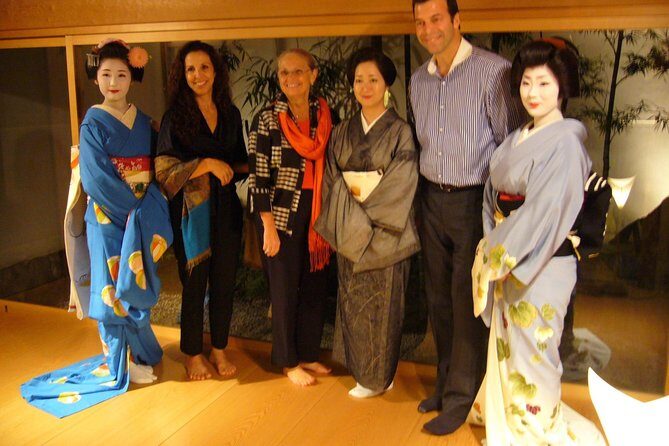
- Entertainment at your table: geiko/maiko sing, play instruments, and perform dance during dinner
- Private group experience (only your group participates), which makes questions feel easier
- Private tea house option adds drinks like sake and beer, but other options usually require you to purchase
Meeting at Minamiza and starting in the right Kyoto mood
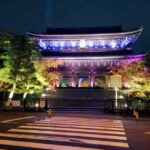
The evening begins at 5:00 pm in front of the Minamiza Kabuki Theatre, facing Shijo street. It’s a smart starting point because it anchors you in Kyoto’s theater-and-tradition zone before you slip into Gion. You’ll be near public transportation, which matters in Kyoto, where a short walk can still feel like a small adventure when you’re wearing good shoes.
From that meeting point, the flow is designed to get you oriented fast. Instead of showing up, eating, and leaving, you start with a human guide who sets context—what Gion is, why it looks the way it does, and what the geiko/maiko world is really like day to day.
This is also where the “tone” is set. The operator notes that the traditions they introduce are not open to the public, and they reserve the right to refuse service if someone does not show proper manners. In plain terms: be respectful, be on time, and treat this like an evening with living professionals, not a theme-park show.
You can also read our reviews of more private tours in Kyoto

The Gion walk that turns the photos into understanding
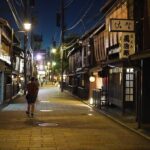
Before dinner, you’ll walk through Gion with an expert English-speaking cultural guide. Depending on your chosen option, that walk may be part of a more basic dinner experience, or it may be paired with a longer, more “Gion-first” route before you reach the tea house or restaurant.
This walking time is the difference between seeing Gion and getting why people remember Gion. You’ll get background on the geiko and maiko world—what the roles mean, how training works, and how public images differ from lived reality. One of the best parts of this segment is that it’s interactive enough for questions, and short enough that you’re not tired before you arrive hungry.
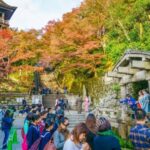
You’ll also get used to what to look for: the old wooden architecture, the quiet lanes, and the way the district feels after late-afternoon light hits the streets. If you want a Kyoto evening that feels respectful and paced, this walk matters.
Kaiseki dinner: what you eat, why it’s part of the experience
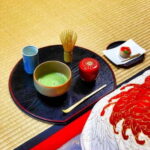
Your meal is a kaiseki style dinner, served as a multiple-course sequence. The menu style described includes courses featuring tempura, seafood, and vegetables. Kaiseki is less about one “big wow” dish and more about a curated progression—different flavors, textures, and presentation meant to match the season and the moment.
Here’s the practical part: you should go in expecting a traditional menu that you can’t fully swap like a restaurant à la carte. The tour data asks you to advise dietary requirements at booking, but it also clearly frames the meal as part of the cultural experience, with set traditions. In real life, I’d treat this as: if you’re very strict (like vegan, vegetarian with no fish stock, severe allergies), confirm what’s possible directly and be ready that it may still be difficult.
A couple of review-based signals help here:
- Some people loved the food as a highlight and described it as traditional and tasty.
- Others were surprised by how fixed and traditional it was, with issues for those with strong diet limits or specific dislikes.
So, if you’re adventurous and want the full Kyoto script, you’ll likely feel taken care of. If you’re a picky eater, go carefully.
Geiko or maiko at your table: conversation plus performance
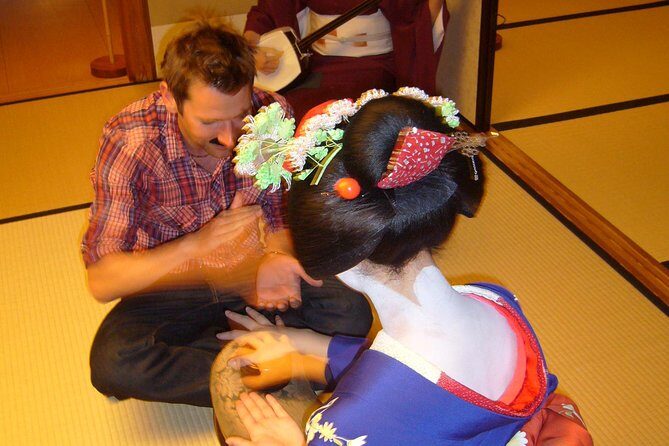
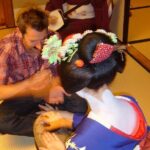
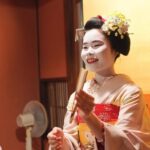
The heart of this tour is the in-room entertainment during dinner. At the restaurant or tea house, a geiko, maiko, or both join you. During your meal, they entertain with singing, musical instruments, and dance.
What makes this special is that it’s not limited to a staged performance. You’re set up for conversation—asking questions, learning the traditions, and getting personal insights that you wouldn’t hear in public settings. People especially mention the feeling of meeting a real maiko or geiko in an environment that still feels private and calm, not crowded.
In many evenings, you’ll also get elements of play: simple games and back-and-forth that break the ice. Some guests describe drinking games where everyone keeps their glasses filled, plus moments where the performer answers questions and shows parts of their world. The cultural guide helps with translation, so you’re not stuck guessing what’s happening.
One more detail worth considering: performances happen in the room where you’re dining, so the space may be cozy. In some cases, guests noted the performance felt brief or limited in movement because of the room setup. That said, the overall vibe is often described as graceful, elegant, and emotionally memorable—more about presence and tradition than about stage spectacle.
Timing, drinks, and the evening pace at 5:00 pm
The duration is about 3 hours 30 minutes. The tour structure also describes a roughly 3-hour stretch combining the walk and the party segment. Either way, you’re working within an evening window that’s long enough for learning, eating, and entertainment, but short enough that you’re not dragging yourself home late and hungry.
Drinks depend on your option:
- If you choose the private tea house option, drinks like sake and beer are included along with the meal.
- For other options, drinks are typically available for purchase, meaning you should budget for add-ons.
Japan’s minimum drinking age is 20, so keep that in mind if you’re bringing anyone close to that boundary.
Also note the “flow” matters. Dinner service can feel slow when everyone is settling in and the room is shared in a structured way. Still, the entertainment is timed into the meal, so you’re not just waiting—you’re learning and watching.
A few more Kyoto tours and experiences worth a look

Value check: what you’re really paying for at about $381.49 per person
At $381.49 per person, this isn’t cheap. But it also isn’t just a dinner ticket. You’re paying for:
- A private group experience (only your group participates)
- An English-speaking guide who handles context and translation
- A geiko/maiko accompaniment and timed entertainment during dinner
- A multi-course kaiseki meal in a traditional format
- The Gion walk component (so you’re not dropping straight into a restaurant)
That’s why people often frame it as a highlight, not a checkbox. The value is strongest if your main goal is cultural closeness: conversation, personal questions, and a real-world view of how the performance works.
If your goal is simply food and you could get a similar meal elsewhere, the price may feel steep. But if you want the rare part—the presence of a geiko or maiko in a private setting—this is the kind of experience that costs what it costs, because the access is the expensive ingredient.
Who should book this (and who might prefer something simpler)
This is best for you if:
- You want an evening focused on Gion culture and geiko/maiko traditions
- You appreciate kaiseki and can handle a fixed-course dinner
- You enjoy asking questions and learning directly with a guide’s support
- You value privacy and hate the feeling of being one face in a crowd
It may not be the best match if:
- You need a highly flexible menu due to diet restrictions
- You dislike seafood or raw fish-style elements commonly found in traditional menus
- You want a modern, casual meal with easy substitutions
- You’re expecting a big theater show with lots of movement and time on stage
Families can work too, but kids must be accompanied by an adult, and if drinks are included (private tea house), that changes what’s age-appropriate.
Practical etiquette: small things that make the night go well
This tour includes traditions that are not open to the public. Treat it like you would a formal meeting:
- Arrive early enough to settle and get oriented at the meeting spot
- Ask questions politely and listen for translation cues
- Avoid phone behavior that distracts the room (keep it discreet)
- Be ready for a traditional pace: conversation, courses, then entertainment
A good guide makes all the difference. In this experience, guides are often praised for being warm, funny, and skilled at explaining the culture in clear English—names you might hear include Mia, Mie, Miyah, and Mei from past tours. Even when the specific guide differs, the format is designed to keep you comfortable and informed.
Should you book Private Dinner with a Geisha?
Book it if you’re chasing the rare access: a guided Gion walk, a real geiko or maiko presence at dinner, and a structured evening where conversation and performance happen in the same calm room. It’s also a strong choice if kaiseki sounds exciting rather than intimidating.
Skip (or shop carefully) if your dinner needs are strict or your food tastes are very limited. The menu is traditional, and while the operator asks you to advise dietary requirements at booking, you shouldn’t assume you’ll get major substitutions.
If you want one clear decision rule, use this: if you’re excited about meeting a living tradition in a private setting more than you’re excited about trying a fancy meal, this is your kind of splurge.
FAQ
What time does the private dinner with a geisha start?
The tour begins at 5:00 pm.
Where do we meet for the tour?
You meet in front of the main gate of the Minamiza Kabuki Theatre, facing Shijo street.
How long is the experience?
It lasts about 3 hours 30 minutes (approx.).
What happens during the Gion part of the tour?
You take a guided walk through Gion with an expert English-speaking cultural guide, when your selected option includes a walking tour.
Is the meal always kaiseki?
Yes. The dinner is described as a kaiseki meal, served as multiple courses (half or full kaiseki depending on the option).
Are drinks included?
Drinks are included only if you select the private tea house option. For other options, drinks are available for purchase.
What entertainment do you get with the geiko or maiko?
A geiko, maiko, or both entertain you during dinner with singing, musical instruments, and dance.
Can children join?
Children can participate, but they must be accompanied by an adult.
What dietary requirements should I plan for?
You should advise specific dietary requirements at the time of booking. The tour notes that the meal is traditional and fixed-course, so it may be harder to make changes if you have strong restrictions.
Is this tour refundable if I cancel?
No. This experience is non-refundable and cannot be changed for any reason.