REVIEW · KYOTO
Kyoto Gion Early Morning Walking Tour
Book on Viator →Operated by Tomodachi Tours · Bookable on Viator
Waking up early pays off in Kyoto. This Gion early morning walking tour is built for the calm window before tour buses and morning rush fully kick in, so you can enjoy iconic sights like Kiyomizu-dera and Yasaka Shrine with breathing room.
Two things I really like: you get a small group (max 12), which makes it easy to ask questions and actually hear the answers. And the route is tightly planned around key landmarks, so you’re not wandering in circles like it’s an escape room.
One consideration: Kiyomizudera-Temple has a separate entry fee (¥500 per person), so your final spend is a bit more than the $49.42 tour price.
In This Review
- Key highlights to know before you go
- Why Kyoto feels different at first light
- The route: a focused walk from Gion’s river to Yasaka’s gates
- Stop 1: Gion Shirakawa (about 15 minutes)
- Stop 2: Hanamikoji Street (about 20 minutes)
- Stop 3: Kiyomizu-dera (about 1 hour, entry not included)
- Stop 4: Sannenzaka and Ninenzaka (about 30 minutes)
- Stop 5: Yasaka-no-To (about 10 minutes)
- Stop 6: Yasaka Shrine (about 30 minutes)
- The guides make or break it (and this tour delivers)
- Price and value: what $49.42 really buys you
- What to do with your morning: photos, pace, and street smarts
- Who should book this tour
- Should you book the Kyoto Gion early morning walking tour?
- FAQ
- How long is the Kyoto Gion early morning walking tour?
- What’s the group size for this tour?
- Do I need to pay an entry fee during the tour?
- Is hotel pickup included?
- Where do I meet the guide?
- Does the tour use mobile tickets?
- Is there an English-speaking guide?
- Is public transportation nearby?
- What happens after the tour ends?
Key highlights to know before you go
- Early access to Gion: Gion Shirakawa and Hanamikoji feel quieter and more intimate in the morning.
- Small-group comfort: up to 12 people means better guide interaction and less “lost herd” energy.
- Smart sequencing: the route lines up famous spots so you see them before they turn into lines and crowds.
- Iconic Kyoto stops: Kiyomizu-dera, Sannenzaka/Ninenzaka, Yasaka Pagoda, and Yasaka Shrine are all on the list.
- English-speaking guide: guides use clear English and are happy to answer questions on the spot.
Why Kyoto feels different at first light
Kyoto has a way of turning any day into a photo mission. The problem is that most of the city’s biggest names get hammered later on. This tour targets that timing gap by starting early and keeping you moving toward the highlights before the crowds thicken.
I like that the experience isn’t only about checking boxes. Your guide ties the sights together with local context—why these places matter, how Kyoto’s traditions shaped the streets around them, and what to notice while you’re walking. And since the group stays small, you’re not stuck staring at the back of someone’s camera.
Also, the morning pace helps you enjoy the space in the city. Gion Shirakawa by the river, for example, reads completely different before the day gets loud.
You can also read our reviews of more walking tours in Kyoto



The route: a focused walk from Gion’s river to Yasaka’s gates
This is about a 3-hour walk, with stops that build from classic Gion streets into temple views and back into shrine-and-street atmosphere. You start at the Statue of Izumo-no-Okuni in Higashiyama Ward, then you return back to the same meeting point.
Here’s how the day flows, and what you should expect at each stop:
Stop 1: Gion Shirakawa (about 15 minutes)
Gion Shirakawa is the sweet spot for atmosphere. You’ll stroll along the Shirakawa River, lined with traditional machiya houses and weeping willows. In the early morning, the riverfront feels peaceful rather than performative.
What I like here is that it sets the tone for the rest of the tour. You’re not rushing into temples right away—you’re first seeing how Kyoto’s “old street life” looks when people aren’t already in full sightseeing mode.
Tip: This is a good moment to look down as much as up. The river, the house facades, and the street edges all frame photos differently.
Stop 2: Hanamikoji Street (about 20 minutes)
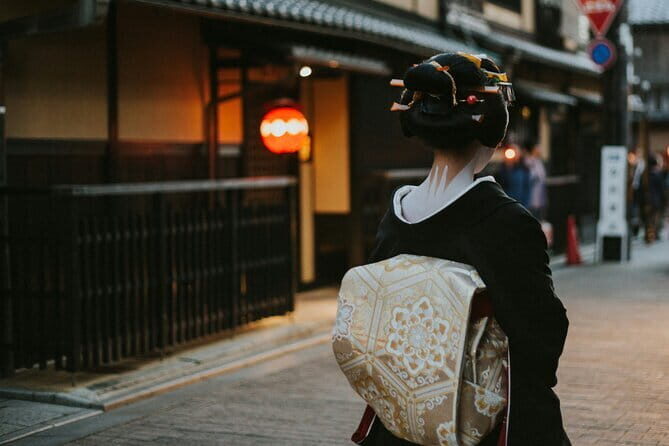
Next comes Hanamikoji Street, Kyoto’s geisha district corridor, lined with historic wooden machiya and traditional teahouses (ochaya). Even if you’ve seen pictures, the street feels more real in person—especially when it’s not crammed with people.
You’ll walk the length of it with your guide explaining what you’re seeing and how the area’s traditions shaped the neighborhood. This stop is quick, but it’s one of the most instantly recognizable parts of the tour.
Possible drawback: because it’s iconic, some sections can still feel busy even in the morning. That said, you’ll typically be walking before the biggest late-start groups arrive.
Stop 3: Kiyomizu-dera (about 1 hour, entry not included)
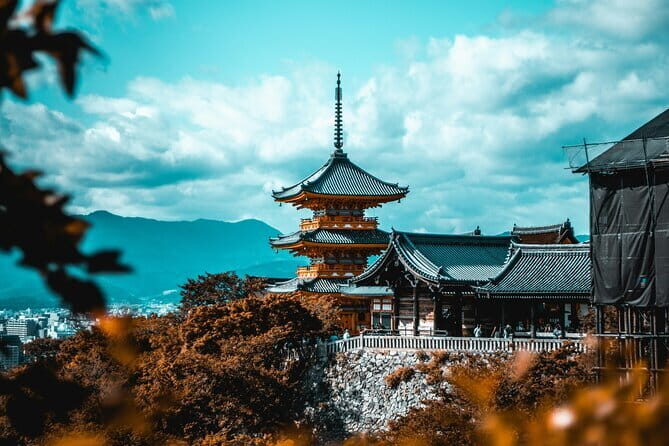
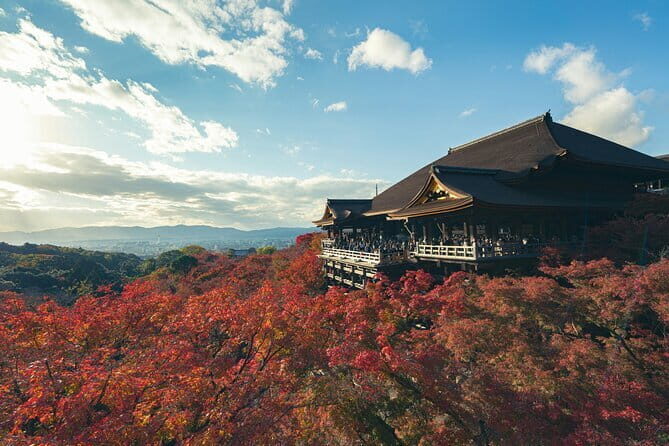
Kiyomizudera is the headline. You’ll spend around an hour here, and the payoff is the views from the main area and the famous wooden stage structure. The temple is also visually linked to seasonal moments, but regardless of season, the elevation and the sightlines make it special.
You should know the budget detail: Kiyomizudera-Temple costs ¥500 per person and is not included in the tour price. Your guide will help you handle it smoothly, but it’s worth having cash or a plan ready.
What I’d watch for at Kiyomizu-dera:
- The perspective from the stage area (it changes how you “read” the city)
- The temple grounds’ layout, so you understand why people photograph it from certain angles
- The little moments where a viewpoint reveals another street or roofline
One note from tour feedback: even with an early start, Kiyomizu-dera can still get busy. The tour’s timing helps, but it’s still one of Kyoto’s top magnets.
A few more Kyoto tours and experiences worth a look


Stop 4: Sannenzaka and Ninenzaka (about 30 minutes)
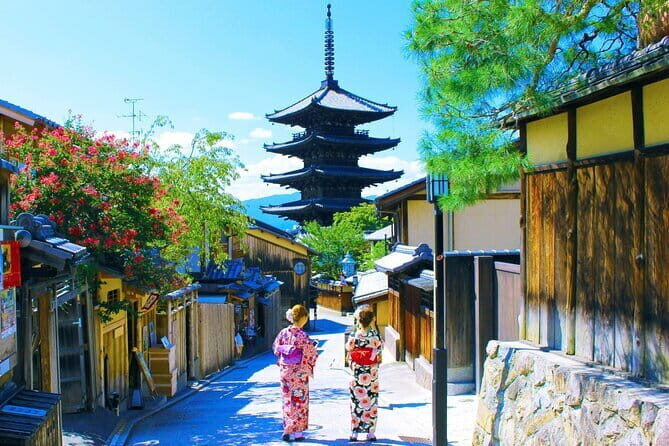
After Kiyomizu-dera, you step into Sannenzaka and Ninenzaka, the postcard-streets with stone paving, traditional wooden townhouses, and small local shops. These lanes feel like a living museum, but they’re also places where modern visitors and daily life coexist.
I like this part because it’s a palate cleanser between temple intensity and the next shrine stop. The streets invite slow walking and window browsing. If you like “Kyoto details” more than big monuments, this is your moment.
Practical note: this is where you’ll likely feel the most temptation to snack and shop. If you’re trying to keep your wallet calm, set a budget now.
Stop 5: Yasaka-no-To (about 10 minutes)
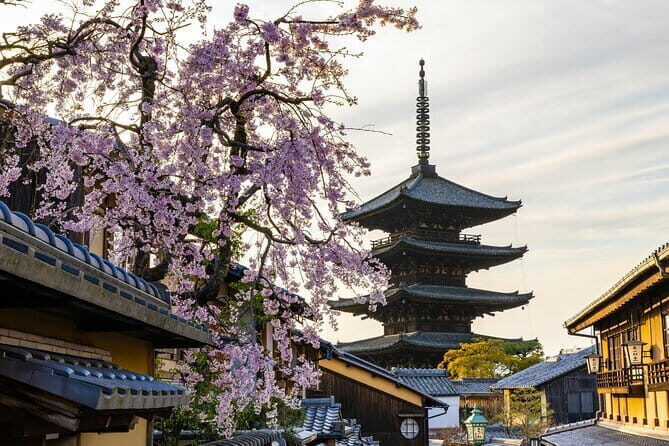
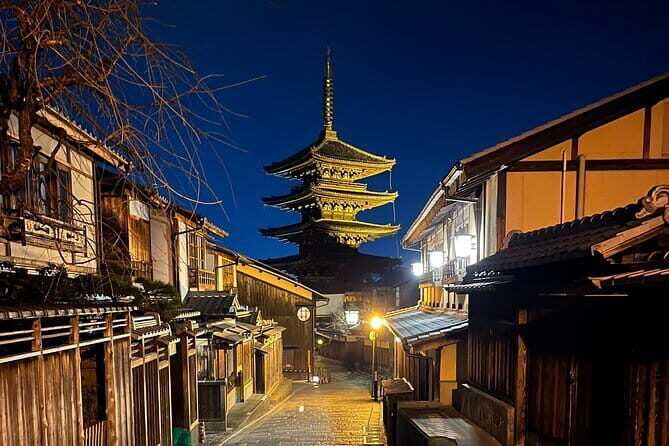
Yasaka-no-To (Yasaka Pagoda) is a short stop, but it’s one of Kyoto’s most recognizable silhouettes. In the morning light, the structure looks crisp against the surrounding streets.
Because the stop is only about 10 minutes, treat it as a quick photo-and-context moment. Your guide helps you spot what makes it distinctive and where best to frame it without sprinting through the crowd.
Stop 6: Yasaka Shrine (about 30 minutes)
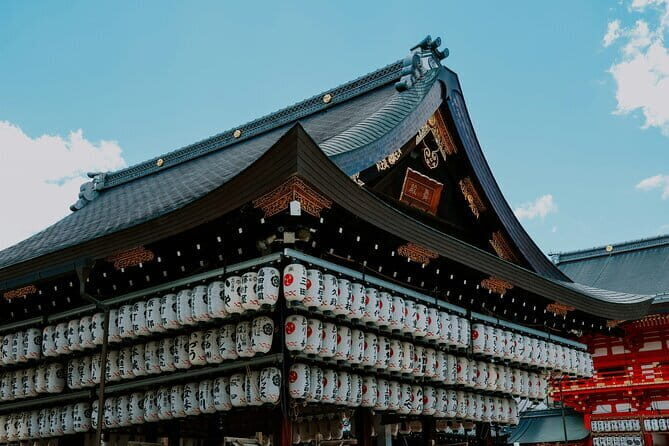
The tour ends at Yasaka Shrine, one of Kyoto’s revered Shinto shrines. Expect the vermilion gate and the shrine’s famed lantern-lit dance stage area. This is a calmer finish than Kiyomizu-dera, and it gives your morning walk a more ceremonial, grounded feel.
If you want to understand Kyoto’s blend of public architecture and religious tradition, this stop is a strong closer. You’ll leave knowing what you saw, not just that you saw it.
The guides make or break it (and this tour delivers)
A walking tour lives or dies by the guide’s pacing and how well they handle questions. The English-speaking guides here tend to do both well.
In my view, the best part is the how: guides like Caleb, Hiro, and Vincent are described as friendly, fluent in English, and willing to answer questions that come up naturally as you walk. That matters because Kyoto’s details can feel endless. When your guide can explain what you’re looking at, the experience clicks.
You’ll also benefit from the small-group setup (max 12). When you’re not shoulder-to-shoulder with a crowd, you can actually hear the explanation over the sound of your own footsteps.
Price and value: what $49.42 really buys you
The tour price is $49.42 per person, and it covers an English-speaking guide plus about 3 hours of guided walking. There’s no hotel pickup, and Kiyomizudera’s ¥500 entry fee is extra.
Here’s how I think about the value:
- You’re paying for time saved and direction. Kyoto is easy to get turned around in, especially in Higashiyama where lanes change every few meters.
- You’re paying for context. Without that, you’d still see the landmarks, but you might miss why the streets and shrines are arranged the way they are.
- You’re paying for early timing. That can be worth it by itself if you’ve ever waited in a crush at Kiyomizu-dera.
If you add the ¥500 temple fee, you should budget a little more, but the overall structure still feels like a fair deal for a guided morning that hits several major icons.
What to do with your morning: photos, pace, and street smarts
This tour is perfect if you want photos that look like Kyoto, not like a crowd. The early start helps you capture street scenes at the moment they feel most “Kyoto-like.”
To make the most of it:
- Wear comfortable shoes. This is a walk with multiple stops, and the day adds up.
- Bring layers. Mornings can feel cooler than you expect, especially before the city warms.
- Keep your camera ready for street-level details around Gion Shirakawa and the stone lanes of Sannenzaka/Ninenzaka.
One small bonus: in at least one account, there was an enjoyable coffee stop noted during the morning. Even if that isn’t guaranteed for every group, it’s a helpful reminder: your guide can often suggest a sensible place to refuel when the pace allows.
Who should book this tour
This is a great fit if you:
- Want to see major Kyoto highlights without spending your morning plotting routes
- Prefer walking with explanation over bouncing around solo
- Like history, culture, and street atmosphere, not just monuments
- Want smaller-group attention and clear English guidance
It may be less ideal if you:
- Hate crowds completely and need fully empty sites (Kiyomizudera can still attract crowds)
- Are short on time and can’t manage a 3-hour morning commitment
- Expect everything to be fully paid-included (Kiyomizudera entry costs extra)
Should you book the Kyoto Gion early morning walking tour?
I’d book it if you’re traveling with the right mindset: you want Kyoto at its calmer hour, and you want a guide to make sense of what you’re seeing as you walk. The combination of Gion’s early atmosphere, a focused route, and small-group access is exactly the kind of value that turns sightseeing into understanding.
If you’re planning to visit Kiyomizudera anyway, this tour gives you a useful payoff: you get there in the early window, then you continue through the famous streets and finish at Yasaka Shrine without stopping your day for navigation.
FAQ

How long is the Kyoto Gion early morning walking tour?
It’s about 3 hours.
What’s the group size for this tour?
The tour has a maximum of 12 travelers.
Do I need to pay an entry fee during the tour?
Yes. Kiyomizudera-Temple has an admission fee of ¥500 per person, and it’s not included.
Is hotel pickup included?
No, hotel pick-up is not included.
Where do I meet the guide?
The meeting point is the Statue of Izumo-no-Okuni at Kawabatacho, Higashiyama Ward, Kyoto, 605-0076, Japan.
Does the tour use mobile tickets?
Yes, the tour uses a mobile ticket.
Is there an English-speaking guide?
Yes, an English-speaking guide is included.
Is public transportation nearby?
The meeting point is near public transportation.
What happens after the tour ends?
The activity ends back at the meeting point.