REVIEW · KYOTO
Kyoto Guided Walking Tour Highlight of Kiyomizu & Fushimi Inari
Book on Viator →Operated by Japan Wonder Travel · Bookable on Viator
Kyoto can feel like a lot. This half-day walking tour turns three major sights into a neat, story-driven route, starting with the dramatic Kiyomizu-dera stage views and ending under Fushimi Inari’s torii gates. I like that you get meaningful time at both Kiyomizu-dera and Sanjūsangendō (not just a quick photo stop), and I also like the small group vibe, so you can ask questions as you walk. Just plan for the one extra line item: the short train ride fee to reach Fushimi Inari is not included, and there is a moderate amount of walking.
The payoff is how much you see in only about 4 hours, rain or shine. You’ll follow a route that’s efficient on paper and still feels relaxed in practice, with a knowledgeable guide (many groups are led by Naomi-san) keeping the day moving while sharing history, trivia, and little jokes along the way. If you’re the type who enjoys slow-looking at details—woodwork, statues, shrine architecture—this tour is an easy yes.
In This Review
- Key Highlights You’ll Actually Feel During the Walk
- A Smart Half-Day Plan: Big Kyoto Energy Without the Full-Day Burn
- Meeting at Kyoto Ceramic Center (8:30 am): Easy Start, Clear Direction
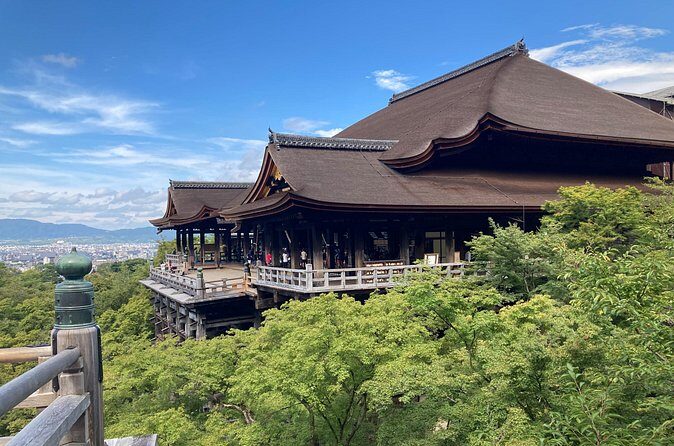
- Stop 1: Kiyomizu-dera and the Wooden Stage Views That Set the Tone
- Stop 2: Sanjūsangendō’s 1,001 Statues (30 Minutes That Can Feel Longer)
- The Transit Link: Short Train Hop Costs About ¥170
- Stop 3: Fushimi Inari Taisha and the Torii Gate Walking Ritual
- Small Group Energy and a Guide Like Naomi-san
- Photo and Comfort Tips for a 4-Hour Kyoto Walk
- Who This Tour Is Best For (And Who Might Want to DIY)
- Should You Book This Kyoto Highlight Walk?
- FAQ
- FAQ
- How long is the Kyoto guided walking tour?
- What does the tour cost?
- Is the tour a small group?
- Do I need to buy tickets for Kiyomizu-dera and Sanjūsangendō?
- Is admission free for Fushimi Inari Taisha?
- Is the train fee included to get to Fushimi Inari?
- Where does the tour start?
- Where does the tour end?
- Does the tour run in bad weather?
- What is the cancellation policy?
Key Highlights You’ll Actually Feel During the Walk
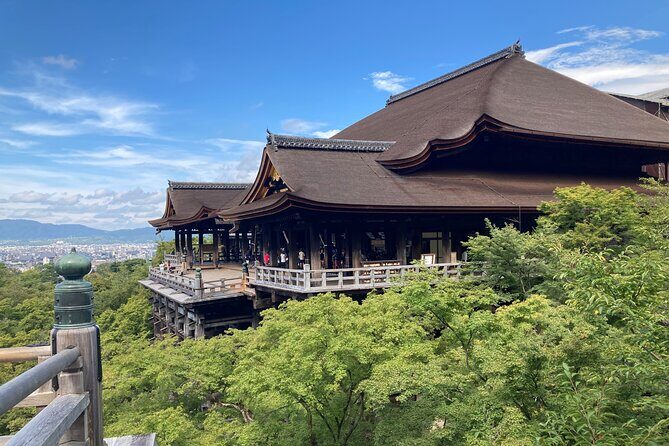
- Kiyomizu-dera’s famous wooden stage views with a full 1-hour visit (admission included).
- Sanjūsangendō’s Hall of 1001 Thousand-Armed Kannon statues, where 30 minutes goes a long way.
- Small-group size (max 8 people), so the pacing stays comfortable and questions are welcome.
- Fushimi Inari’s torii-gate walking at a classic spiritual spot, with time to wander and photograph.
- A guide like Naomi-san bringing energy plus practical context, not just dates and names.
- Mobile ticket convenience plus a rain-or-shine plan, so your morning doesn’t fall apart.
A Smart Half-Day Plan: Big Kyoto Energy Without the Full-Day Burn
This tour is built for people who want Kyoto highlights without turning your day into a sprint. In roughly 4 hours, you cover two heavyweight temple stops—Kiyomizu-dera and Sanjūsangendō—then shift to Fushimi Inari Taisha for the iconic torii gates.
The real value is the pacing. You aren’t bouncing from one place to another every 10 minutes. Instead, you get a solid hour at Kiyomizu-dera (enough time to appreciate the temple approach and the views) and a focused 30 minutes at Sanjūsangendō, a site that’s easy to underestimate until you’re standing in front of the hall.
Is it still a walking tour? Yes. You’ll cover distances between stops and you should wear comfortable shoes. But compared with DIY days where you’re constantly checking transit times and ticket lines, this is the kind of structure that makes Kyoto feel doable.
Price check: $78.18 per person for about 4 hours. That’s not cheap, but you’re paying for (1) guide time, (2) time-saving routing, and (3) admission being included for Kiyomizu-dera and Sanjūsangendō. Then you add the one extra cost: the train fee to connect toward Fushimi Inari. In other words, the math is pretty clear—you’re mostly paying for guidance and entry, not just “someone walking with you.”
One extra practical note: the tour is commonly booked about 46 days in advance. If your dates are fixed (or you want the 8:30am start), booking ahead is wise.
You can also read our reviews of more walking tours in Kyoto


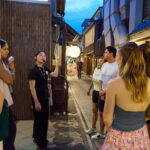
Meeting at Kyoto Ceramic Center (8:30 am): Easy Start, Clear Direction
You’ll start at Kyoto Ceramic Center (Kyoto Ceramic Art Association Official Shop and Gallery) at 8:30 am. The address listed is 583-1 Yūgyōmaechō, Higashiyama Ward, Kyoto.
Why this matters: the meeting point is specific and public-transport friendly, which reduces the classic “where do we meet?” stress. Also, starting earlier helps you get into the Kiyomizu-dera area before your energy level fully disappears.
Your day ends at Fushimi Inari Taisha Honden (Sanctuary), at 68 Fukakusa Yabunouchichō, Fushimi Ward, Kyoto, right in front of the main sanctuary area. So you finish at the heart of the torii-gate complex rather than being dumped somewhere inconvenient.
The tour uses a mobile ticket, which is useful when you’re juggling phones, maps, and the last thing you want is another paper card to manage.
Stop 1: Kiyomizu-dera and the Wooden Stage Views That Set the Tone
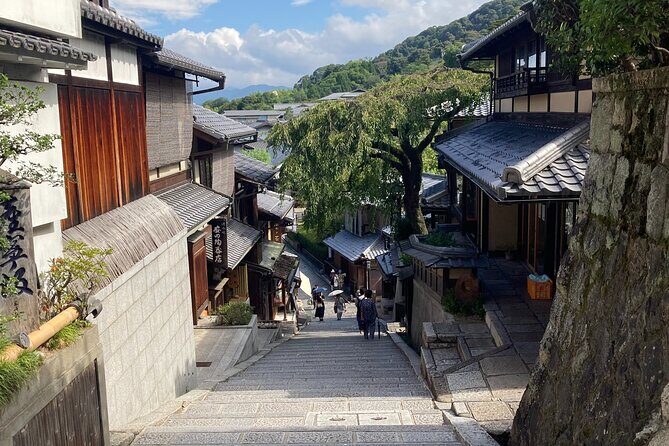
Kiyomizu-dera is one of Kyoto’s most famous Buddhist temples, founded in the late 8th century. You’ll have about 1 hour here, and admission is included.
Here’s what makes this stop worth slowing down for. The temple is known for its large wooden stage, the kind of structure that makes you stop and look up (and then, yes, look out). From there, you’re meant to take in the surrounding scenery—historically described with views over things like cherry trees and the wider city area.
Even if you’ve seen photos, Kiyomizu-dera works in real life because you can read the site. You see why the architecture matters, why the stage is there, and how the space is designed for watching the landscape beyond the temple grounds. That’s also where a guide helps. When you know what you’re looking at, you spend your time more intelligently than just snapping shots.
Potential drawback: Kiyomizu-dera is popular, and crowds can be real. You won’t control that, but the tour’s hour-long timing gives you the chance to settle into the experience instead of being rushed through like a conveyor belt.
Practical tip: bring your patience and your water. If you’re sensitive to walking uphill and uneven temple paths, take it slow on the approach. Comfortable shoes are not optional for this route.
Stop 2: Sanjūsangendō’s 1,001 Statues (30 Minutes That Can Feel Longer)
Next up is Sanjūsangendō Temple, with about 30 minutes on-site and admission included.
This place has a specific, memorable claim to fame: the hall houses 1,001 statues of the Thousand Armed Kannon, the Goddess of Mercy. The name Sanjūsangen-dō refers to the hall as “thirty-three bays,” which is the kind of detail that sounds abstract until you’re standing there and noticing the hall’s scale.
Why this stop fits in a short tour: it’s concentrated. You don’t need a full afternoon to appreciate what makes Sanjūsangendō distinctive. You focus on the hall, the statues, and the atmosphere—then move on. It’s also a great “contrast stop” after Kiyomizu-dera’s dramatic views. Kiyomizu pulls your eyes outward. Sanjūsangendō pulls you inward, toward the statues and the solemn rhythm of the space.
From the way guide-led tours are described, the best value here is how the guide frames what you’re seeing. A good explanation turns the time limit from a drawback into a focused experience. You end up leaving with more mental images than you would from a quick walk-by.
Potential consideration: 30 minutes can feel short if you’re the type who likes to read everything slowly. If that’s you, you’ll still likely enjoy it, but you may want to plan one extra visit later on your own if you want more time in the hall.
The Transit Link: Short Train Hop Costs About ¥170
Between temples and shrines, you’ll use public transportation. The tour includes a train step from Shichijō Station to reach the Fushimi Inari area.
Important detail: the train fee is not included. The listed cost is about ¥170 per person. The tour suggests having an IC card or coins ready.
Why I think this matters for planning: when a tour includes a transit segment without ticket cost, you don’t want to be scrambling mid-morning. If you already use a transit card in Japan, you’re golden. If you don’t, keep some coins handy so you’re not rushing at the worst time.
This transit portion is short—listed as about 5 minutes in the flow of the tour—so it’s not a huge detour. It’s just a small extra cost you should budget so the day stays smooth.
You can also read our reviews of more guided tours in Kyoto



Stop 3: Fushimi Inari Taisha and the Torii Gate Walking Ritual
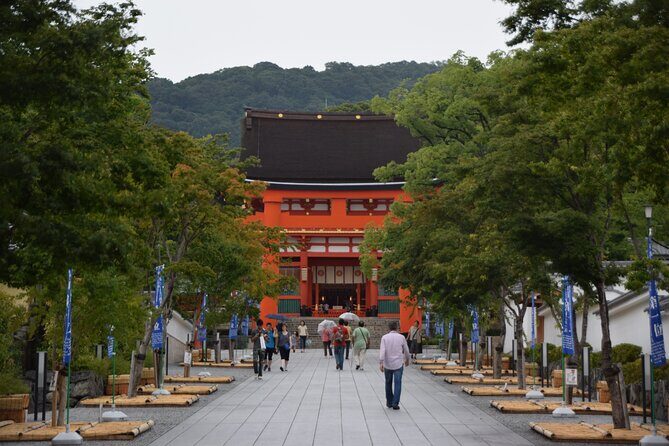
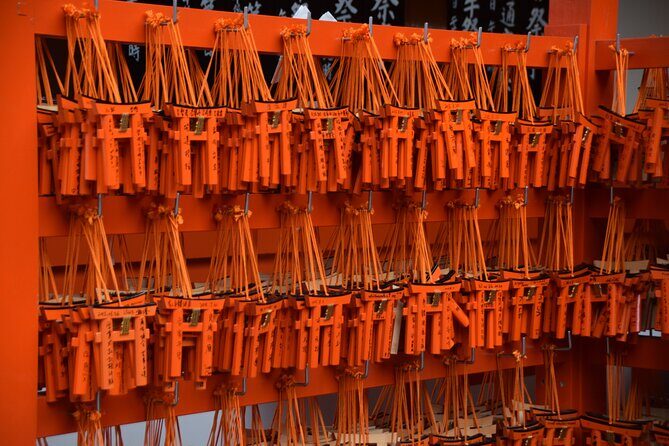
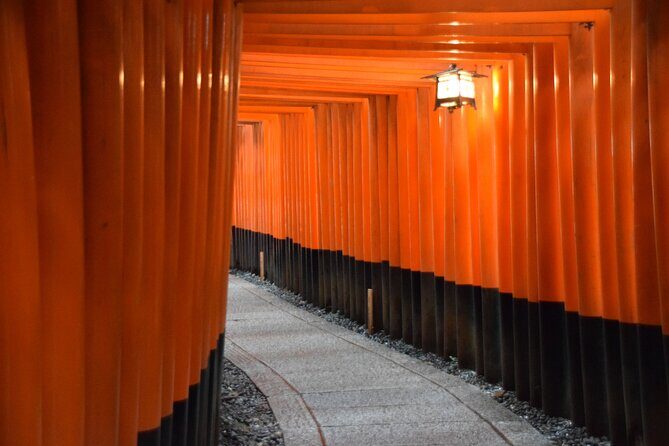
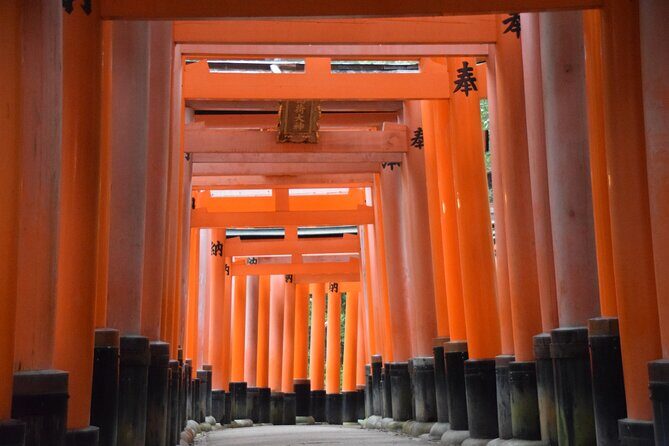
Finally, you reach Fushimi Inari Taisha, a Shinto shrine dedicated to Inari, the god of rice, agriculture, and prosperity. This is the stop everyone recognizes from films, photos, and postcards.
You get about 45 minutes, and admission is free.
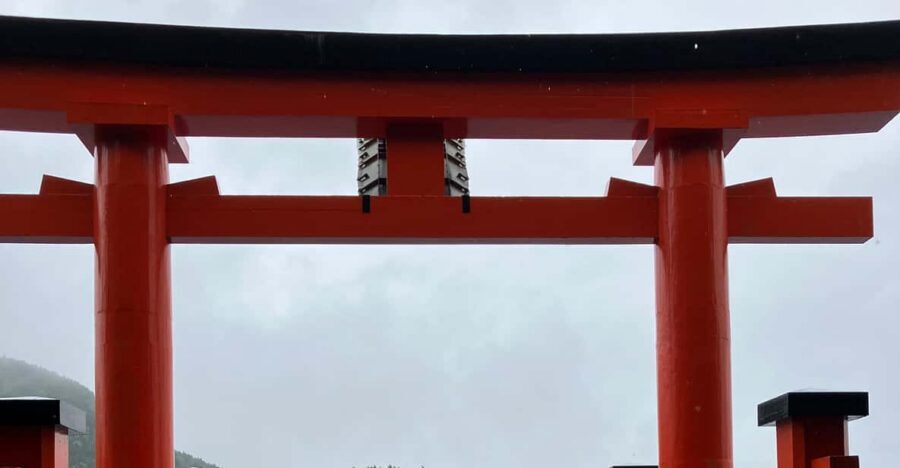
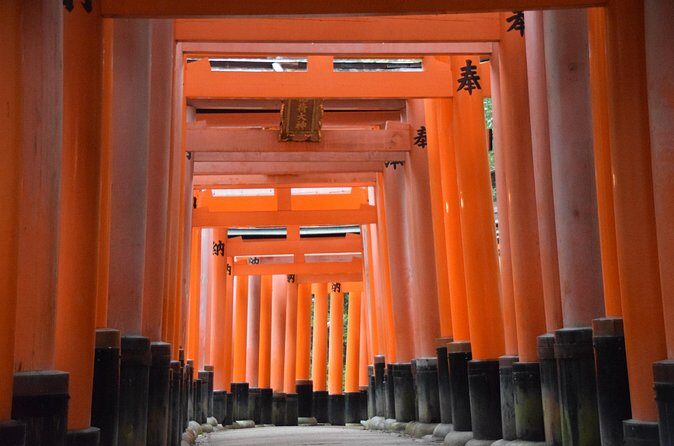
The highlight is walking through the thousands of red torii gates. In real life, the gates don’t just look cool—they create a path that guides your pace. Even when you’re not climbing for the “top,” the layout makes you move forward naturally, and the tunnel effect makes the photos easy to get without turning the whole experience into a selfie session.
One of the most praised parts of this style of tour is that you don’t only stay on the busiest straight line. You can get a more peaceful feeling in areas sometimes described as secret or calmer paths inside Fushimi Inari. That’s where a guide’s familiarity matters: they help you find a rhythm and keep the walk interesting, not repetitive.
Potential drawback: 45 minutes is a good window, but torii-gate complexes invite wanderlust. If you want to go really deep into the grounds, you might feel time pressure. For most people, though, it’s a balanced amount of time to see the iconic part and still enjoy the vibe.
Practical photo tip: shoot a few wide frames early, then switch to details—torii spacing, stone lanterns, the texture of the path. Don’t burn all your energy chasing one “perfect” shot.
Small Group Energy and a Guide Like Naomi-san
This tour caps at 8 travelers, which is the sweet spot for a walking experience like this. You’re not stuck behind strangers who move at a different speed, and you’re not stuck waiting while everyone figures things out.
The guide experience seems to be a major strength. Guides are described as friendly and passionate, with a high-energy style that makes the walking feel lighter than the distance suggests. Many groups are led by Naomi-san, and the descriptions emphasize that questions are welcome, answers are clear, and the day doesn’t feel like a lecture.
Also, the humor matters more than you’d think. A few jokes and little history tidbits can turn “I’m tired of walking” into “wait, that’s actually interesting.” That’s the difference between seeing Kyoto and understanding what you’re seeing.
Weather note: the tour runs rain or shine. Kyoto mornings can shift fast. If it’s wet, bring a light umbrella or rain layer. The route includes outdoor walking between sites, so don’t plan to be dry the whole time.
Photo and Comfort Tips for a 4-Hour Kyoto Walk
You’re hitting three big sights in one morning, so your best strategy is to travel smart, not just fast.
- Wear comfortable walking shoes. Temple steps and uneven paths are part of the deal.
- Start early with a light breakfast. You’ll have a long stretch from 8:30 am before your next meal.
- Charge your phone the night before. You’ll likely use navigation and photos back-to-back.
- Keep an eye on energy: 4 hours sounds short until you’re climbing, descending, and stopping for viewpoints.
If you’re trying to photograph Kiyomizu-dera and Fushimi Inari on the same morning, remember that light shifts. Early shots tend to look cleaner and less hazy, while later ones can get softer and moodier depending on weather.
Who This Tour Is Best For (And Who Might Want to DIY)
This tour is a strong match if you want:
- A structured half-day with Kyoto’s top religious highlights.
- A guide-led explanation so the sites make sense, not just look impressive.
- A small group where you can ask questions and keep moving.
- Efficient sightseeing without the stress of transit planning.
It’s also good for first-timers. Kiyomizu-dera and Fushimi Inari are must-sees. Adding Sanjūsangendō gives you something that feels distinctly Kyoto, not just Instagram-famous.
Who might not love it:
- If you hate any walking at all, this won’t be your style.
- If you want to spend a long time lingering in one place (especially if you read every sign), the 4-hour structure could feel limiting.
For many people, though, this is exactly the right compromise: enough time to appreciate, short enough to keep your energy for the rest of Kyoto that day.
Should You Book This Kyoto Highlight Walk?
I’d book it if you’re after a focused morning that hits the best-known sites while still leaving you with a sense of place, not just a checklist. The value hinges on two things: admission included for Kiyomizu-dera and Sanjūsangendō and a small group size (max 8) that supports a relaxed pace and real questions.
Be aware of the one extra cost (the train fee of about ¥170) and plan for moderate walking. If you’re okay with that, this is a practical way to experience Kyoto’s spiritual side without burning your whole day—and without doing the math yourself.
FAQ
FAQ
How long is the Kyoto guided walking tour?
It’s about 4 hours.
What does the tour cost?
The price is $78.18 per person.
Is the tour a small group?
Yes. The maximum group size is 8 travelers.
Do I need to buy tickets for Kiyomizu-dera and Sanjūsangendō?
No. Admission is included for both Kiyomizu-dera (about 1 hour) and Sanjūsangendō (about 30 minutes).
Is admission free for Fushimi Inari Taisha?
Yes. Fushimi Inari-taisha Shrine admission is listed as free.
Is the train fee included to get to Fushimi Inari?
No. The train fee is not included. You should have an IC card or coins, and the listed estimate is ¥170 per person.
Where does the tour start?
You meet at Kyoto Ceramic Center (Kyoto Ceramic Art Association Official Shop and Gallery), 583-1 Yūgyōmaechō, Higashiyama Ward. Start time is 8:30 am.
Where does the tour end?
The tour ends at Fushimi Inari Taisha Honden (Sanctuary), 68 Fukakusa Yabunouchichō, Fushimi Ward.
Does the tour run in bad weather?
Yes. It takes place rain or shine.
What is the cancellation policy?
You can get a free cancellation refund if you cancel at least 24 hours before the experience start time.