REVIEW · KYOTO
Kyoto: Lunch or Dinner with Maiko
Book on GetYourGuide →Operated by B.B.Advisors Inc. AN KYOTO · Bookable on GetYourGuide
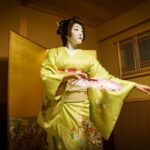
Maiko etiquette, up close, with dinner. This Kyoto experience lets you enjoy a Maiko dance performance while you’re eating, then follow it with a real Q&A session where you learn how this traditional world runs. You’re not just watching from the back row.
I also like how the program builds in hands-on moments, like a photo right beside the Maiko and a small lucky charm. One heads-up: the venue isn’t an ochaya-style house, and the room setup can feel more straightforward than you might hope, so manage expectations on atmosphere and decor.
In This Review
- Key Highlights You’ll Actually Care About
- Why This Maiko Lunch or Dinner Feels Personal
- The 90-Minute Flow: Tea, Dinner, Q&A, Photos, and Two Dances
- Tea Ceremony Demonstration (and the Optional Tea-Making Add-On)
- The Q&A Session: Learning the Daily World Behind the Kimono
- Photo Moment + Senjyafuda Lucky Charm
- Two Traditional Dances: Seasons, Love Stories, and Everyday Life
- Kyoto Food at the Center: Dashi, Soup, and Traditional Style
- Price and Value: Is $63 Worth It?
- Getting There: Gojo Station, Stairs, and On-Time Rules
- Venue Expectations: Not an Ochaya, Relaxed Staff, Friendly Vibe
- Who This Is Best For (and Who Should Pass)
- Should You Book This Maiko Lunch or Dinner in Kyoto?
- FAQ
- How long is Kyoto: Lunch or Dinner with Maiko?
- How much does it cost?
- What is included with the program?
- Is a tea ceremony included, and can I add tea making?
- Where is the meeting point?
- Is the venue in a traditional house?
- Do I need to climb stairs?
- Are there seat upgrades available?
- Is English translation available?
- What is the cancellation policy?
Key Highlights You’ll Actually Care About
- Two dances, up close: You’ll see Maiko movements tied to seasons, love stories, and everyday life.
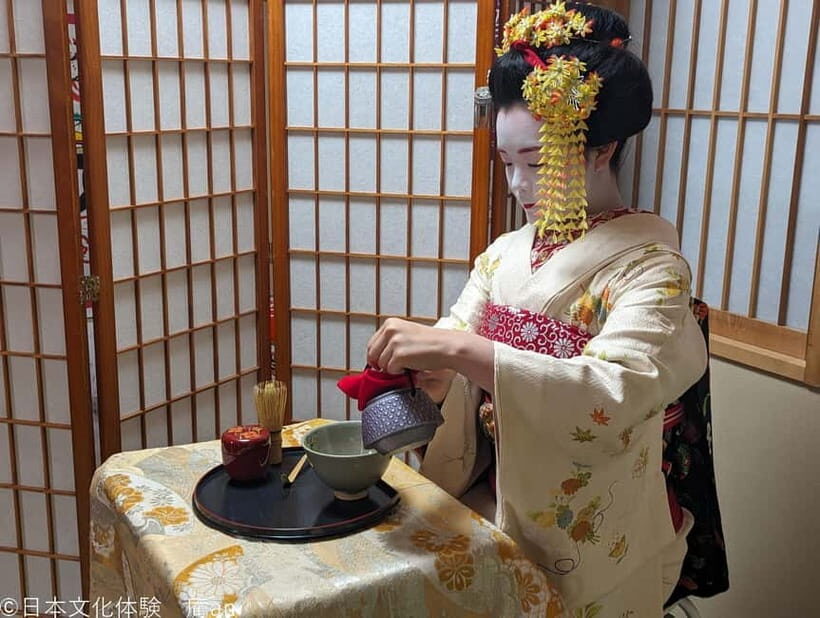
- Tea ceremony moment first: A tea ceremony demonstration happens early, with an optional tea-making add-on.
- Q&A is the real hook: Ask questions directly and get insight into daily life.
- Photo beside Maiko + Senjyafuda: You get a commemorative photo and a lucky charm as a gift.
- Interactive game energy: Simple games with Maiko hospitality, with a chance to join or cheer.
Why This Maiko Lunch or Dinner Feels Personal
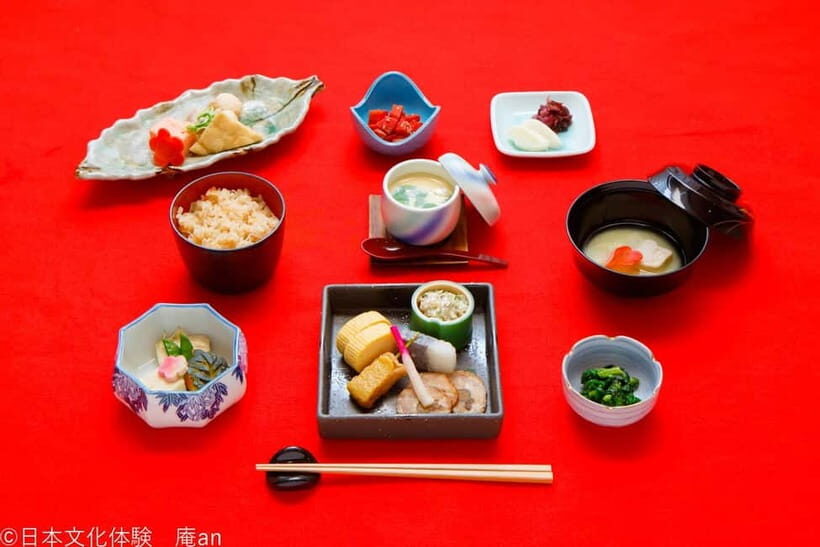
This isn’t the usual Kyoto performance where you sit quietly and hope the show ends before your feet go numb. The format mixes culture, conversation, and short performance pieces, so you get multiple ways to connect with the tradition in just 90 minutes.
You also get close access to a Maiko in her role. That matters because you learn the details you’d normally miss: how etiquette shows up in small movements, and how the performance connects to everyday customs like tea and seasonal storytelling.
The program is run by a Japanese team (the instructor is Japanese, and English translation is provided as much as possible). That language support helps a lot if you want to actually understand what’s being explained, not just watch the motions.
A few more Kyoto tours and experiences worth a look


The 90-Minute Flow: Tea, Dinner, Q&A, Photos, and Two Dances
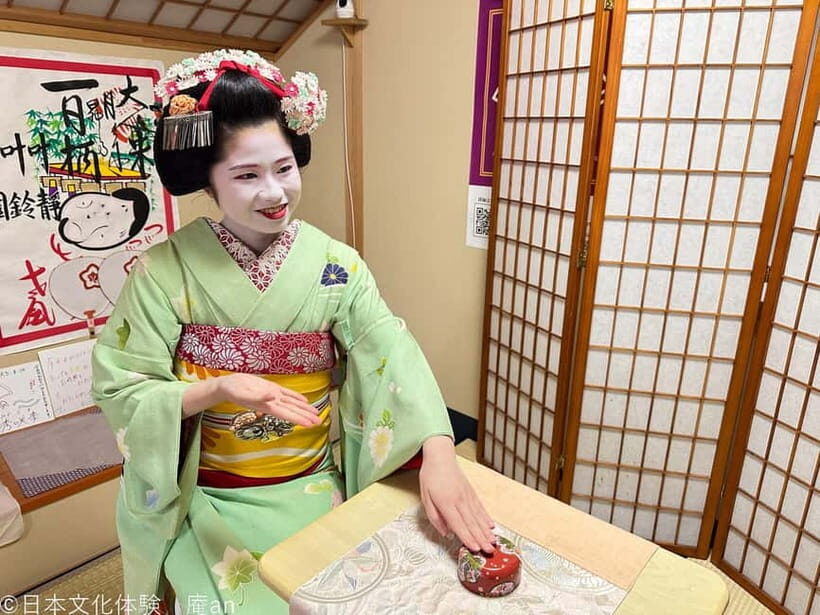
The schedule moves in a clear, visitor-friendly order. You start with a tea ceremony demonstration, then you eat a Kyoto-style meal from a long-established restaurant, then the program shifts into conversation and audience interaction.
Here’s the typical rhythm:
- Tea ceremony demonstration by the Maiko
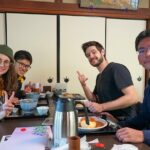
- Traditional Kyoto dinner (the restaurant meal is part of the experience)
- Question and Answer session with Maiko
- Photo opportunity beside the Maiko, with a Senjyafuda gift
- Two Maiko dances (short sets that express seasonal beauty, stories of love, and everyday life)
- Interactive game with Maiko hospitality
- Departure window: the main program ends around 75 minutes, with a little extra chatting time before you leave
This structure is efficient. You get the “wow” of the dances, but you also get the “oh, that’s why” of the Q&A and tea etiquette.
One practical thing to note: this is scheduled tightly. The event won’t be held to accommodate delays, so if you’re bouncing between Kyoto spots that day, plan buffer time.
Tea Ceremony Demonstration (and the Optional Tea-Making Add-On)
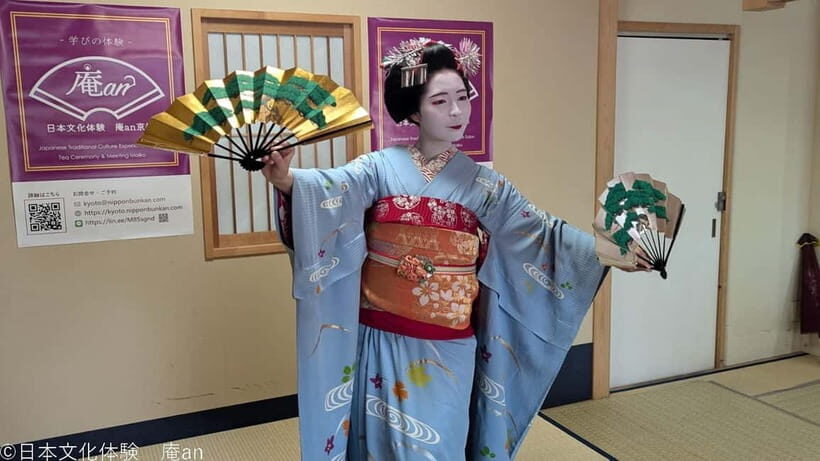
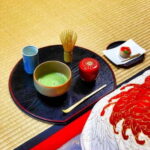
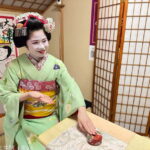
Tea is a big deal in Kyoto, and here you don’t just see a performance—you get a demonstration with the Maiko. Watch the graceful etiquette and the pacing, because that’s often where the respect for tradition shows up.
If you want to do more than observe, there’s an optional tea-making add-on. It costs 1,600 JPY, and you choose it when you apply.
This option is worth considering if you’re the type who remembers experiences better when you’ve handled something yourself. If you’d rather keep it simple and focus on the dances and Q&A, you can skip the extra add-on.
The Q&A Session: Learning the Daily World Behind the Kimono
This is the part that turns the evening from show-and-snack into a real cultural conversation. The Q&A is designed so you can ask questions directly and get insight into daily life, routines, and what Maiko culture looks like beyond the costume.
If you’ve ever wondered what goes into training, etiquette, or maintaining traditions, this is the place where those questions can land naturally. The format is also built to make you feel like you’re stepping into a more private, “hidden” world for a short time.
English support is offered as much as possible, and you can contact the provider if you want to add support. If you’re planning to ask questions, it helps to write down a few in advance so you don’t blank when the moment arrives.
Photo Moment + Senjyafuda Lucky Charm
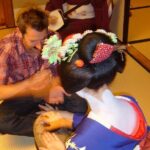
The program includes a photo opportunity right beside the Maiko. It’s close enough to feel personal, not like a distant souvenir shot.
After the photo, you receive a small gift: a lucky charm called a Senjyafuda. This is one of those details that feels genuinely Kyoto—small, meaningful, and connected to the moment rather than a generic “thanks for coming” token.
Bring your best “I’m not sure where to stand” energy. The staff will guide you, but this is still a photo you’ll remember, so slow down, smile, and let the moment happen.
A few more Kyoto tours and experiences worth a look



Two Traditional Dances: Seasons, Love Stories, and Everyday Life
The highlight for many people is straightforward: you see two Maiko dances, and they’re presented as expressions of Japan’s seasons, love stories, and daily life. The value here isn’t just in watching the choreography—it’s in understanding that dance is a storytelling tool.
Between the tea demonstration, Q&A, and photo, the dances land with more meaning. You’ve already learned the cultural “rules of the room,” so the performance reads clearer.
If you’re picky about dance and want a great view, ask about seating upgrades. Front-row upgrades cost extra, but if you care about seeing details in movement and expressions, paying for better seats can be reasonable.
One note: sometimes the program may invite a Geiko instead of a Maiko, depending on the situation. If that happens, you’ll still get the cultural program format and performance elements, just with the performer type adjusted.
Kyoto Food at the Center: Dashi, Soup, and Traditional Style
You eat a dinner prepared by a long-established Kyoto restaurant. Kyoto cuisine leans heavily on dashi (soup stock), and that flavor shows up in many dishes, especially soups and delicate cooked items.
Also, the program follows Kyoto’s traditional style of delivery, known as “Shidashi.” In practical terms, this is the kind of meal that aims for authenticity over fancy presentation.
Here’s the balanced truth: the meal quality seems to be the most mixed element. Some people feel the food is very typical and enjoyable; others have described it as less inspiring in terms of presentation and taste. Your best approach is to treat the meal as part of the cultural package, not the main event.
If you have strong preferences about food temperature or want a big variety of modern dishes, you might plan a snack afterward. If you’re happy with traditional flavors and a Kyoto-style dinner rhythm, you’ll likely be satisfied.
Price and Value: Is $63 Worth It?
At $63 per person for 90 minutes, you’re paying for far more than a seat at a dance show. You’re getting:
- tea ceremony demonstration
- a full restaurant meal
- Q&A time
- photo beside the performer
- a lucky charm (Senjyafuda)
- two dance performances
- an interactive game with Maiko hospitality
That’s a lot bundled into one short experience, which makes it good value compared to piecing together separate tickets and private cultural moments.
That said, there are add-ons. Tea-making costs 1,600 JPY. If you want better sightlines, seating upgrades are available:
- SS seat (first row): 3,300 JPY
- S2 seat (second row): 2,200 JPY
- S3 seat (third row): 1,100 JPY
If you’re on a tight budget, you can stick to the standard seat and still get the core program. If you’re especially interested in seeing expressions and handwork clearly, seat upgrades are the easiest way to get more out of the performance portion.
Getting There: Gojo Station, Stairs, and On-Time Rules
Meeting point is simple. You’ll be a 1-minute walk from Exit 1 of Subway Karasuma Line Gojo Station. The storefront entrance faces Gojo-dori, and it’s right by the main street.
Two practical cautions:
- There’s no elevator, so plan on stairs to reach each venue.
- The event won’t be adjusted for late arrivals. Build slack time into your day so you’re not rushing in from another neighborhood.
Also, reservations come with defined operation hours. The program runs 10:00 to 17:00, and if you book after 17:00, it’s processed the next day.
If you need English translation, contact the provider so they can plan support. The experience language is Japanese, but translation is provided as much as possible.
Venue Expectations: Not an Ochaya, Relaxed Staff, Friendly Vibe
One key expectation check: the venue is not an ochaya or a traditional Japanese house. It’s located in a building and the atmosphere is relaxed with friendly staff.
That matters because the “set dressing” and decor may not match the dreamy Kyoto postcard vibe you might imagine. Some visitors say it feels basic, like a more functional room setup rather than a fully staged tea-house scene.
The upside is that you don’t need special preparation. You can show up as you are and focus on the program itself: tea etiquette, Q&A, dances, and the interaction moments.
Who This Is Best For (and Who Should Pass)
This is a great fit if you want a compact Kyoto experience that includes both performance and conversation. It works well for couples, solo travelers who love structured cultural encounters, and anyone who wants to ask questions directly instead of just taking photos.
It’s also ideal if you’re comfortable with a short schedule and you’d rather get value from one planned activity than spread your time across multiple ticketed stops.
You might want another option if:
- you’re very sensitive to room decor and want a classic ochaya environment
- you’re expecting a meal that feels like a top-tier restaurant tasting menu
- you dislike tight timing and won’t be able to arrive on schedule
Should You Book This Maiko Lunch or Dinner in Kyoto?
Book it if your goal is a real Maiko experience that goes beyond watching. The combination of tea demonstration, Q&A, close photo access, and two dances makes this one of the more complete ways to understand what Maiko culture looks like from the inside.
Skip or choose another style of program if food quality and room atmosphere are your top priorities. Based on the experience format, you’re paying mainly for access and cultural interaction, not a guaranteed five-star meal presentation.
If you do book, I’d strongly consider seat upgrades if you can, and be early. In a program this timed, punctual arrival is the easiest way to protect your enjoyment.
FAQ
How long is Kyoto: Lunch or Dinner with Maiko?
The experience lasts about 90 minutes.
How much does it cost?
The price is listed as $63 per person.
What is included with the program?
It includes dinner with Maiko, a tea ceremony demonstration, a Q&A session, a photo opportunity, Maiko dances, and an interactive game with Maiko hospitality.
Is a tea ceremony included, and can I add tea making?
A tea ceremony demonstration is included. You can add tea making as an option for 1,600 JPY.
Where is the meeting point?
Meet at a spot about 1 minute walk from Exit 1 of Subway Karasuma Line Gojo Station. The entrance faces Gojo-dori.
Is the venue in a traditional house?
No. The venue is in a building and is not an ochaya or traditional Japanese house, though it has a relaxed atmosphere.
Do I need to climb stairs?
Yes. There is no elevator in the building, and you will need to take stairs.
Are there seat upgrades available?
Yes. SS seat (first row) is 3,300 JPY, S2 seat (second row) is 2,200 JPY, and S3 seat (third row) is 1,100 JPY. These are not included in the base price.
Is English translation available?
English translation is provided as much as possible. If you want to add English support, you should contact the provider.
What is the cancellation policy?
You can cancel up to 8 days in advance for a full refund.