REVIEW · KYOTO
Kyoto: Shakyo & Matcha in Historic Temple Garden
Book on GetYourGuide →Operated by Cornwall Ltd · Bookable on GetYourGuide
Sutra copying turns Kyoto quiet. This small-group visit to Sennyu-ji, a historic temple that’s designated an Important Cultural Property, slows your whole day down fast. I like how you start in a calm, incense-scented space where the only big goal is to write carefully and follow the rhythm of the practice.
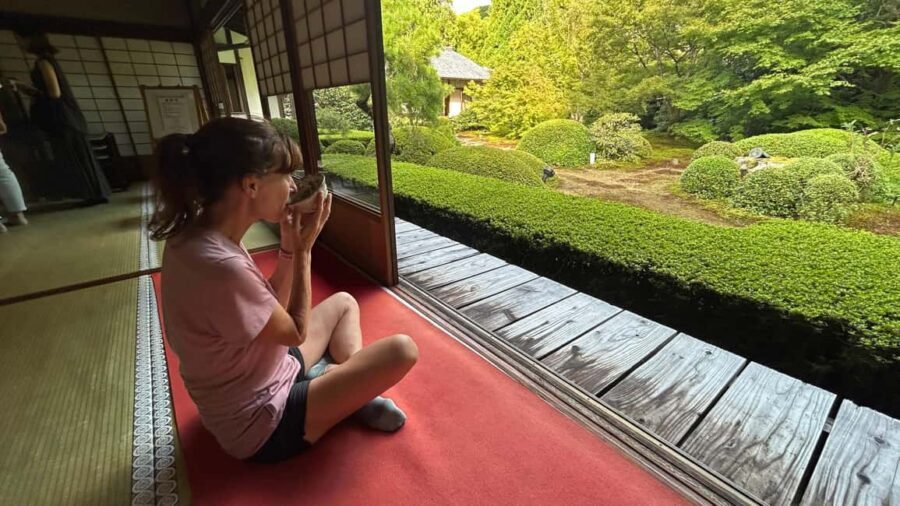
My favorite part is what comes right after: a cup of freshly prepared matcha plus seasonal wagashi. It feels like a reward that’s connected to the setting, not just a snack stop, and you get to enjoy it while looking out at the temple’s garden.
One thing to plan around: parts of the experience require a quiet sitting posture, and photography can be limited inside certain temple areas to protect the atmosphere.
In This Review
- Key things to know before you go
- Sennyu-ji and the walk that sets the tone
- Shakyo sutra copying: the practice you actually feel
- Matcha and seasonal wagashi in the garden
- Guided context that helps you see more
- The itinerary in real time: what each moment feels like
- Small group pace: calm without feeling alone
- Price and value: what $35 buys in Kyoto time
- Who should book shakyo and matcha at Sennyu-ji
- Should you book this Kyoto Shakyo & Matcha tour?
- FAQ
- Where do I meet for this tour?
- How long does the experience last?
- What is the main activity?
- How long is the shakyo session?
- Is matcha included, and is it freshly prepared?
- Are admission fees included?
- What size is the group?
- Is the tour in English?
- Is photography allowed inside the temple?
- Who can participate?
Key things to know before you go
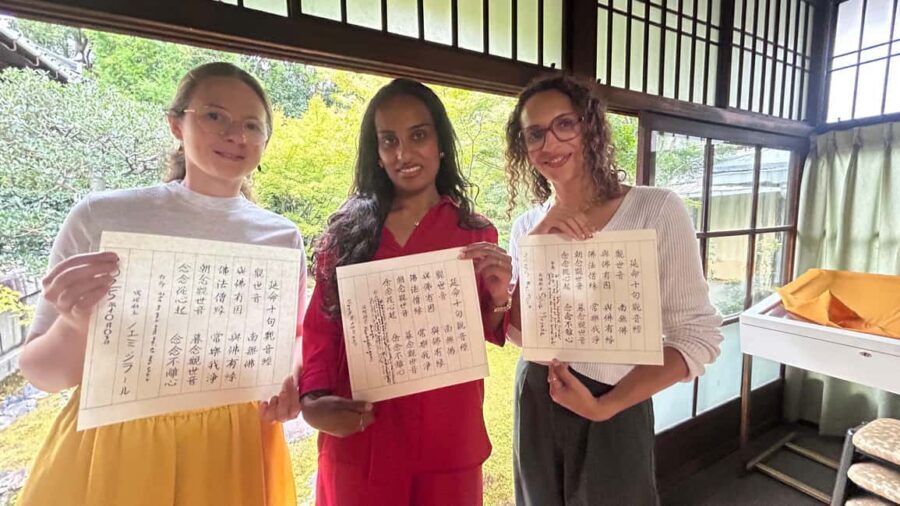
- Shakyo (sutra copying) with all materials provided: brushes, paper, and ink are included
- 60–90 minutes of meditative writing: time can vary based on your writing pace
- Matcha and seasonal wagashi: served after your practice, paired with garden views
- Small group size (up to 10): you get space to focus and ask questions
- Sennyu-ji garden photo stop and guided tour: learn while you look
- Skip-the-line access via a separate entrance: less waiting, more temple time
Sennyu-ji and the walk that sets the tone
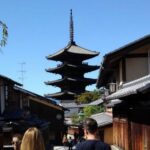
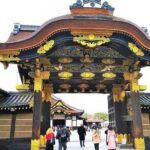
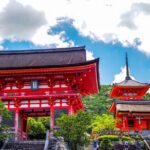
This tour is built around one of Kyoto’s best kinds of breaks: not a frantic “see everything” loop, but a guided pause in a real temple space. You meet at the East Gate of Keihan Station, and the guide is easy to spot with a yellow fluorescent band on their bag. From there, you head on foot toward Sennyu-ji, with a short walk (about 15 minutes) and a photo stop along the way.
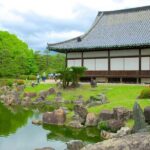
That walking chunk matters more than you might expect. In Kyoto, it’s easy to treat temples like backdrops while your mind stays on the next stop. Here, the pace is slower from the start, so when you arrive you’re ready for calm. The guided portion also helps you notice what you’d normally miss—how the path, sightlines, and garden layout work together to create a sense of order and quiet.
Also, remember you’re in a sacred environment. This is not a quick photo spree kind of visit. The best vibe is respectful, attentive, and a little quiet.
You can also read our reviews of more historical tours in Kyoto
Shakyo sutra copying: the practice you actually feel
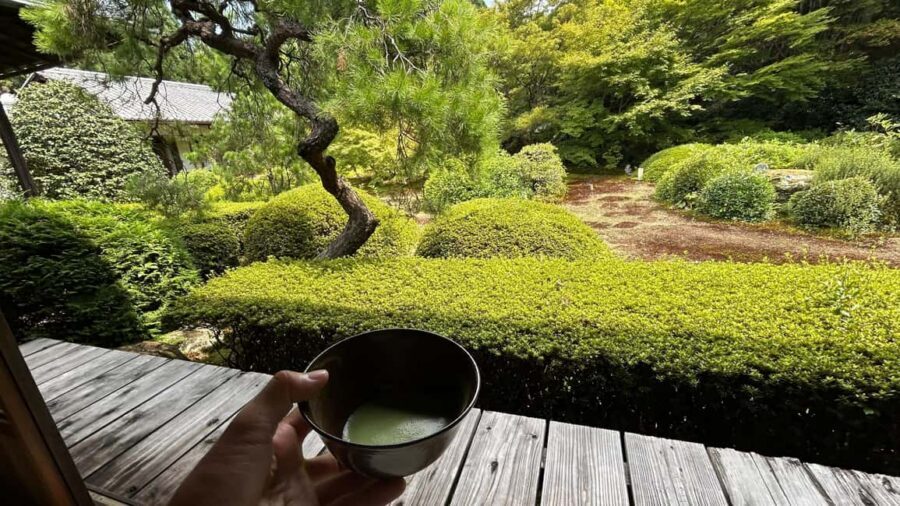
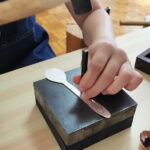
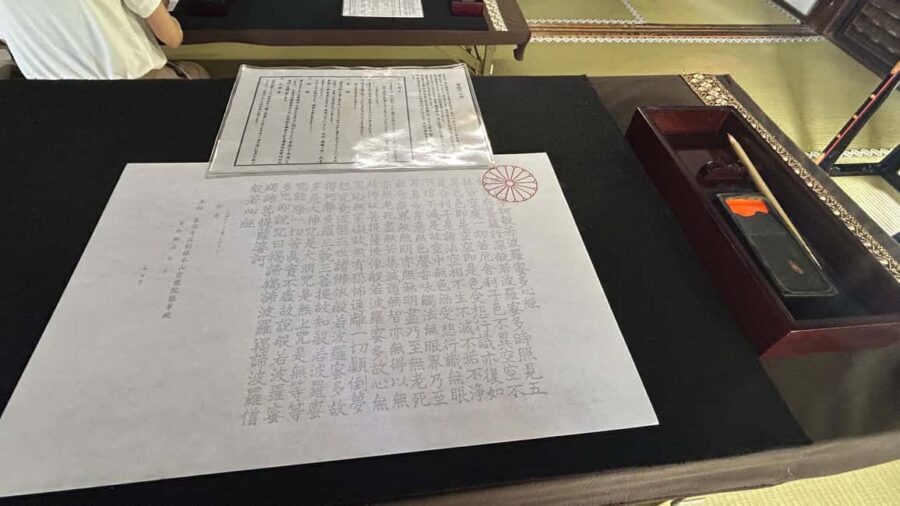
The main event is shakyo, sutra copying—a Buddhist practice where you reproduce writing carefully as a form of meditation. You’ll be in a cozy, peaceful space designed for concentration. Incense is part of the atmosphere, and you may also notice natural sounds like birdsong outside the room. It’s a simple sensory mix, but it’s effective: it nudges your mind away from phone-scrolling mode and toward one clear task.
Before you start, the guide explains what you’re doing and how to hold the brush. Then you copy sutras using materials provided for you: brushes, paper, and ink. You don’t need calligraphy experience. The goal isn’t artistic perfection. The goal is steady focus.
Timing is usually 60–90 minutes for the shakyo session, depending on your writing speed. In other words, you should plan to treat this as a real chunk of your morning or afternoon, not a “side activity.” When you’re writing in silence, it’s surprising how fast the time can pass, but you’ll still get that meditative, unhurried feeling people chase in Japan.
Practical tip: wear comfortable clothing that works for sitting quietly. You’ll be concentrating for a while, so stiff clothes aren’t your friend. Also, don’t bring anything that you’ll have to manage during the session—this experience doesn’t allow luggage or large bags.
Matcha and seasonal wagashi in the garden
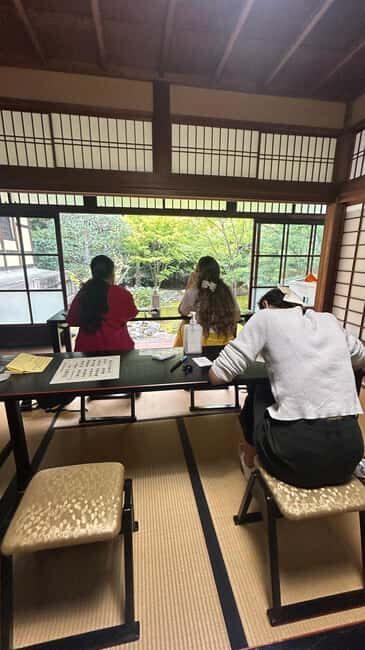
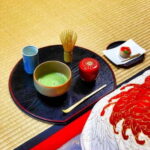
After your writing practice, you shift gears to a gentler, sensory break: freshly prepared matcha and seasonal wagashi (Japanese sweets). This is not thrown in at the end as a checkbox. The tea and sweets feel like part of the same atmosphere—warm, quiet, and slow.
What makes this pairing special is where you enjoy it: you’re looking out toward the Japanese garden. Gardens in Kyoto are designed to guide your eye. Even when you’re just sitting with tea, you start noticing how the elements frame the view—how stone, plantings, and seasonal touches work together to create a balanced scene.
Matcha flavor is also a good reality check for visitors who think they know matcha already. Here, it’s presented as freshly prepared, and it tends to taste smoother and more deliberate than the versions you might grab on the run. The wagashi are seasonal, so the sweetness and texture are tied to the time of year, not mass-produced.
If you love food experiences with context, this is a strong one: your tea tastes like you were practicing for it.
Guided context that helps you see more
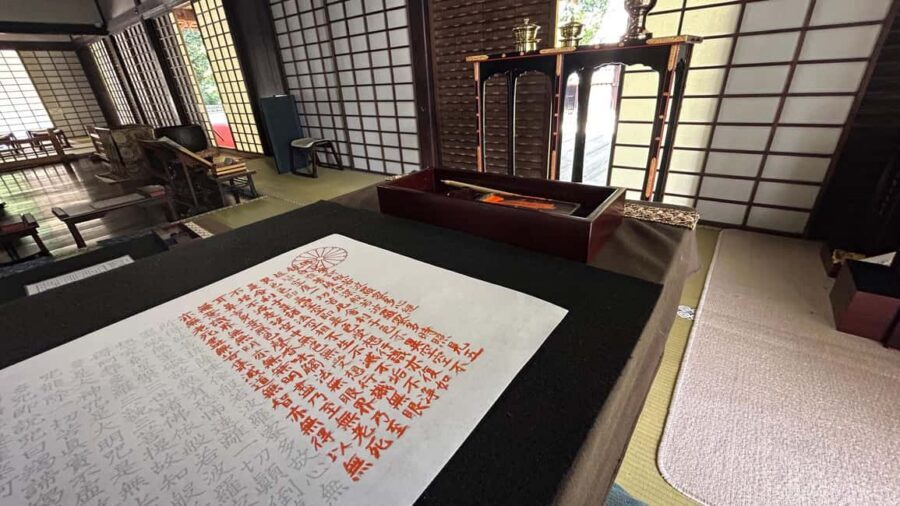
You also get a guided tour of the historic temple, with explanations of Kyoto’s Buddhist culture and why this place matters. The best part of having a guide here is that they translate what you’re looking at into something your brain can keep. Without that, temples can blur together into “pretty buildings and gardens.”
In the experience, you’ll get background while still keeping your eyes on the real environment: the temple setting, the garden design, and the meaning behind shakyo. That connection is especially useful if your Kyoto itinerary is packed. Instead of just adding another stop, you’re learning how to interpret what you see while you’re still inside the atmosphere.
I also like that the guide’s support doesn’t end when the activity ends. The experience includes tips for planning the rest of your day, which can be handy if you’re trying to avoid backtracking or double-paying for transport.
The itinerary in real time: what each moment feels like
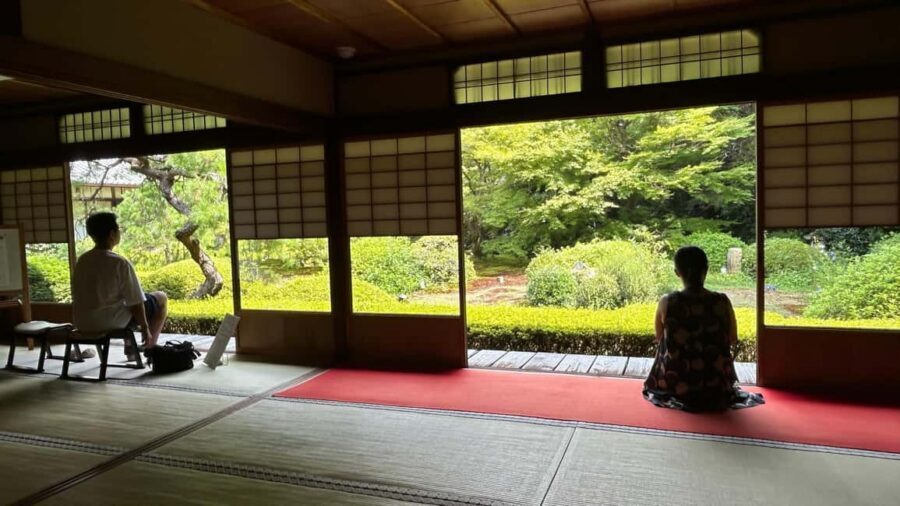
Here’s how the flow plays out, and why it’s designed this way:
Meet and walk to Sennyu-ji
You meet at Keihan Station and head on foot for about 15 minutes. Along the way, there’s a photo stop and scenic walking time. This part helps you arrive settled, rather than arriving already tired.
Sennyu-ji: guided visit and temple time
You spend about two hours at Sennyu-ji with guided sightseeing and time for learning. This isn’t a rushed “look, move, repeat” format. You have breathing room to look carefully, and the guide fills in the cultural meaning so you’re not just collecting images.
Shakyo session
Then you shift into the core practice. Plan for 60–90 minutes for writing. The quiet focus is the main value here. If you’ve been doing lots of shrines and busy streets, this is the reset button.
Matcha and wagashi break
After shakyo, you enjoy matcha and seasonal wagashi. This is the decompression phase. You’re still in the temple environment, so you don’t jump right back into crowds.
Return to the station area
Finally, you walk back about 15 minutes to where the experience ends near Tofukuji Station. It’s a practical finish point for continuing your Kyoto day.
At 150 minutes total, the timing is long enough to matter, but not so long that it wrecks the rest of your schedule.

Small group pace: calm without feeling alone
This is a small group experience, limited to 10 participants. That size is ideal for something like shakyo, where you need quiet and enough time to get guidance on technique. You’re not being herded. You’re also not stuck waiting for someone else to finish their explanations.
Because it’s live guided and in English, you get clarity without needing to guess what’s going on. The guide’s job is to translate the practice and also keep the group respectful and on time—especially important inside temple spaces.
One more practical point: since it’s a sacred environment, be ready for moments where you might not be able to do things like photographing everywhere. The experience notes that photography may be limited inside certain temple areas.
Price and value: what $35 buys in Kyoto time
At $35 per person, this tour can feel like a bargain if you compare it to the cost of a few separate things you’d otherwise piece together on your own: admission, a guided interpretation, and a structured shakyo session with materials included.
Here’s the value math that matters:
- You’re paying for a guided temple experience plus interpretation, not just a ticket.
- Your shakyo materials (brushes, paper, ink) are included, which is often the hidden cost in hands-on activities.
- You’re getting matcha and seasonal wagashi, which makes the experience feel complete.
- The group size stays small, and there’s skip-the-line access via a separate entrance, so you lose less time to waiting.
Is it cheaper than self-guided Kyoto? Sure, if you’re only measuring dollars. But self-guided doesn’t give you a structured shakyo practice or a calm, guided tea break with the right cultural context. For many visitors, that combination is exactly what turns a standard temple visit into a memorable one.
Who should book shakyo and matcha at Sennyu-ji
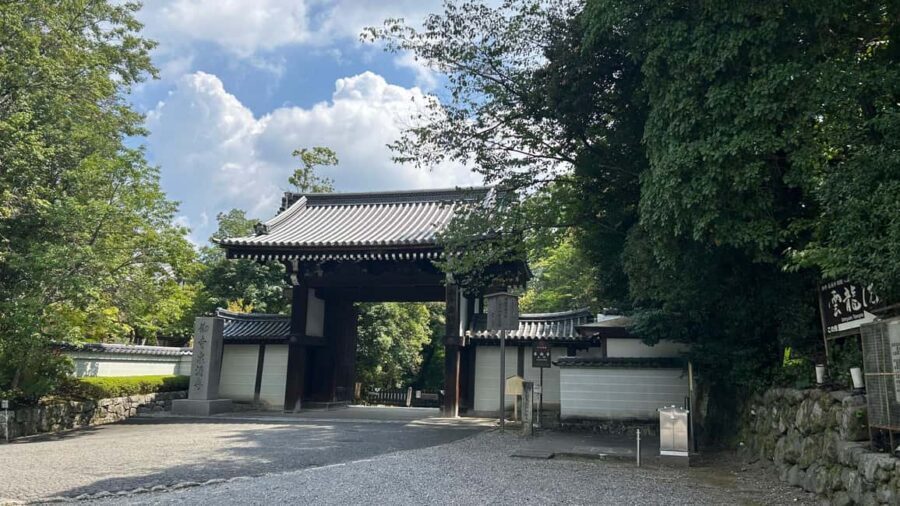
I’d point this tour toward people who want Kyoto to slow down for a bit.
You’ll likely enjoy it if:
- You’re the type who likes hands-on cultural activities more than photo-only sightseeing
- Your schedule is packed and you want a calm reset rather than another busy stop
- You want to learn just enough context so you can actually read what you’re seeing
- You enjoy matcha and seasonal sweets, especially when they connect to the setting
You might want to think twice if:
- You need a fully standing or fully accessible experience. This is not suitable for wheelchair users or people with mobility impairments, and it also doesn’t allow baby strollers.
- You’re traveling with young kids. It’s not suitable for children under 10.
- You’re carrying lots of luggage or large bags. Those aren’t allowed.
If you’re looking for a serene break that still feels culturally meaningful, this is a strong match.
Should you book this Kyoto Shakyo & Matcha tour?
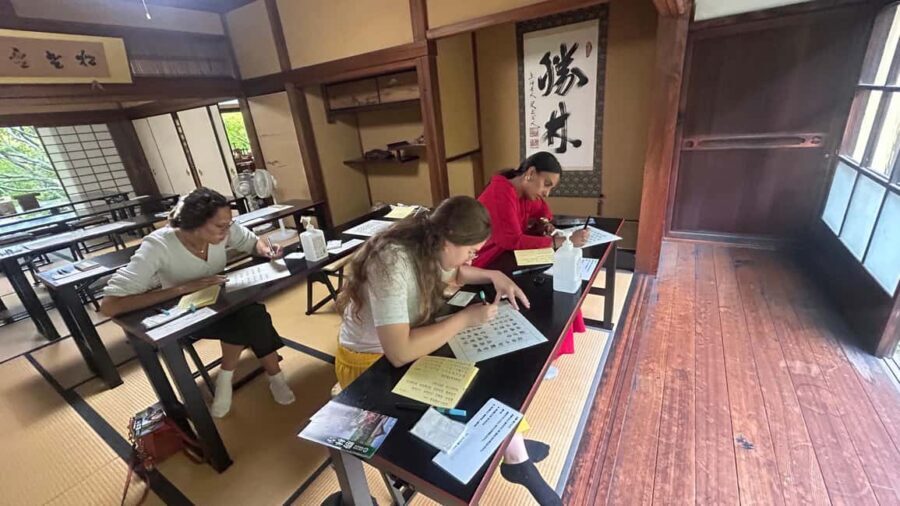
Yes, if you want one Kyoto experience that’s calm, guided, and actually structured around a practice—not just a pretty place. The best reason to book is simple: shakyo changes how you experience the temple. You’re not just looking at tradition—you’re doing something that requires attention and quiet.
The strongest draw for me is the combination of meditative sutra copying plus matcha and wagashi with garden views. It’s the kind of pairing that makes the experience feel rounded, and it gives your brain a break without feeling like a generic activity.
If you’re the type who hates sitting quietly, or if you rely on lots of mobility support, you’ll likely be happier choosing a different temple visit format. But if you can settle in, this tour is one of the better ways to get a slower, more thoughtful slice of Kyoto in just 150 minutes.
FAQ
Where do I meet for this tour?
Meet at the East Gate of Keihan Station. Look for the guide with a yellow fluorescent band on their bag.
How long does the experience last?
The duration is listed as 150 minutes.
What is the main activity?
The main activity is shakyo, a meditative practice of sutra copying.
How long is the shakyo session?
The shakyo session usually takes about 60–90 minutes, depending on your writing speed.
Is matcha included, and is it freshly prepared?
Yes. You get a bowl of freshly prepared matcha green tea along with seasonal wagashi.
Are admission fees included?
Yes. Admission fees are included, along with a guided tour of the historic temple.
What size is the group?
It’s a small group limited to 10 participants.
Is the tour in English?
Yes. The live tour guide is English.
Is photography allowed inside the temple?
Photography may be limited inside certain temple areas to preserve the atmosphere.
Who can participate?
It’s not suitable for children under 10, wheelchair users, and people with mobility impairments. Pets, baby strollers, and luggage or large bags are also not allowed.