REVIEW · KYOTO
Kyoto Udon and Tempura Cooking Class with Professional Chefs
Book on Viator →Operated by MagicalTrip Inc. · Bookable on Viator
Fresh noodles beat store-bought every time. This Kyoto class teaches handmade udon from flour and water, then turns you loose on classic Japanese rice bites and crispy tempura with professional help. I like that you get step-by-step coaching even if you’ve never cooked Japanese food before, and you’re not just watching.
The other big win for me is the small, friendly setup—up to 8 people—and the clear English guidance from Josh and Nakajima-san. One practical drawback: transportation to the meeting point isn’t included, so you’ll want a plan to get to the 7-Eleven at 599 Uraderachō (Nakagyo Ward) by 10:00 am.
In This Review
- Key highlights you’ll actually care about
- What this Kyoto cooking class really gives you (beyond food)
- Entering udon mode: kneading, rolling, and cutting noodles
- Making onigiri and inari sushi without the mystery
- Tempura at the right moment: getting crisp, not greasy
- The best part: eating your udon, sushi, and tempura (plus mini sake)
- Small group energy with Josh and Nakajima-san
- Price and what you truly get for $85.39
- Timing and where to meet (so you start on time)
- Who should book this Kyoto cooking class
- Should you book it? My take
- FAQ
- Where is the meeting point?
- What time does the cooking class start?
- How long is the experience?
- How much does it cost?
- What dishes will I make?
- Are drinks included?
- Do I need cooking experience?
- How big is the group?
- Is transportation included?
- Can I get a refund if my plans change?
Key highlights you’ll actually care about
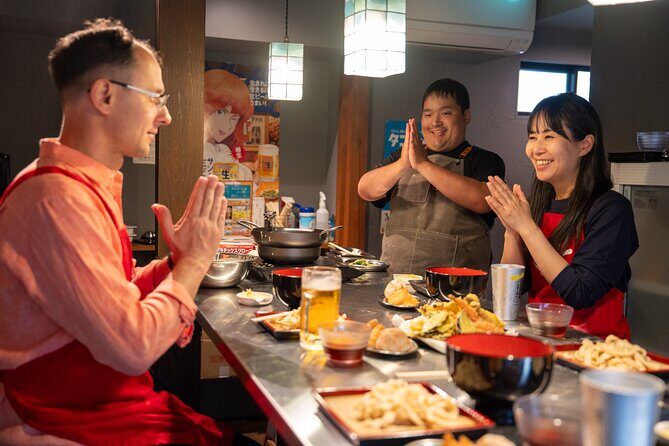
- Udon made by hand: knead, roll, and cut your own noodles from scratch
- Onigiri + inari sushi practice: classic rice shapes you can repeat later
- Tempura frying technique: learn how to get that crisp, golden texture
- You eat everything you make: udon, sushi, and tempura in one sitting
- Mini sake tasting + drink options: choose alcoholic or non-alcoholic (includes sake)
- Small group with Josh and Nakajima-san: English help plus an udon master
What this Kyoto cooking class really gives you (beyond food)
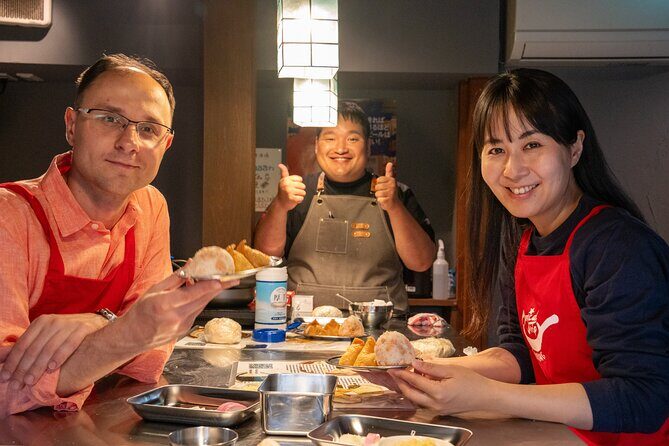
This is one of those cooking classes where the goal isn’t to impress you with a fancy menu. It’s to make sure you can leave Kyoto with a real skill: turning a few basic ingredients into noodles, rice bites, and crispy fried tempura.
The structure matters. You’re not hopping around with vague instructions. You start with the foundation—udon dough—and you work through the textures: kneading builds elasticity, rolling and cutting affect thickness, and cooking timing affects that satisfying chew. Then you shift to rice dishes (onigiri and inari sushi) where technique is more about shape and balance. Finally you go to tempura, where the batter and frying process determine whether you get light crunch or soggy disappointment.
And yes, you get to eat what you make. That sounds obvious, but it’s a big difference versus classes that end with tiny portions and a mostly educational lecture. Here, you finish with fresh udon, sushi, and tempura plus drinks, so you get payoff right away.
You can also read our reviews of more cooking classes in Kyoto
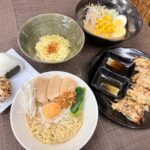
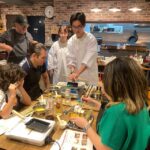
Entering udon mode: kneading, rolling, and cutting noodles
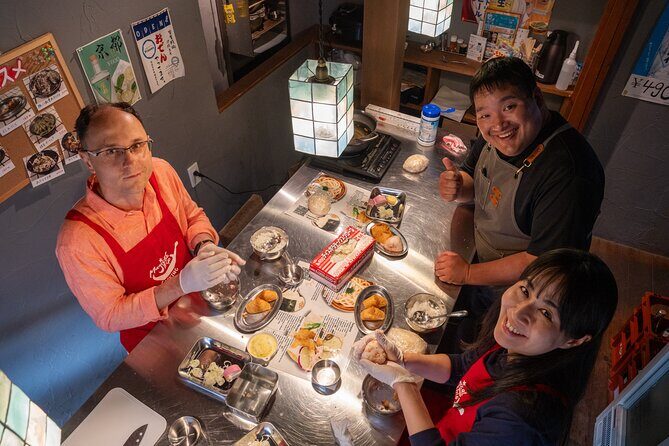
The udon part starts simple: flour and water. But simple doesn’t mean easy. Udon has a specific feel, and the class is built around getting your hands to learn what your brain can’t guess.
You’ll work with a local udon master and an English-speaking local guide, so you can understand what to do and why it matters. Expect to:
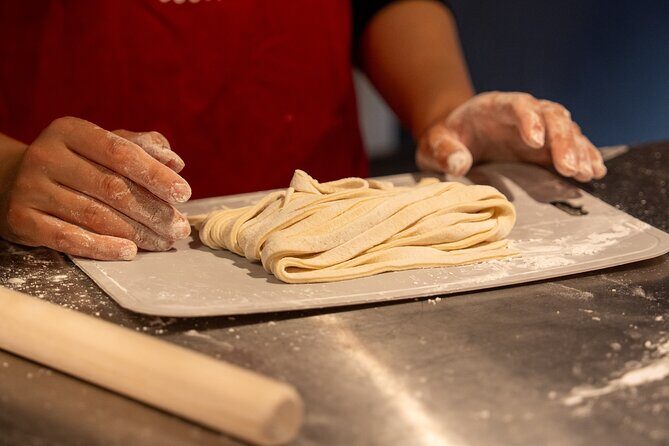
- knead the dough until it develops that stretchy, workable texture
- roll it out evenly
- cut the noodles into consistent strips
That consistency is the secret. Even if you’re not chasing perfect restaurant uniformity, you’ll see fast how thickness changes cooking and bite. It’s the kind of skill that sticks, because you physically experience the cause-and-effect.
If you’re wondering whether this will feel intimidating, don’t. One of the best parts is the tone: hands-on, practical, and built for all skill levels. You’re learning by doing, not by getting lectured while your hands stay idle.
Making onigiri and inari sushi without the mystery
After udon, you move to Japanese rice classics: onigiri and inari sushi.
Onigiri is deceptively tricky in the best way. It’s not just pressing rice into a shape. You’re working with hot rice texture and handling it without it turning into a sticky mess. The class approach helps because you’re guided through the steps rather than being told to figure it out solo.
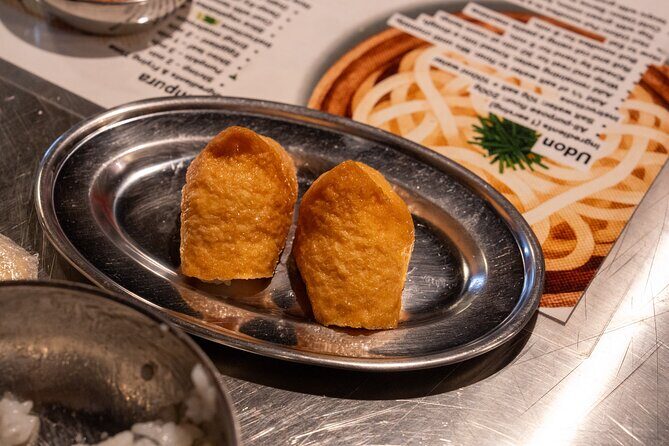
Inari sushi brings a different challenge: you’re assembling a familiar bite with a different texture and flavor profile. This matters for value. If you only make one item, you walk away with one technique. Here, you’re getting two distinct rice formats, each with its own logic.
Also, this is where the English recipes included with the experience are especially helpful. Once you’ve made the dishes in class, the recipe becomes something you can actually follow at home, not something that turns into a translation puzzle.
Tempura at the right moment: getting crisp, not greasy
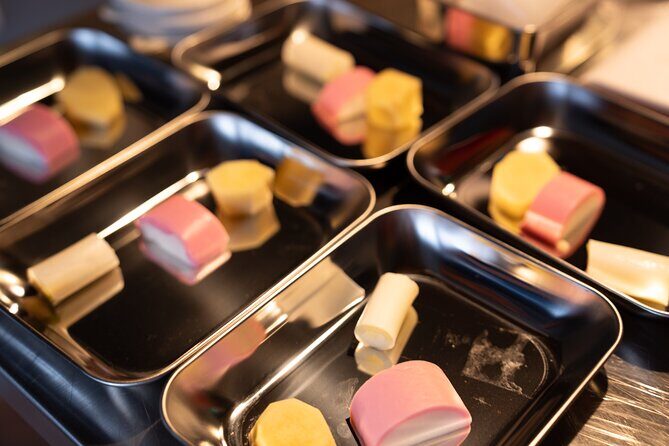
Tempura is where many people hope for a miracle. The truth is more reassuring: crisp tempura is about timing and technique, and those are learnable.
You’ll fry tempura with instruction, focusing on how to achieve that golden exterior. While the class is about learning, it’s also about producing something you’ll be proud to eat immediately. Tempura can go wrong fast, so the guidance helps you stay on track.
Also, if you like seafood and vegetables, you’ll likely find the tempura includes options like shrimp and veg based on how the class is commonly set up. Come in hungry and ready to taste. This is one of those experiences where you can smell the difference between batch-learning and a random kitchen attempt.
The best part: eating your udon, sushi, and tempura (plus mini sake)
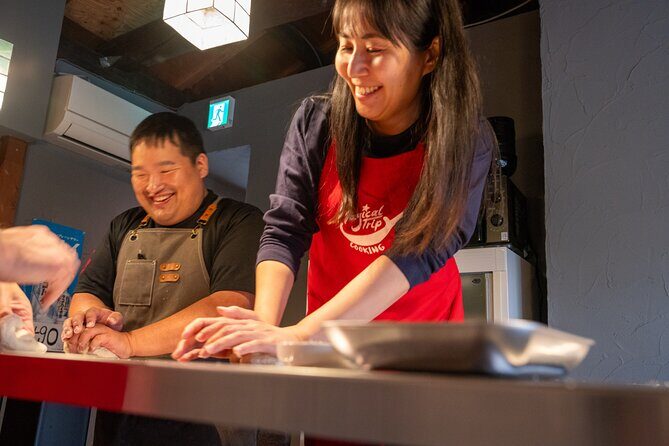
Most cooking classes end with a polite snack. This one ends with a meal.
After you finish cooking, you get to enjoy everything you made—udon, onigiri and inari sushi, and tempura—plus drinks. The class includes two drinks total, and you can choose alcoholic or non-alcoholic. A mini sake tasting is part of the experience, so you can sample Japanese sake without committing to a full pour.
Value-wise, this is huge. You’re not paying just for instruction time. You’re paying for ingredients, professional guidance, and a full tasting of your results. And because it’s hands-on, you’re eating food with context in your head: you remember the dough texture, the shape work, and the frying cues. That makes the meal feel more like a win than just lunch.
A few more Kyoto tours and experiences worth a look
Small group energy with Josh and Nakajima-san
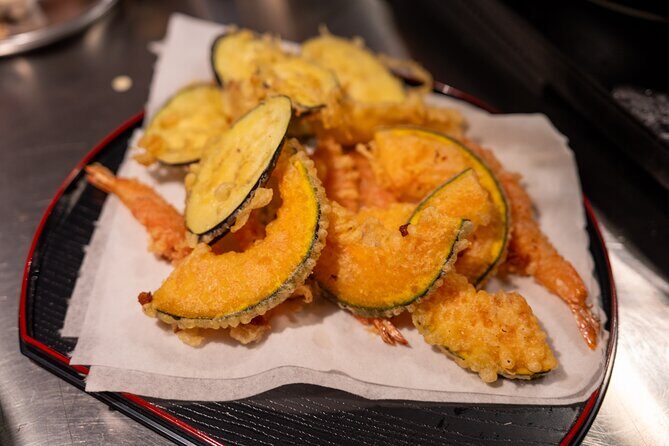
A big part of why this works is the instructor team and the group size. With a maximum of 8 travelers, you’re not lost in a crowd. You get more chances to ask questions, correct small mistakes, and actually keep moving through the stations.
The class is led by Josh and Nakajima-san on the local side, with the udon master teaching the noodle process. The English support is meaningful because cooking instructions can be full of shortcuts and assumptions. Here, you get clarity, which is especially important for:
- dough texture and kneading
- rice handling and shaping
- frying cues for tempura
If you’re traveling with family or friends, that small-group vibe makes the class feel like a shared activity instead of a workshop where only the confident cooks get attention.
Price and what you truly get for $85.39
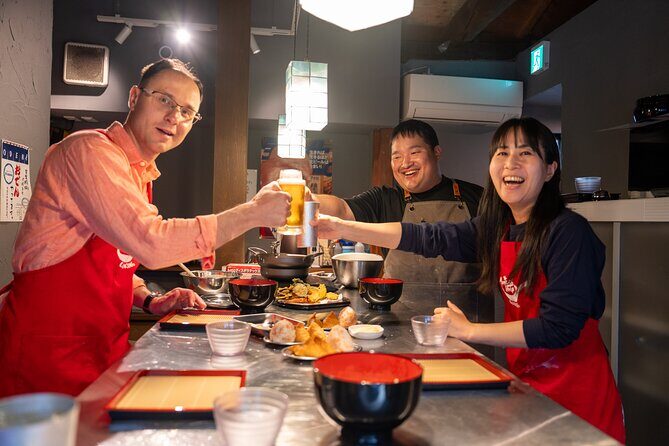
At $85.39 per person, you might wonder if it’s just another food activity. For me, it reads as solid value because the inclusions are practical, not decorative.
You’re getting:
- instruction for multiple dishes (udon, tempura, onigiri, inari sushi)
- ingredients to make those items from scratch
- two drinks including a mini sake tasting
- downloadable recipes to recreate at home
- tour photos taken during the class and emailed afterward
The time matters too. About 2 hours 30 minutes isn’t just a quick demo. It’s long enough to actually make things, not just assemble them.
The only “cost” you should plan for is your appetite. This is a skip-breakfast type of experience. You’ll be working and then eating what you made, so arriving with a light stomach can leave you feeling like you’re racing the schedule.
Timing and where to meet (so you start on time)
The class starts at 10:00 am and runs about 2 hours 30 minutes. It ends back at the meeting point, so you don’t need to solve a second logistics puzzle afterward.
Meet at the 7-Eleven (599 Uraderachō, Nakagyo Ward, Kyoto, 604-8041, Japan). It’s described as near public transportation, which helps if you’re already doing Kyoto by rail and bus. Still, transportation to the meeting point isn’t included, so I recommend you:
- check your route in advance
- give yourself buffer time for station exits and walking
Also, you’ll use a mobile ticket, which is convenient if you’re already traveling digitally.
Who should book this Kyoto cooking class
This is a great fit if you want hands-on Kyoto, not just sightseeing.
You’ll enjoy it if:
- you want to learn real technique (especially udon by hand)
- you like eating what you cook
- you’re traveling with family, friends, or mixed skill levels
- you care about having recipes you can actually use later
It’s especially good for first-timers. No cooking background is required, and the class is built around making you successful quickly.
If you’re the type who hates messy hands or frying smells, you might find tempura prep a bit chaotic. But that’s also part of the charm. This class is designed to be participatory.
Should you book it? My take
Yes—if you want a cooking experience that feels practical and rewarding, this one makes sense.
Book this class if you like the idea of leaving Kyoto with skills you can repeat: kneading and cutting udon, shaping onigiri, assembling inari sushi, and producing crispy tempura. The small group size, English help, and full meal payoff make it feel worth the price.
Skip it only if you prefer pure observation, or if you’re worried about needing your own transport to the meeting point. Otherwise, this is one of those Kyoto activities where you’ll go home with memories you can taste.
FAQ
Where is the meeting point?
The tour meets at a 7-Eleven at 599 Uraderachō, Nakagyo Ward, Kyoto, 604-8041, Japan.
What time does the cooking class start?
It starts at 10:00 am.
How long is the experience?
It lasts about 2 hours 30 minutes.
How much does it cost?
The price is $85.39 per person.
What dishes will I make?
You’ll learn to make udon, tempura, onigiri, and inari sushi.
Are drinks included?
Yes. Two drinks are included, and it includes a mini sake tasting. You can choose alcoholic or non-alcoholic drinks.
Do I need cooking experience?
No. The class is designed so it works even if you have no experience.
How big is the group?
The maximum group size is 8 travelers.
Is transportation included?
No. Transportation to and from the meeting point is not included.
Can I get a refund if my plans change?
You can cancel for a full refund up to 24 hours before the experience’s start time. Less than 24 hours before start time is not refundable.