REVIEW · TOKYO
Tokyo Morning Tour : Meiji Shrine, Asakusa and Fish Market
Book on Viator →Operated by Goen Japan · Bookable on Viator
You’ll feel Tokyo’s morning rhythm fast. This 4-hour Tokyo morning tour strings together three major icons—Meiji Jingu, Tsukiji outer market, and Asakusa’s Senso-ji—so you get both calm, sacred spaces and real street-level food energy. It’s built for early hours, includes a mobile ticket, and your guide explains the why behind what you’re seeing.
I really like that the stops are simple and direct: you walk through shrine paths at Meiji Jingu (free entry), then head to Tsukiji Jogai Market for food-first wandering, and finish at Senso-ji with time at Nakamise-dori shopping street. I also like the practical add-ons: an English-speaking guide, historical insights along the way, and photos taken during the tour so you’re not juggling your camera the whole time.
One thing to consider: public transportation fare is not included (you’ll likely budget about 550 yen), and the total time is short—so go with a light plan and save big shopping or extra museum time for later.
In This Review
- Key Points at a Glance
- A 4-Hour Morning Route That Fits Real Schedules
- Meiji Jingu: The Shrine Walk That Changes Your Pace
- Tsukiji Outer Market (Jogai Market): Eat Like You Mean It
- Asakusa and Senso-ji: Thunder Gate Into Shopping Street Energy
- Food Tastings: Small Amounts, Smart Timing
- The Guide Makes the Difference (Shoma Sato, Yosuke, and More)
- Price and Value: What $72.67 Actually Buys
- Logistics That Matter: Where You Meet and How You End
- Who This Tour Fits Best
- Should You Book This Tokyo Morning Tour?
- FAQ
- FAQ
- How long is the Tokyo Morning Tour?
- How much does the tour cost?
- What’s included in the tour price?
- What food tastings are included?
- Are admission tickets included?
- Is public transportation included?
- Where do we meet for the tour?
- Where does the tour end?
- What’s the group size limit?
- Is cancellation free?
Key Points at a Glance
- Small group size (max 8) keeps the pace relaxed and questions easy.
- Meiji Jingu + Tsukiji + Senso-ji is an efficient “morning best-of” mix.
- Food tastings include sweet mochi, sweet potato, and savory cutlet.
- Photos included so you can enjoy the walk instead of constantly photographing.
- English guide with strong on-site explanations (including guides such as Shoma Sato and Yosuke).
A 4-Hour Morning Route That Fits Real Schedules
This Tokyo morning tour is designed for the kind of trip where you want big highlights without turning your day into a full-time sprint. The whole experience runs about 4 hours, and each major stop gets roughly an hour—enough time to look around, eat a few things, and actually understand what you’re seeing instead of just passing through.
The route also makes sense geographically: you start in the Harajuku area, then move toward Tsukiji’s outer market scene, and finish in Asakusa near Senso-ji. Ending at Asakusa Station is a smart choice, because it’s an easy base for continuing your day with trains and taxis.
If you’re the type who likes to see Tokyo with a plan—especially your first morning—this has the right rhythm. You’re not stuck waiting forever in lines you can’t predict. You’re not trying to cover three neighborhoods on your own with maps and guesswork at a time when you really want to be present.
You can also read our reviews of more shopping tours in Tokyo
Meiji Jingu: The Shrine Walk That Changes Your Pace
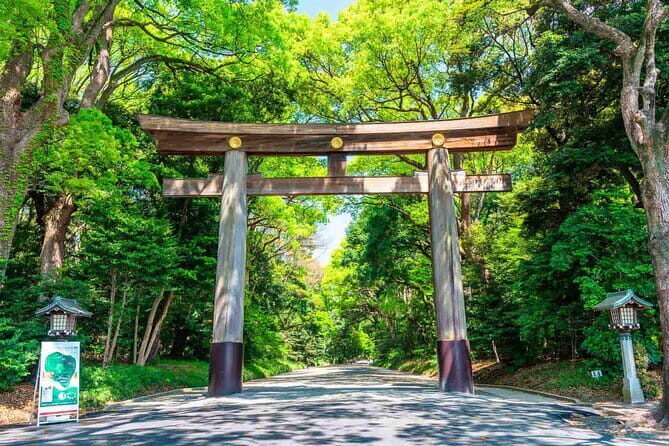
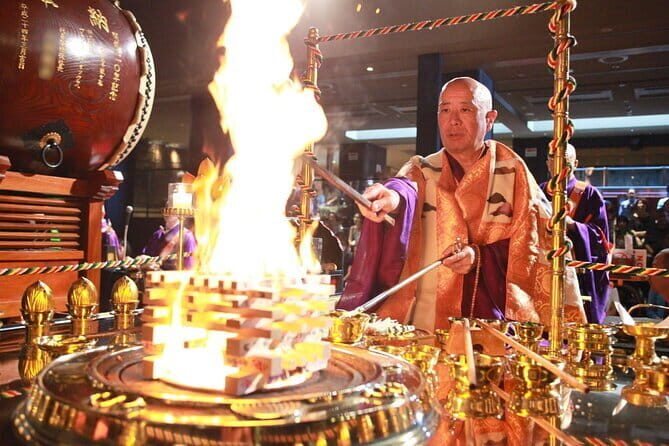
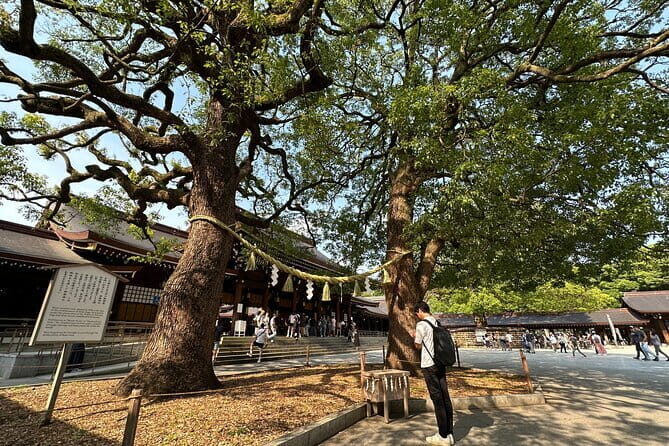
Meiji Jingu (Meiji Jingu Shrine) is the opening move for a reason. Even before you get to the main areas, the experience starts by slowing you down. You enter through the shrine approach and move into forested pathways—exactly the kind of setting where Tokyo’s noise fades.
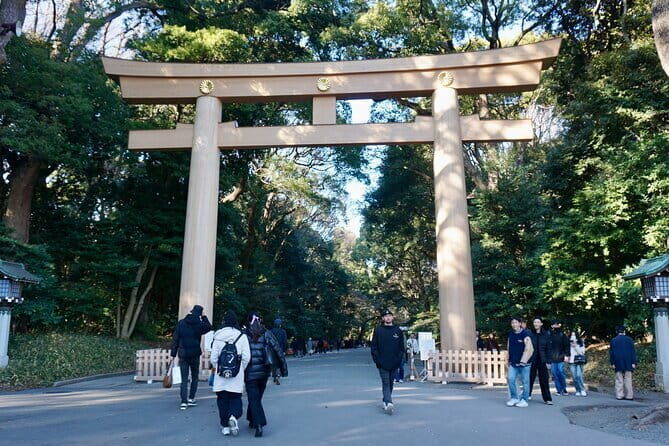
You’ll walk under towering torii gates and spend about one hour in the shrine grounds. The tour is built around the core idea of Meiji Jingu: a Shinto shrine dedicated to Emperor Meiji and Empress Shoken. A guide’s job here isn’t just to point at buildings—it’s to help you understand what makes this space feel different from a typical “sightseeing stop.”
Here’s what I’d pay attention to during your hour:
- The way the walk is structured as a transition, not a random stroll.
- The quiet routines and the respectful body language people use in shrine areas.
- Any explanation your guide provides about Shinto customs and the shrine’s meaning.
A practical note: Meiji Jingu is free entry on this tour. That means your value is really coming from the guidance—how you interpret the grounds—rather than paying multiple ticket fees.
If you get a guide like Yosuke, the tone tends to be thoughtful and easygoing, with explanations that connect customs to what you’re physically doing on the path. If you get Shoma Sato, the style tends to be patient and clear, with strong on-the-spot explanations.
Tsukiji Outer Market (Jogai Market): Eat Like You Mean It
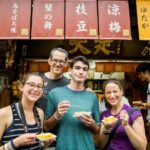
Next up is Tsukiji Jogai Market. The famous inner auction area is gone now, but the outer market is still a full sensory experience—food stalls, snack energy, and plenty of locals doing their day-to-day buying. You’ll spend about one hour here, and this is where the tour gets seriously fun.
The big value: you’re not wandering hungry with no plan. You’re there for a curated street-food moment, with time to look around while you eat.
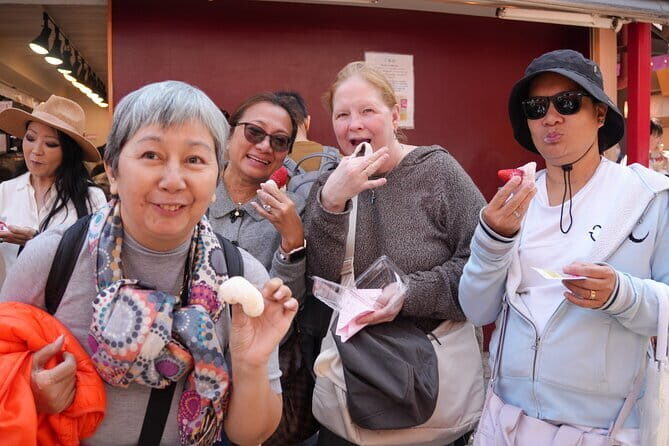
On this tour, your tastings include:
- Sweet mochi (sweet rice cake)
- Sweet potato
- Savory cutlet
That may sound like a small list, but it works well for a morning route. You get sweet and savory without turning your stomach into a food coma right before you walk into Asakusa.
What makes Tsukiji worth including even if you’ve seen photos before is the feeling: this is food culture you can smell and see in motion. When your guide provides historical context and points out how the market functions, it turns the experience from random eating into something you actually understand.
Tip for your appetite: go easy with breakfast before you meet. This route is built around feeding you in the middle, and you’ll enjoy the tastings more if you’re not already full.
Also, Meiji Jingu and Senso-ji are free entry on this tour, and Tsukiji is also treated as part of the included experience. So you’re not paying to enter each stop—you’re paying for the human guidance plus the food tastings plus the photos.
Asakusa and Senso-ji: Thunder Gate Into Shopping Street Energy
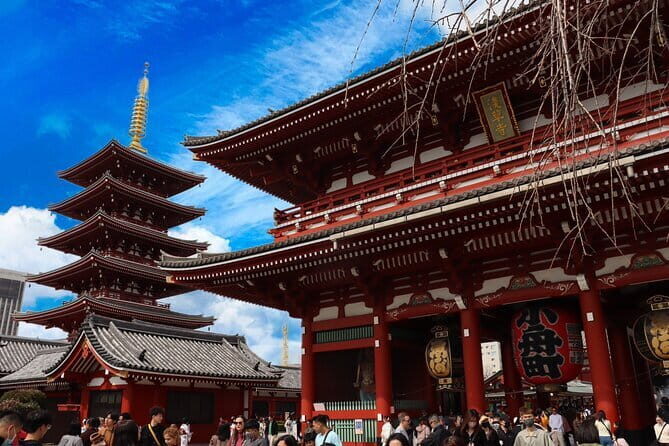
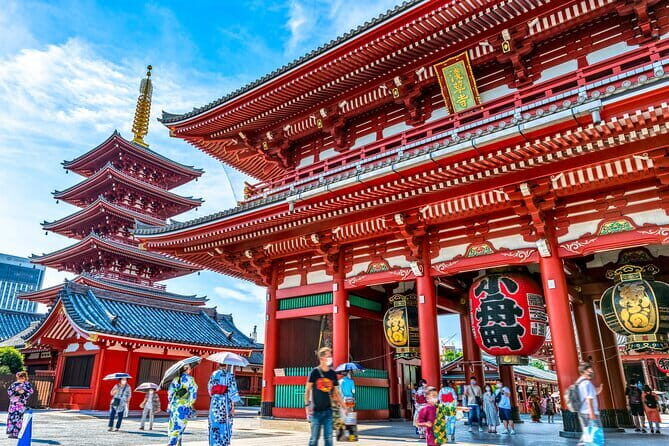
You finish at Senso-ji, Tokyo’s oldest Buddhist temple, in Asakusa. This is a great ending choice because Senso-ji doesn’t just feel historic—it’s alive. The area around it has an old-Tokyo feel, and the tour gives you about one hour to experience it properly.
You’ll enter through the iconic Kaminarimon (Thunder Gate). That moment matters. It’s the dramatic transition from shrine quiet to a more lively temple district. From there, you’ll have time to explore the shopping street called Nakamise-dori, lined with stalls and traditional-style goods.
This is where your guide’s historical insights help most. The value isn’t only in walking past shops. It’s knowing what you’re seeing and why those specific streets and temple customs developed the way they did.
What I like about ending here is that your next steps are easy. If you want to keep moving after the tour, Asakusa Station gives you transport options. If you want souvenirs, you’re already in the right place to browse without backtracking.
Food Tastings: Small Amounts, Smart Timing
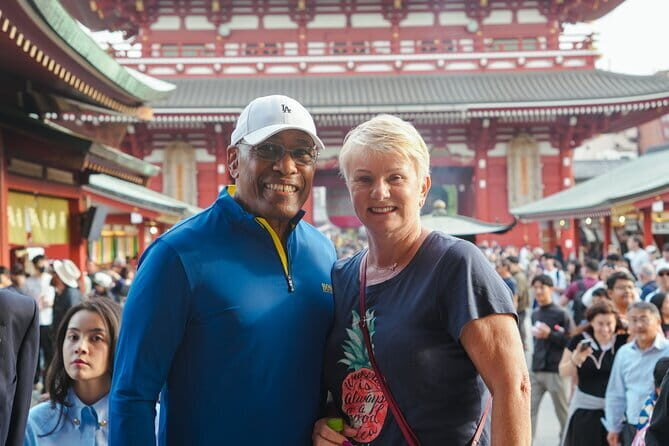
Food on this tour isn’t meant to replace breakfast or dinner. It’s meant to keep you energized and give you a few Tokyo flavors that match each neighborhood’s vibe.
The tastings on your route—sweet mochi, sweet potato, and savory cutlet—are perfect for a morning walk because:
- They’re easy to eat while moving.
- They cover different tastes (sweet + savory).
- They’re the kind of snacks you can imagine later when you’re planning your own street-food crawl.
One practical consideration: snacks can be sticky, hot, or messy depending on how they’re served. Bring a small amount of patience, and consider packing a couple of tissues or wipes if you’re the type who hates food on your hands.
A few more Tokyo tours and experiences worth a look

The Guide Makes the Difference (Shoma Sato, Yosuke, and More)
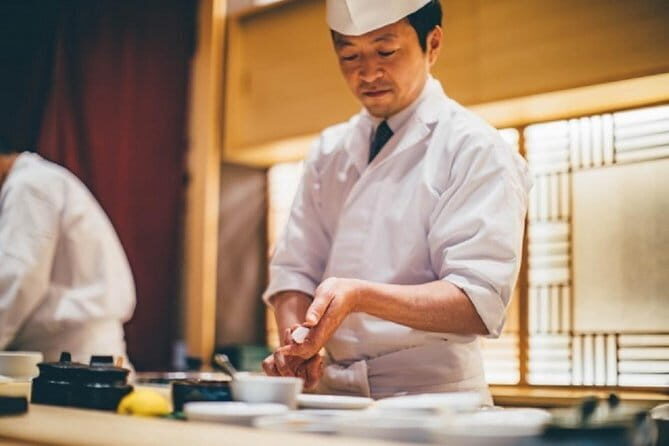
This is the kind of tour where the guide quality truly matters, because you’re walking through places where the details are the point. You want someone who can explain customs without sounding like a textbook.
From what I can infer from the strongest praise patterns, the guide experience tends to be:
- Professional and fun at the same time
- Patient when questions pop up
- Flexible with pacing and breaks
- Able to connect what you’re seeing to meaning and everyday behavior
Specific guide names show up in positive feedback: Shoma Sato and Yosuke. If your tour includes them, that’s a strong sign the explanation style will be clear and human, not robotic.
Another underrated feature: photos taken during the tour. That’s not just convenience. It changes how you move. You can focus on the place instead of constantly asking strangers or doing awkward selfie angles under shrine gates or temple entrances.
Price and Value: What $72.67 Actually Buys
At $72.67 per person, this isn’t a bargain-basement tour. It’s also not overpriced for what you get—assuming you value guidance and convenience.
Here’s what you’re paying for, in plain terms:
- An English-speaking guide
- Historical insights across three major areas
- Photos taken during the tour
- Entry/participation into the key sites (Meiji Jingu, Tsukiji experience, Senso-ji)
- Food tastings (sweet mochi, sweet potato, savory cutlet)
- A mobile ticket and a defined route
The price becomes more sensible when you compare it to trying to do the same thing alone with timing pressure. Tokyo is easy to navigate, but a morning like this is about rhythm: you’re walking in the right order, seeing the right mix, and getting food without guessing.
The one cost you should keep in mind is public transport fare, listed as around 550 yen. That’s not the end of the world, but it is a real addition. So treat the tour price as the base cost, then add your train fare and any extras you want while shopping in Asakusa.
Logistics That Matter: Where You Meet and How You End
This tour starts at IKEA スウェーデンカフェ 原宿, located in Shibuya (Harajuku area). It’s specific, and that’s good—meeting points are often where trips go wrong if they’re vague. The location is also described as near public transport, which helps if you’re arriving early.
You end in Asakusa, specifically near Asakusa Station. That’s ideal because it supports a smooth continuation. You can hop to another part of Tokyo without fighting your way back across town.
The group size is capped at 8 travelers, which is another practical win. With a small group, your guide can keep an eye on everyone and adjust pacing when someone needs an extra minute near a gate or a stall.
Who This Tour Fits Best
This Tokyo morning tour is a good match if:
- You want Tokyo highlights in one clean morning block
- You like learning the meaning behind major sites, not just snapping photos
- You’d rather have a guide handle timing and route so you can focus on experiencing
- You want street-food tastings without committing to a huge food plan
It might be less ideal if:
- You plan to spend a long time shopping in Asakusa and want hours there
- You prefer fully self-guided wandering with zero structure
- You’re hoping for an extremely long, slow, countryside-style pace (this is an efficient urban morning)
Should You Book This Tokyo Morning Tour?
I’d book it if you’re trying to make your first Tokyo days feel organized and flavorful. The combination of Meiji Jingu calm, Tsukiji snack energy, and Senso-ji temple district momentum is a smart way to see different Tokyo moods without needing multiple separate days.
If your top priorities are a small-group English guide, included tastings, and photos that save you time, this tour is a strong value. Just plan for the extra train fare, and don’t overpack your stomach before Tsukiji.
FAQ
FAQ
How long is the Tokyo Morning Tour?
The tour lasts about 4 hours.
How much does the tour cost?
The price is $72.67 per person.
What’s included in the tour price?
Included items are an English-speaking guide, photos taken during the tour, historical insights, entry/admission for Meiji Jingu Shrine, the fish market area, and Senso-ji Temple, plus street-food tastings.
What food tastings are included?
You’ll try sweet mochi (sweet rice cake), sweet potato, and a savory cutlet.
Are admission tickets included?
Yes. Entry/admission for Meiji Jingu Shrine, the fish market, and Senso-ji Temple are included.
Is public transportation included?
No. Public transportation fare is not included and is listed as around 550 yen.
Where do we meet for the tour?
You meet at IKEA スウェーデンカフェ 原宿, Japan, in Shibuya (Harajuku area), at the specific address provided.
Where does the tour end?
The tour ends in Asakusa, near Asakusa Station.
What’s the group size limit?
The tour has a maximum of 8 travelers.
Is cancellation free?
Yes. You can cancel up to 24 hours in advance for a full refund.