REVIEW · TOKYO
Tokyo: Private City Highlights Tour
Book on GetYourGuide →Operated by Thrive Travels And Tourism · Bookable on GetYourGuide
Tokyo icons in a single, guided day.
This private tour is built around Japan’s biggest “hit list” with the nice twist of customizing the pace to what you care about most. You’ll cover old-school Tokyo (temples and gardens) and new-school Tokyo (Skytree views, shopping streets, and major intersections) without feeling like you’re speed-running a checklist.
What I like most is how flexible the day can be. If weather goes sideways or you want to swap stops, your guide can adjust on the spot. I also like that English support is built in, with guides such as Ahmad showing up on time, staying patient, and not rushing you through the sights.
One consideration: tickets and lunch are not included, so budget for entrance fees and a meal that fits your taste. Also, you’ll want comfortable shoes because even “short” stops can add up fast in Tokyo.
In This Review
- Key things that make this tour work well
- A day of Tokyo icons with a guide who adjusts to you
- Price and logistics for a 5-person private group
- Asakusa and Senso-ji: lantern gates and shopping street energy
- Meiji Shrine: a quiet forest walk after the city noise
- Tokyo Skytree 634 meters up: city views and Mt. Fuji odds
- Imperial Palace East Gardens and Tokyo Tower: classic skyline viewpoints
- Shinjuku Gyoen National Garden: a break you’ll feel in your legs
- Shibuya Crossing and Harajuku/Takeshita: crowds, fashion, and fast street theater
- Tsukiji Outer Market and the food-street reality check
- Taito City: adding another layer beyond the headlines
- Comfort, walking, and timing: how to plan your 8-hour day
- Who should book this tour
- Should you book this Tokyo private highlights tour?
- FAQ
- How long is the Tokyo Private City Highlights Tour?
- What is the price, and how many people can be in a group?
- Where does pickup happen?
- Is pickup available from airports, ports, and stations?
- What languages are available for the host/guide?
- Is this tour private?
- Is the tour wheelchair accessible?
- Are entrance fees included?
- Is lunch included?
- Is WiFi available during the tour?
- What should I bring and wear?
- What’s not allowed in the vehicle?
Key things that make this tour work well
- Private group, up to 5: you control the pace and the plan.
- English/Japanese guide support: communication is usually smooth, including practical guidance.
- Flexible routing: weather or your interests can change the order without chaos.
- Big-name Tokyo stops in one loop: you get the highlights without public-transport math.
- Real care for comfort: if you have walking limits, you can ask for closer drop-offs.
A day of Tokyo icons with a guide who adjusts to you
This is the kind of tour that helps you get your bearings fast. Tokyo is huge, and the distance between “must-see” places can eat your day if you’re figuring transit, crowds, and timing alone. With a private vehicle and pickup included, you can focus on what’s in front of you instead of constantly checking maps.
The best part is how human the schedule feels. On paper, you’ve got a strong lineup. In practice, the guide can adapt to what you want to linger on, what you want to skip, and what the day hands you (especially weather). The pace is also not aggressive—this matters when you’re standing around for views, walking through temple grounds, or weaving through shopping streets.
You can also read our reviews of more city tours in Tokyo

Price and logistics for a 5-person private group
It’s $319 per group, designed for up to 5 people. That pricing can be a good deal if you’re traveling as a small group (family, friends, or a couple plus a friend). You’re paying for private transport, guide time, and the convenience of hotel pickup/drop-off.
Here’s the practical part: you’re not paying for every entry ticket or lunch. Entrance fees will be extra, and you’ll need to choose where and what to eat on your own. Also, the tour duration is 8 hours, so you’ll cover a lot—but not everything will get deep, museum-style treatment. Think “see, experience, photograph, and understand the meaning,” not “every detail for every place.”
Logistics-wise, pickup is from your Tokyo address (hotels and similar places). Pickup isn’t available from airports, ports, and stations, so plan around that. Your guide will wait about 10 minutes before pickup time, and in heavy highway traffic they can be late by up to 30 minutes.
And yes, there’s WiFi onboard if it’s available. Not life-changing, but it helps when you’re coordinating with a group or checking train/subway alternatives later.
Asakusa and Senso-ji: lantern gates and shopping street energy
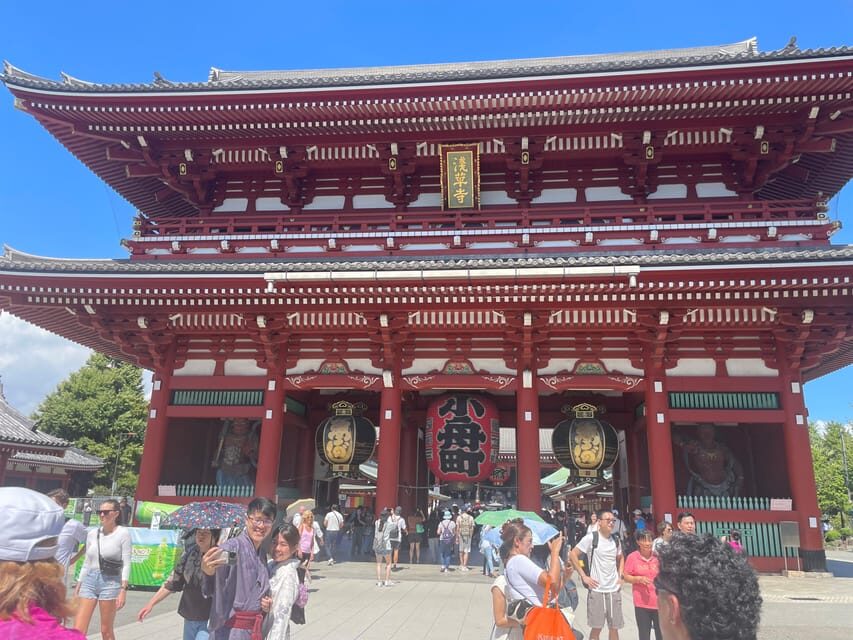
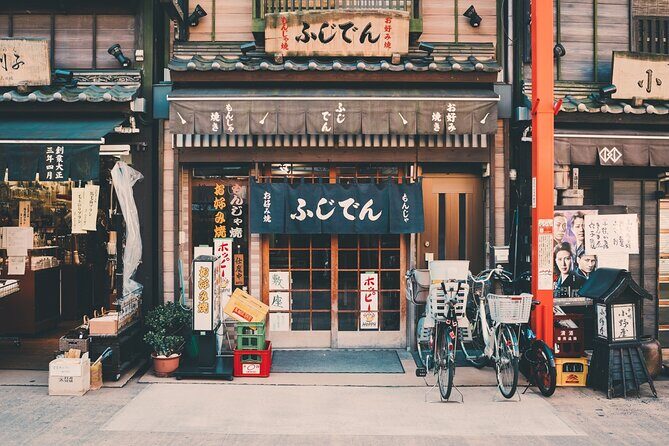
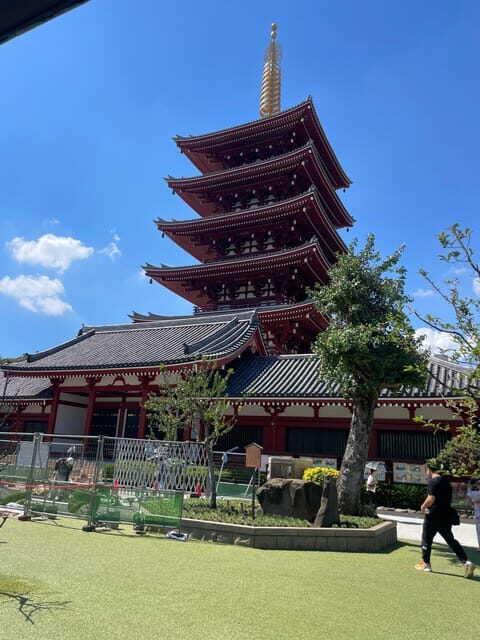
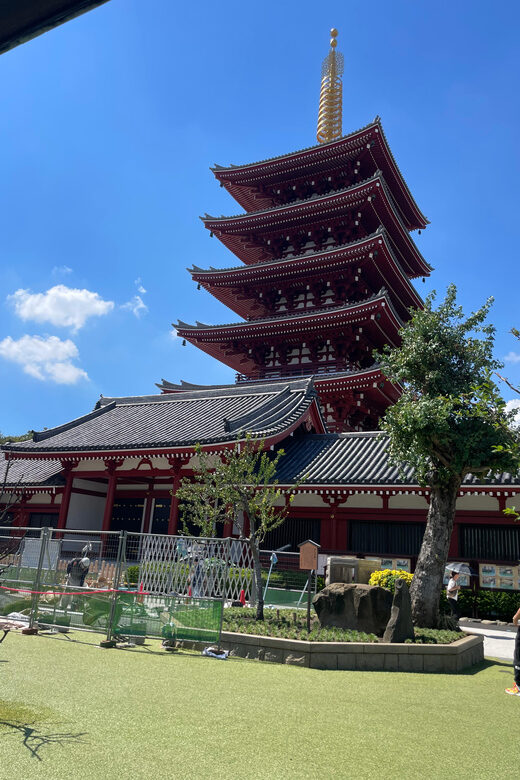
Asakusa is where Tokyo shows its older face without putting on a costume. Your day starts with Senso-ji area, including the classic temple approach through Kaminarimon Gate and the shopping lane (Nakamise-style street shopping) right before you hit the main temple grounds.
What I like about this stop is the contrast you feel in minutes. You go from street-level chaos—snacks, souvenirs, and people moving in waves—to the temple area where you can slow down. Senso-ji is widely seen as Tokyo’s oldest and most famous Buddhist temple, with foundations dating back to 628 AD. That long timeline makes the place feel real, not just scenic.
Practical tip: come ready for sensory overload. It’s a popular area, and you’ll be navigating crowds. If your group likes photos, arrive with a plan for where you want shots (gate approach, incense/temple frontage, and side views). If you dislike crowds, tell your guide early and choose slower moments inside the complex.
Meiji Shrine: a quiet forest walk after the city noise
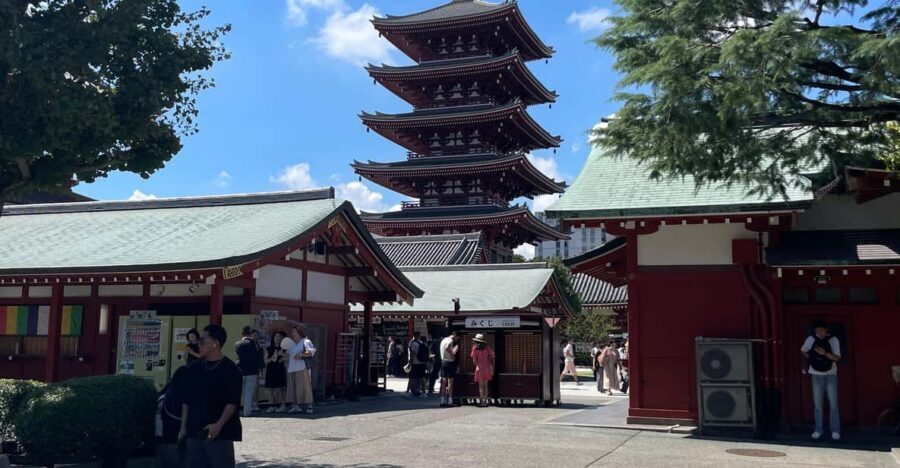
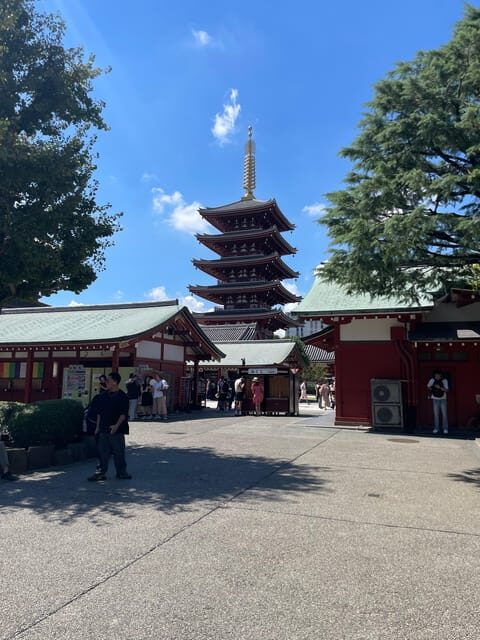
If Asakusa is about energy, Meiji Shrine is about reset. This Shinto shrine is in a peaceful forested setting and is dedicated to Emperor Meiji and Empress Shoken. In a few steps, the sound changes. The city’s noise fades, and you can actually hear yourself think.
The value here is not just seeing a landmark. It’s how Tokyo can shift gears so quickly. You’re in the same metro area, yet the mood feels different. That’s the kind of cultural rhythm I think you should experience in a first visit—Tokyo’s tradition isn’t only in museums. It’s also in how people move, pray, and stand.
This is a good stop if you want photos with fewer distractions. You’ll still see visitors, but the setting supports a calmer pace.
Tokyo Skytree 634 meters up: city views and Mt. Fuji odds
Tokyo Skytree is the tallest structure in Japan at 634 meters (2,080 feet). The payoff is obvious: panoramic views that let you read Tokyo as a grid of neighborhoods, highways, and waterways—plus, on clear days, a chance to spot Mt. Fuji.
What you should understand before you go: the view quality depends on weather and visibility. Cloudy or rainy conditions can turn the skyline into a soft blur. That’s why I like the flexibility of a private guide. If conditions look ugly, you can ask what the best timing is or adjust around the day’s mood.
Also, plan mentally for this: observation deck time plus walking time through the area. It’s not just “go up, take two photos, leave.” You’ll want a few minutes to scan the city and pick out landmarks.
You can also read our reviews of more private tours in Tokyo

Imperial Palace East Gardens and Tokyo Tower: classic skyline viewpoints
Next up is the Imperial Palace area, where you can visit the East Gardens. The Imperial Palace is the Emperor of Japan’s residence, and the gardens are open to the public. This is one of those places where you don’t need to know every fact to feel the scale.
Then you’ll move to Tokyo Tower for another viewpoint-style experience. Tokyo Tower and Skytree are different “brands” of skyline watching—one iconic steel silhouette, the other a towering modern presence. Seeing both helps you understand how Tokyo’s skyline identity has evolved.
A smart approach: use one stop to take in wide city structure, and use the next stop to focus on how the city layers change by viewpoint. That way you’re not just stacking photos—you’re building a mental map.
Shinjuku Gyoen National Garden: a break you’ll feel in your legs
By the time you reach Shinjuku Gyoen National Garden, you’ve already seen temples, shrines, and big-city sights. This garden stop is a needed pause. You’ll get an hour to wander in a calmer setting, which is especially valuable if the rest of the day includes heavy foot traffic.
Even if you don’t normally love gardens, this break helps your brain process what you saw earlier. Tokyo can feel intense. A green reset is a practical strategy, not a luxury.
Wear shoes you can walk in comfortably. Gardens still mean walking, and the ground can be uneven in places. If your mobility is limited, this is a good moment to communicate needs so you don’t spend energy fighting terrain.
Shibuya Crossing and Harajuku/Takeshita: crowds, fashion, and fast street theater
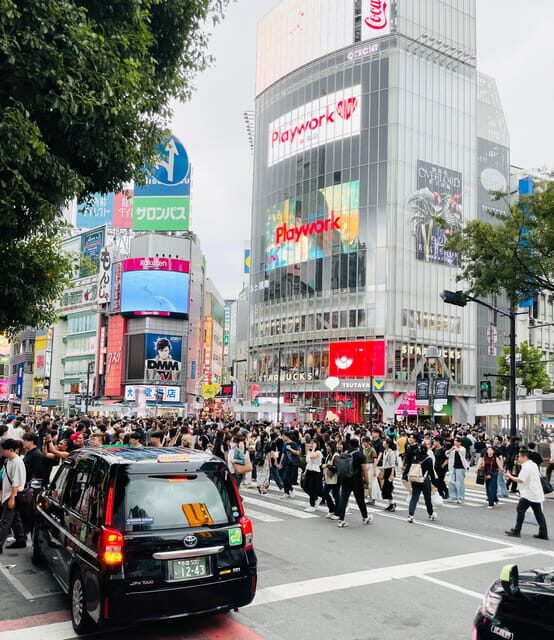
Shibuya Crossing is Tokyo’s famous pedestrian scramble—the one that turns into a mass of coordinated movement every time the lights change. Visiting with a guide helps because you can get to the good viewing spots and understand how to time your crossing.
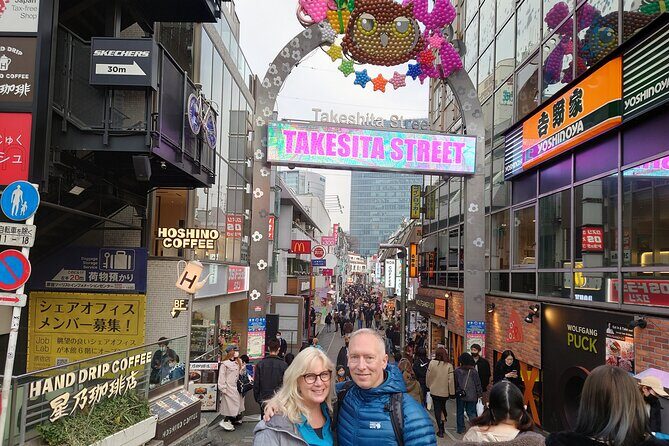
Right after that energy, you pivot into Harajuku and Takeshita Street, Tokyo’s well-known zone for youth fashion and street shopping. This is the part of the day where you’ll want to slow down for people-watching and quick browsing. You’ll see bold styles and lots of little storefronts, with plenty to photograph.
One practical note: Harajuku and Takeshita can be crowded. If you prefer calmer shopping, tell your guide what kind of browsing you want—trend sampling, souvenir hunting, or just walking through. The private setup lets you aim for what matches your style rather than getting dragged into every shop.
Tsukiji Outer Market and the food-street reality check
Even though the main Tsukiji Fish Market moved to Toyosu, the Tsukiji Outer Market remains a major stop for fresh seafood and local bites. You’ll find stalls and restaurants offering sushi, sashimi, and street food like tamagoyaki (Japanese omelette).
Here’s how to make this section work for you: eat something small that you can actually finish comfortably while walking. That way you keep your energy for the rest of the day. If you have dietary restrictions, ask your guide early. Tokyo markets are easier when you’re not guessing.
This is also where you get a more everyday Tokyo feel. It’s not only about icons. It’s about routines—vendors, quick orders, and the rhythm of people shopping for lunch.
Taito City: adding another layer beyond the headlines
You’ll also stop in Taito City. The data doesn’t spell out a specific museum or exact landmark here, so treat this as a flexible district addition. In practice, these neighborhood-style stops are useful because they break up the day’s “global-famous” feeling.
If you enjoy browsing streets, seeing everyday scenes, and picking up small local snacks or souvenirs, this kind of add-on can be a nice payoff. If you prefer only major sights, ask your guide what you’ll be walking past and for how long, so the time matches your interests.
Comfort, walking, and timing: how to plan your 8-hour day
This tour is wheelchair accessible, and it’s set up as a private group, which makes it easier to adapt your walking route. If you have walking difficulties, bring that up early. In the past, guides like Ahmad have been able to drop people closer to sights to minimize walking distance.
Still, you’re in central Tokyo for an 8-hour stretch. You’ll be on your feet for several different environments:
- temple/shrine complexes (stairs and path changes)
- observation area entry and waiting lines
- garden walking paths
- crowded crossings and street shopping zones
So bring comfortable shoes, and consider a small bag with essentials (water if allowed on your own schedule, tissues, and anything you need to stay comfortable). Even though the vehicle rules prohibit drinks and food inside the car, you can still plan your own breaks outside.
Who should book this tour
This works best for you if:
- you want a focused Tokyo highlight route without working out transit yourself
- you’re traveling with 1 to 5 people and want privacy
- you care about both traditional sites (Senso-ji, Meiji, gardens) and modern landmarks (Skytree, Shibuya)
- you want a guide who can adjust when your interests shift mid-day
- you’d like support in English (or Japanese) rather than relying on self-guided interpretation
It may be less suitable if you want long stays at only one place (like a full-day museum day) or if you prefer fully independent planning with no guide. Also, it isn’t suitable for people over 95 years.
Should you book this Tokyo private highlights tour?
Yes, I think you should book it if you want a smart first-time Tokyo day that mixes iconic sights with real context—and you value flexibility. The price makes more sense when you’re splitting cost across a group of up to 5, because you’re paying for private transport and time with a guide.
Book it especially if your travel style includes adjustments: weather changes, mobility needs, or switching priorities once you see what the day feels like. With a guide like Ahmad, the day is designed to stay comfortable rather than rushed.
Skip it if entrance fees and your lunch budget feel like a dealbreaker, or if you prefer building your own detailed itinerary stop-by-stop with public transit. Otherwise, this is a strong way to cover the big Tokyo names while still keeping the day personal.
FAQ
How long is the Tokyo Private City Highlights Tour?
The tour lasts 8 hours.
What is the price, and how many people can be in a group?
It costs $319 per group for up to 5 people.
Where does pickup happen?
Pickup is included from hotels, hostels, apartments, or other addresses in Tokyo.
Is pickup available from airports, ports, and stations?
No. Pickup is not available from airports, ports, and stations.
What languages are available for the host/guide?
The host/greeter is listed as English and Japanese.
Is this tour private?
Yes, it’s a private group experience.
Is the tour wheelchair accessible?
Yes, it is wheelchair accessible.
Are entrance fees included?
No. Entrance fees are not included.
Is lunch included?
No. Lunch is not included.
Is WiFi available during the tour?
WiFi is available onboard, subject to availability.
What should I bring and wear?
Bring comfortable shoes.
What’s not allowed in the vehicle?
Pets are not allowed, and smoking in the vehicle is not allowed. Drinks, food, and alcohol in the vehicle are also not allowed, along with alcohol and drugs and explosive substances.