REVIEW · TOKYO
Tokyo: Sumo Morning Practice Viewing Tour at a Real Stable
Book on GetYourGuide →Operated by Local Guide Stars · Bookable on GetYourGuide
Sumo feels different when you’re this close. I love the real stable setting and the chance to watch morning practice from very near the ring, not from some staged viewing spot. I also love how an English-speaking guide explains the rules and rituals first, so the training actually makes sense as you’re watching.
There’s one big consideration: this is a workplace. You’ll need to stay seated and quiet, follow stable rules about modest clothing and phones, and you must stay until the end of practice (roughly 09:00 to 10:00), with no re-entry once you leave.
In This Review
- Key Points to Know Before You Go
- Why a Real Sumo Stable Morning Beats a Show-Only Visit
- The Morning Session: What You’ll Actually See and How Long It Runs
- Meeting at Kiyosumi-Shirakawa and Getting to the Stable Without Stress
- Your English Guide’s Job: Rules, Rituals, and Making Sense of the Ring
- Talking With Wrestlers: The Human Side After (or Around) Practice
- Price and Value: Is $98 Worth It for 2 Hours?
- Etiquette Rules That Make or Break the Experience
- Who Should Book This Sumo Morning Practice Tour
- Should You Book? My Clear Take
- FAQ
- Where is the meeting point for the tour?
- Which train lines can I use to reach Kiyosumi-Shirakawa Station?
- How long is the tour?
- Will I get a chance to speak with the wrestlers?
- Are there rules about noise and phones inside the stable?
- Can I stand up, move around, or take breaks during the practice?
- What should I wear?
- Is this tour suitable for children?
- What if I arrive late to the meeting point?
- Is there free cancellation?
Key Points to Know Before You Go
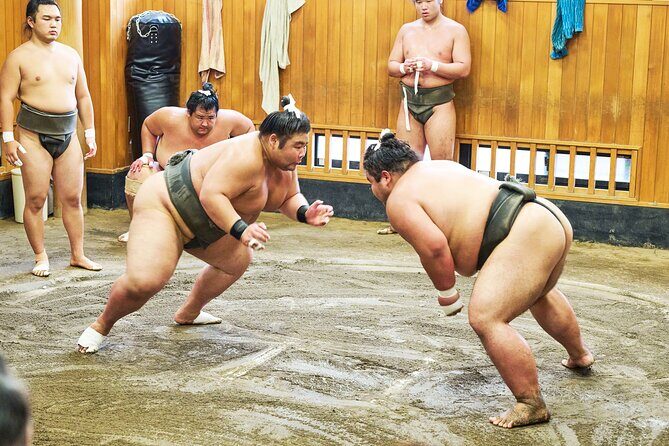
- Real stable access: This is a working training place where wrestlers live and train, not a performance venue.
- Ringside closeness: You sit along the side of the ring and watch up close, with the speed and force of training very easy to appreciate.
- You’ll understand what you’re seeing: Your English guide breaks down the rules, rituals, and meaning behind movements before practice starts.
- Meet the people behind the sport: You may get a chance to speak with wrestlers outside active training hours.
- Follow etiquette or you’ll get shut down fast: No noise, phones silent, modest clothing, and you don’t stand or wander during practice.
- Timing matters: If you’re late to the meeting point, entry may not be possible, and the practice window can run a bit short.
Why a Real Sumo Stable Morning Beats a Show-Only Visit
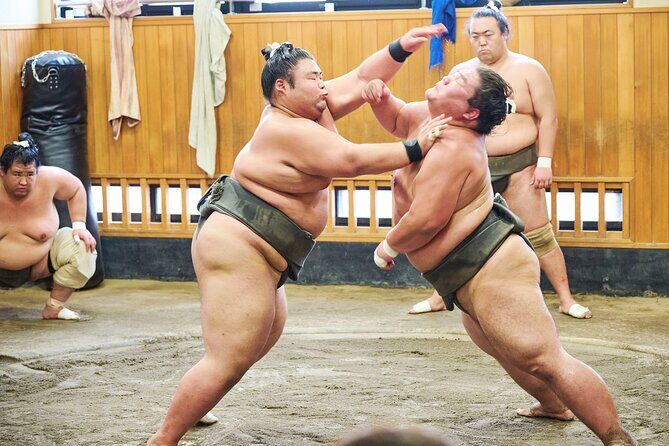
Tokyo has plenty of sumo experiences, but this one works because it’s not built to entertain you. You’re watching practice where wrestlers train for tournaments, and they keep treating it like work. That changes everything.
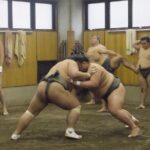
The best part is proximity. You’re close enough to notice details like how bodies move through drills, how fast training turns serious, and how loudly the training ring can feel even when everyone is being respectful. In the ring, sumo isn’t slow or ceremonial in the way outsiders often imagine. It’s athletic, sweaty, and intense—while still tied to ritual.
I also like that the tour does the teaching part, not just the viewing. The guide explains what’s going on—rules, rituals, and why certain actions matter—so you don’t just watch motion. You understand the meaning behind it. People often leave Tokyo sumo tours impressed but confused. This one aims for the opposite: you walk out with a clearer picture of the sport’s structure and culture.
The tradeoff is simple: you can’t treat it like a normal attraction. You’ll be there early, you’ll need to be quiet, and you’ll sit through the full practice window. If you want loud, bouncy, selfie-first sightseeing, this isn’t that.
A few more Tokyo tours and experiences worth a look


The Morning Session: What You’ll Actually See and How Long It Runs
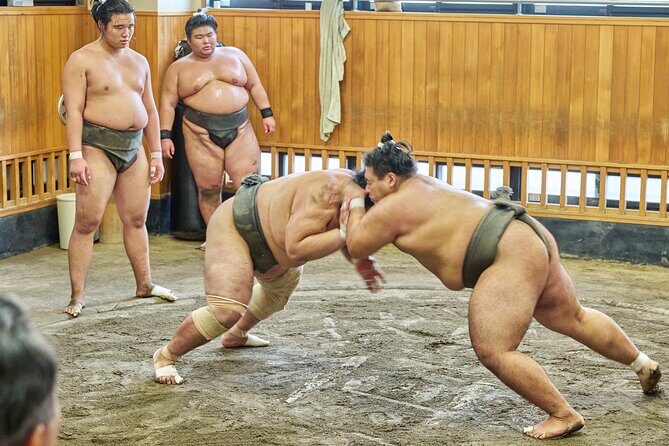
This tour centers on a morning practice session in a real training stable. Expect the experience to last about 2 hours, with practice itself running roughly 09:00 to 10:00. You’ll need to stay until the end of practice, and once you leave the stable, there’s no re-entry. That means you plan your time like an adult (boring, but it keeps the experience smooth).
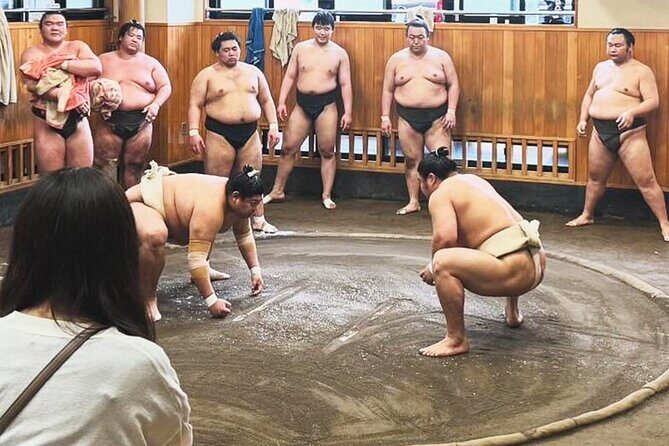
What does the practice look like? Based on how the wrestlers work during the session, you should expect drills and sparring-like training where technique and power are on full display. You’ll be seated on the side of the ring, giving you a close view of the wrestlers’ movements. Several people highlight that it can feel like you’re right there—close enough to see and even hear what’s happening in the ring.
Also expect “hands-on silence.” Stable etiquette matters. You’re not allowed to make noise, you should keep your phone on silent, and you’re not meant to stand up or move around during practice. People who get restless, or who try to film like it’s a concert, tend to be the problem here. The stable is a workplace, and the tour is designed to fit into that reality.
One more practical note: the practice or tour may be a bit shorter or longer than expected. If you have a commitment after the tour, you’ll sleep better if you schedule a buffer.
Meeting at Kiyosumi-Shirakawa and Getting to the Stable Without Stress
You meet at Kiyosumi-Shirakawa Station, Exit A1. You can get there via the Toei Oedo Line or the Hanzomon Line. Your guide meets you in front of the station and is holding a sign that says Local Guide Stars.
After you meet, you may take a train to the sumo stable. That part matters because your arrival time sets your whole day’s mood. One of the clearest pieces of practical advice I’d follow is: arrive at least 30 minutes early. The tour can be sensitive to late arrivals, and if the group gets behind, the stable time can shrink.
There’s also a strict reality check: if you arrive late for the meeting time, entry may not be possible. And depending on the schedule, the ending location may differ from the meeting place. So don’t plan a tight connection right after, and don’t assume you’ll end exactly where you started.
If you’re coming from central Tokyo, set aside extra buffer time. Mornings in transit can go either way—your goal is to walk in calm and ready, not rushing in with your breath still visible.
Your English Guide’s Job: Rules, Rituals, and Making Sense of the Ring
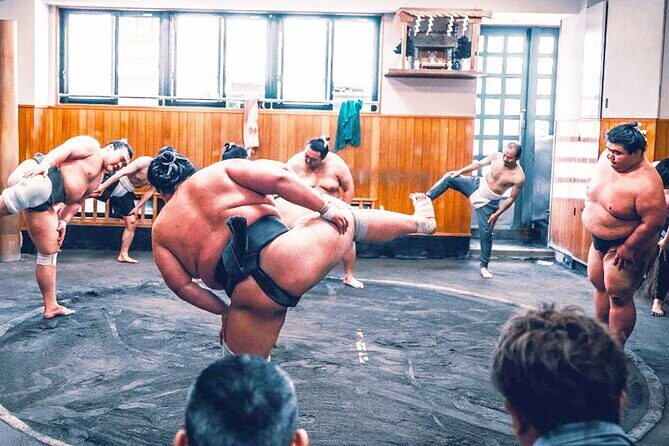
The value here isn’t only watching sumo; it’s understanding it in real time. The tour includes an English-speaking guide who explains the rules, rituals, and meaning behind the movements. That pre-context turns practice from random grappling into a structured sport with deep cultural roots.
You’ll also learn the big idea of how sumo is won: forcing your opponent out of the ring or causing any part of the body to touch the ground. That sounds simple on paper. When you see practice close up, you start noticing how every approach supports that goal, and how technique isn’t just strength—it’s balance, timing, and positioning.
Guides mentioned in past sessions include Mao and Yuki, and the experience description also references other guide names like Kawa and Tomo. Whoever you get, the pattern is consistent: they explain without turning it into a lecture marathon. People note that the guide can be very informative and patient—especially when some folks in the group are late—while still keeping the flow of the morning.
A smart tip: if you have questions, write them down on your phone notes before you go quiet-mode at the stable. Once you’re inside, you’ll have much less patience for rummaging around.
Talking With Wrestlers: The Human Side After (or Around) Practice
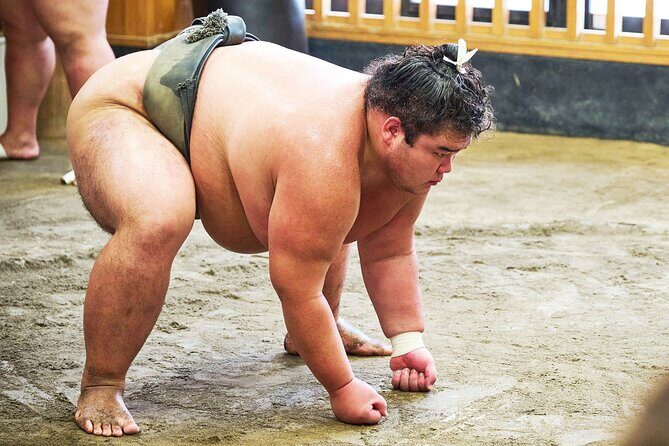
One of the most memorable parts of this tour is the chance to speak with wrestlers. The experience description says you can talk with them outside training hours. In other words, this isn’t about interrupting practice. It’s about learning the sport’s reality from the people who live it.
This is where the stable visit becomes more than sport viewing. You start understanding the lifestyle: the dedication, the discipline, and what it takes to keep working toward top rankings and tournament goals. People also describe the wrestlers as focused and professional during practice—meaning they don’t perform for the audience. That’s good. It’s also a reminder that your best role is to observe respectfully.
Depending on the stable schedule, you might even have the rare chance to see a higher-ranked figure on-site (one guide’s group specifically mentioned spotting a yokozuna). That kind of moment isn’t guaranteed, but it’s a reminder that you’re not watching a tourist show—you’re watching training that matters to ranked athletes.






Price and Value: Is $98 Worth It for 2 Hours?
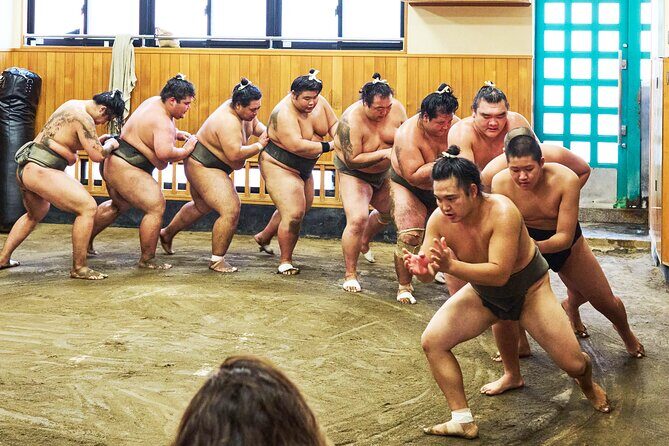
At $98 per person for about 2 hours, this isn’t the cheapest way to do sumo in Tokyo. But the value is clearer when you look at what’s included.
You’re paying for:
- Access to a real training stable that’s normally closed to the public.
- An English-speaking guide who explains rules and rituals before and during the visit.
- A close-view practice session where you can actually see the athletic work.
- An opportunity to speak with wrestlers outside active training hours.
Cheaper sumo experiences in Tokyo often trade access for presentation. They can be informative, but they don’t give you the same level of “this is how the sport is lived” insight. Here, you’re paying for authenticity plus structured explanation.
Is it worth it for every traveler? Not necessarily. If you dislike early mornings, don’t handle quiet well, or want to roam around, you’ll feel constrained. But if you care about culture, sport, and learning how tradition shapes daily life, you’ll likely see the price as fair.
In short: $98 buys you a rare doorway into a working world—one most visitors never see.
Etiquette Rules That Make or Break the Experience
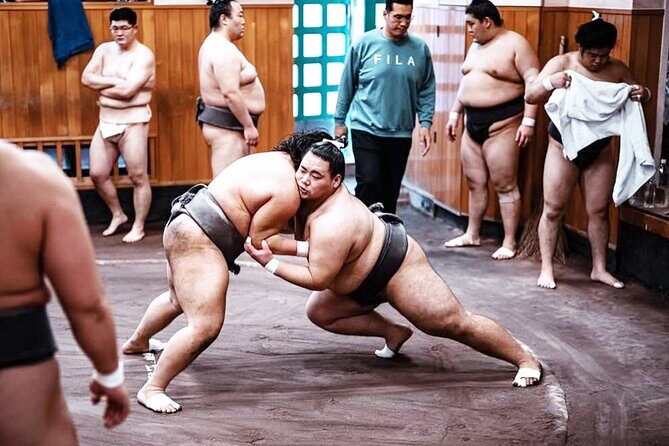
This tour works only if everyone respects the stable environment. The rules aren’t complicated, but you have to take them seriously.
You must follow:
- Modest clothing only
- Don’t stand up or move around during the practice
- Keep your phone on silent
- No making noise
- You must stay until the end of the practice
- No re-entry after you leave the stable
Also, plan for basic “respectful behavior” expectations. People describe not eating or drinking during the stable visit (with water as the exception). That fits the reality of a quiet workplace.
Two practical moves I recommend:
- Use the restroom before you enter. Once practice starts, moving around isn’t part of the job.
- Wear something comfortable but modest—because you’ll be sitting and watching for the duration.
There’s also an age limit: it isn’t suitable for children under 11. If you’re traveling with kids, this may mean you’ll need a different kind of sumo option.
Who Should Book This Sumo Morning Practice Tour
You’ll love this tour if you:
- Want an authentic cultural experience, not a staged performance
- Enjoy understanding sports (rules, rituals, meaning) more than just watching
- Don’t mind early mornings and quiet observation
- Like close-up learning and being respectful in someone else’s workplace
You should skip or rethink it if you:
- Need to stand, walk, talk loudly, or constantly check your phone
- Have trouble sitting still during a practice window
- Are traveling with children under 11
It’s a good fit for couples, solo travelers, and small groups who prefer learning over spectacle. If you’re a sumo fan, it’s the kind of visit that gives you a deeper reference point for the bigger tournaments later.
Should You Book? My Clear Take
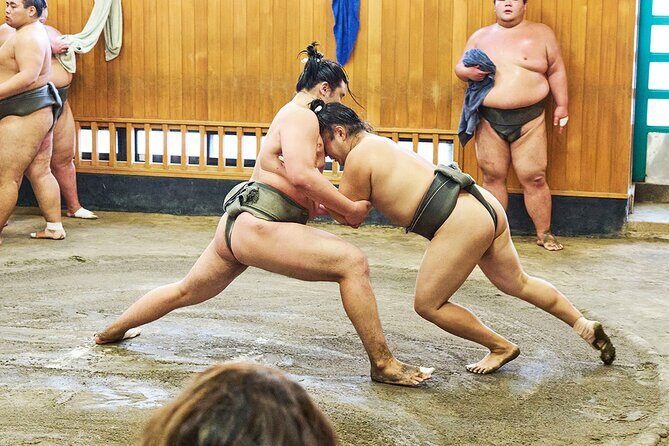
Yes—if you can follow the etiquette and you want the real deal. This tour is valuable because it’s access to training life, taught in plain English, with the ring view kept close and respectful.
Book it if:
- You care about the connection between ritual and sport
- You want a hands-on understanding of how sumo works
- You’re ready to be quiet, seated, and on time
Think twice if:
- Your schedule is tight after the morning slot
- You hate early start times
- You’d struggle with a strict no-noise, no-moving practice environment
If you go in prepared—quiet phone, modest clothing, and a calm arrival—this becomes one of those Tokyo mornings that sticks with you long after you’ve left the stable.
FAQ
Where is the meeting point for the tour?
You meet at Kiyosumi-Shirakawa Station, Exit A1. Your guide will be there holding a sign that says Local Guide Stars.
Which train lines can I use to reach Kiyosumi-Shirakawa Station?
You can reach Kiyosumi-Shirakawa Station via the Toei Oedo Line or the Hanzomon Line.
How long is the tour?
The tour duration is about 2 hours. The practice viewing itself is around 09:00 to 10:00 AM.
Will I get a chance to speak with the wrestlers?
Yes. The tour includes an opportunity to speak with wrestlers outside training hours.
Are there rules about noise and phones inside the stable?
Yes. You’re not allowed to make noise, and you must keep your phone on silent during the practice.
Can I stand up, move around, or take breaks during the practice?
No. You must not stand up or move around during the practice, and you need to stay until the end. Once you leave the stable, there is no re-entry.
What should I wear?
The stable requires modest clothing only.
Is this tour suitable for children?
It is not suitable for children under 11 years old.
What if I arrive late to the meeting point?
If you arrive late, entry may not be possible. The tour also emphasizes that you should arrive in time for the meeting before you’re able to enter.
Is there free cancellation?
Yes. You can cancel up to 24 hours in advance for a full refund.