REVIEW · TOKYO
Tokyo: Sumo Morning Practice with Photo Banzuke and Guide
Book on GetYourGuide →Operated by VAS LLC · Bookable on GetYourGuide
That first loud burst of impact is the whole point. This Tokyo experience puts you close to real sumo morning practice at a working stable, then you get a short basics lesson so you understand what you’re seeing. I especially love the power of watching the wrestlers train in person, and how the guide makes the traditions click in plain language. The main drawback: it’s a group morning, so starting on time depends on everyone—if people arrive late, the flow can get slow.
You’re based around Kiyosumi-shirakawa, and the timing is built for practice itself, not sightseeing detours. In a sport with no weight class, you’ll quickly see that sumo is as much balance, timing, and technique as it is strength. Just plan for a long block outdoors/indoors watching and moving between spots, and wear comfy shoes because you’ll be standing and walking more than you might expect.
In This Review
- Key highlights you’ll feel right away
- Why this sumo morning practice in Tokyo feels different
- Meeting at Kiyosumi-shirakawa Exit B1: the one logistics rule
- The short start: a quick guided setup before the action
- Watching the practice: sitting close enough to feel it
- Photo stop: capturing the right moment without rushing
- Learning sumo basics from a local guide (so it sticks)
- The stable layout and your easy walking breaks
- Who this tour is perfect for—and who should think twice
- Price and value: is $115 for 7 hours worth it?
- Should you book this sumo morning practice tour?
- FAQ
- What is the duration of the Tokyo sumo morning practice tour?
- How much does the tour cost per person?
- Where do we meet for the tour?
- Is the tour in English?
- How big is the group?
- Is the tour wheelchair accessible?
- Is it suitable for children?
- What should I bring?
- FAQ
- What’s included in the experience?
- Is there an option to cancel or get a refund?
Key highlights you’ll feel right away
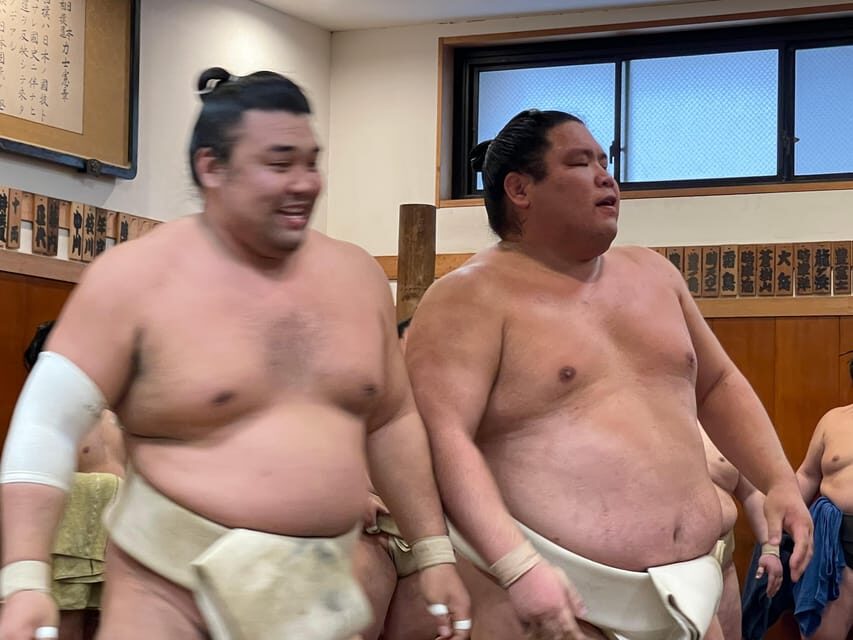
- Rare morning stable access: only a few stables allow visitors to watch practice.
- Up-close training from chairs: you don’t just lurk in the back; you sit and watch the action.
- Hands-on context from an English guide: traditions and fundamentals, not a lecture.
- A built-in photo moment: a dedicated stop for photos with the right focus.
- Small group, capped at 9: easier attention and less chaos than the usual big tours.
- Good museum-sense for sumo: you’ll connect the rituals to what the wrestlers are doing.
Why this sumo morning practice in Tokyo feels different
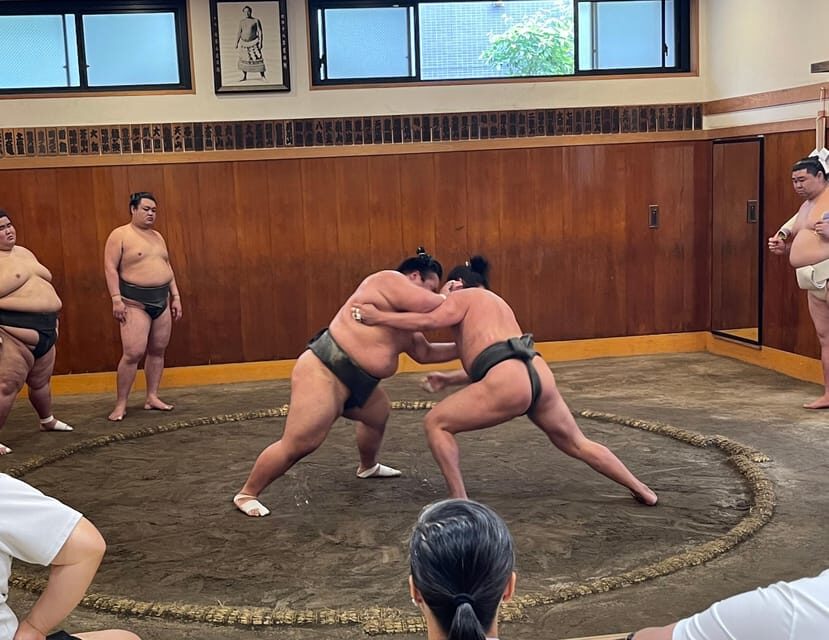
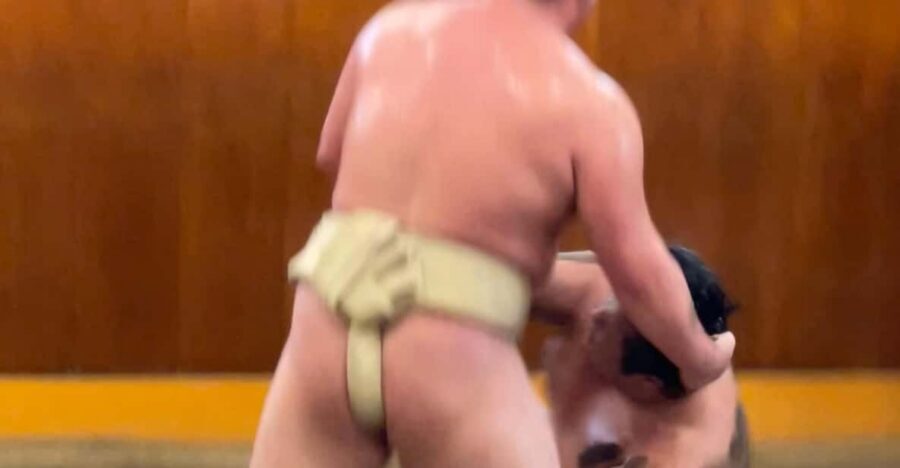
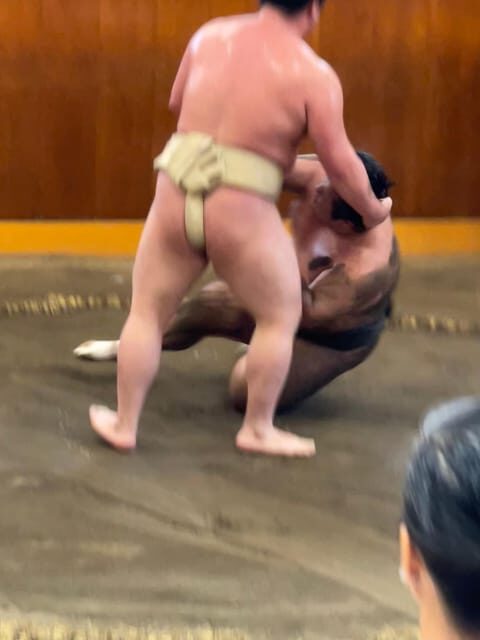
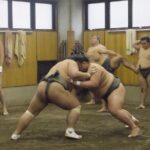
Tokyo is full of sumo-themed stuff. This is not that. This is the morning routine of a working stable, where you can watch wrestlers practice their attacks, footwork, and throws with full concentration. And because sumo tournaments only run about 90 days per year, practice time is a rare window into the sport at full intensity.
The best part is that you’re not just looking at spectacle. You’re watching technique under real rhythm. Sumo is built around control and leverage, not weight classes like boxing or judo. Once you see that, the training makes more sense—staying low, getting your grip right, and using timing to create openings.
I also like that the experience doesn’t sell you as a tourist spectator. Your guide’s job is to help you interpret what you’re seeing, and that changes everything. If you know just a bit when you walk in, the session turns from random choreography into a skill-building process.
You can also read our reviews of more guided tours in Tokyo

Meeting at Kiyosumi-shirakawa Exit B1: the one logistics rule
This tour runs on a tight schedule, because you’re there for morning practice. The meeting point is Exit B1 of Kiyosumi-shirakawa Station, near a FamilyMart convenience store. Your best move is to get there early and wait outside at street level so your guide can spot you quickly.
The tour is also very clear about one thing: do not be late. Since it’s a group activity, the guide has to prioritize the group’s timeline. If you’re delayed, you should contact them ASAP so they can see if they can still fit you in.
Here’s a practical tip that matters more than people think: plan your route so you’re not the one improvising a last-minute train transfer. Morning rail schedules can be predictable, but getting from your exit to the meeting spot is where small errors add up. Leave buffer time, then you’ll spend the morning watching sumo instead of searching for a meeting point.
The short start: a quick guided setup before the action
Right when you meet, you’ll get a brief guided introduction—think of it as setting expectations so you know what to watch for. This part is short, so don’t assume it will cover everything. Instead, it helps you focus on the important stuff: how the stable day works, what the wrestlers are training, and what the routines mean in sumo culture.
If you’ve never seen sumo up close, this is the moment that turns confusion into recognition. You’ll start the practice with the right mindset, which makes the longer viewing time far more rewarding.
One consideration: because it’s a group, the start can feel slower if people keep arriving late. If you’re considering booking, choose a day you can truly commit to, and if there’s any chance you might cut the experience short, tell your guide early so the group timing doesn’t get disrupted.
Watching the practice: sitting close enough to feel it
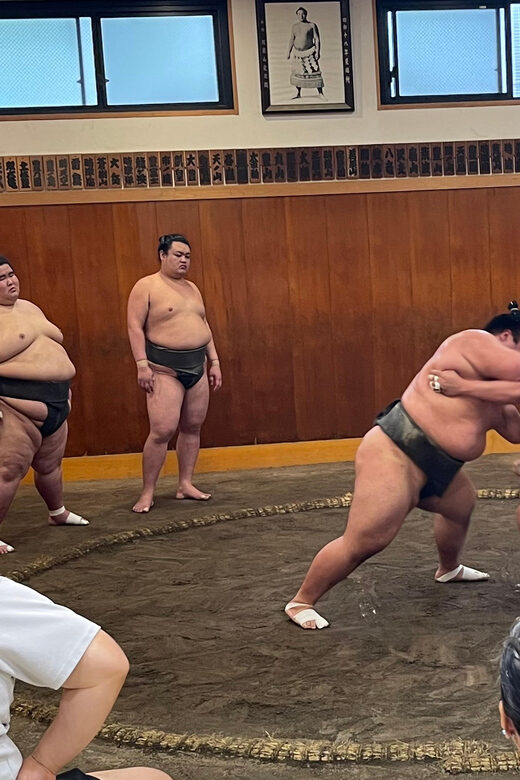
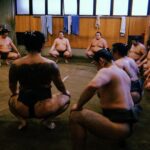
Once you’re at the stable viewing area, you’ll see wrestlers train in a way that’s both intense and methodical. The session is long enough for patterns to emerge. You’ll notice repetition for a reason: footwork drills, grip work, and practice bouts where the objective is control rather than a dramatic show.
And yes, this tour includes the detail that matters for comfort and viewing: you sit in chairs. That simple word changes the experience. You can stay oriented, keep your camera steady, and watch longer without your legs burning out. It also helps you keep your head up for the action instead of scanning for a better angle every few minutes.
Up close, you’ll start noticing the physical details you can’t get from TV:
- How quickly wrestlers reset their stance.
- The importance of hand placement and pushing lines.
- How they use timing—sometimes it’s not strength, it’s the moment you choose.
That’s where this becomes more than photos. You’re getting the feel of why sumo works as a system. You’ll likely leave with a mental checklist of what to look for next time you see a match.
Photo stop: capturing the right moment without rushing
There’s a dedicated photo stop built into the flow, around 15 minutes. In a stable setting, rushing is the enemy of good photos. Having a planned pause means you can focus on getting pictures without breaking the rhythm of the morning practice.
What to do with that time:
- Take photos that show context, not just faces.
- Snap a few close-ups if you can, but don’t ignore wider shots that show the training setting.
- If your guide points out what’s meaningful, follow their cue. In sumo, the details tend to matter.
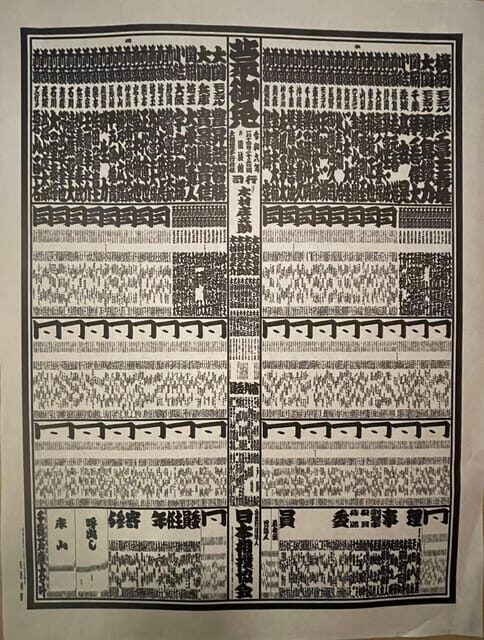
This is where the tour title’s photo banzuke angle can fit in. Even if you only catch the part that’s pointed out during the stop, the lesson is the same: the guide helps you understand what you’re photographing instead of treating it like a random souvenir moment.
A few more Tokyo tours and experiences worth a look
Learning sumo basics from a local guide (so it sticks)
After practice, you get a short presentation on sumo fundamentals. This is one of the most valuable pieces of the day, because it helps you translate what you just watched.
Your guide explains the sport’s structure and traditions, with enough clarity that you can take the experience home mentally. Instead of leaving with a pile of photos and no clue what you saw, you start linking:
- what training drills are aiming for,
- why certain rituals exist,
- and how sumo culture shapes the sport.
One reason this section works: it’s short. You’re not stuck in a long classroom segment while the morning slips away. It fits the pace of a 7-hour experience: watch hard, learn just enough, then walk back out with context.
If you’re the type who likes to understand the meaning behind what you’re seeing, this is your payoff. If you only want a show, you might still enjoy it—but you’ll get the most out of it when you lean in during the explanation.
The stable layout and your easy walking breaks
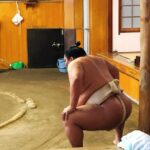
Between viewing areas, you’ll do a bit of walking—two short on-foot stretches. This matters because it prevents your brain from getting stuck in one spot for too long. A stable isn’t designed like a museum with arrows and labels, so small repositioning helps you see more angles and understand how movement and training flow.
Practically, it’s also a break. Morning sumo viewing can feel intense. Even sitting in chairs, you’ll want short movement breaks to reset. These short walks help you stay comfortable and keep your energy for the main practice time.
Keep in mind: you’ll be on your feet more than you might expect for a “watching” tour. Bring comfortable shoes, and choose socks you don’t regret.
Who this tour is perfect for—and who should think twice
This is ideal if you want a real taste of sumo culture without needing to be a lifelong fan. You don’t need deep background knowledge. The guide’s role is to make the fundamentals understandable and relevant to what you just watched.
It’s also a good fit if you like smaller groups. With a maximum of 9 participants, you’re less likely to feel like a number, and your guide can actually keep track of the group.
It may be less ideal if you’re traveling with young kids. The tour is not suitable for children under 9, likely because it’s a long, focused morning and involves stable conditions.
Also consider your tolerance for timing. This isn’t a slow, flexible half-day. If you hate being tied to a schedule, you might feel stressed. But if you can commit to the morning, the payoff is big.
Price and value: is $115 for 7 hours worth it?
At $115 per person for a 7-hour tour, the value depends on what you want from Tokyo.
If you’re comparing it to generic sightseeing, it looks expensive. But it’s not the same category. This is a rare access opportunity: only a few stables in Japan let visitors observe morning practice sessions. You’re paying for:
- the access itself,
- the local guide who explains traditions and fundamentals,
- the structure of a small-group experience,
- and the convenience of having entry setup handled (including skipping the ticket line).
Also, the schedule matters. This tour is designed around when the wrestlers train—so you’re not wasting time. That’s a big part of why it’s worth it for dedicated travelers who want an experience that feels specific to sumo, not just Tokyo.
In my book, this price makes sense if you want something you can’t easily DIY. If you only want a quick look at sumo branding, you can probably find cheaper options. But if you want to understand the sport while watching it close up, this is one of those “pay for access and context” experiences.
Should you book this sumo morning practice tour?
Yes, with conditions. I’d book it if you can arrive on time, you’re comfortable spending a focused morning watching, and you want your photos to come with meaning. The chairs, small group size, and guide-led basics are the combo that turns this from a passive viewing session into a learning experience.
Skip it if you’re bringing kids under 9, you hate schedule pressure, or you’re expecting a flexible, wander-at-your-own-pace morning. Also be honest with yourself: group tours are group tours. If you might leave early or arrive late, the morning can feel less smooth for everyone.
If you match the right traveler profile, you’ll walk away with something better than souvenirs: a clearer sense of what sumo practice looks like when it’s happening for real.
FAQ
What is the duration of the Tokyo sumo morning practice tour?
The tour runs for 7 hours.
How much does the tour cost per person?
It costs $115 per person.
Where do we meet for the tour?
Meet at Exit B1 of Kiyosumi-shirakawa Station, near a FamilyMart convenience store.
Is the tour in English?
Yes, the live tour guide speaks English.
How big is the group?
It’s a small group limited to 9 participants.
Is the tour wheelchair accessible?
Yes, it’s listed as wheelchair accessible.
Is it suitable for children?
It’s not suitable for children under 9 years old.
What should I bring?
Bring comfortable shoes and a camera.
FAQ
What’s included in the experience?
You’ll observe a sumo practice session, get a short presentation on the basics of sumo, and have a local guide with you.
Is there an option to cancel or get a refund?
Yes. Free cancellation is available up to 24 hours in advance for a full refund.