REVIEW · TOKYO
Akihabara Anime & Game Adventure Walking Tour (Group or Private)
Book on Viator →Operated by MagicalTrip Inc. · Bookable on Viator
Akihabara can swallow your time fast. This 3-hour walk is a smart way to see retro games and lock in a maid cafe stop with entry plus one drink, while a guide helps you make sense of what you’re looking at. My favorite part is the built-in photo fun (Purikura), plus the small-group feel, which keeps things from turning into a chaotic crowd march. One consideration: the vibe is very subculture-focused, and if you want heavy history, you may find some segments feel more like browsing than teaching.
The tour runs with a maximum of 7 people, so you get more back-and-forth than the typical big-group experience. Guides praised in past tours include Naoki, Yuki, Seina, Eye, Kenji, Taka, Ryo, and Tommy, and many were called out for adjusting the pace to the group, including families. If you go in expecting a guided shopping sampler with culture explanations, you’ll probably have a much better time.
In This Review
- Key points to know before you go
- The Akihabara vibe: fun chaos with a plan
- Price and what your $90.86 actually covers
- Meeting point: start in the right spot and you’ll waste less time
- Stop 1: Super Potato and the retro game-store rush
- Stop 2: Akiba Cultures Zone and the goods-and-subculture maze
- Stop 3: Akihabara Gachapon Hall and the capsule toy hunt
- Stop 4: Heaven’s Gate maid cafe and the included drink moment
- Stop 5: Taito Station Akihabara, Space Invaders, and arcade energy
- Stop 6: Cosplay corners and mysterious vending machines
- What a good guide changes (and what can go wrong)
- Included photo fun: Purikura and optional Polaroid
- Who should book this tour
- Tips to make your 3 hours go smoothly
- Should you book: my straight answer
- FAQ
- What is included in the tour price?
- How long is the Akihabara walking tour?
- How many people are in the group?
- Where do we meet for the tour?
- Are dietary restrictions or allergies guaranteed to be handled?
- What if it’s hot or rainy?
Key points to know before you go
- Maid cafe included: entry and one drink are part of the tour price
- Purikura photo booth included: Japanese photo booth experience to take home
- Small group (max 7): easier questions, better flow through crowded streets
- Iconic stops: Super Potato, Gachapon Hall, and Taito Station’s Space Invaders landmark
- Guide-led shortcuts: helps you find spots you might miss when wandering solo
- Capsule toy hunt energy: gachapon is treated like a must-do here
The Akihabara vibe: fun chaos with a plan

Akihabara is not subtle. It’s neon, storefronts stacked with anime and electronics, and constant motion—so it’s easy to lose track of what’s actually worth your time. This tour helps you “see the district” in a short window by stringing together the most commonly loved stops in a logical walking loop.
What you’re buying is not just access to places, but time-saving context. A good guide helps translate the meaning of what’s on the shelves and what kind of stores you’re walking into (retro game shops versus figure merch zones versus arcade-style attractions). That matters because Akihabara is overwhelming on your first pass, even if you know the fandom words.
Also, the group size is small. That reduces the typical problems: no waiting forever at confusing intersections, and you’re more likely to get answers instead of just hearing a quick overview.
You can also read our reviews of more walking tours in Tokyo


Price and what your $90.86 actually covers
At $90.86 per person for about 3 hours, the value hinges on what’s included versus what you’d pay anyway. Here’s the key: the price covers maid cafe entrance and one drink, plus the Purikura photo booth experience. If you were already planning both, the math gets easier fast.
You’ll also pass major paid-or-hard-to-plan areas without needing to figure them out on the spot. The tour includes multiple storefront stops with free admission tickets listed for several stops, which means you’re paying mostly for the guide time and the included experiences rather than a long chain of entry fees.
Two optional add-ons show up in the details. A Polaroid photo with a maid is available for purchase, and there’s also a Maids’ Live Performance option (¥1,430 per person) that’s not included. If you want the full fan experience, budget for at least one extra purchase.
Meeting point: start in the right spot and you’ll waste less time
The tour’s meeting point is in front of the Ticket Office right outside of the Electric Town Gate of JR Akihabara Station. Arriving early helps because Electric Town area is busy and signage can feel like sensory overload.
One practical note from how the experience is described: if the maid cafe stop needs to vary depending on situations, the tour still aims to keep the included experience aligned with what you bought. That’s reassuring if you’re visiting on a tight schedule.
For your first stop, you’ll start with a short walk-and-wait rhythm. The whole point is to reduce your decision fatigue, so give yourself a little buffer before start time.
Stop 1: Super Potato and the retro game-store rush
Super Potato is the first big hit. This is a retro video game store that many people come to for that time-capsule feeling—older consoles, games, and the kind of clutter you only find when a shop is built around fandom.
Why this stop is a smart start: it sets your frame for the whole district. You’ll start noticing what kind of collecting culture Akihabara supports, and you’ll be more alert for similar items at the other stops. It also helps you immediately identify what you’re into—arcade nostalgia, older Nintendo-era stuff, or broader game collecting.
The listed time is about 30 minutes. That’s enough to browse without feeling trapped, but not enough to become a full-on collector’s marathon. If you’re a hard-core buyer, keep your wishlist in your phone so you don’t forget what you came for.
Stop 2: Akiba Cultures Zone and the goods-and-subculture maze

Next is Akiba Cultures Zone, described as a place where the subculture takes over. Think idol smiles, anime merchandise variety, maid cafe culture, and a lot of visual noise in a small space.
This stop works best if you want to understand Akihabara’s “ecosystem.” It’s not just one type of store—it’s an interconnected web of communities and consumer habits. A good guide can help you spot what’s mainstream versus what’s more niche, and how people shop here.
The time listed is about 30 minutes. It can feel crowded. If you’re sensitive to tight aisles or you want room to breathe, plan to keep moving as a group and avoid pausing in chokepoints.
You can also read our reviews of more private tours in Tokyo





Stop 3: Akihabara Gachapon Hall and the capsule toy hunt

Then comes the gachapon stop—Akihabara Gachapon Hall. Capsule toys have a cult following, and this place is described as the holy land of gachapon for 10 years, which fits the way people treat gachapon like a mission.
What you’ll do here is mostly browse and pick capsules. It’s fun because the category is endless: rare items, newer releases, and the satisfying randomness of getting exactly what you wanted—or accidentally getting something hilarious.
The time is shorter here, about 15 minutes. That’s good for most people, because once you start aiming for specific capsule sets, you can burn an hour without noticing. Use the quick window as a sampling round, then buy extra later only if it genuinely hits your taste.
Stop 4: Heaven’s Gate maid cafe and the included drink moment
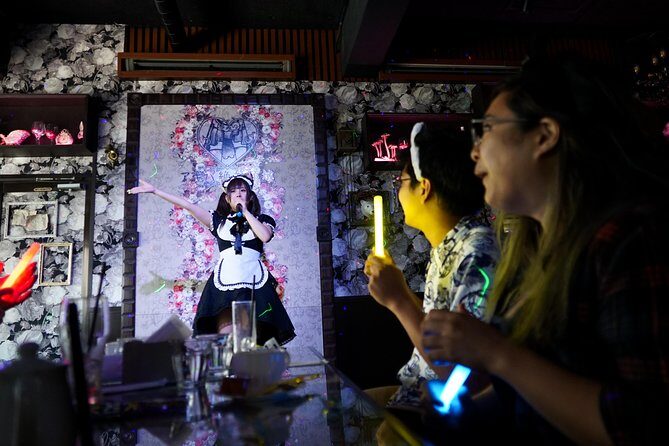
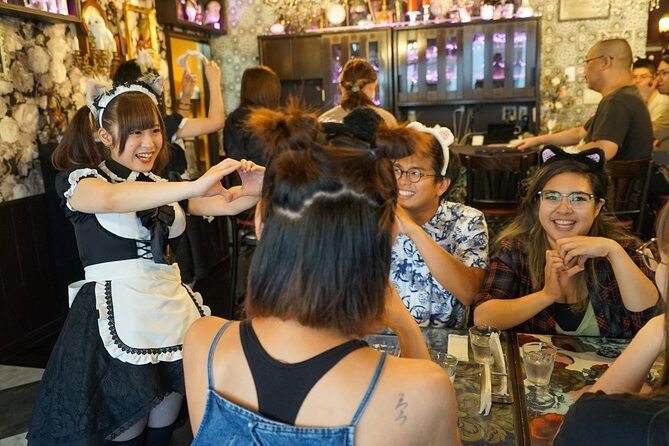
The biggest included experience is the maid cafe stop at Heaven’s Gate. This is where Akihabara’s famous “maid cafe” culture gets real—cute themed setting, staff interacting in character, and the kind of attention to presentation that you won’t get by just walking past a storefront.
You’re told to expect a popular maid cafe among locals, with time set aside at about 1 hour. The tour includes maid cafe entry plus one drink, which is important because maid cafes can turn expensive fast once you start adding upgrades.
Two practical points. First, the maid cafe you visit may vary depending on the situation, so don’t lock into the idea that every single detail is guaranteed to match one exact room setup. Second, don’t plan this stop as a relaxed café break if you’re not into the concept. It’s an experience, not just a latte-and-chat moment.
On top of that, there’s an optional Polaroid photo with a maid available for purchase. If you want a souvenir that matches the theme, this is the time to decide, not after you’ve left.
Stop 5: Taito Station Akihabara, Space Invaders, and arcade energy

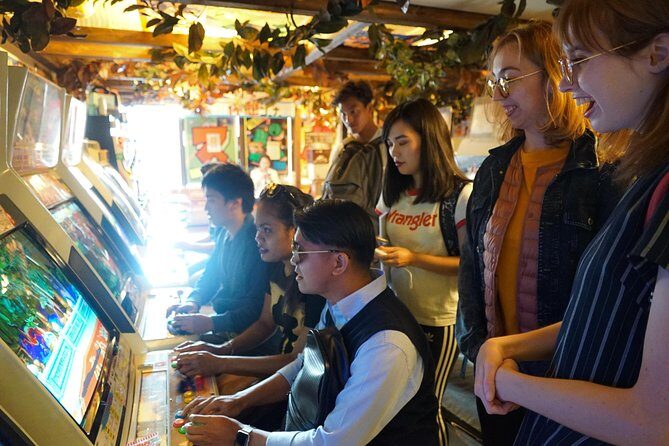
Taito Station Akihabara is a classic anchor point. It’s about a 3-minute walk from Akihabara Station, and the Space Invaders sign is the landmark you’ll likely spot quickly once you’re close.
This stop is about 25 minutes. That length usually works for people who want to play a couple arcade games, look around at what’s available, and grab the atmosphere without committing to a full arcade session. It’s also a natural transition from shopping-heavy areas to the “play” side of Akihabara.
Why this matters: arcade culture is part of the same story as retro consoles. It’s the modern living room of game nostalgia. If you’re traveling with kids, this is often where their attention stays steady.
Some guides were also praised for steering people to lesser-known arcade areas, and that’s where your guide can quietly add real value—helping you find what fits your interests, not just where the crowd walks.
Stop 6: Cosplay corners and mysterious vending machines

The last listed walk segment is about cosplay and mysterious vending machines, about 15 minutes. This is the “Akihabara feels like a character” payoff.
Even if you don’t cosplay, it’s fun to watch the style. The vending machines are especially worth a short look because they’re part of the visual language of the area—specialty drinks, novelty items, and the occasional weirdness that Japan does better than almost anywhere else.
This isn’t a deep activity, but it’s a good ending because it helps you leave with images and small memories, not just purchases.
What a good guide changes (and what can go wrong)
This tour is only as good as the guide you get, and the reviews make that clear. Many people praised guides for being energetic and helpful, and for explaining the area in a way that made the stores feel connected.
Specific guide names that show up in positive feedback include Naoki, Yuki, Seina, Eye, Kenji, Taka, Ryo, and Tommy. People liked that guides offered helpful guidance for finding specific shops, handled questions, and sometimes even helped with practical things like navigating onward after the tour.
Still, there are real caution flags. Some reviews complain about limited information, feeling like the guide just directed the group from store to store, or spending time in places that felt less interesting to them. A few mentioned awkward situations, like issues around meeting location, pacing, or unprofessional behavior.
So here’s the practical advice. Go in with realistic expectations: this is a guided walking tour with structured stops and a strong included maid cafe element. If your heart is set on heavy academic history, plan a second day to explore on your own too.
Included photo fun: Purikura and optional Polaroid
One of the more “Akihabara only” inclusions is Purikura, the Japanese photo booth experience. This is not just a quick photo. It’s usually themed, with decoration and a playful output that feels more like a souvenir game than a normal camera moment.
You’ll also have the chance for a Polaroid photo shooting with a maid for purchase. If you want a photo that directly matches the maid cafe theme, this is an easy add-on to say yes to.
If you’re traveling with friends or kids, these photo moments are often the part that makes everyone relax. You’re doing something common and shareable, instead of splitting up mentally while you browse.
Who should book this tour
This is best for you if:
- You’re a fan of anime, manga, retro games, arcades, or capsule toy hunting
- You want a short, guided overview without building your own plan from scratch
- You like the idea of committing to a maid cafe stop, not just peeking from outside
- You prefer a smaller group that makes questions easier
This may not be ideal if:
- You want deep, slow, museum-style cultural history
- You dislike crowds or tight shopping aisles
- You don’t care about the maid cafe concept or photo booth souvenirs
- You’re hoping the guide will personally tailor every store request beyond what’s feasible in the set schedule
Tips to make your 3 hours go smoothly
Akihabara rewards people who keep moving. Here are a few practical moves that match the tour’s shape:
- Bring water, especially in summer. The info explicitly warns summers are hot and humid and recommends water and a hat.
- Wear comfortable shoes. You’ll be walking between multiple sub-stops with short time windows.
- Have a quick list of what matters most: retro games, anime goods, gachapon, arcade time, or the maid cafe photo moment. That helps you decide fast inside each stop.
And most importantly: when you enter a store, pick your goal early. A 15-minute gachapon segment can turn into a wandering maze if you don’t set a target.
Should you book: my straight answer
Book this tour if you want a guided sampler of Akihabara culture-as-consumer-fandom, with the two big anchors handled for you: maid cafe entry with a drink and Purikura photo booth time. The small group size and the structured stops can save you from wasting half a day just figuring out where to go.
Skip it or consider a different approach if you only want strict historical context, or if you’re worried about the maid cafe experience not matching your taste. In that case, you may enjoy wandering Electric Town on your own, then only adding Purikura or one targeted arcade stop later.
If you’re a first-timer and you want a fast way to get your bearings, this is a strong pick. Just go with the right mindset: fun, guided browsing, plus that very Akihabara photo-and-maid-cafe payoff.
FAQ
What is included in the tour price?
You get the maid cafe entrance plus one drink, a certified guide by MagicalTrip, and a Japanese photo booth experience (Purikura). A Polaroid photo shooting with a maid is also available for purchase.
How long is the Akihabara walking tour?
The tour is about 3 hours approximately.
How many people are in the group?
The tour has a maximum of 7 travelers.
Where do we meet for the tour?
Meet in front of the Ticket Office right outside of the Electric Town Gate of JR Akihabara station.
Are dietary restrictions or allergies guaranteed to be handled?
No. The info says they cannot guarantee allergy-free or that dietary restrictions will be catered to, since food is prepared in kitchens that do not belong to MagicalTrip. Substitutions may not always be possible, though they aim to compensate at different stops.
What if it’s hot or rainy?
The tour notes that summer in Japan can be very hot and humid, so bring water and a hat. It also says the experience requires good weather; if it’s canceled due to poor weather, you’ll be offered a different date or a full refund.