REVIEW · TOKYO
Asakusa: Japanese kitchen knife store visits after history tour
Book on Viator →Operated by Arumachi · Bookable on Viator
Knives meet temples in Asakusa. This 3.5-hour small-group tour blends a guided walk around Senso-ji with hands-on help at Kappabashi knife shops, so you get both the why and the what. I like how the morning feels structured but not stiff.
Another big win is the group size: up to 8 people, and if there are at least 3, headsets are provided so you do not miss the guide’s voice. Past guides (Akiko, Kay, Sue, and Amy) have been praised for keeping the pace friendly and answering shopping questions clearly.
One drawback to consider: if you only want knives and would happily skip the temple area, the tour still includes a full Asakusa history walk before you reach the shopping street.
In This Review
- Key points worth knowing
- Entering Asakusa: Why This Knife Shopping Tour Works
- Kaminarimon to Nakamise: The Walk That Sets the Scene
- Sumida Park and the Asakusa View Stops
- Hozomon and Senso-ji: What You Gain Beyond Photos
- Asakusa Shrine Meets the Temple Area
- Sensō-ji Denboin Garden: A Breather in the Middle of It
- Kappabashi Street Kitchen Town: Buying Knives With Real Support
- A quick reality check: if knives are your only goal
- Price and Timing: Is $78.18 a Good Value?
- Who This Tour Suits (and Who Might Not Love It)
- Logistics That Matter: Meeting Point, Transit, and Pace
- Making Knife Shopping Worth It: Simple Prep
- Should You Book This Asakusa Knife Tour?
- FAQ
- How long is the Asakusa history and Japanese kitchen knife tour?
- Where does the tour start and end?
- What time does the tour begin?
- How much does it cost?
- Are headsets included?
- What’s included and what is not?
- What is the cancellation policy?
Key points worth knowing
Small group (max 8) with headsets when needed to keep the guide’s story audible.
History walk through the Senso-ji approach including iconic gates, the main temple, and nearby shrine spots.
Optional looking-out moment at the Asakusa Culture Tourist Information Center observation deck.
Kappabashi Street is the real payoff for people who want Japanese kitchen knives tied to how restaurants work.
Guides can adjust your focus if knives are your main goal.
Entering Asakusa: Why This Knife Shopping Tour Works
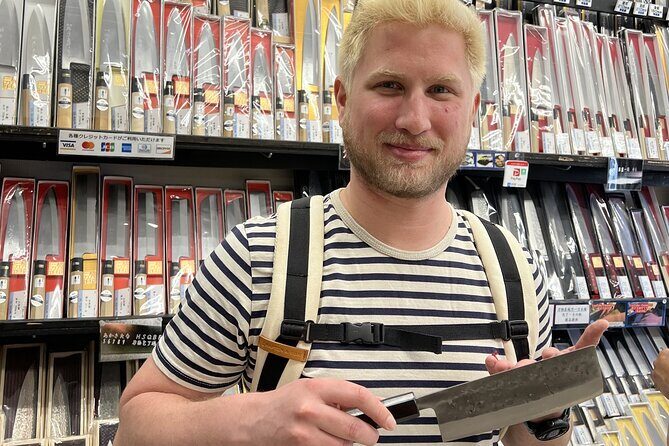
Tokyo has lots of shopping tours. This one has a different trick: it uses the temple neighborhood as the context for what you buy next.
You start in Asakusa and spend your morning walking with a guide who explains how this area became the place for crafts, food culture, and local trades. Then you end on Kappabashi Street, where the knife shops sit close enough to compare options without losing time.
I also like that the tour is built for practical curiosity. You are not just looking at old sights from a distance. You are learning what the neighborhood is known for, and then you’re walking into the place where kitchen gear is sold in the style used by working cooks and restaurant operators.
You can also read our reviews of more historical tours in Tokyo
Kaminarimon to Nakamise: The Walk That Sets the Scene
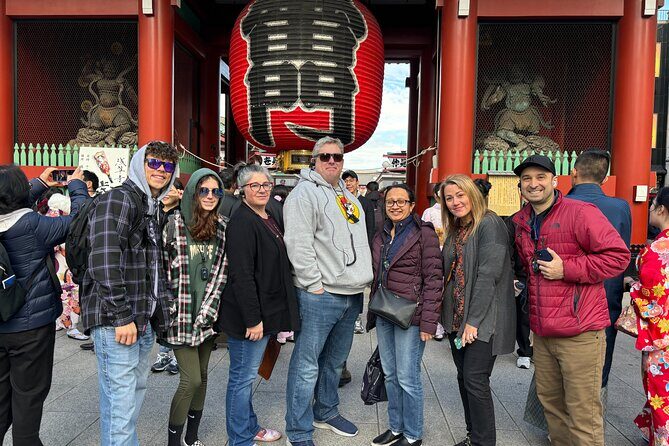
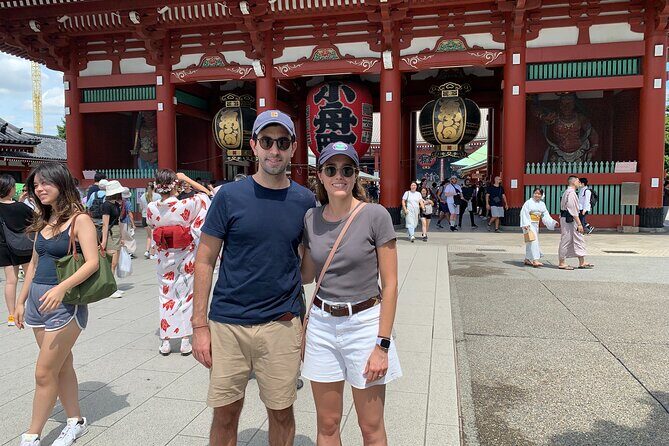
The tour begins near Kaminarimon, the Thunder Gate. It is a loud landmark in the best way. Even if you are not a super-detail-history person, the gate gives you a mental map fast: you know you are entering the temple route, not just strolling through town.
From there, the walk follows the approach to Senso-ji. You go by Nakamise Shopping Street, which can feel more lively than you expect for a temple area. Instead of a stiff, solemn vibe, it reads like an everyday market street—exactly the kind of setting where locals and visitors mingle while they move toward the main temple.
A guide adds meaning to the route. You get the story behind the gates and why the area developed into a shopping corridor tied to pilgrimage and daily life. And because this is a small group, you can ask quick questions without feeling like you are slowing down a big crowd.
Sumida Park and the Asakusa View Stops
Early on, you also spend time near Sumida Park. The key value here is timing and perspective. Getting out by the river area before the busiest parts of Asakusa crowd in gives you a calmer start.
One stop includes the Asakusa Culture Tourist Information Center, with time to use the open terrace observation deck for views over the neighborhood. It is the kind of “reset” pause that helps you understand where everything sits—temple grounds, surrounding streets, and the general layout of the district—so later, when you hit Kappabashi, you feel oriented instead of lost.
And yes, the tour is paced like a morning walk, not a sprint. Still, plan on comfortable shoes. Asakusa is walkable, but it adds up over three and a half hours.
Hozomon and Senso-ji: What You Gain Beyond Photos
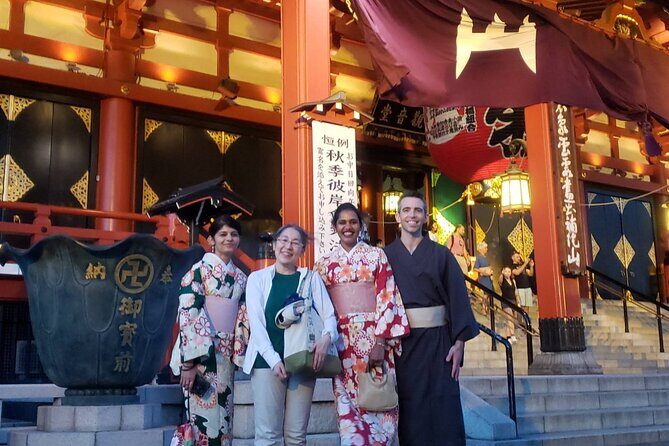
At the Senso-ji temple complex, you pass the Hozomon, the Treasure-House Gate, which acts like an inner threshold before you reach the main temple area. This matters because the guide’s framing helps you notice that the space is arranged in layers. You are not just seeing buildings—you are moving through a layout with meaning.
Senso-ji is described as Tokyo’s oldest temple and one of its most significant. You also spend time with the temple scene long enough to register key details rather than just snapping one photo and moving on. There’s even specific context provided around the adjacent five-story pagoda and the Buddha-related ash tradition connected with Sri Lanka’s government and Buddhist society for goodwill.
You do not need to be religious to enjoy this. The payoff is learning how the place communicates importance through structure and sequence—how the route funnels you inward, and how the neighborhood wraps around the temple grounds.
Asakusa Shrine Meets the Temple Area
Right next to Senso-ji, the tour includes Asakusa Shrine. The point is simple but interesting: you see Shinto and Buddhist space side by side in the same premises. That contrast can feel surprising if you expect religious areas to separate cleanly.
The guide explains the mystery behind the arrangement, and this is where the tour earns its “not just shopping” label. Even if you came for knives, this section helps you understand why locals would treat the area as more than a tourist backdrop.
This also helps you connect the shopping theme later. In Asakusa, food and craft culture are part of daily life, not an isolated hobby corner. The shrine-and-temple pairing is one more reason the neighborhood feels like a lived-in place rather than a staged one.
You can also read our reviews of more shopping tours in Tokyo

Sensō-ji Denboin Garden: A Breather in the Middle of It
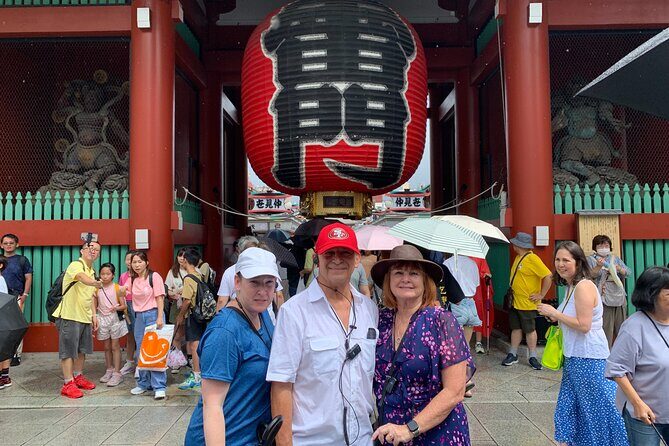
After the main temple highlights, the tour takes you toward Sensō-ji Denboin Garden. This is your change of pace moment. The guide helps you shift from the big, iconic temple energy to a more traditional, Meiji-era-to-present feel.
You also get a walk through the Rokku area, described as a traditional entertainment district that has activity but does not feel packed. That phrasing is useful because it sets expectations. You are stepping into a neighborhood that carries the feel of past eras while continuing as regular city space.
If your legs are starting to feel the morning, this stop is a good way to reset. It’s also a useful photo break that does not feel like a random detour.
Kappabashi Street Kitchen Town: Buying Knives With Real Support
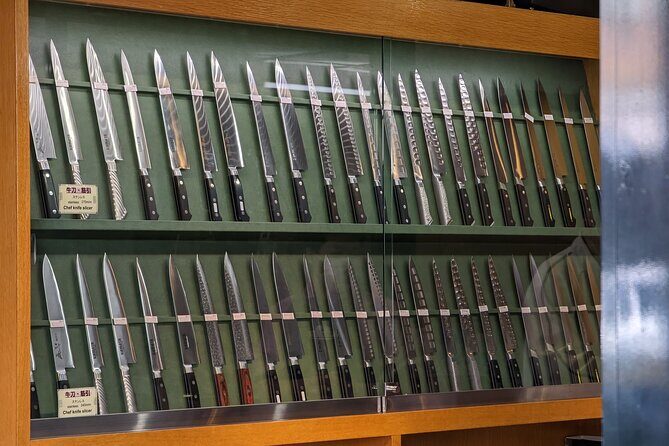
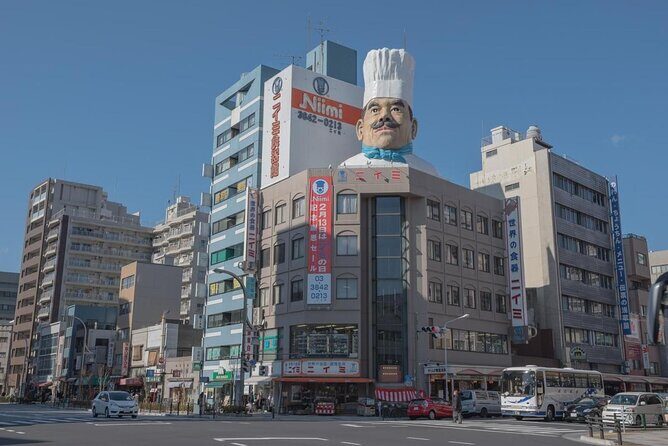
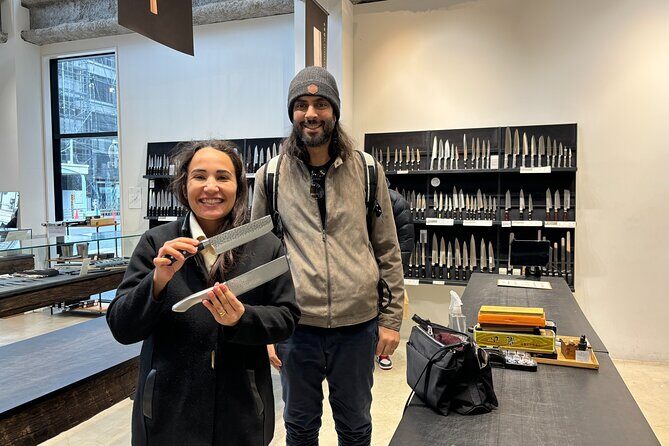
Now you reach the reason many people book this tour: Kappabashi Street, also known around Asakusa as Kitchen Town. This area is lined with shops that sell kitchen knives and related tools, including items used by restaurant operators.
What makes this part valuable is that you are not going alone with your shopping instincts. The guide helps you with the selection process while you shop. In past tours, Kay stood out for being informative and helpful when people were choosing a knife. Sue also got praise for making it easy to shop while still understanding the context.
This is where you should be honest with yourself: if you know exactly what you want, the guide helps you move faster. If you have no clue, the guide helps you narrow choices based on what you plan to cook and what kind of knife experience you want.
Also, the tour ends here. That means once you buy, you can keep browsing on your own afterward if you want, or get moving toward lunch without the fear of missing the group.
A quick reality check: if knives are your only goal
One review note that matters: if your entire goal is knives only, it may be more efficient to go straight to Kappabashi on your own. This tour still includes the temple walk first. The good news is that guides can sometimes adjust the pace if you tell them you care more about the knife shopping than the history. In one case, the history and area time was shortened because a guest’s main interest was knives.
Price and Timing: Is $78.18 a Good Value?
The price is $78.18 per person for about 3 hours 30 minutes. Whether it’s worth it depends on what you’re trying to solve.
If you want both parts—Asakusa context plus shopping help—then you’re paying for two things at once. You pay not just for walking, but for a guide who connects the neighborhood story to the knife-shopping area. You also get headsets when the group has at least three people, which helps the tour stay usable even if you end up in a slightly larger group.
If you only want the shopping and you already know what you want, you might prefer a shorter, less structured option. But if you want your knife-buying decision guided, this tour helps you avoid the most common problem: spending a long time looking at gear without knowing what questions to ask.
Timing-wise, the 9:30 am start works well because you’re in the temple area before the day’s crush really takes over. You also still have most of the day left afterward, because the tour ends at Kappabashi rather than somewhere far away.
Who This Tour Suits (and Who Might Not Love It)
This fits best if you:
- Like a morning walk with a guide and small group energy.
- Want Japanese knives but also want the culture and context behind the shopping streets.
- Enjoy a structured route that still leaves room for questions.
- Are buying knives as gifts and want help picking something that makes sense.
It may not be the best match if you:
- Are very short on time and want only the shopping segment.
- Are totally uninterested in the Senso-ji / Asakusa history side.
In short: this is a history-and-hands-on-shopping mix. If you come for only one half, you may find the other half feels like extra.
Logistics That Matter: Meeting Point, Transit, and Pace
There’s no hotel pickup or dropoff. You meet near Kaminarimon at 2-chōme-20-6 Kaminarimon, Taito City, Tokyo 111-0034, Japan, and you end at Kappabashi Dougugai Kitchen Town, 3-chōme-18-2 Matsugaya, Taito City, Tokyo 110-0036, Japan.
The tour is marked as near public transportation, which is practical in Tokyo. You can usually piece together a subway or train route without too much trouble.
Because the group max is 8, you should still show up a bit early. Not because it’s a headache, but because starting on time keeps the flow from the park and temple areas into Kappabashi.
Making Knife Shopping Worth It: Simple Prep
You do not need to be a knife expert before you go. But you’ll get more out of the shopping time if you prepare a bit.
Here’s what helps:
- Decide what you’re buying for: daily cooking, a gift, or upgrading one key tool.
- Have a rough price range in mind before you walk into shops.
- Think about your comfort level: some people want to try one good knife; others shop for a small set.
The guide’s job is to help you choose, not to guess your needs. Even a quick conversation about what you cook most often makes the shopping part more satisfying.
And bring payment plans that make sense for you. If you’re buying multiple knives, you’ll want to avoid scrambling at the last second.
Should You Book This Asakusa Knife Tour?
Book it if you want a Tokyo morning that mixes iconic Asakusa sights with a real destination for Japanese kitchen knives. The small-group setup, optional headsets, and the guide’s ability to support shopping questions are the main reasons this works at the $78.18 price point.
Skip it or consider a different plan if your goal is strictly knife shopping and you do not want the temple-area walking portion first. The tour may feel like more sightseeing than you asked for.
My take: this is a smart choice when you care about getting the story right and making a confident purchase at the end of the route—especially if you’re buying gifts for cooks who will actually use the knives.
FAQ
How long is the Asakusa history and Japanese kitchen knife tour?
The tour runs for about 3 hours 30 minutes.
Where does the tour start and end?
It starts at 2-chōme-20-6 Kaminarimon, Taito City, Tokyo 111-0034, Japan and ends at Kappabashi Dougugai Kitchen Town, 3-chōme-18-2 Matsugaya, Taito City, Tokyo 110-0036, Japan.
What time does the tour begin?
The start time is 9:30 am.
How much does it cost?
The price is $78.18 per person.
Are headsets included?
Headsets are included for a group of 3 or more so everyone can hear the guide clearly.
What’s included and what is not?
The tour includes the guided experience and headsets when the group size meets the condition. Hotel pickup and dropoff are not included.
What is the cancellation policy?
You can cancel for a full refund up to 24 hours before the experience’s start time. If you cancel less than 24 hours before, the amount paid is not refunded.