REVIEW · TOKYO
Imperial Palace Tour: Discover Samurai History with a Local Guide
Book on Viator →Operated by YURAGI · Bookable on Viator
Samurai stories start in plain sight. This 2-hour Tokyo Imperial Palace East Gardens tour connects emperor-era politics to samurai-era power, as you walk past Edo Castle remnants with a local guide and see landmarks like Tatsumi Yagura and the famous Ni-ju Bashi approach. I like the small group (max 8) feel, and I love how the guide turns stone, gates, and layout into understandable stories you can actually picture.
One possible drawback: the tour involves a moderate walking route through outdoor grounds, so you’ll want comfortable shoes and a pace that works for you. Also, a past participant had trouble spotting the guide at the start, so do yourself a favor and arrive a few minutes early at the meet-up point.
In This Review
- Quick highlights
- Why this Imperial Palace East Gardens walk makes sense for first-timers
- The meet-up at Starbucks near Kokyo Gaien: start smart and avoid stress
- Stop 1: Sakurada Tatsumi Yagura (Tatsumi Yagura Watchtower)
- Stop 2: Nijūbashi Bridge and the ceremonial moat approach
- Stop 3: Imperial Palace East Gardens as Edo Castle ruins
- Stop 4: Imperial Palace—where the stories meet the landmark
- What makes the guide-led format worth it
- Who this tour is best for (and who should skip it)
- Price and logistics: the practical reality behind $12.90
- Should you book the Imperial Palace Tour for samurai-era stories?
- FAQ
- How long is the Imperial Palace Tour?
- How much does the Imperial Palace Tour cost?
- Where do I meet for the tour?
- What are the main stops on the tour?
- Is there an admission ticket needed for the stops?
- What is the group size limit?
- Is there a mobile ticket?
- Are service animals allowed?
- What is the cancellation policy?
Quick highlights

- Sakurada (Tatsumi) Yagura: a two-story Edo-period watchtower in the palace grounds
- Ni-ju Bashi Bridge: the iconic double-arched main approach spanning the moat
- Imperial Palace East Gardens as Edo Castle ruins: stone walls, gates, and traditional landscaping
- A guide who links emperors, samurai, and political power: helps the place click fast
- Max 8 travelers: more questions, less crowd noise blocking your view
Why this Imperial Palace East Gardens walk makes sense for first-timers

Tokyo has big, loud highlights. But if you want a calmer, smarter way to understand Japan’s power history, this route is a great pick. You’ll spend about two hours walking through Imperial Palace East Gardens, which sit on the former grounds of Edo Castle, the stronghold connected to the Tokugawa shogunate. That connection matters because it turns the palace area from a photo stop into a story you can follow.
What I like most is how practical the format is. You’re not trying to chase information on your own while everything looks similar. With a guide, you get on-the-spot context for what you’re seeing, and you get a clear sequence: watchtower, bridge approach, then the East Gardens remnants, finishing with the Imperial Palace area view from where visitors can go.
The value also feels strong for the price. At $12.90 per person, you’re paying mostly for guided interpretation and an organized walk, while the stops themselves are listed as admission ticket free.
You can also read our reviews of more guided tours in Tokyo


The meet-up at Starbucks near Kokyo Gaien: start smart and avoid stress
This tour starts and ends at the same place: Starbucks Coffee – Kokyo Gaien Wadakura Fountain Park (3-1 Kōkyogaien, Chiyoda City, Tokyo 100-0002, Japan). That’s helpful because you don’t have to solve an end-point puzzle at the end.
Because one earlier experience mentioned a not-so-smooth start when the guide was hard to locate, I’d treat the meet-up like part of the tour prep. Show up a few minutes early, stand where it’s easy to identify your group, and make sure your phone is ready for any mobile ticket details.
You’ll also want moderate physical fitness readiness. This is a walking tour with outdoor segments through maintained grounds, so comfortable shoes are the difference between enjoying it and counting minutes.
Stop 1: Sakurada Tatsumi Yagura (Tatsumi Yagura Watchtower)
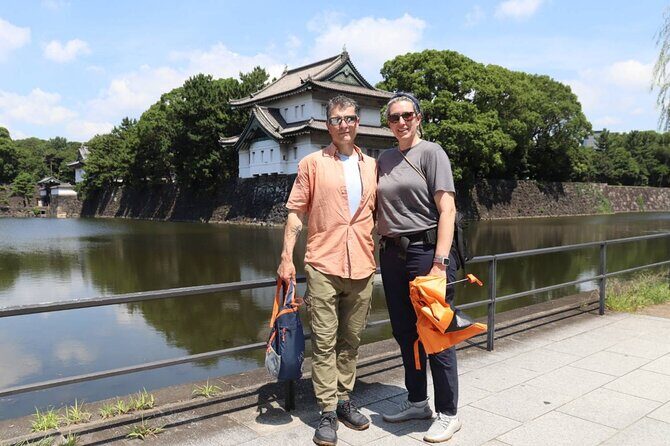
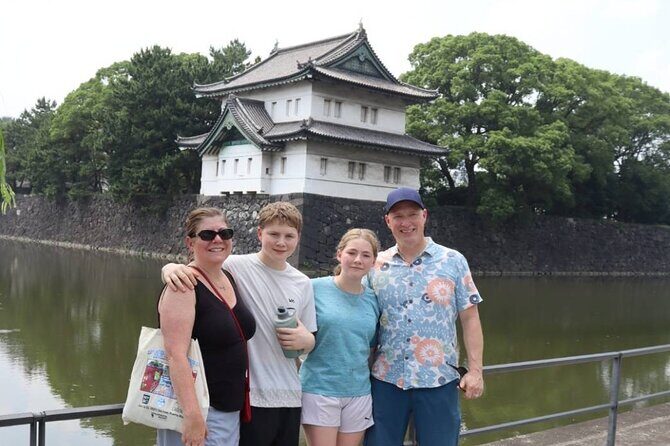
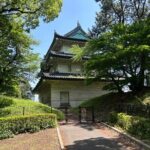
Your first major landmark is Sakurada Tatsumi Yagura, also known as Sakurada Nijū Yagura. This is a historic two-story watchtower inside the Imperial Palace grounds, built during the Edo period. The description also notes it’s one of the few surviving structures, which is a big deal for anyone who likes old architecture you can still stand near.
Here’s what makes this stop useful on the ground: it gives you a concrete object to attach the tour’s theme to. When your guide starts talking about power structures—who controlled what, and why certain buildings existed—you’ll have a watchtower in front of you to anchor the explanation. The tour isn’t just pointing out things; it’s teaching you how to read the place.
Time is about 30 minutes at this stop, and it’s listed as free to enter. That’s a nice setup because you get a lot of story time without worrying about lining up for paid entry.
Stop 2: Nijūbashi Bridge and the ceremonial moat approach
Next you’ll head to Ni-ju Bashi, the two-tiered bridge, also written as Nijūbashi Bridge. This spot is famous for a reason: it’s described as the double-arched stone bridge that spans the moat and works as the main approach to the inner grounds.
Think of it as the tour’s visual “reset.” After the watchtower, you shift from a tall, functional structure to a formal approach. Even without getting overly technical, you can see how the layout supports authority—stonework, symmetry, and a clear path forward.
The time here is shorter—about 15 minutes—but that’s often perfect for a bridge viewpoint. You can take in the arches, get your bearings, and then let the guide move you onward.
This stop is also listed as admission ticket free, so you’re maximizing your sightseeing time without adding ticket hassle.
Stop 3: Imperial Palace East Gardens as Edo Castle ruins
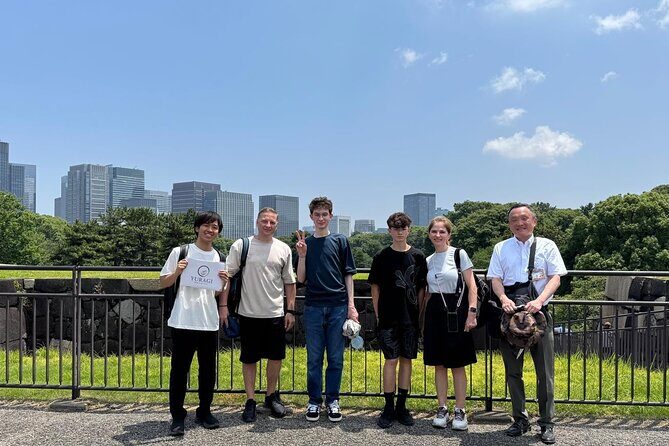
Now the tour starts feeling like a proper walking history lesson. The Imperial Palace East Gardens are open to the public and sit on what used to be the former grounds of Edo Castle. In practical terms, this means you’re not just seeing greenery; you’re seeing remnants of a place that once mattered politically.
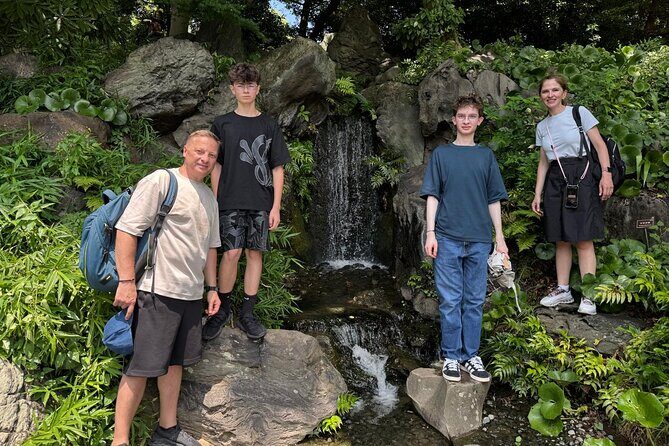
The East Gardens description highlights stone walls, gates, and traditional Japanese landscaping. It also mentions seasonal flowers, which is one reason I find garden walks worth doing with a guide: they’ll help you notice what you might otherwise overlook in passing.
This is also where the tour includes historic remnants such as the Tenshudai and the watchtower area connection. When the guide references names like Tenshudai, it helps to have been at the earlier stops first. The sequence makes the site feel like one system rather than scattered points.
You’ll likely spend about 30 minutes here, and again the stop is listed as admission ticket free. That’s a good combo: free access plus interpretation you’d normally have to pay for via guide services or museum-style tickets.
What to watch for as you walk: changes in stonework, how gates frame movement, and how paths guide your view toward key features. Even if you’re not a history nerd, your brain naturally starts mapping the layout. That’s where the tour pays off.
You can also read our reviews of more historical tours in Tokyo


Stop 4: Imperial Palace—where the stories meet the landmark
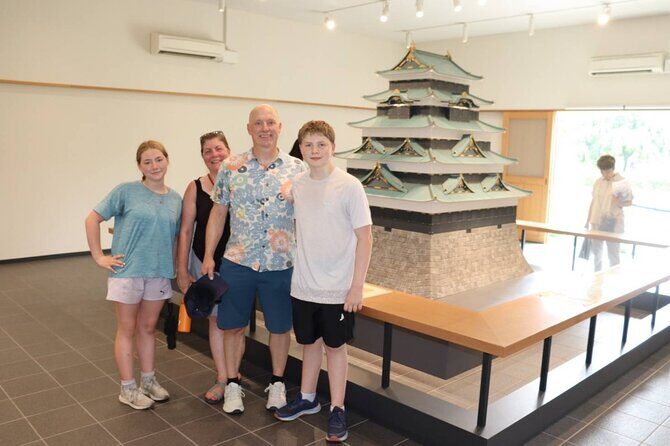
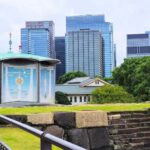
The final stop centers on the Imperial Palace, described as the residence of the Emperor of Japan and a major Tokyo landmark in Chiyoda Ward. It’s also connected to the earlier Edo Castle site, which is the tour’s recurring theme: continuity and transformation across eras.
The description notes you can see moats and stone walls, and it points you to beautiful Imperial Palace surroundings accessible from where visitors are allowed. Since you’re in an outdoor walking format, you’re not going to get the palace like a closed-door visit. Instead, you’ll get the meaningful parts: the perimeter signals, the scale, and the layout your guide explains as part of Japan’s shifting political power over time.
Time at this stop is about 30 minutes. That’s long enough to absorb what you’ve learned earlier—watchtower, bridge approach, and garden remnants—so the palace area feels like a finish with context, not a random last photo.
What makes the guide-led format worth it
This tour is built around a professional guide who explains what you’re seeing as you move. That matters in the Imperial Palace area because the space can look serene and quiet, but the underlying structure is about control, protection, and political messaging.
You’ll also benefit from the small group size (maximum 8 travelers). In a place like this, that’s the difference between asking questions once and actually getting your point answered. It also helps you keep your attention on what the guide points out—rather than constantly dodging camera bags and crowd flow.
Another small but meaningful detail: the tour uses a mobile ticket. On the day you’re walking around Tokyo, that keeps your start streamlined.
And for value math: you’re paying $12.90 for a timed walking experience, while the listed stops are free. If you’ve ever paid for a guided tour where you still had ticket lines for every stop, this one feels refreshingly simple.
Who this tour is best for (and who should skip it)

This works especially well if you:
- Want a structured way to see Imperial Palace East Gardens without feeling lost
- Like Japan’s history told through real places, not just a timeline
- Prefer a calmer, guided walk over long museum sessions
- Are traveling with moderate expectations for outdoor walking and want a manageable 2-hour plan
You might skip it if you:
- Only want palace interior access (this type of tour is centered on what’s available within the public East Gardens and exterior views)
- Are looking for a long, high-intensity activity day with lots of stops beyond the Imperial Palace zone
Price and logistics: the practical reality behind $12.90
At $12.90 per person, this is one of those tours that feels fair because it doesn’t pretend to be something it isn’t. You’re not paying for expensive add-ons. You’re paying for a guide-led route, timing, and interpretation in a place that’s easy to misread on your own.
Logistics are also set up to keep friction low:
- Near public transportation (so you’re not stuck planning a complex transfer)
- Service animals allowed
- Confirmation received at booking
- Free cancellation is offered if you cancel at least 24 hours ahead (details are in the FAQ below)
The only real “watch out” is your first step: find your guide at the Starbucks meet-up. If you’ve ever arrived early and still felt unsure, you already know the feeling—so remove that stress before it starts.
Should you book the Imperial Palace Tour for samurai-era stories?
I’d book it if you want a short, guided, historically grounded walk that turns famous landmarks into understandable ideas—watchtower, bridge, stone walls, and gates—linked to the broader story of Japan’s political power. The 4.9 rating from 20 reviews and the 100% recommendation rate suggest the format works for most people who try it.
I would not book it if you need heavy hands-on action or are expecting an all-access palace experience. This is a walking history tour of public grounds and visible landmarks, and that’s exactly why it’s a good fit for your first visit.
If you’re deciding, here’s my simple rule: if you enjoy learning while you walk and you like seeing how buildings and layout tell a story, this tour is a smart use of time in Tokyo.
FAQ
How long is the Imperial Palace Tour?
The tour lasts about 2 hours.
How much does the Imperial Palace Tour cost?
It costs $12.90 per person.
Where do I meet for the tour?
You meet at Starbucks Coffee – Kokyo Gaien Wadakura Fountain Park at 3-1 Kōkyogaien, Chiyoda City, Tokyo 100-0002, Japan.
What are the main stops on the tour?
You’ll visit Sakurada Tatsumi Yagura, Nijūbashi Bridge (Two-tiered Bridge), the Imperial Palace East Gardens (Edo Castle ruins), and the Imperial Palace area.
Is there an admission ticket needed for the stops?
The stops listed for the tour show admission ticket free.
What is the group size limit?
The tour has a maximum of 8 travelers.
Is there a mobile ticket?
Yes, the tour includes a mobile ticket.
Are service animals allowed?
Yes, service animals are allowed.
What is the cancellation policy?
You can cancel for a full refund up to 24 hours in advance of the experience start time. If you cancel less than 24 hours before, you won’t receive a refund.