REVIEW · KYOTO
Kyoto Early Morning Private Tour with Government-Licensed Guide
Book on Viator →Operated by Japan Guide Agency · Bookable on Viator
Beat the crowds by going early. This Kyoto private early-morning tour is built for a calmer visit to big-name sights, and I love that it’s customizable to 2–3 stops instead of forcing a rigid bus-circuit. You also get a government-licensed, English-speaking guide who can explain what you’re seeing while you walk. One consideration: it’s a walking tour, and entrance fees and transit costs are not included, so your total day cost can creep up depending on which stops you choose.
I like the way the tour balances must-sees with breathing room. In practice, guides such as Rie (who started her group around 7:00am), Tomy (often starting at 6:30am), and Yasu (helpful with getting around by public transportation) all lean on the early start to keep lines and heat under control. That matters in Kyoto, where the popular places can go from peaceful to crowded fast.
Key points for your Kyoto morning
- Government-licensed English guides: you get commentary as you walk, not just a map and a time limit
- Choose 2–3 sites: build a loop that fits your interests, like castles, temples, markets, or districts
- Early start = softer crowds: popular stops can feel almost empty compared with afternoon runs
- Walking tour format: you trade buses for freedom, plus less time hunting meeting points
- Entrance fees vary: some sites are free, others are not, so plan a small budget buffer
In This Review
- Why 6:30am and 7am Change Everything in Kyoto
- Government-Licensed Guide: What You Gain Beyond Directions
- Building Your 4-Hour Morning: How to Pick 2–3 Stops
- East Kyoto Essentials: Fushimi Inari, Gion, Nishiki, Kiyomizu, Imperial Grounds
- Fushimi Inari-taisha Shrine: The Torii Gates, Explained
- Nijo Castle: Power, Politics, and UNESCO Status
- Gion: The Streets You’d Otherwise Miss
- Nishiki Market: Kyoto’s Kitchen in a Condensed Visit
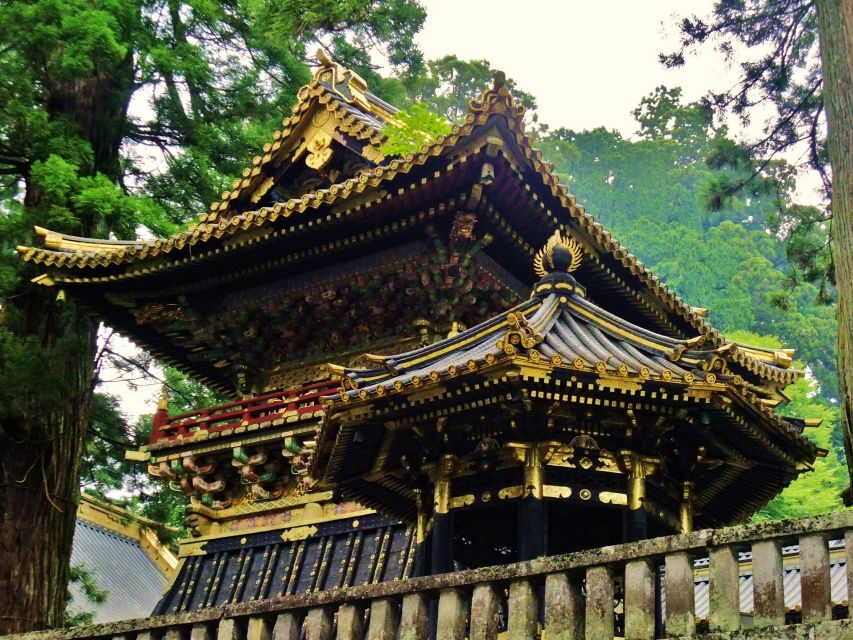
- Kiyomizu-dera Temple: One of Kyoto’s Big Stage Sets
- Kyoto Imperial Palace, Pontocho, and Higashiyama: The Walk Between Big Moments
- If You Want More Temples: Ginkakuji, Nanzenji, Kinkakuji, and Ryoan-ji
- Ginkakuji (Silver Pavilion): Zen Setting and a Quiet Mood
- Nanzenji Suirokaku: A Zen Stop with Space
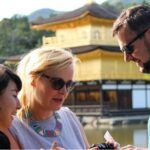
- Kinkakuji (Golden Pavilion): Gold Leaf and Big Visual Payoff
- Ryoan-ji: The Rock Garden Test
- West Kyoto Morning Mode: Arashiyama, Bamboo, Togetsukyo, Tenryu-ji
- Arashiyama and Togetsukyo Bridge: The Icon Walk
- Bamboo Forest Street: Early Morning Magic
- Tenryu-ji: One of Arashiyama’s Main Temple Anchors
- Okochi Sanso Garden: A More Controlled Garden Stop
- Other Arashiyama Temple Options: Jojakkoji, Nisonin, Gioji, Adashino, Otagi
- Price and Logistics: What $101.82 Buys (and What It Doesn’t)
- The Small Tradeoffs That Matter on a Walking Private Tour
- 1) It’s not a vehicle tour
- 2) You can only customize to the set of available sites
- 3) Some famous places cost extra
- 4) Time can feel fast
- Should You Book This Early-Morning Private Kyoto Tour?
Why 6:30am and 7am Change Everything in Kyoto
Kyoto is famous for temples and shrine gates, but the real difference-maker is timing. When you start early—think around 6:30am to 7:00am—you often arrive before tour buses and day-trip waves fully stack up. That means you can take photos without a crowd breathing down your neck and actually read signage and details instead of just rushing through.
It also changes the mood. Early light makes stone, wood, and moss look different, and you get a quieter sense of place—especially around shrine approaches and temple grounds. In cooler mornings, your pace feels easier, too, which matters because this is a walking format.
The other big win: your guide can steer you through the “where to look” moments. You’re not only going to famous spots—you’re learning why they’re famous, and what people miss when they sprint.
Government-Licensed Guide: What You Gain Beyond Directions
A good Kyoto guide does more than point. With a licensed local English-speaking guide, you get context that helps the city click: how the places connect to Japanese culture, how the sites were used historically, and what to notice on the walk.
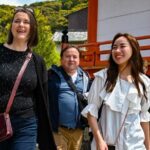
I like that the tour is private. Only your group is with the guide, so you can ask questions without feeling like you’re slowing a larger crowd down. And the guides you’ll encounter through this service—people like Rie, Tomy, Kay, Yasu, Mayumi, and Yoji—tend to follow your priorities. One guide spent extra time because a guest had an ankle issue, for example, which is a reminder that flexibility is part of the value.
You’ll also get better “after the tour” momentum. Several guides focus on how you can navigate Kyoto once you’re dropped off—so you don’t feel stuck wondering what to do next.
You can also read our reviews of more guided tours in Kyoto
Building Your 4-Hour Morning: How to Pick 2–3 Stops
This experience is designed around customizing 2–3 sites within about 4 hours (approx.). That’s a sweet spot. You can see multiple highlights while still having time to slow down, learn, and take breaks—without turning your day into a marathon.
Here’s a practical way to choose:
- Pick one anchor temple/shrine (the headline experience)
- Add one “scenery or streets” stop (district, market, river alley)
- Optional add-on: one castle/palace or another temple if you want more variety
If you’re choosing between classics, remember this: some stops are free to enter, while others require paid entry. For example, Fushimi Inari-taisha is free, while Nijo Castle and Kiyomizu-dera are marked as not included for admission in the pricing details. So if you want to keep costs down, you can mix free sites with one paid entry.
East Kyoto Essentials: Fushimi Inari, Gion, Nishiki, Kiyomizu, Imperial Grounds
A lot of first-time Kyoto itineraries start with East Kyoto, and this tour supports that logic well because it stacks high-demand places early.
Fushimi Inari-taisha Shrine: The Torii Gates, Explained
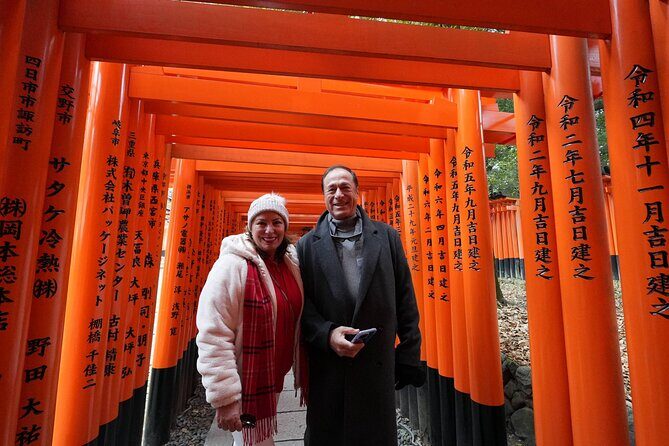
Most people think of Fushimi Inari’s red torii tunnels. They’re the obvious photo—but the better experience comes when you understand the layers behind the walk. Even with a short stop, you can appreciate that it’s more than a tunnel view; it has a lot of stories, and your guide can point out what to look for so you don’t miss the meaning hidden in plain sight.
Practical tip: wear shoes you can walk in. The ground and paths add up fast once you start moving deeper.
Nijo Castle: Power, Politics, and UNESCO Status
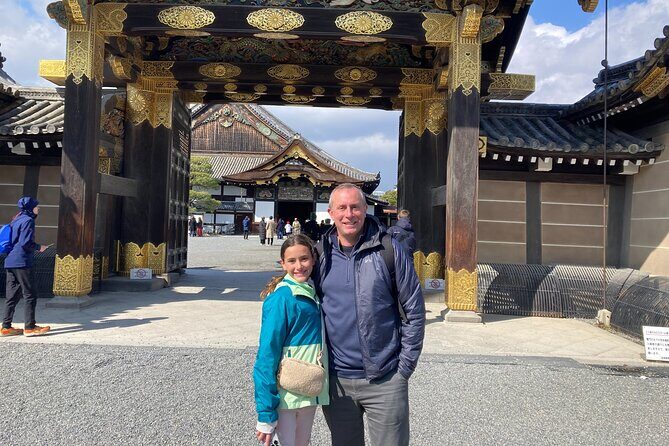
Nijo Castle is a UNESCO World Heritage site and it was built in 1603 as the Kyoto residence of Tokugawa Ieyasu, the first shogun of the Edo Period. That date detail matters because it frames the castle as a seat of authority, not just an architecture stop.
One consideration: admission is not included, so decide early if castle entry is a must for you. If your group loves historical buildings, it’s worth prioritizing. If you’re more into districts and walking atmosphere, you might swap it for a free-area stroll.
You can also read our reviews of more private tours in Kyoto
Gion: The Streets You’d Otherwise Miss
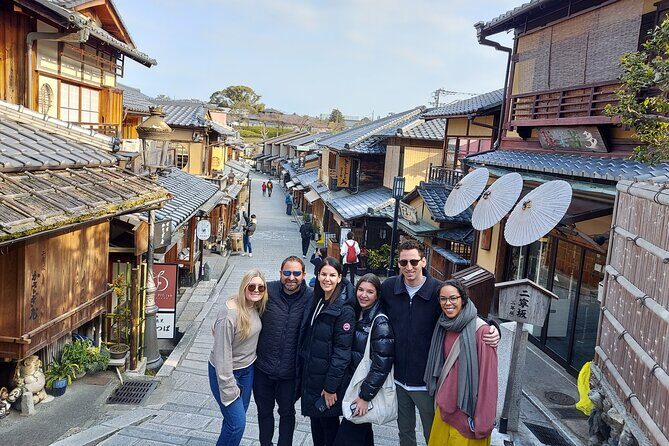
Gion can feel intimidating for a first visit because you’re not sure where to walk—or which lanes are worth your time. Going with a guide helps you understand the district’s layout and rhythm, and it reduces the “wandering tax” that eats into a morning.
This is a good stop for people who want Kyoto’s atmosphere, not just a checklist of buildings.
Nishiki Market: Kyoto’s Kitchen in a Condensed Visit
Nishiki Market is described as a narrow, about five-block shopping street lined with more than 100 shops and restaurants, earning the nickname Kyoto’s Kitchen. This is where your morning turns into sensory browsing—snacks, ingredients, and small bites.
Practical tip: if you’re going to eat, plan it. Food costs aren’t included, so it helps to pick just a couple items instead of trying to sample everything.
Kiyomizu-dera Temple: One of Kyoto’s Big Stage Sets
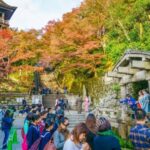
Kiyomizu-dera is one of Kyoto’s most popular temples, and the appeal isn’t only its fame. With a guide, you can focus on the temple grounds with context—history and culture that makes the visit feel intentional, not rushed.
Admission is not included, so treat Kiyomizu as your paid “anchor” if you want one.
Kyoto Imperial Palace, Pontocho, and Higashiyama: The Walk Between Big Moments
If you want an experience that feels like Kyoto beyond the postcard, these stops help.
- Kyoto Imperial Palace (formerly the imperial residence until 1868) connects you to Japan’s political shift.
- Pontocho is an atmospheric dining alley near the Kamogawa River, narrow and full of restaurant life—great for a morning vibe check.
- Higashiyama is noted as a best-preserved historic district along the lower slopes of Kyoto’s eastern mountains, ideal for old-Kyoto walking.
These are the stops where you might slow down, look at street details, and feel like you’re traveling through a living neighborhood instead of moving between venues.
If You Want More Temples: Ginkakuji, Nanzenji, Kinkakuji, and Ryoan-ji
If your group prefers a temple-focused morning, Kyoto gives you options beyond the headline crowds.
Ginkakuji (Silver Pavilion): Zen Setting and a Quiet Mood
Ginkakuji is a Zen temple on the Higashiyama side, founded as part of Ashikaga Yoshimasa’s retirement villa story. Even though it’s known as Silver Pavilion, what you’ll really notice is the Zen layout and how the gardens and buildings frame the experience.
Admission is not included for this stop in the details, so think of it as your second paid entry only if it matches your interests.
Nanzenji Suirokaku: A Zen Stop with Space
Nanzenji’s grounds are described as spacious and located at the base of Higashiyama’s forested mountains. It’s an important Zen temple, and it’s one of those places where you can feel the scale without feeling like you’re fighting crowds.
Again, admission is not included, but the “space advantage” can be worth it.
Kinkakuji (Golden Pavilion): Gold Leaf and Big Visual Payoff
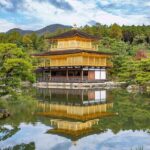
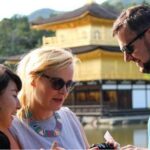
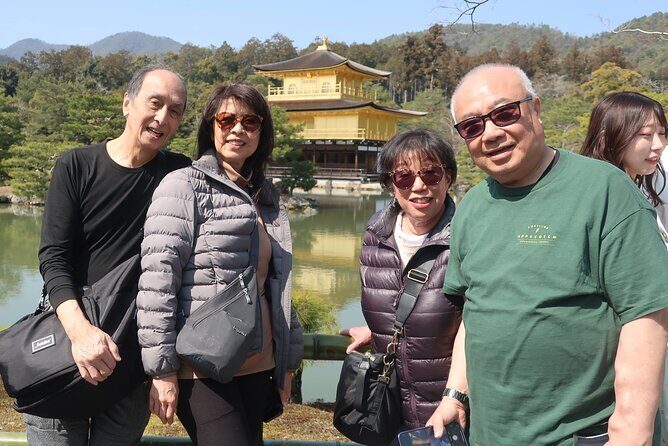
Kinkakuji is famous for top floors covered in gold leaf. Even if you’ve seen photos, the early-morning timing helps you see it without the constant line pressure that turns everything into a quick snapshot.
Admission is not included. If gold leaf is on your must-see list, prioritize it early.
Ryoan-ji: The Rock Garden Test
Ryoan-ji is known for Japan’s most famous rock garden. It attracts hundreds every day, which is exactly why an early start helps: you can study the stones and composition without the full crowd crush.
Admission is not included, so consider it a “pay for the experience” stop if rock garden design is your thing.
West Kyoto Morning Mode: Arashiyama, Bamboo, Togetsukyo, Tenryu-ji
If your ideal Kyoto morning includes nature and classic scenery, Arashiyama is the obvious pull. This tour’s options include multiple Arashiyama-linked stops, making it easier to build a west-Kyoto loop without wasting time switching plans.
Arashiyama and Togetsukyo Bridge: The Icon Walk
Arashiyama is a scenic district on Kyoto’s western outskirts, historically popular for noble outings. Togetsukyo Bridge is its iconic landmark and has Heian Period roots, reconstructed more recently (in the 1930s). The bridge is a great “circulation moment”—you walk in, take photos, and transition from city feeling to nature feeling.
Togetsukyo Bridge is marked as free for admission in the tour details.
Bamboo Forest Street: Early Morning Magic
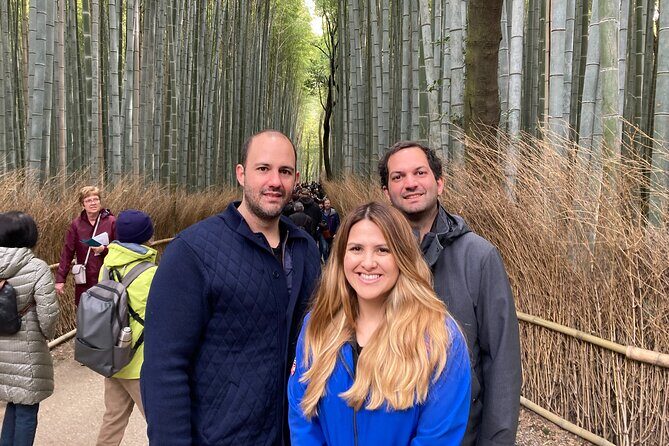
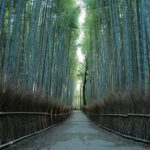
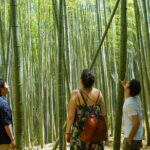
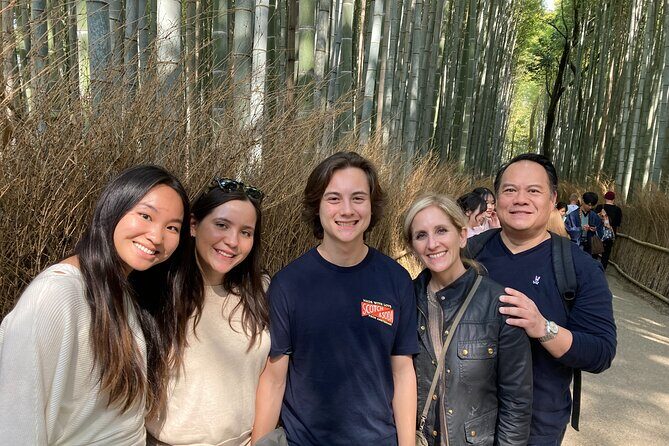
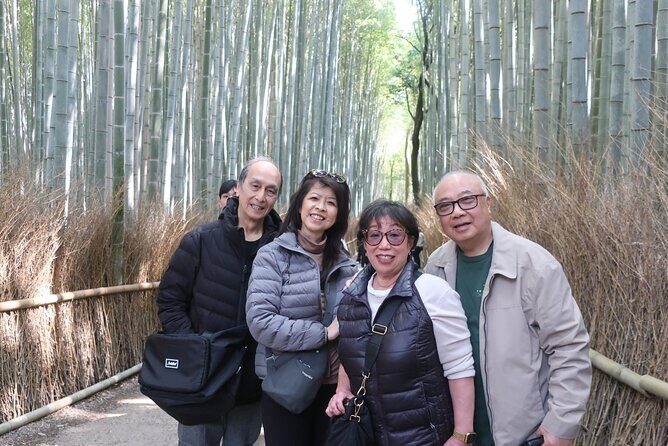
The bamboo paths are best when there’s a light wind and you can feel the stalks sway. Going early is practical here: the bamboo forest gets crowded later, and then it’s more like a line than a walk.
Admission is free. That makes it a strong value pick if you want drama without paid entry.
Tenryu-ji: One of Arashiyama’s Main Temple Anchors
Tenryu-ji is described as the most important temple in Arashiyama and is registered as a world heritage site. It’s also noted as one of Kyoto’s five great Zen temples. If you choose only one paid Arashiyama temple, this is a common match for that role.
Admission is not included.
Okochi Sanso Garden: A More Controlled Garden Stop
Okochi Sanso is the former villa of actor Okochi Denjiro and sits behind the bamboo groves with several gardens and buildings. It’s listed as a stop that takes about a few minutes in the tour flow, but gardens like this often feel longer because you’re walking slowly and looking closely.
Admission is not included, so treat it as a “want-to-see-garden-details” add-on.
Other Arashiyama Temple Options: Jojakkoji, Nisonin, Gioji, Adashino, Otagi
If your group wants something calmer and more hillside-like, options include:
- Jojakkoji, Nisonin, and Gioji, each described as mountainside/hillside temples with understated atmosphere and moss/maple along the paths
- Adashino Nenbutsu-ji and Otagi Nenbutsu-ji, known for stone statues (rakan) and a quieter hillside stop feel
- Daikaku-ji, linked to an imperial detached palace story
- Katsura Imperial Villa and Shugakuin Imperial Villa, both imperial-connection garden/architecture options (admission not included)
These work well if you’re okay with fewer “single famous photo spots” and more “scenic walking + calm temple atmosphere.”
Price and Logistics: What $101.82 Buys (and What It Doesn’t)
At about $101.82 per person for roughly 4 hours, the main value isn’t just access to a guide. It’s access to a guide with time to set your pace and help you pick the best 2–3 stops for your style.
What’s included:
- Meet your guide on foot within a designated area in Kyoto
- A licensed local English-speaking guide
- A customizable tour where you select 2–3 sites from the tour’s expectation list
What’s not included:
- Private vehicle (so you’re moving by walking and/or public transportation depending on the route)
- Entrance fees and any paid admission at stops marked not included
- Lunch and personal expenses
- Guide entry fees only cover sights included in the tour’s chosen set
This is why it helps to think of the price as paying for time, planning help, and interpretation—not just transportation and tickets. If you select mostly free areas like Fushimi Inari and Nishiki Market plus one paid temple, you’ll keep the total cost closer to the base price.
The Small Tradeoffs That Matter on a Walking Private Tour
This format has real advantages, but also a few practical edges.
1) It’s not a vehicle tour
The details say it’s a walking tour, and pickup is on foot. That’s good for keeping you close to where things happen, but it also means you should plan for walking time and a steady pace.
2) You can only customize to the set of available sites
Your guide will help you customize within the options list. The tour notes you can’t combine multiple tour groups, which keeps it private—but it also means you’ll want to get your stop choices right upfront.
3) Some famous places cost extra
Stops like Nijo Castle, Kiyomizu-dera, Ginkakuji, Kinkakuji, and Tenryu-ji are marked with admission not included. If your “must see” list includes several paid entries, your day budget will rise.
4) Time can feel fast
Some guides shift efficiently between stops early in the morning. That’s the whole point of the early start, but if you’re the type who wants long unhurried time inside every building, you’ll likely want to choose fewer stops.
Should You Book This Early-Morning Private Kyoto Tour?
Yes—if your goal is a calmer Kyoto morning with the freedom to tailor your route. It’s especially strong for:
- First-timers who want a smart taste of temples and classic neighborhoods without tour-bus crowds
- Couples and friends who want a private guide and a set timeframe
- People who enjoy walking and prefer learning in context over reading alone
Skip it or rethink the stop mix if:
- You want to ride in a vehicle most of the day (this is primarily a walking format)
- You’re trying to pack many paid-entry sites into a single 4-hour window
If you book, do yourself a favor: choose your 2–3 stops based on your budget and your energy, not just the biggest names. With a guide like Tomy, Kay, Rie, Yasu, or Mayumi, the early timing plus the explanation is where the real payoff is.