REVIEW · KYOTO
Kyoto: Early Morning Walking Tour with Local Guide
Book on GetYourGuide →Operated by Kyoto Mikey Adventures · Bookable on GetYourGuide
Kyoto before the tour buses is magic. This private, early-morning route helps you see Kyoto’s temples and traditional streets at a calmer pace, with photo chances before the biggest waves of visitors. You’ll hit iconic stops like Kiyomizu-dera and Fushimi Inari Taisha, but you’ll also get time in quieter lanes that make the whole morning feel more local.
I especially like how the tour trades midday crowds for early serenity, so places like Chion-in feel spacious and still when you’re there. I also like the mix of classic landmarks plus street-level wandering through areas such as Sannen-zaka and Ninen-zaka, and a quieter morning walk through Gion.
The main thing to consider is timing: you’re out for about 6 hours on foot, starting early. If you’re not a morning person, or if you prefer long, slow breaks and lots of extra detours, this pace might feel tight.
In This Review
- Key highlights to look for
- Why this early-morning Kyoto route feels different
- Meeting near Kiyomizu: location matters more than you think
- Kiyomizu-dera Koyasunoto Pagoda: views before the crowds
- Chion-in Temple: architecture you notice when the pace slows
- Yasaka Shrine and Yasaka Pagoda: icons with real atmosphere
- Gion in the quiet hours: where streets tell the story
- The short train ride to Fushimi Inari: why a break helps
- Fushimi Inari Taisha at morning scale: torii without the squeeze
- The guide makes the difference: Michele’s flexible, real-world feel
- Price and value: $316 per group can be a smart deal
- Who should book this tour (and who might not)
- Should you book this early-morning Kyoto walking tour?
- FAQ
- Where does the tour start?
- How long is the tour?
- What is included in the tour?
- What is not included?
- What is the tour language?
- Is this a private tour?
- What should I bring?
- How does the tour handle transportation during the day?
- Where does the tour end?
- Is there flexibility with meeting location?
Key highlights to look for
- Early start at Kiyomizu-dera means big views with fewer people in your way
- Chion-in Temple gives you a quieter architecture stop that feels more contemplative
- Yasaka area combo covers the shrine vibe plus the iconic five-story Yasaka Pagoda area
- Sannen-zaka and Ninen-zaka bring you into traditional lanes where the streets matter as much as the sights
- Gion in the morning is calmer and easier to enjoy than later in the day
- Fushimi Inari with torii gates is more manageable when you’re there before the crush
Why this early-morning Kyoto route feels different
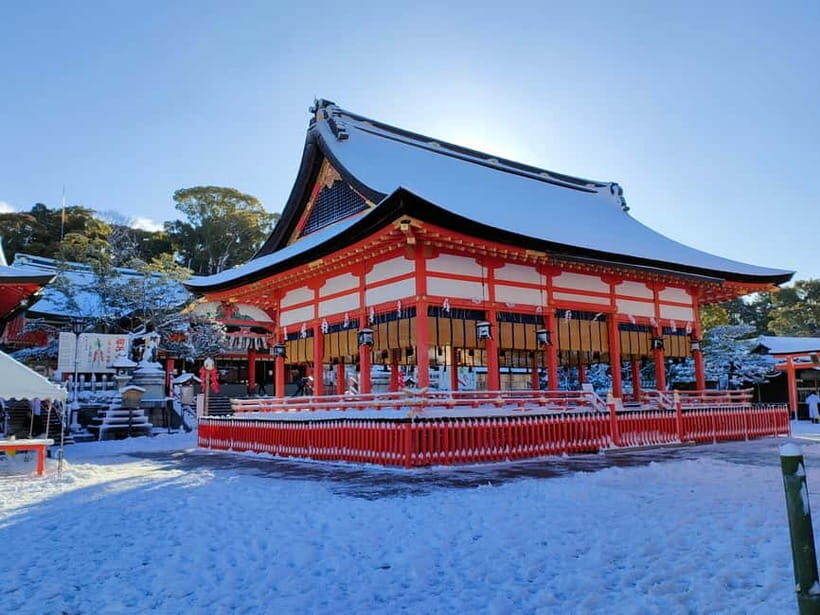
Kyoto changes with the light. Early morning has that soft, quiet tempo that lets you notice details you miss later—texture in wooden buildings, the curve of tiled roofs, the way people move when they’re not rushing for a checklist. This tour is built around that idea: you start early, then you work through major sites in a way that helps you stay ahead of the crowds.
You also get a practical rhythm. Instead of trying to “win” Kyoto by sprinting from stop to stop, you move with a plan and still have time to look, pause, and take photos. That balance matters, because Kyoto can feel exhausting if you try to do everything yourself, especially when you’re aiming for the most popular places.
And since this is a private group tour with an English or Italian live guide (Kyoto Mikey Adventures), the experience can flex more than a fixed, bus-like schedule. In real life, that means you’re not stuck in a one-size-fits-all flow if your group needs a slower pace.
You can also read our reviews of more walking tours in Kyoto


Meeting near Kiyomizu: location matters more than you think
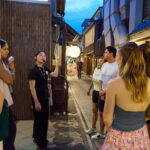
Your day begins at the FamilyMart in front of Higashiyama Fire Station (address: 4 Chome-182-18 Kiyomizu, Higashiyama Ward, Kyoto 605-0862). The meeting point is in the Kiyomizu area, so you’re already positioned close to your first big temple stop.
You can also request a different meeting location, including meeting at your hotel in Kyoto city. That’s useful if you’re dealing with luggage, you’re staying a bit away, or you don’t want to coordinate getting to a specific street at an early hour. Either way, the goal is to keep the morning simple.
What to bring is straightforward and worth taking seriously:
- Comfortable shoes (you’ll walk)
- Camera
- Sunscreen
- Water
In Kyoto, you’ll feel the sunlight even when it’s cool, and you don’t want to run out of water halfway through the day.
Kiyomizu-dera Koyasunoto Pagoda: views before the crowds
The tour starts with Kiyomizu-dera, including time around the Koyasunoto Pagoda area. You’ll have about an hour here, which is the sweet spot for a first temple without turning it into a rushed factory line.
Why this stop works early: Kiyomizu-dera is famous for a reason, and it’s also one of those places where crowds can swallow your attention. Going early helps you see the layout more clearly. You can take in the views calmly, then adjust your angle for photos without feeling like you’re constantly moving because people are flowing around you.
Also, Kiyomizu-dera is more than one photo spot. The complex has enough corners that a guide helps you choose where to focus. That’s where a good guide earns their fee: not by talking louder, but by pointing you toward the parts you’ll remember.
One extra cost to plan for: the Kiyomizudera entrance fee is not included (listed at about 3 USD). So if you’re budgeting tightly, add that before you go.
Chion-in Temple: architecture you notice when the pace slows
Next comes Chion-in, with about 30 minutes on site. It’s a shorter stop than Kiyomizu, but that can be a good thing. Kyoto has a way of making long stays feel repetitive if you don’t know what to prioritize, and a focused visit keeps your energy for later highlights.
Chion-in is described as serene, and that word fits the way the temple experience tends to land when you’re not fighting the crowd. You’ll have the time to look at the space and the structure without feeling like you need to rush to the next “must-see.”
For me, this is the kind of stop that helps you understand Kyoto beyond Instagram images. When the tour pace is right, you start noticing how buildings relate to one another, how courtyards shape movement, and how the atmosphere changes as you walk deeper.
Yasaka Shrine and Yasaka Pagoda: icons with real atmosphere
After Chion-in, the tour moves to the Yasaka area, including Yasaka Shrine (about 30 minutes) and the iconic five-story Yasaka Pagoda area. This is one of Kyoto’s big visual anchors. The pagoda stands out in the skyline, and the shrine adds the human energy—people coming for prayer, quiet conversation, and a sense of tradition.
The value here is the pairing. If you only see the pagoda from a distance, you miss the feel of the neighborhood around it. And if you only focus on the shrine, you may miss the stronger sense of Kyoto’s architectural identity that the pagoda represents.
At this point, you’ll likely feel the morning advantage even more. The tour’s early timing helps you view Yasaka Shrine without turning it into a photo sprint. You can look up, look around, and actually take in the design details.
You can also read our reviews of more guided tours in Kyoto

Gion in the quiet hours: where streets tell the story
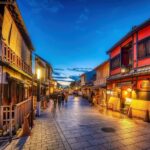
Then you head into Gion, with about an hour set aside. Gion is famous, but morning changes everything. Later, the area can feel packed and geared toward sightseeing. In the quiet hours, you get more of the street-level vibe: narrow lanes, traditional-style surroundings, and the sense of a neighborhood that continues outside of peak tourist time.
This is also where the tour leans into walking through real streets rather than just passing between monuments. That matters because Kyoto’s magic often lives in the small spaces between the famous buildings.
Sannen-zaka and Ninen-zaka fit into this traditional-street time, too. These are the kinds of lanes where the architecture and the atmosphere combine. Walking them feels like stepping into the version of Kyoto you came for, except you’re moving at a comfortable pace, not stuck behind a crowd.
The short train ride to Fushimi Inari: why a break helps
About halfway through, there’s a local train segment (about 15 minutes). That’s not just transportation—it’s a reset. It breaks up the walking so you can arrive at the final highlight without feeling totally spent.
Also, ending the tour at a major transit-friendly location is smart. The day finishes at Fushimi Inari Taisha, with easy access to trains afterward. That means you can plan the rest of your day without worrying about complex pickup logistics.
If you’re the kind of traveler who likes to keep your travel day under control, this structure is a plus. You get the big sights, but you also get a sensible flow.
Fushimi Inari Taisha at morning scale: torii without the squeeze
Your final stop is Fushimi Inari Taisha, with about an hour on site. This is the torii-gate experience Kyoto does better than anywhere else: long rows of red gates, the sense of walking through a repeated pattern, and the feeling that you’re gradually changing elevation as you go.
Timing is everything here. Fushimi Inari can get crowded, and the torii tunnels are exactly where crowds slow down your ability to enjoy the space. Visiting earlier helps you keep the walk feeling like a walk, not a shuffle.
You’ll have enough time for the classic impressions and a bit of exploration. A guide also helps you navigate the flow so you’re not stuck wondering where to go next. This is especially useful when you’re trying to balance photos with actually experiencing the place.
And because the tour ends here, it’s easy to continue on your own afterward—get a train, grab lunch nearby, or keep exploring Fushimi’s neighborhood streets.
The guide makes the difference: Michele’s flexible, real-world feel
A big part of what makes this tour special is how it’s guided. The tour is led by a live English or Italian guide from Kyoto Mikey Adventures, and the experience is built around storytelling and practical direction.
One of the strongest themes from the experience reports is how well the guide supports calm, unrushed visiting. Michele, for example, is described as prepared and available, with a knack for showing not just the obvious spots but also beautiful areas that aren’t as packed. That’s the difference between seeing Kyoto and experiencing Kyoto.
Another plus: the tour includes explanations that connect temple sights to daily life and Japanese society. That kind of context helps you make sense of what you’re seeing without drowning you in facts. It also makes the time more memorable because you’re not just collecting photos—you’re understanding why the place matters.
And if you’re traveling with kids, this tour can work. The route is described as feasible for families, and the guide can adapt if your group needs a different pace.
Price and value: $316 per group can be a smart deal
The price is $316 per group, up to 10 people, for about 6 hours. That pricing structure can be surprisingly good value if you’re traveling with friends, family, or another couple and you’re splitting the cost.
Here’s the simple math: if you have the full group size (10), it works out to about $31.60 per person. Even with fewer people, you’re often paying less than what you’d expect for a private, guided, multi-site walk that includes several major landmarks.
What’s not included matters for budgeting:
- Food and drinks
- Kiyomizudera entrance fee (around 3 USD)
- Transportation to the meeting point
- Transportation from the end point
So think of it as paying for the guide plus the organized walking plan, not covering your whole day’s expenses. If you bring water and plan a snack strategy, the day stays easy.
If your priority is early timing and you want a guide to help you see the quieter side of Kyoto, this tour is priced like a practical choice, not a luxury indulgence.
Who should book this tour (and who might not)
This tour fits best if you:
- Want early-morning calm more than late-day crowds
- Like walking with a plan but still want time to look
- Care about more than just the biggest icons, and want traditional streets like Sannen-zaka and Ninen-zaka
- Appreciate context and stories, not only sign-reading
It may not be ideal if you:
- Dislike early starts or would rather tour in a slow, open-ended way
- Want to spend much longer at one single site, since the day moves through multiple stops over 6 hours
- Prefer a self-guided itinerary where you can change everything on the fly without a set route
Should you book this early-morning Kyoto walking tour?
If your idea of a great Kyoto day is quiet temples, traditional lanes, and a finish at Fushimi Inari that doesn’t feel chaotic, then yes, I’d book it. The biggest strength is the timing plus the fact that you’re not just rushing through names—you’re walking Kyoto with a guide who knows how to keep the pace comfortable and the stops meaningful.
Two final decision tips:
- If you’re bringing a group (even just family or friends), this price structure can be a strong value.
- If you’re sensitive to crowds, the early start is the feature that actually changes your experience, not just the schedule on paper.
Go in with good shoes, water in hand, and a camera ready for red torii lines and temple views. That’s the morning story this tour is built to deliver.
FAQ
Where does the tour start?
The meeting point is at the FamilyMart in front of Higashiyama Fire Station, address 4 Chome-182-18 Kiyomizu, Higashiyama Ward, Kyoto 605-0862. You can also request to meet at your hotel in Kyoto city.
How long is the tour?
The tour duration is 6 hours.
What is included in the tour?
It includes a guided walking tour and visits to Kiyomizu-dera, Gion District, Sannen-zaka and Ninen-zaka Streets, Yasaka Pagoda, Yasaka Shrine, Chion-in Temple, and Fushimi Inari Shrine.
What is not included?
Food and drinks are not included. Also not included are the Kiyomizudera entrance fee (listed as 3 USD), transportation to the meeting point, and transportation from the end point.
What is the tour language?
The live tour guide offers English and Italian.
Is this a private tour?
Yes, it’s a private group tour.
What should I bring?
Bring comfortable shoes, a camera, sunscreen, and water.
How does the tour handle transportation during the day?
There is a short local train segment (15 minutes) during the itinerary, after the earlier stops and before Fushimi Inari.
Where does the tour end?
The tour ends at Fushimi Inari Taisha, with easy access to trains afterward.
Is there flexibility with meeting location?
Yes. You can request a different meeting location, including meeting at your hotel in Kyoto city.