REVIEW · KYOTO
Kyoto: Gion and Geisha District Walking Tour
Book on Viator →Operated by Traveling Kyoto · Bookable on Viator
Gion feels like another Kyoto. This 2-hour walking tour strings together Gion’s key streets with shrine stops so you understand the geisha district in context, not as a postcard.
I especially like the small-group feel (up to 10 people) and the guide-led explanations that connect samurai history, shrine rituals, and today’s entertainment world. I also like that the route gives you practical orientation fast, ending in the heart of the district.
One catch to plan for: a geisha sighting is never guaranteed, and the walk covers several traditional lanes that can feel uneven—so wear solid shoes and keep your expectations flexible.
In This Review
- Key points worth knowing before you go
- Why this Gion walking tour makes sense in Kyoto
- Price and what you’re really paying for ($22.55)
- Meeting point and day-of flow (what to expect)
- Stop 1: Yasaka Shrine sets the cultural tone fast
- Stop 2: Maruyama Park gives you a needed pause
- Stop 3: Nene-no-Michi turns history into a street you can walk
- Stop 4: Sannenzaka and Ninenzaka feel like old Kyoto on foot
- Stop 5: Yasui-Konpiragu and the Power Stone ritual
- Stop 6: Hanamikoji Street is the Gion centerpiece
- Getting geisha culture right: the value of context over spotting
- Small-group guides make a big difference (and you might get one of these)
- Timing: why Gion can feel different at night
- Who this tour is best for
- Who might want a different plan
- Should you book this Kyoto Gion walking tour?
- FAQ
- How long is the Kyoto Gion and Geisha District walking tour?
- What is the price per person?
- How many people are in the group?
- Where do I meet the tour?
- What’s included in the tour price?
- Is it a mobile ticket or do I need a printed ticket?
- Is tipping included?
- How much admission do the listed stops have?
- Can I cancel and get a full refund?
Key points worth knowing before you go

- Small group size (max 10): more chances to ask questions and get pointers as you walk.
- English-speaking guide: shared stories that link Gion’s everyday street life to samurai and shrine traditions.
- Geisha-spotting tips: you’ll learn where visitors tend to look and what to watch for without being intrusive.
- Classic Gion route in 2 hours: Yasaka Shrine to Hanamikoji Street gives you a fast sense of the neighborhood.
- Free stops along the way: Yasaka Shrine, Maruyama Park, and the other featured shrines are listed as free-entry.
- Mobile ticket: less hassle on the day, since you don’t need to track a paper ticket.
Why this Gion walking tour makes sense in Kyoto
Kyoto can be overwhelming fast. You step out of your hotel and suddenly you’re surrounded by shrines, souvenir streets, and quiet alleys, but it’s not obvious what matters most or how everything connects.
This tour helps you do two useful things at once: it narrows your focus to Gion (so you don’t bounce between too many neighborhoods) and it layers the stories onto the streets as you go. That combination is what makes it feel practical, not just scenic. In a couple of hours, you’re not only walking past famous places—you’re learning how people in Kyoto have long understood them.
Also, the pace benefits from the group size. With a maximum of 10 people, the guide can slow down when there’s something worth pointing out, like the architecture in preserved lanes or the meaning behind a shrine custom.
You can also read our reviews of more walking tours in Kyoto



Price and what you’re really paying for ($22.55)
At $22.55 per person, you’re not buying a long, all-day outing—you’re buying guided time. That matters because the value here is in the explanations and in the fact you’re walking a route designed to connect the dots between:
- shrine culture
- samurai references
- Gion’s geisha district atmosphere
Several stops are listed as free for admission, which keeps your costs predictable. And you do get an English-speaking guide plus included access related to Gion and Hanamikoji Street, so you’re not constantly paying small entry fees along the way.
Could you wander Gion on your own cheaper? Sure. But you’d miss the “why” behind what you’re seeing—like what people pray for at Yasui-Konpiragu, or how the area’s old street layout ties into the culture you’re there to experience.
For me, the sweet spot is this: you’re paying for clarity and context more than for facilities or tickets.
Meeting point and day-of flow (what to expect)
You meet at Starbucks Coffee – Kyoto Gion Hotel, located at the Kyoto Gion Hotel building, in the 1F area on Gionmachi Minamigawa, number 555. The tour ends back at the same meeting point, so you don’t need to figure out a second transfer.
The meeting area is also described as being near public transportation, which is a practical bonus in Kyoto where walking plus transit can add up quickly. And with a mobile ticket, you can keep things simple—no paper hunt required.
One more practical note: the tour is about 2 hours, so it’s a good fit for a half-day plan. If you’re also doing other Higashiyama or old-town stops, treat this as your orientation anchor for Gion.
Stop 1: Yasaka Shrine sets the cultural tone fast
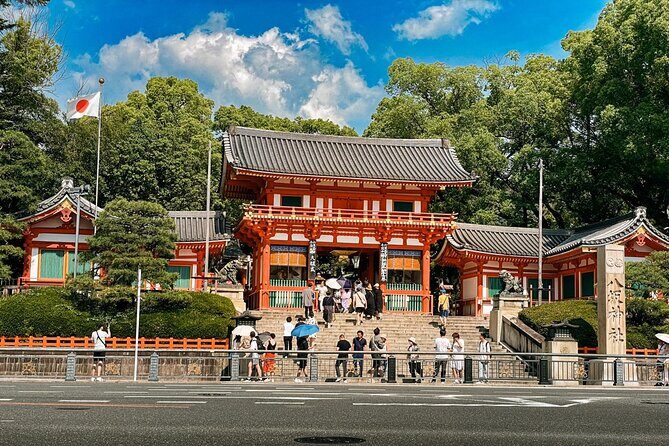
Yasaka Shrine is the kind of place that gives Kyoto its mood immediately. You’re there for the dramatic vermilion gate and lantern-lit pathways, but the real payoff is how it frames the rest of your walk.
This tour starts here because it’s between Gion and Higashiyama, so you’re naturally positioned to understand why the geisha district sits in a city full of spiritual landmarks. Even if you’re not a shrine expert, the guide helps you see what makes this shrine feel central to the area.
Duration at the stop is listed as about 20 minutes, which is enough time to look around, take photos, and reset your brain from street mode to culture mode.
Practical tip: go in with a little patience. Kyoto shrines can be crowded, especially around peak hours, so keep your pace steady and don’t block flow when you stop.
Stop 2: Maruyama Park gives you a needed pause
After Yasaka Shrine, you move to Maruyama Park, Kyoto’s oldest public park. This stop is short—about 10 minutes—but it does something important: it gives you breathing room.
The park is known for seasonal beauty and especially for the weeping cherry trees. Even if your visit isn’t in peak cherry season, it’s a useful way to break up a walking-heavy morning or afternoon. It also helps you understand that Gion isn’t only about lanterns and teahouses; it’s also about everyday green space and seasonal rhythms.
Think of it as a reset before you head into the tighter lanes where the details matter more.

Stop 3: Nene-no-Michi turns history into a street you can walk
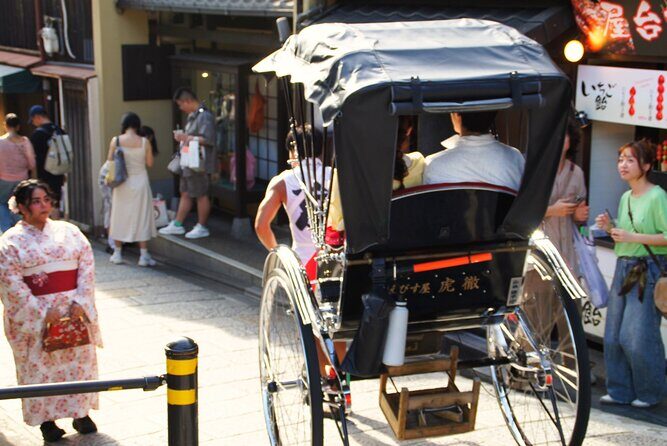
Next comes Nene-no-Michi, a picturesque lane named after Nene, the wife of samurai warlord Toyotomi Hideyoshi. This is where the tour’s storytelling starts to feel less like facts and more like walking through living history.
You’ll see preserved traditional architecture and small shops along the way, and it’s the kind of lane where you start noticing that Kyoto’s past isn’t locked behind walls—it’s built into the street grid and building shapes.
This stop is also listed as about 10 minutes, so it’s more about letting the guide point out what to look for than about long browsing.
Small consideration: if you’re the type who likes to stop for snacks and photos every few meters, this route may feel faster than solo wandering. That’s not a flaw—it just changes your expectations.
Stop 4: Sannenzaka and Ninenzaka feel like old Kyoto on foot
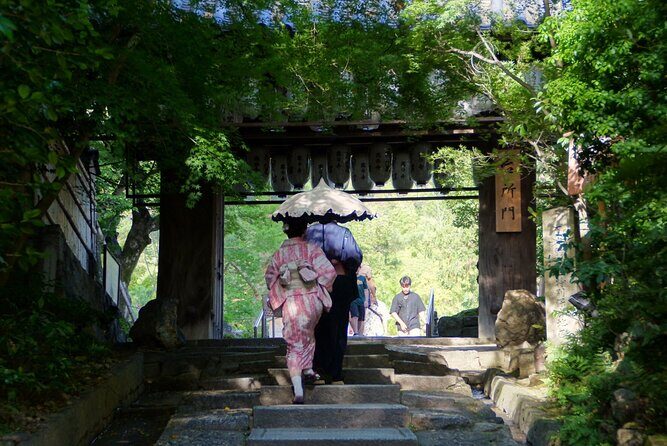
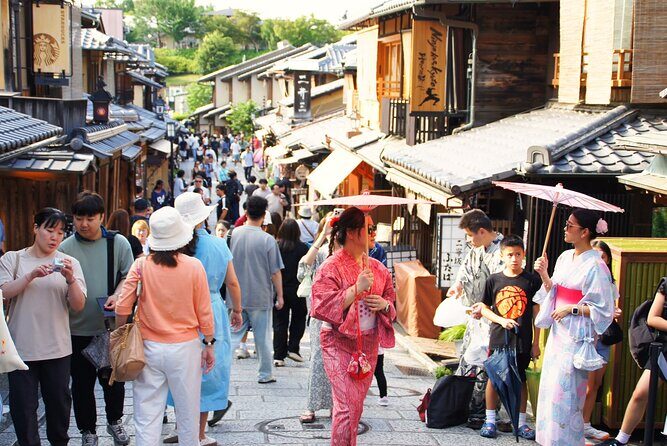
Then you descend Sannenzaka Ninenzaka, with the classic stone-paved path and preserved wooden buildings. You also get a run of artisan-focused shopping, which is useful because it helps you understand how “old” and “practical” overlap in Kyoto.
This stop is about 15 minutes. At that time length, it’s enough to notice the street texture, the way buildings meet the walkway, and why these slopes became famous for experiencing Kyoto’s past in motion.
What I like about stops like this is that they help you build visual memory. Later, when you see other old streets in Kyoto, you’ll spot the patterns more easily.
What to watch: the stone-paved surface and slope can be slippery, especially if it’s been raining. Good shoes keep this stop enjoyable.
Stop 5: Yasui-Konpiragu and the Power Stone ritual
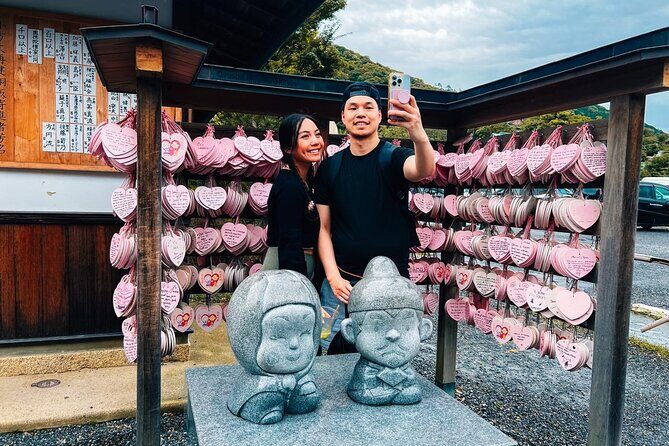
Now you hit a shrine stop that stands out for the kind of story people remember. Yasui-Konpiragu in the Higashiyama area is famous for its “Power Stone” archway. The tradition here is what makes it memorable: locals and visitors crawl through the archway as part of prayers connected to relationships—either for strengthening connections or, in some cases, for letting go of the past.
Your guide is likely to make this feel human rather than mysterious. In the experiences shared by past groups, people often mention that the ritual was funny in the moment, but also meaningful in context—exactly the right mix for a first-time Kyoto shrine encounter.
This stop is listed at about 10 minutes, which works well because you get the story and the atmosphere without getting stuck in one spot.
Practical tip: watch what others do, then follow along respectfully. If you decide not to participate, you can still observe and understand the custom through the guide’s explanation.
Stop 6: Hanamikoji Street is the Gion centerpiece
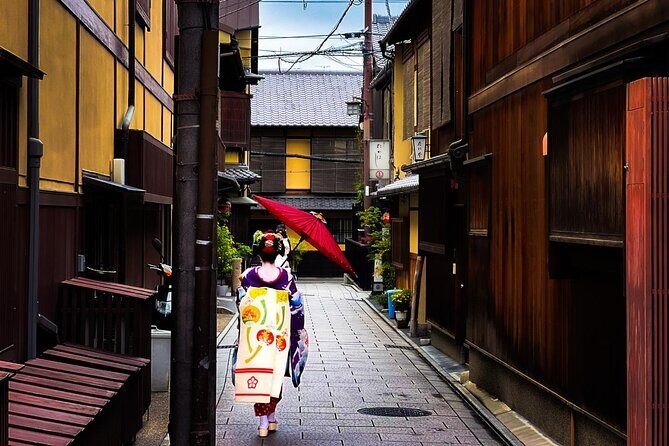
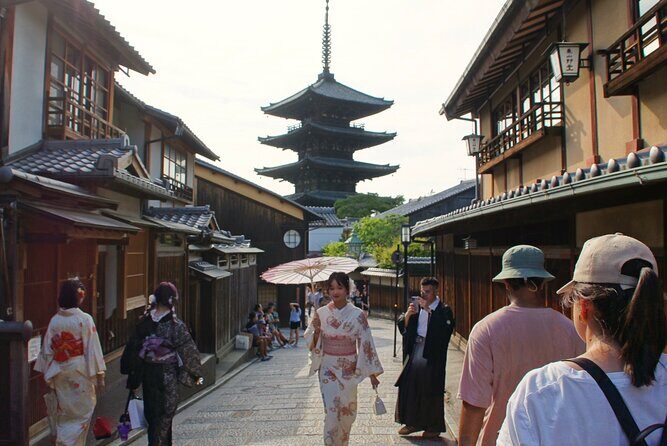
Finally, you arrive at Hanamikoji Street, the heart of Gion. This is what most people picture when they think of Kyoto’s geisha district: preserved machiya townhouses, teahouses, and lantern-lined streets that slow your thinking down.
This stop is about 15 minutes, and it’s a great finish because it caps the walk with the most recognizable scenery. The guide also uses this area to share tips on where you might spot geisha activity, which is one of the biggest reasons people book this tour in the first place.
In past groups, guides have pointed out details tied to maiko training and traditional entertainment customs. Even if you don’t see anyone up close, you’ll understand what you’re looking at and why the streets feel different at different times of day.
One more consideration: this area can be busy. If you’re hoping to catch something, don’t crowd doorways or block foot traffic. The best results often come from staying calm, watching from the side, and being patient.
Getting geisha culture right: the value of context over spotting
Let’s be honest. A lot of geisha-focused tours get judged by one question: did you see one?
This tour doesn’t promise that. What it does promise—based on the tour description—is guidance on geisha culture and tips on places where you might spot geisha. That’s more realistic and, honestly, more respectful of the subject.
The bigger win is what you learn along the way:
- how samurai-era stories show up in street names and local lore
- why shrine spaces matter in the geography of Gion
- how to read traditional townhouses and teahouse layouts without turning it into a scavenger hunt
If you want authentic understanding more than a lottery ticket for sightings, this is the right approach.
And if you do see someone in passing, you’ll be better prepared to enjoy the moment because you’ll already know what the guide has explained.
Small-group guides make a big difference (and you might get one of these)
A big theme in the feedback is the quality of the guide. Past groups have been led by English-speaking guides with names like Sam, Shin, Amy, Tim, Maria, and Naoya.
What matters isn’t just the name—it’s the way the guide connects the dots. People repeatedly mention how the storytelling turns narrow stone streets into places with meaning, and how the guide stays helpful and accommodating (including keeping people comfortable when it’s hot).
So if your top priority is explanation—architecture details, shrine rituals, and culture—this tour is built for that.
Timing: why Gion can feel different at night
Some of the most memorable experiences come from Gion at night. Even though the tour is described generally as a walking tour, you’ll see from previous impressions that evening routes can feel special because lanterns and dark streets change the mood.
If you have the flexibility, consider booking an option closer to evening and dress for walking comfort. If it’s hot out, choose times that reduce sun exposure, and rely on the guide to keep the group moving in a way that’s manageable.
Who this tour is best for
This is a great match if you:
- want a first-time orientation to Gion in a short window
- like guided cultural context more than museum-style lectures
- enjoy shrine sites and traditional street architecture
- want practical pointers for geisha culture without pushing boundaries
It’s also a nice fit if you’re traveling with mixed interests: someone who loves photography will enjoy the preserved lanes, while someone who likes history will appreciate the samurai connections and ritual explanations.
Who might want a different plan
Skip this and consider something else if your main goal is guaranteed geisha sightings. No tour can promise that, and this one is designed around learning and respectful street viewing.
Also, if you hate walking on older stone surfaces or slopes, consider whether the total route length and street textures will feel comfortable. The itinerary includes stone-paved lanes like Ninenzaka, so shoes matter.
Should you book this Kyoto Gion walking tour?
I think you should book it if you want your Gion experience to make sense fast. The route covers the major beats—Yasaka Shrine, classic lanes, and the Hanamikoji finish—so you leave with a mental map and a cultural framework, not just photos.
It’s also strong value for the price because you’re paying for an English-speaking guide’s storytelling during a focused 2-hour walk, with free-entry stops built into the schedule. If you’re the type who likes to ask questions and notice details, the small-group size will feel worth it.
If you’re hoping for nonstop geisha action, recalibrate. Treat the sightseeing as the bonus, and the culture education as the main event. In Kyoto, that mindset usually leads to the best memories.
FAQ
How long is the Kyoto Gion and Geisha District walking tour?
The tour lasts about 2 hours.
What is the price per person?
The price is $22.55 per person.
How many people are in the group?
The tour has a maximum of 10 travelers.
Where do I meet the tour?
You meet at Starbucks Coffee – Kyoto Gion Hotel, Kyoto, Higashiyama Ward, Gionmachi Minamigawa, 555 Gion Hotel 1F.
What’s included in the tour price?
It includes an English-speaking guide and entry/admission to Gion and Hanamikoji Street.
Is it a mobile ticket or do I need a printed ticket?
It uses a mobile ticket.
Is tipping included?
No. Tips are optional.
How much admission do the listed stops have?
The itinerary lists admission for Yasaka Shrine, Maruyama Park, and the other featured stops as free.
Can I cancel and get a full refund?
Yes. You can cancel up to 24 hours in advance for a full refund.