REVIEW · KYOTO
Kyoto: Half-day Guided Bike Tour with Fushimi Inari
Book on GetYourGuide →Operated by Cycle Kyoto · Bookable on GetYourGuide
South Kyoto by bike feels like shortcut sightseeing. I love the mix of big-ticket temples plus quiet river-side lanes, and I especially like the small-group energy that keeps the ride personal. One thing to factor in: this is real biking, so it’s not for people who can’t ride comfortably or who have back issues.
I also like that the tour is designed for short attention spans—in a good way. You get a focused set of stops, with picture time built in at places like Tofukuji, then a guided walk through Fushimi Inari’s orange torii gates. Guides such as Jay, Julian, and Indra come through in the feedback for being patient, friendly, and ready to explain what you’re seeing.
The pace is generally relaxed, but you should still be prepared for some exertion and time on a bike saddle. In fact, one rider noted the loop can go past 15 km, so it’s a better fit than a slow walking tour if you want to move through Kyoto without rushing.
In This Review
- Key highlights you’ll feel right away
- Why biking South Kyoto feels like a smart way to see Kyoto
- Getting rolling at Cycle Kyoto: safety briefing, helmets, and real comfort
- Toji Temple: starting with Kyoto’s oldest temple and UNESCO weight
- Higashi-Honganji: one of Japan’s largest temples and serious scale
- Takase Canal and Kamo River: water stops that actually refresh your brain
- Gion backstreets: geisha and teahouse vibes without feeling stuck
- Tofukuji Temple photo stop: enough time for pictures, not so much it slows you down
- Fushimi Inari Taisha: orange torii gates with a guided path and clear end point
- Price value: what $77 buys you in Kyoto time and sanity
- Group size, guide style, and why your morning matters
- Getting to the meeting point without stress
- What to bring (and the small habits that help biking days)
- Who this Kyoto bike tour is best for
- Should you book this Kyoto half-day bike tour to Fushimi Inari?
Key highlights you’ll feel right away
- UNESCO Toji first: start at Kyoto’s oldest temple, with real temple scale right off the bat
- Gion backstreets, not just the main road: glide into the geisha and teahouse area streets with a guide
- Canals and rivers add breathing room: Takase Canal and the Kamo River break up the temple-heavy morning
- Tofukuji as a photo stop: enough time to grab shots without turning the day into a crawl
- Fushimi Inari torii circuit with guidance: walk the shrine complex guided, then head out in a planned way
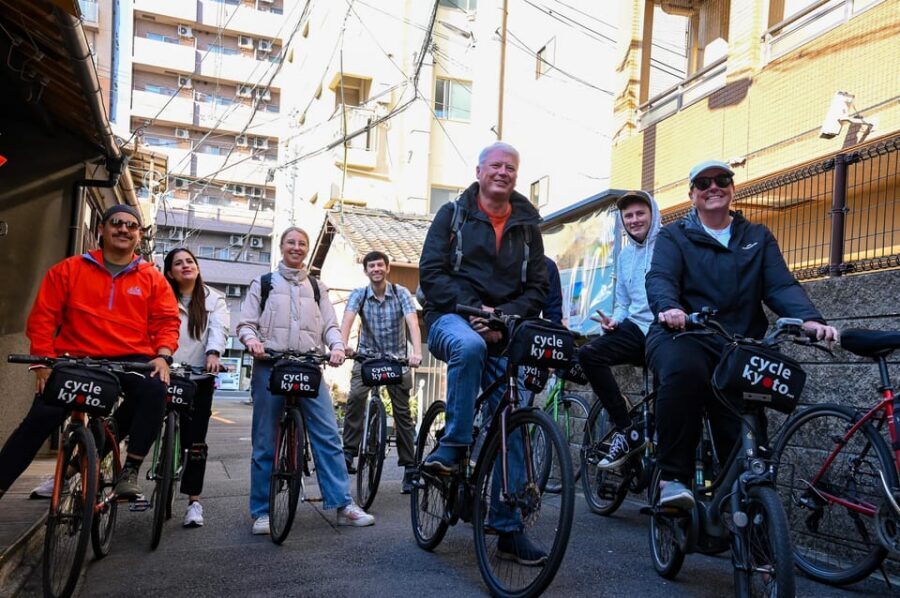
- Small group comfort: limited to 8 people, with bikes and helmets included
Why biking South Kyoto feels like a smart way to see Kyoto
Kyoto can be a lot. Even when you have a neat list of places, you still spend time crossing neighborhoods, waiting for trains, or lining up for the next entrance. This bike tour cuts through that friction. Instead of “bus stop, temple stop,” it’s more like: ride, pause, learn, ride again.
I like how the route strings together different Kyoto moods. You’re not only hitting iconic sites—you’re also moving through regular neighborhoods and along water. That matters because Kyoto isn’t just temples. It’s the way a canal leads you toward a district, or how a river path softens the transition into Gion.
For you, the practical upside is simple: in about 210 minutes, you can cover major attractions across South and Central Kyoto without spending your whole day in transit. And because it’s a small group, you’re more likely to get answers to real questions instead of just hearing a standard speech.
You can also read our reviews of more cycling tours in Kyoto

Getting rolling at Cycle Kyoto: safety briefing, helmets, and real comfort
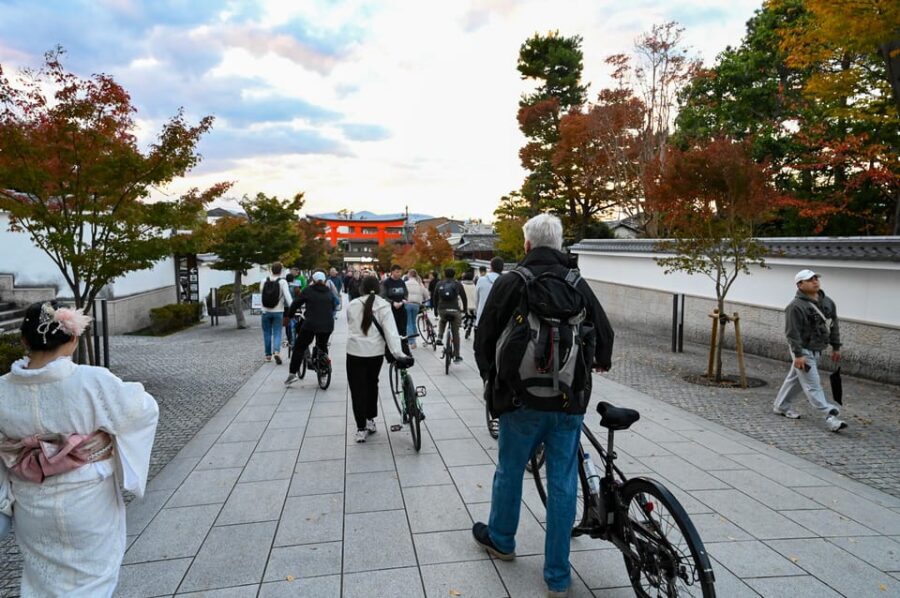
The tour starts at Cycle Kyoto. If you’re coming from Kyoto JR Station, you’ll go past Avanti and cross one set of traffic lights, then head past the Daily Yamazaki convenience store and turn left at the next one. Once you arrive, you’ll get a 15-minute safety briefing before you ride.
That briefing is important because you’ll be navigating neighborhood streets, not cycling in a closed park. And while helmets are included, your job is still to ride smoothly and stay aware—especially near crowded pedestrian zones like around shrine areas.
The bikes come in a variety of sizes, and helmets are provided. One review specifically praised bike condition. I’d treat that as a sign to show up ready: bring comfortable clothes, and wear shoes you trust on pedals. If your feet slip, the whole ride feels more stressful than it needs to be.
If you want help making the ride easier, e-bikes are available on request for an upgrade fee of 3000 yen. That’s a nice option if you’re worried about hills or you just want to spend more energy on photos and less energy on pedaling.
Toji Temple: starting with Kyoto’s oldest temple and UNESCO weight
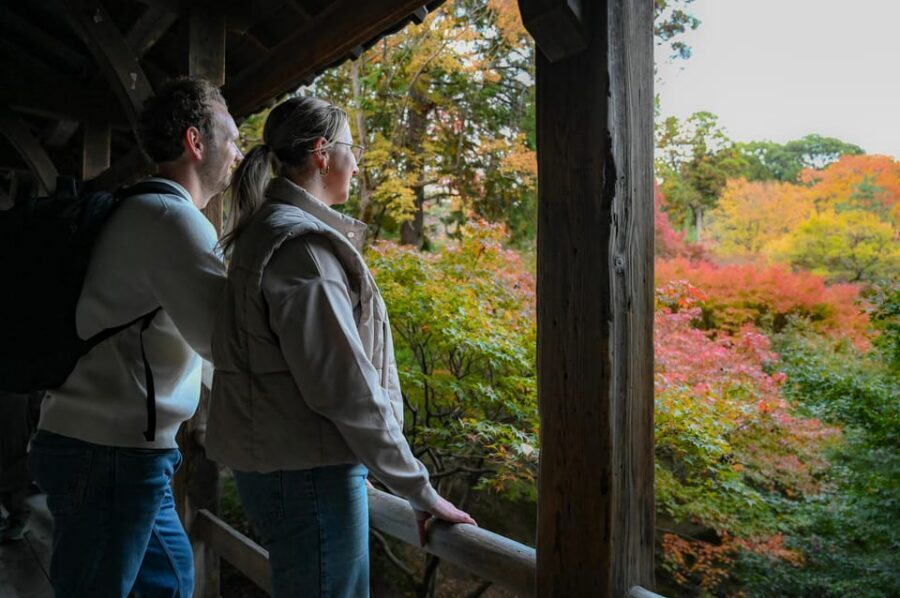
The first major stop is Toji, Kyoto’s oldest temple and a UNESCO heritage site. This is a strong opener because it sets the tone: you’re not starting with something small. You begin with a site that has stature, history, and clear visual impact.
What you’ll get out of this stop isn’t only the postcard view. You’re on a guided tour, so you’ll also be hearing context that helps the place make sense in Kyoto’s religious and cultural geography. Even if you’re new to temple visiting, Toji gives you a reference point for what Kyoto’s sacred architecture can look like.
A possible drawback: with early starts, you may arrive when you want caffeine more than contemplation. If that’s you, just keep moving—this is a short guided period, and it’s timed so you’re not stuck in one spot too long.
Higashi-Honganji: one of Japan’s largest temples and serious scale
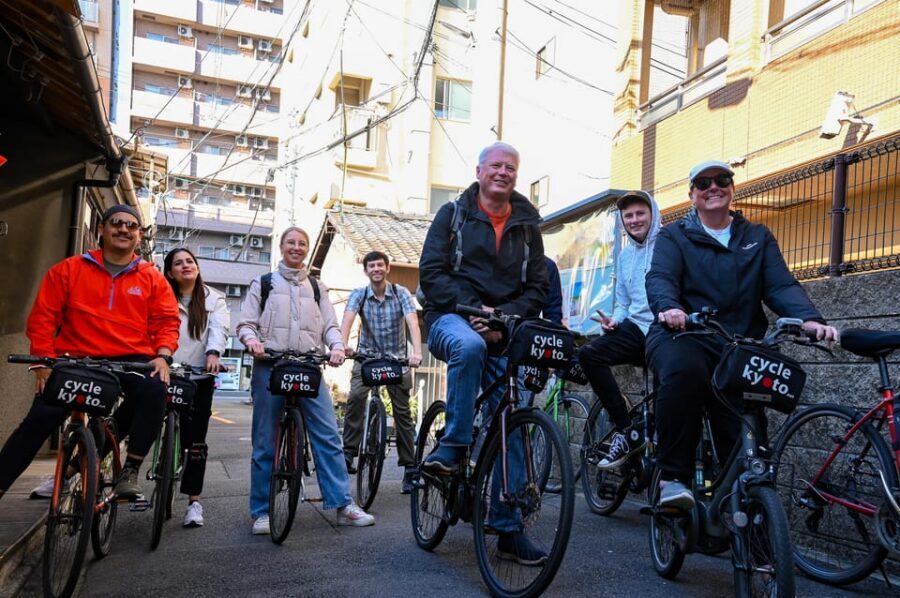
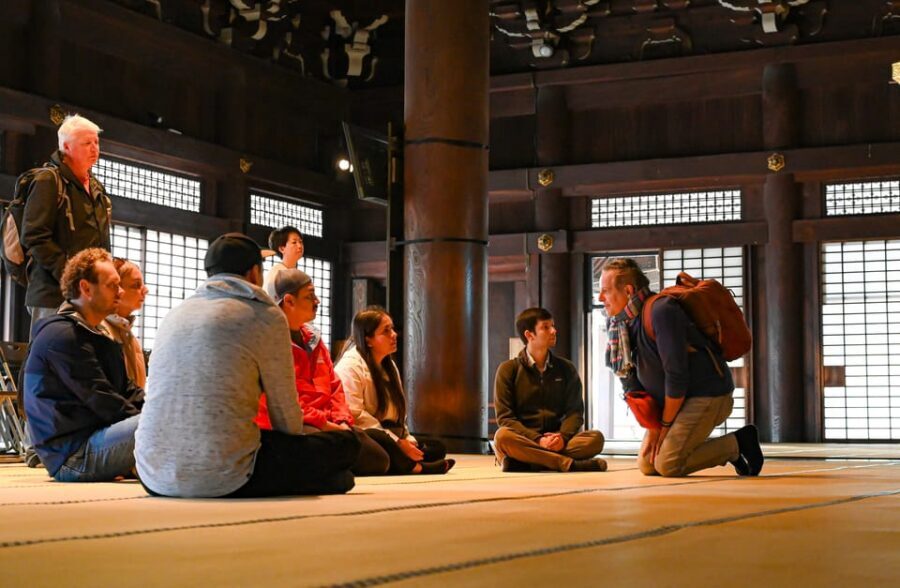
Next up is Higashi-Honganji, described as one of Japan’s largest temples. This is where the tour shifts from “pretty and historic” into “big and impressive.” When you walk around large temple compounds, the experience can feel different than smaller shrines: you get a sense of how a place functions as a major religious center.
I like pairing Toji with Higashi-Honganji because the contrast helps you notice details. Toji gives you one kind of temple atmosphere; Higashi-Honganji gives you another. Together, they make the tour feel like a guided story instead of a checklist.
The stop is guided for about 35 minutes, so you’ll have enough time to move at a comfortable pace, take a few photos, and still stay ahead of the rest of the day’s ride.
Takase Canal and Kamo River: water stops that actually refresh your brain
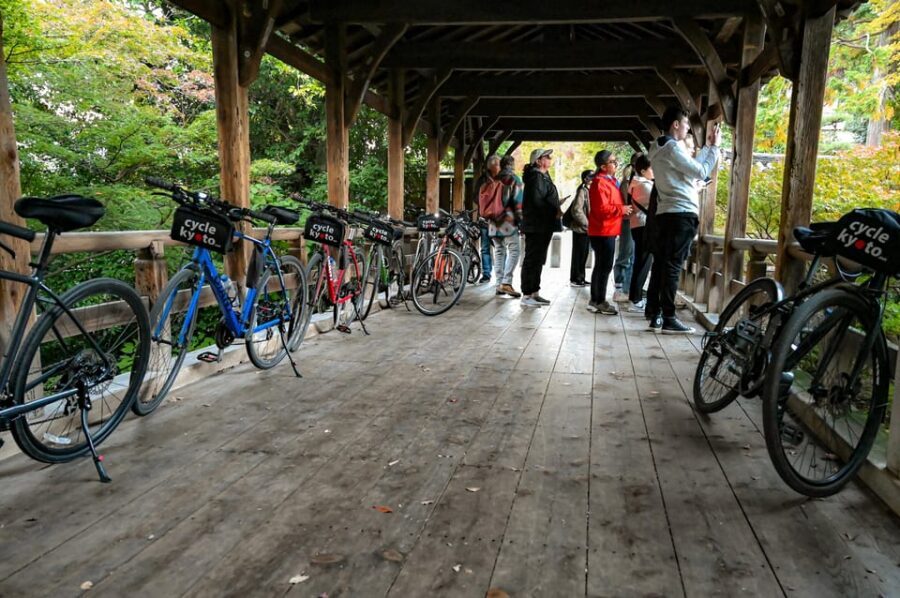
After temples, you shift gears. There’s a quick visit to the Takase River/Canal area (about 10 minutes), then a longer 15-minute visit at the Kamo River.
These segments are short, but that’s the point. Kyoto temples can pull you forward with their details. Water does the opposite. It gives you a calm break where you can reset your eyes and your legs between heavier walking.
For you, these stops also help the flow of the tour. The ride moves you toward Gion, and being near water makes that transition feel smoother. You’ll also get a break from concentrating on traffic and intersections—so you can actually enjoy the ride.
Weather can change how these river segments feel. In rain, the route still works, and you may just want to keep your camera protected and wear warm layers.
You can also read our reviews of more guided tours in Kyoto
Gion backstreets: geisha and teahouse vibes without feeling stuck
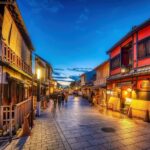
Then you roll into Gion, the famous geisha and teahouse district. The tour doesn’t just sweep through the main tourist lanes. You’ll weave through backstreets, guided, with time for a 30-minute guided tour.
This is one of the most valuable parts of the day. Gion looks simple from afar, but once you’re inside the smaller streets, you start noticing rhythm: quiet corners, storefront rhythms, and the way the district transitions into residential areas.
I like that the tour doesn’t treat Gion as only a photo mission. A guide can help you understand what you’re seeing and why certain streets and buildings matter. And several guides are praised for sharing context and insider angles—people even mentioned spots that were less crowded, which is exactly what you want in a short half-day format.
Tofukuji Temple photo stop: enough time for pictures, not so much it slows you down
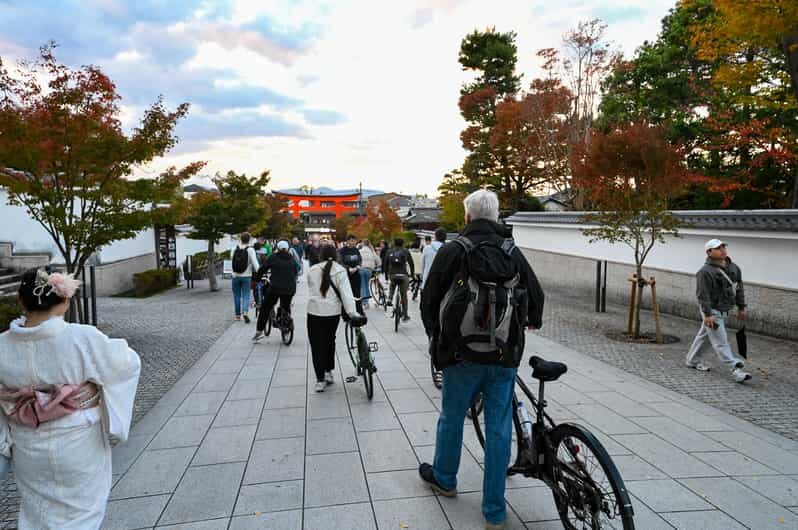
From Gion, you head toward Tofukuji Temple. This is handled as a photo stop with about 30 minutes.
I think this timing is smart. If you made Tofukuji a full stop, the whole day could turn into temple-to-temple walking. Instead, you get a chance to capture the look of the gardens or temple areas without losing momentum. For many visitors, that’s the balance they want: guided context earlier, then breathing room for your own camera.
One note for you: even with 30 minutes, this is still a busy attraction zone at times. So plan to pick your angles quickly. If you’re traveling with friends, agree on a meetup point near where the group gathers after photos.
Fushimi Inari Taisha: orange torii gates with a guided path and clear end point
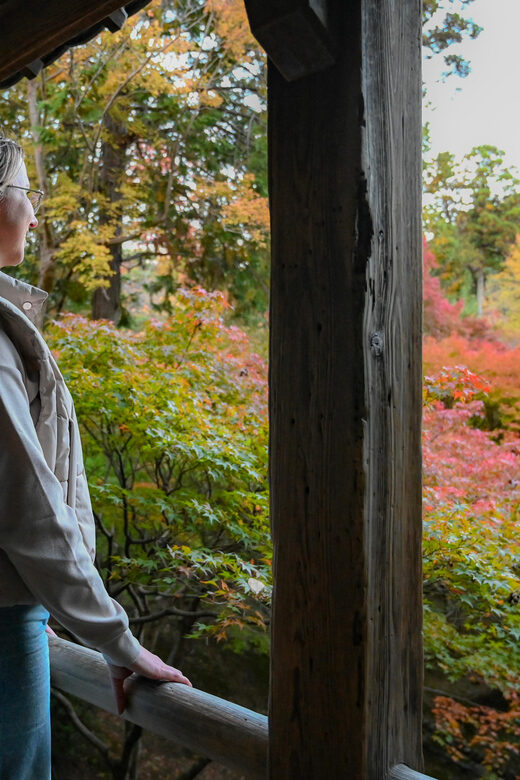
The finale is Fushimi Inari Taisha, home to the famous orange torii gates and widely listed as Japan’s most visited attraction. You’ll ride down through local neighborhoods and then arrive for a guided tour of about 45 minutes, after which you’ll head back to the starting point.
This is the moment most people come for, and the guided format helps. With torii gates, it’s easy to walk in circles or miss the flow of the shrine complex. A guide helps you connect what you’re seeing to the layout and what the gates represent, plus you get help with when to pause and when to keep moving.
For your experience, the biggest benefit is the structure. In a short time window, you still feel like you’ve done the classic Inari circuit—but you’re not stuck there forever. That matters when your day includes biking, other temple stops, and a finish back at Cycle Kyoto.
Also, remember this area can be crowded. Bring your patience, not just your camera. You’ll likely get the best experience when you treat it as a guided walk with photo breaks rather than a solo sprint for every angle.
Price value: what $77 buys you in Kyoto time and sanity
At $77 per person for about 210 minutes, this isn’t a budget-only activity—but it’s also not pricing itself like a premium luxury tour. The value comes from three things:
- You get bicycle rental, a helmet, a guide, and water included. That’s real cost you don’t have to figure out on your own.
- You’re covering multiple major sites—Toji, Higashi-Honganji, Gion, Tofukuji, and Fushimi Inari—plus the canal and river areas that keep the day from feeling like only temples.
- The small group size (max 8 participants) helps you move with less waiting and more responsiveness from the guide.
In plain terms: if you’re visiting Kyoto and you want a short guided day that feels efficient without feeling like a rushed bus tour, this price can make sense. If you already plan to bike or you’re comfortable building your own route and paying for each rental separately, then the cost calculus changes. But for most first-time Kyoto visitors, having the route and timing handled for you is the value.
Group size, guide style, and why your morning matters
This tour is limited to 8 participants, and the feedback is clear on one theme: the guides are the difference between seeing places and actually understanding them.
Names that show up in the positive experiences include Jay, Julian, Indra, Juan, Sean, and Mayco. People praised guides for being easy-going, answering questions, and making adjustments when weather wasn’t ideal. One rider even highlighted that the tour pace felt gentle and that the guide could modify how much time to spend at stops.
That matters because Kyoto isn’t a place where one pace fits everyone. If you’re photo-heavy, you’ll want more camera time. If you’re more into explanations, you’ll want a guide who can slow down and answer questions. The small group structure makes that possible.
Also: e-bike availability on request means you can choose your effort level. So you can travel with a friend who wants to bike more slowly without holding everyone back.
Getting to the meeting point without stress
You’ll meet at Cycle Kyoto, and the directions from Kyoto JR Station are specific: go past Avanti, cross one set of traffic lights, after the Daily Yamazaki convenience store take the next left. If you’re arriving early, I suggest you do a quick orientation walk before the start so you’re not scanning streets while everyone else is gearing up.
Once you find the meeting point, plan to arrive a little ahead of time so you can handle bike sizing and get settled. The 15-minute safety briefing means the tour won’t wait around long once it starts.
What to bring (and the small habits that help biking days)
This tour gives you helmets and a water bottle, but you should handle the rest. Bring:
- Comfortable shoes for biking
- Warm clothing in case the morning is chilly (weather can change quickly)
- A camera
- Sunscreen
- Comfortable clothes you can move in
They also provide a small pouch on the bicycle for personal items, which is handy if you’re carrying only a phone, a small camera, or a compact layer.
Two more practical notes from the tour rules:
- No smoking, and no alcohol or drugs during the activity.
- You must be able to ride a bike comfortably.
And if you’re thinking about an e-bike upgrade: ask ahead if you want one, so you’re not making the decision at the last second.
Who this Kyoto bike tour is best for
This is a great fit for you if you:
- Want a half-day plan that covers major South Kyoto highlights efficiently
- Like guided context but still want room to take photos
- Feel comfortable biking on city streets
- Prefer a small group experience (up to 8 people)
It’s not the best choice if you:
- Can’t ride a bike confidently
- Have back problems that make biking uncomfortable
- Are traveling with children under 13 (minimum age is 13 for public tours)
If you’re debating between walking tours and bike tours, I’d lean toward biking when your goal is to see more without exhausting yourself with constant transit and long lines.
Should you book this Kyoto half-day bike tour to Fushimi Inari?
Book it if you want the classic Kyoto hits—Toji, Gion, and Fushimi Inari—but you also want the ride to feel like part of the experience, not just a way to get from one stop to the next. The route, the small group size, and the included bike gear make it easier than building your own plan.
Skip it or reconsider if biking is uncomfortable for you, even for a short morning ride. Also, if you’re the type who wants hours at a single temple, this short format might feel too structured.
My take: if you’re in Kyoto with limited time and you want a guided morning that moves through real neighborhoods and ends at Inari’s torii gates, this is a strong, sensible choice.