REVIEW · KYOTO
Private eBike Tour Exploring Fushimi with Torii Red Gate Ride
Book on Viator →Operated by KCTP · Bookable on Viator
Three shrines, one e-bike, and Kyoto’s quiet side streets. This private 3.5-hour ride takes you to the world-famous Fushimi-Inari Torii red gates, with an approved English-speaking guide, plus time for Sanjusangendo and a calmer return along the Kamo River. I especially like the mix of big-ticket sights and slower moments where you can actually hear the place, not just pass through.
I also love that the guide doesn’t just recite facts. You’ll get guidance for where to walk and what to notice, and some guides (like Kaz, Yuichi, and JJ) are known for humor and for helping with photos. One consideration: you do need to be comfortable riding a bicycle on roads, and the tour runs in rain (you’ll get a poncho and helmet, but weather can still change how relaxed you feel).
In This Review
- Key takeaways before you book
- Why Fushimi-Inari feels better by e-bike than by bus
- Getting ready at Kyoto Station’s cycle terminal (and handling rain)
- Stop 1: Nintendo Original Building for a fast peek at modern Kyoto
- Sanjusangendo Temple: where a one-hour visit actually makes sense
- Stop 3: Tofuku-ji Temple for a quiet photo-and-breath moment
- Fushimi Inari’s Torii red gates: walk the famous path with guidance
- Kamo River ride back: calmer streets, wildlife breaks, and a soft landing
- Price and value: what $111.05 buys you in Kyoto time
- Guides, pacing, and why humor helps at temples
- Practical tips so your day feels easy
- Who this e-bike tour suits best
- Should you book this private e-bike tour?
- FAQ
- How long is the private e-bike tour?
- What’s included in the price?
- Where does the tour start and end?
- What age and height are required for children?
- How many people are in each group?
- Is cancellation refundable?
Key takeaways before you book
- Fushimi-Inari on wheels: Get to the Torii paths efficiently, then walk the gates with clear explanations.
- A full hour at Sanjusangendo: The guide walks you through the temple’s meaning, not just the doors.
- Private, small groups: Min 2 and max 6 guests per guide, so you’re not lost in a crowd.
- Kamo River return ride: A lighter, scenic pedal after the main shrine time.
- Rain-ready kit included: Poncho and helmet are part of the deal, and the tour still runs in wet weather.
Why Fushimi-Inari feels better by e-bike than by bus
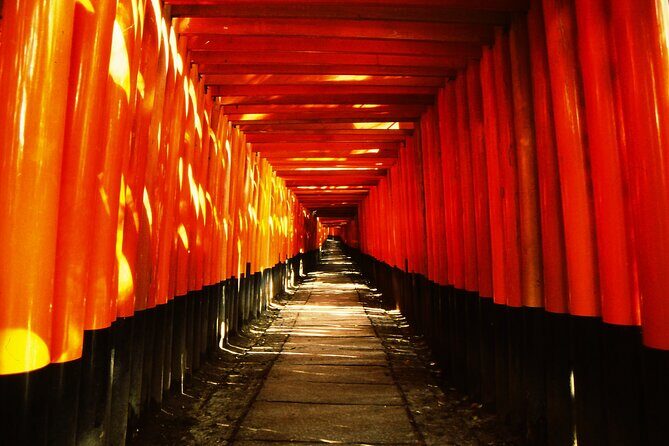
Fushimi-Inari is the kind of place where the lines, crowds, and stair-heavy walking can wear you out fast. An e-bike changes the rhythm. You spend your energy on the parts that deserve it—walking the shrine paths and taking your time—while the ride between sights stays easy.
Kyoto is made for two wheels: alleys, side streets, and routes that don’t funnel you into the most congested lanes. With an e-bike, you can move through the city at a pace that feels like sightseeing, not like racing to beat a schedule. I like that your guide also controls the flow, so you’re not figuring out logistics while also trying to appreciate the scenery.
You can also read our reviews of more cycling tours in Kyoto


Getting ready at Kyoto Station’s cycle terminal (and handling rain)
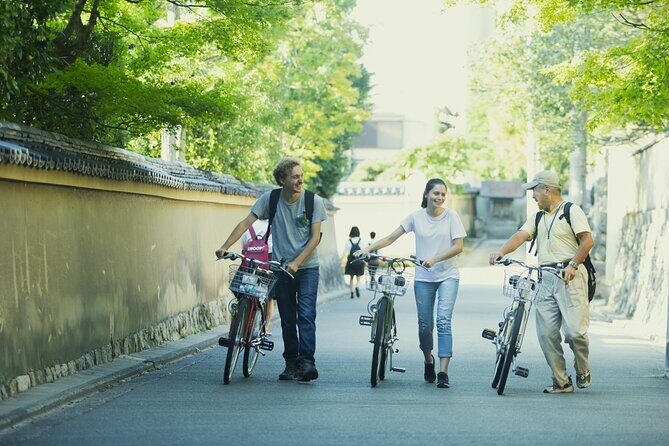
You’ll meet at Kyoto Cycling Tour Project at the Kyoto Station Cycle Terminal. From there, you’ll gear up with a helmet, and you’ll have a mobile ticket ready for the day.
The tour operates in rain, and you’re provided a rain poncho. That’s practical in Kyoto because sudden showers are common, and rain can mean the city feels calmer rather than busier. Still, if you’re the type who hates slippery surfaces, plan to ride slowly and keep your hands relaxed—an e-bike helps, but you still control balance.
Stop 1: Nintendo Original Building for a fast peek at modern Kyoto
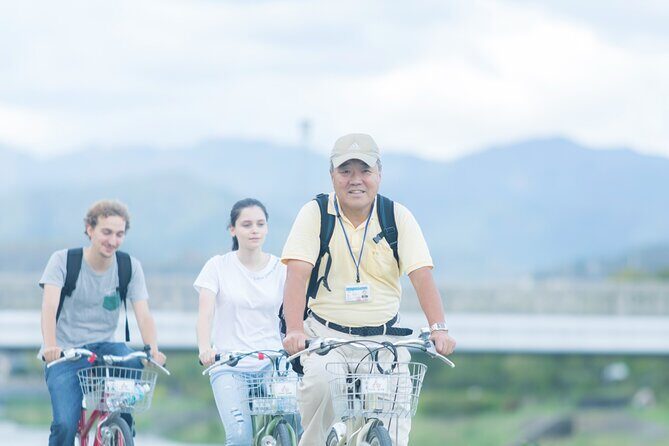
Early on, you cycle past the former offices of a famous Kyoto company, stopping at the Nintendo Original Building area for about 10 minutes. This is a short detour, not a long history lesson.
Why it’s worth the quick stop: Kyoto isn’t only temples and tradition. Seeing a recognizable, modern landmark from the streets helps you frame the city as it really is—old and new living side by side. The admission ticket here is free, so you’re not losing time or extra money to a paid attraction.
If you want a purely spiritual day, you can treat this as a breather and a chance to reset before the more intense sacred stops.
Sanjusangendo Temple: where a one-hour visit actually makes sense
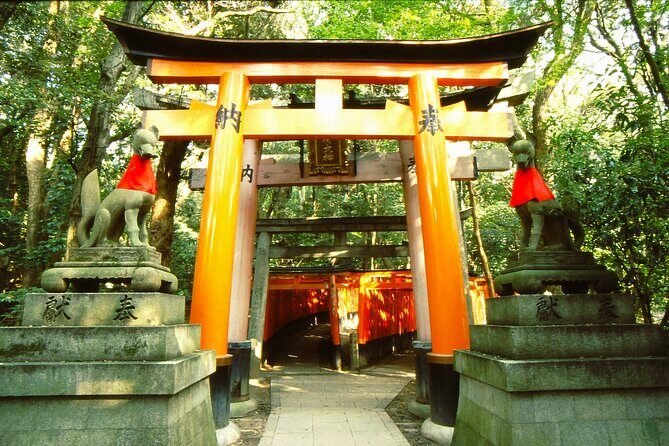
Sanjusangendo Temple is the kind of place that becomes memorable when someone gives you the right context. You’ll spend about an hour here, and the guide accompanies you inside to explain what the temple is and why it matters.
The big draw is the scale and the quiet focus of the space. You’ll walk through long, old corridors where you can see a thousand Buddha statues. Even if you don’t memorize every detail, the guide’s explanations help you look past the obvious and notice patterns, arrangement, and the overall atmosphere.
One practical note: a full hour inside can feel like “just walking,” but it’s also where you slow down. If you like calm pacing, this stop is one of the best parts of the tour. If you’re easily tired by indoor crowds or low light, wear comfortable footwear and expect to move steadily.
Stop 3: Tofuku-ji Temple for a quiet photo-and-breath moment

After Sanjusangendo, the tour adds a shorter stop at Tofuku-ji Temple—about 15 minutes. It’s described as a quiet but imposing Zen temple, and the admission ticket here is free.
This stop works as a palate cleanser. You get temple visuals without the commitment of another long indoor hour. You’ll also have time to take photos and then hop back on the bike before your energy runs out.
If you’re the photographer in your group, this is the moment to get your basics done—wide shots, a few quiet corners, and something that shows the scale. Then let the bike carry you to the main finale.
You can also read our reviews of more private tours in Kyoto

Fushimi Inari’s Torii red gates: walk the famous path with guidance
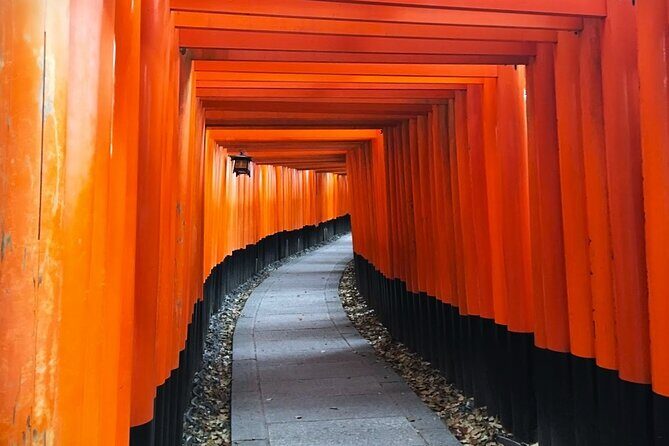
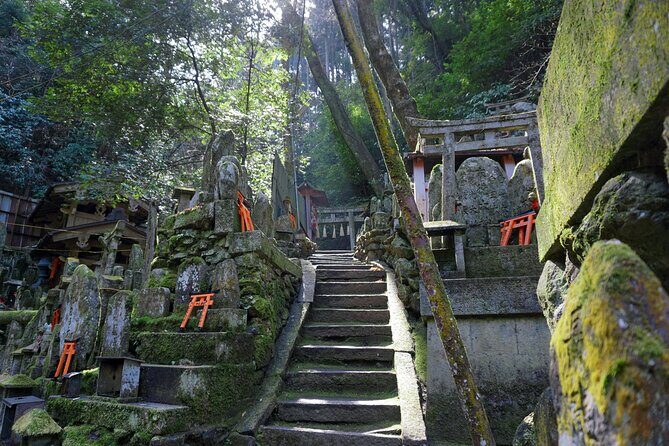
This is the star of the day. At Fushimi Inari-taisha Shrine, the guide takes you along the thousand-gate paths and gives explanations as you go. You’ll have about an hour here, and admission is free.
What makes a guided walk valuable at Fushimi-Inari is not only the story, but the navigation. The Torii paths can feel confusing because there are many branches and viewpoints. A guide helps you choose a route that gives you good gate time without you spending your whole hour trying to figure out where you’re headed.
You also get the benefit of skipping crowds in practice, not by magic. When your route and timing are managed, the shrine feels more like a place you’re exploring and less like a one-way conveyor belt.
Practical expectation: you’ll walk on paths that can be uneven and sometimes steep. E-bike travel doesn’t change that part, so comfortable shoes matter.
Kamo River ride back: calmer streets, wildlife breaks, and a soft landing
After the shrine focus, the tour turns more scenic and relaxed with a ride along the Kamo River. You’ll cycle along the peaceful embankment with lots of wildlife.
This section is a smart design choice. You’ve done the main sacred walking, so the return ride gives you a chance to breathe, regroup, and enjoy Kyoto’s everyday rhythm. It also helps that the bike brings you back toward Kyoto Station area without adding more intense stair walking.
If you’re traveling with kids or anyone who needs a calmer pace, this river time is often the best kind of payoff: it feels like a nature break without leaving the Kyoto plan.
Price and value: what $111.05 buys you in Kyoto time
At $111.05 per person for about 3 hours 30 minutes, you’re paying for three things at once: local expertise, private-group convenience, and logistics handled by someone who knows the city.
This isn’t a “grab a bike and go” product. You’re getting:
- a licensed or certified English-speaking guide
- helmet and rain poncho
- use of the bicycle
- an accident insurance component
- an original cycling map
- and included entry at Sanjusangendo
When I look at value, I think about stress reduction. Kyoto can be hard to coordinate on your own, especially if you want shrine time that isn’t just photo stops. This tour structure trades planning headaches for a smooth flow of stops—plus it’s private, so you’re not stuck with mismatch pacing.
Group size also matters. Your guide can take 2 to 6 guests per guide, and 1-person participation isn’t accepted. That means the experience is built to stay group-friendly, not solo casual.
Guides, pacing, and why humor helps at temples
One of the strongest signals from past experiences is how guides shape the day. Names that come up include Kaz, Yuichi, Tibor, Kas, J Jay, Kay, JJ, and Y Yagyu. Across those experiences, the recurring theme is that guides bring history with a sense of humor and keep things moving at a chilled pace.
That matters more than people expect. At shrines, you can end up either overwhelmed by details or bored by generic commentary. A guide who can explain with clarity and still keep the mood light helps you enjoy both the big moments and the quiet ones.
Also, guides in this setup will help with practical moments like taking photos. If you want a few solid pictures without doing your own setup every time, that’s a real quality-of-life win.
Practical tips so your day feels easy
Here’s how I’d set yourself up for an enjoyable ride.
Wear shoes you’re happy to walk in for shrine paths. Bring a small layer even in mild weather; Kyoto can change fast, and rain can cool you down.
Don’t pack only for temples. You’re cycling too, so think about comfort and grip. Helmets and rain ponchos are provided, but you’re still the one riding—so ride calmly, especially on slick days.
If you’re bringing kids, note the rules: children must be at least 10 years old, 145 cm or above, and able to ride safely on the road unassisted. It’s designed to be safe for active riders.
Finally, timing matters. The total duration includes travel between stops, so don’t expect each location to feel open-ended. The trade is that you’ll hit the highlights without losing the day to transit.
Who this e-bike tour suits best
This tour fits best if you want:
- a private, small-group day
- major Kyoto shrine sights with meaningful guidance
- an active way to travel that avoids most of the traffic hassle
- a mix of walking and easy riding
It’s a great choice for couples who want a scenic day without splitting up. Families also do well because the pacing can stay relaxed while still covering key stops. If you’re someone who strongly dislikes walking at all, you may find the Torii gate areas and temple corridors a bit too much.
Should you book this private e-bike tour?
If your priority is seeing Fushimi-Inari properly while keeping the rest of the day organized and not exhausting, I think booking makes sense. The combo of an English-speaking guide, included temple entry where it counts, and a calmer return along the Kamo River is exactly what turns a list of attractions into a smooth morning-to-afternoon experience.
I’d consider skipping (or at least thinking twice) if you’re not comfortable riding in traffic-adjacent roads or if rain is a dealbreaker for your group. The tour runs in rain, and while you get a poncho, the riding environment can still affect comfort.
If you can handle that, this is a smart way to experience Kyoto with fewer frustrations and more time where it matters.
FAQ
How long is the private e-bike tour?
It’s about 3 hours 30 minutes in total, and that duration includes the time cycling between locations.
What’s included in the price?
Included items are use of a bicycle, helmet, rain poncho, a licensed English-speaking guide, an original cycling map, and accident insurance. Admission for Sanjusangendo Temple is included, while other mentioned sites have free admission.
Where does the tour start and end?
The tour starts at Kyoto Cycling Tour Project (Kyoto Station Cycle Terminal) in Kyoto. It ends back at the same meeting point.
What age and height are required for children?
Children must be at least 10 years old, 145 cm or above, and able to ride a bicycle safely on the road unassisted.
How many people are in each group?
The tour accepts 2 to 6 guests per guide. If you have 7 to 12 people, an extra guide can be arranged without an extra fee.
Is cancellation refundable?
No. This experience is non-refundable and cannot be changed for any reason.