REVIEW · KYOTO
Private Walking Tour in Gion and Higashiyama
Book on Viator →Operated by IKOO - let's go! · Bookable on Viator
Gion makes sense with a guide. This private walking tour strings together Kyoto’s Gion and Higashiyama highlights in about 3 hours, so you spend less time figuring out routes and more time noticing what matters. I like the way it pairs famous sights with the small context you’d miss on your own, from Yasaka Shrine traditions to quiet temple atmosphere.
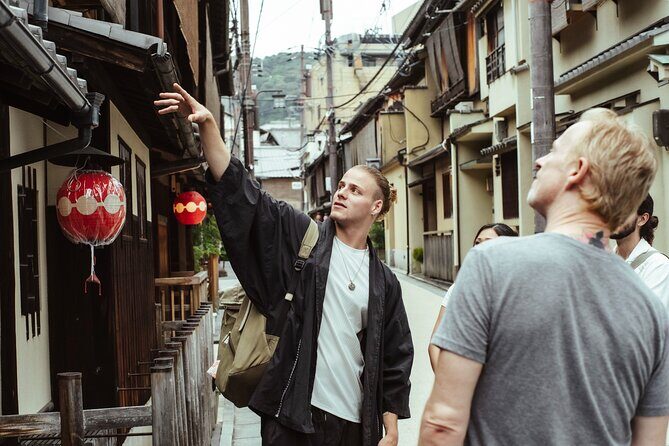
Two things I especially like are the focused pace and the story power of the guide. You get full attention on a private route, and that makes questions easy while you’re walking. One guide named Dominic has been specifically praised for being friendly, answering questions, and adding local insights, which is exactly what you hope for in a tour like this.
The main drawback to consider is simple: time is tight. Three hours covers big-name stops, so if you love lingering in shops or wandering off-script for long stretches, you’ll likely want a second, slower day.
In This Review
- Key things I’d plan around
- Why this Gion–Higashiyama walk works in 3 hours
- Starting at Izumo-no-Okuni: a smart first placement in Higashiyama
- Gion on foot: geisha culture you can actually connect to the streets
- Kennin-ji Temple: Zen roots and what it changes in your walk
- Hokan-ji Temple (Yasaka Pagoda): old streets, plus a strong landmark
- Ninenzaka Path: the Higashiyama lane you’ll want to revisit
- Maruyama Park: cherry blossoms and momiji season timing
- Yasaka Shrine: where the walk turns into Kyoto practice
- Guide quality is the real product here
- Price and value: is $144.88 per person worth it?
- Who this private Gion and Higashiyama walk suits best
- Should you book this Gion and Higashiyama private walking tour?
- FAQ
- How long is the private walking tour?
- Is this tour private?
- Where does the tour start?
- Where does the tour end?
- What stops are included in the route?
- Do we pay for admission at the listed stops?
- How is the ticket delivered?
- Is it okay to use public transportation to reach the meeting point?
- Can service animals join the tour?
- What is the cancellation policy?
Key things I’d plan around
- A real shortcut across Gion and Higashiyama: fewer decisions, more looking and learning.
- Temples and street life in one walk: Kennin-ji, Hokan-ji, then Ninenzaka’s old-town vibe.
- Private means your pace and questions: the guide keeps you moving without rushing your brain.
- Seasonal Kyoto at Maruyama Park: cherry blossoms and momiji (fall leaves) are the big seasonal draw.
- A classic ending at Yasaka Shrine: architecture and practice, including Omikuji (fortune slips).
- Free admissions at the listed stops: the tour highlights focus on what’s outside and what’s already open.
Why this Gion–Higashiyama walk works in 3 hours
Kyoto’s eastern districts can be confusing if you’re only using a map. This tour is built for people who want a clean outline of the area without doing research for every corner.
In around three hours, you hit Gion, step into Zen temple history, walk Higashiyama’s historic lanes, and end at Yasaka Shrine. The result is a tight sampler that helps you understand where you’d want to go back later.
You can also read our reviews of more walking tours in Kyoto



Starting at Izumo-no-Okuni: a smart first placement in Higashiyama
The tour meets near the Statue of Izumo-no-Okuni in Higashiyama Ward. That’s a practical starting point because it puts you close to the historic flow between Gion and the Higashiyama side streets.
It also sets expectations for the walk. You’re not doing a bus-and-bag tour; you’re doing a neighborhood stroll where orientation matters.
The tour ends at Yasaka Shrine, about a short walk from the main gate on the south side. That finish is useful because it gives you a clear “bookmark” point for the rest of your day.
Gion on foot: geisha culture you can actually connect to the streets

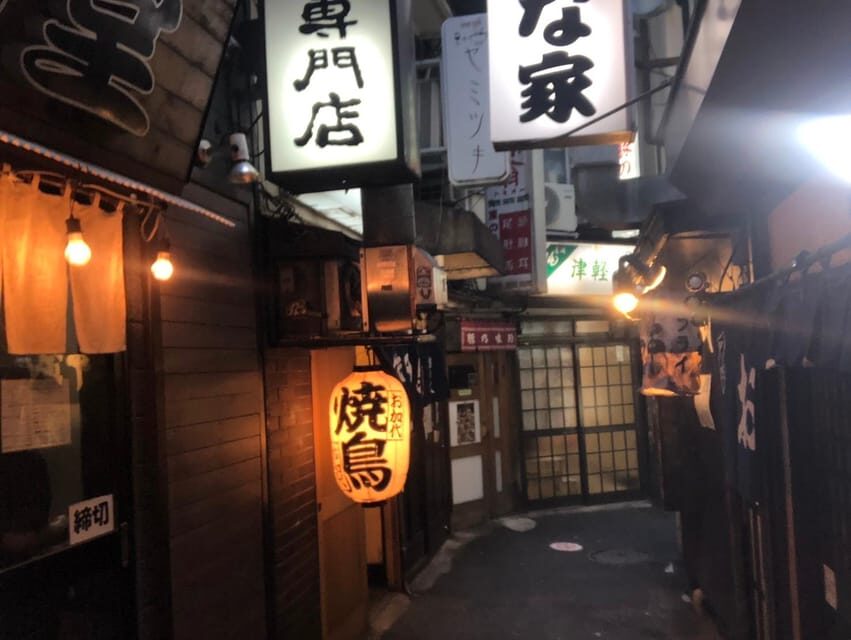
Your first stop is Gion for about an hour. This is where the tour earns its keep: you’re not only seeing the famous streets, you’re hearing what they mean in Kyoto’s traditions.
The guide’s commentary is designed to connect the physical place to the cultural background. Expect discussion of geisha culture and Japanese traditions as you move through the district.
What I like about this format is that Gion can feel like a set-piece if you show up without context. Here, you get that context while you can still look around and test the story against what you see.
A practical tip: wear comfortable shoes. Gion and Higashiyama streets are full of small turns, and even a short walk can feel longer when you’re reading signs and listening.
Kennin-ji Temple: Zen roots and what it changes in your walk
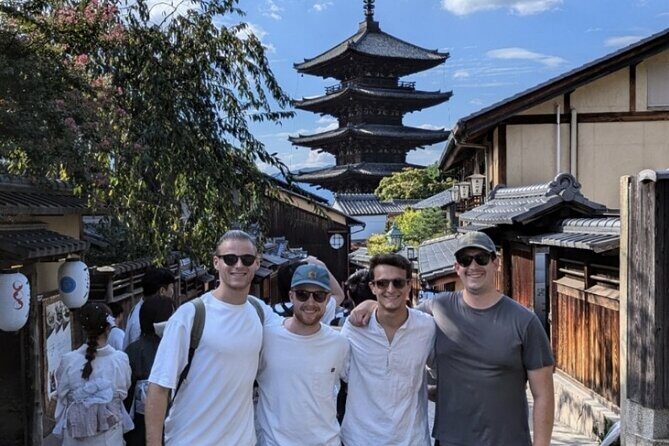
Next comes Kennin-ji Temple for about 30 minutes, with admission listed as free. Kennin-ji is described as one of Kyoto’s oldest Zen temples, so this stop is meant to give you a foundation.
This is the part of the tour that shifts gears from street culture to spiritual history. You’ll hear about the origins of Buddhism and how that influence shows up in Japanese culture.
Even if you’re not a temple person, this stop can still be valuable. It slows the pace just enough that you start seeing the day as more than a photo run.
Possible consideration: 30 minutes can feel short if you want to read every sign. Use the time to orient yourself—then if you’re curious later, you’ll know what to look for on your own.
Hokan-ji Temple (Yasaka Pagoda): old streets, plus a strong landmark
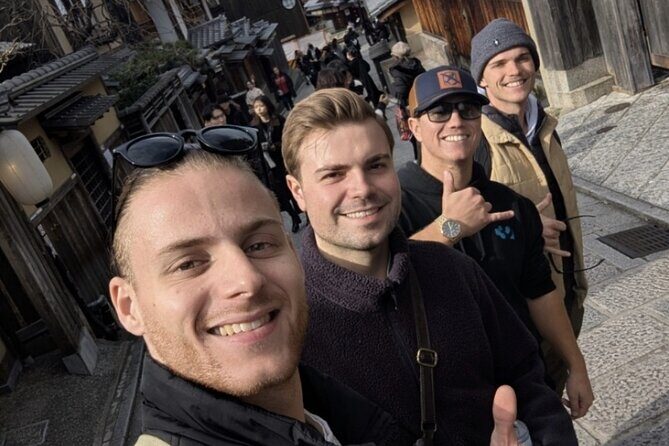
After Kennin-ji, the tour heads to Hokan-ji Temple, also called the Yasaka Pagoda area, for about 20 minutes. Admission is listed as free here too, and the plan includes time to soak up the old-town feel around it.
This stop adds texture. You’re not just at a single point; you’re walking through narrow streets lined with traditional shops and cozy cafes, which helps you feel the day’s rhythm.
If you care about Kyoto’s “in-between” details, this is the stop that often delivers. It’s easy to remember Gion as “the famous district,” but Hokan-ji’s surroundings remind you what daily streets feel like.
You can also read our reviews of more private tours in Kyoto



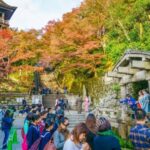
Ninenzaka Path: the Higashiyama lane you’ll want to revisit
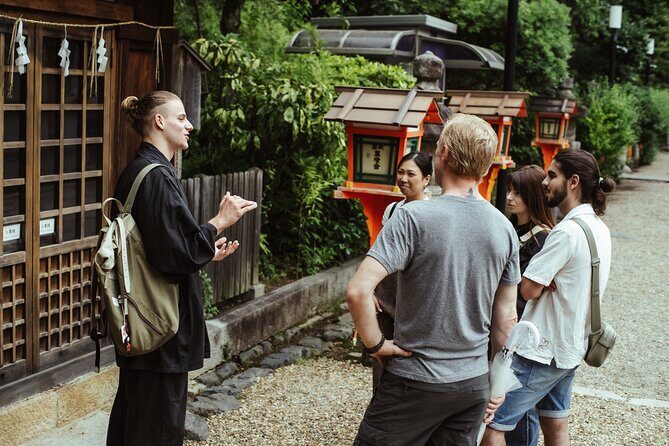
Between temple stops, you’ll walk along Ninenzaka Path in Higashiyama. This is the classic old-street stroll, lined with traditional shops, teahouses, and old Kyoto-style lanes.
Ninenzaka works well as a bridge. You get the cultural explanations earlier, then you get a more sensory, casual walk where you can linger just a bit—without losing the overall route.
A downside to keep in mind: popular streets can be busy at peak times, which can limit how long you can stand and observe. If you want quieter moments, use your guide’s timing and keep moving when you see a tight crowd forming.
Maruyama Park: cherry blossoms and momiji season timing
You’ll stop at Maruyama Park for about 10 minutes, again with free admission. The draw is seasonal: it’s known for cherry blossoms in spring and momiji (fall leaves) in autumn.
Even outside those seasons, the value here is perspective. The park gives you a breather from dense streets, plus views that help you picture Kyoto’s seasonal moods.
Practical note: 10 minutes is brief. Treat this as a quick look-and-photo stop, then keep walking rather than trying to “finish” the park.
Yasaka Shrine: where the walk turns into Kyoto practice

The final anchor is Yasaka Shrine, with about 30 minutes planned. It’s described as historic and culturally significant, with stunning architecture that makes it an obvious finish point.
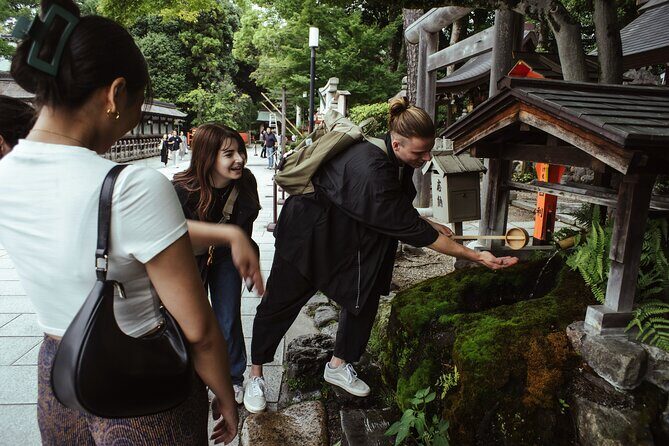
One of the tour’s most practical cultural moments is the mention of Omikuji—fortune slips. You’ll come across the traditional practice as part of exploring the shrine area.
This is where the tour’s structure feels most satisfying. You started in Gion with culture and traditions, moved through temple history, walked an old-street lane, then ended at one of the most recognized shrine spaces in the district.
If you want to make this stop even more fun, treat it as an active moment rather than a passive viewing spot. Look at what people are doing, then decide if you want to participate in the Omikuji tradition when you reach it.
Guide quality is the real product here
This is a private tour, meaning only your group participates. That matters because it changes how you experience the stops: you can ask questions on the spot and adjust the pace to what interests you.
In one praised guide experience, Dominic was described as extremely friendly and fun, with strong answers and local insights. The consistent message behind that kind of praise is what you want from a guide in Kyoto: someone who helps you connect what you see to what it means.
I’d expect that the guide also handles the practical navigation. When you don’t have to manage turns, you can focus on cues like temple layout, shrine details, and how streets shift from one neighborhood character to another.
Price and value: is $144.88 per person worth it?
At $144.88 per person for about 3 hours, this tour is priced for travelers who want convenience plus cultural context. It’s not a bargain-fare walking tour, but it may be good value depending on how you travel.
Here’s the value math I’d use:
- Private time: you’re paying for your group to have the guide’s full attention.
- Context at each stop: geisha culture, Buddhism origins, and local practice like Omikuji.
- Convenience: the guide navigates so you don’t spend your limited energy mapping.
- Free admissions at the listed sites: the tour highlights don’t revolve around paid museum tickets.
Where the price is less friendly is if you’re the type who already enjoys planning your own Kyoto day and wandering without needing explanations. In that case, you might do better with a self-guided route and a couple of timed entry sights.
But if you want the area to make sense fast, private tours like this often pay off in the form of clarity. You’ll know what you saw, why it matters, and where you might want to return.
Who this private Gion and Higashiyama walk suits best
I’d suggest this tour if:
- you’re doing Kyoto for the first time and want a structured highlights route
- you prefer asking questions as you go instead of researching later
- you like mixing temples and traditional street life in one day
- you want a guide to help you notice the right details at each stop
It may be less ideal if:
- you want a slower, longer exploration of each neighborhood
- you plan to do lots of spontaneous detours and long shopping breaks
- you dislike walking and want a more stop-and-start plan
Should you book this Gion and Higashiyama private walking tour?
Book it if you want Kyoto’s eastern districts to feel coherent by the end of the day. The route covers the core landmarks—Gion, Kennin-ji, Hokan-ji, Ninenzaka, Maruyama Park, and Yasaka Shrine—and the guide’s explanations are built to connect those places to culture and everyday practice.
Skip it only if you’d rather build your own itinerary from scratch and you don’t feel you need context while walking. Otherwise, this is a solid, practical way to get oriented, learn a few Kyoto traditions that will stick, and finish at Yasaka Shrine with plenty of momentum left for the rest of your evening.
FAQ
How long is the private walking tour?
It’s approximately 3 hours.
Is this tour private?
Yes. It’s private, so only your group will participate.
Where does the tour start?
The meeting point is the Statue of Izumo-no-Okuni in Higashiyama Ward, Kyoto.
Where does the tour end?
It ends at Yasaka Shrine, about a 7-minute walk from the tour’s start, near the main gate on the south side.
What stops are included in the route?
The tour includes Gion, Kennin-ji Temple, Hokan-ji Temple (Yasaka Pagoda), Ninenzaka Path, Maruyama Park, and Yasaka Shrine.
Do we pay for admission at the listed stops?
Admission is listed as free for the stops included on the itinerary.
How is the ticket delivered?
You’ll use a mobile ticket.
Is it okay to use public transportation to reach the meeting point?
Yes. The meeting point is near public transportation.
Can service animals join the tour?
Yes, service animals are allowed.
What is the cancellation policy?
You can cancel for a full refund up to 24 hours in advance of the experience start time. If you cancel less than 24 hours before, the amount paid is not refunded.