REVIEW · TOKYO
Tokyo: Taishu Engeki Show with Kimono and Sword Lesson
Book on GetYourGuide →Operated by 有限会社篠原演劇企画 · Bookable on GetYourGuide
A live Taishu Engeki performance in Asakusa is a treat. What makes this one special is the mix of traditional theater and hands-on fan-and-sword choreography inside the Mokubakan stage world.
I especially love the small-group feel (max 6) and how beginner-friendly the workshop is. I also like that you get a real costume moment with kimono dressing plus a commemorative photo session, not just a ticket and a quick walkthrough.
One possible drawback: the professional show uses flashing lights and loud sounds, so if you’re sensitive to that, plan accordingly since the workshop portion is calmer.
In This Review
- Key things that make this experience worth your time
- Taishu Engeki in Asakusa: Why this theater format works
- Mokubakan Theater: The small-room advantage for real connections
- Two schedules: the 2:20 afternoon flow vs the 5:40 evening flow
- Welcome, the offer-custom, and what happens during the show
- The short walk to the workshop and your quick kimono moment
- Fan dance and chanbara sword movement: fun, guided, and physical
- Commemorative photos in kimono: how to get the most out of them
- Price and value: what $12 buys you in real terms
- Who this Taishu Engeki experience suits best
- Should you book this Taishu Engeki show with kimono and sword lesson?
- FAQ
- What is the duration of the Tokyo Taishu Engeki show and workshop?
- Where do I meet the group for the evening slot?
- Is the schedule the same for the afternoon and evening slots?
- Do I need experience with dance or sword choreography?
- What languages are available for instruction?
- Does the performance use special lighting or loud audio?
- Is the workshop physically demanding?
- Can I bring alcohol or drugs?
- Who is this experience not suitable for?
- Can I cancel or pay later?
Key things that make this experience worth your time
- Mokubakan’s Taishu Engeki-only focus: dedicated theater since 1977, so you’re not bouncing between styles.
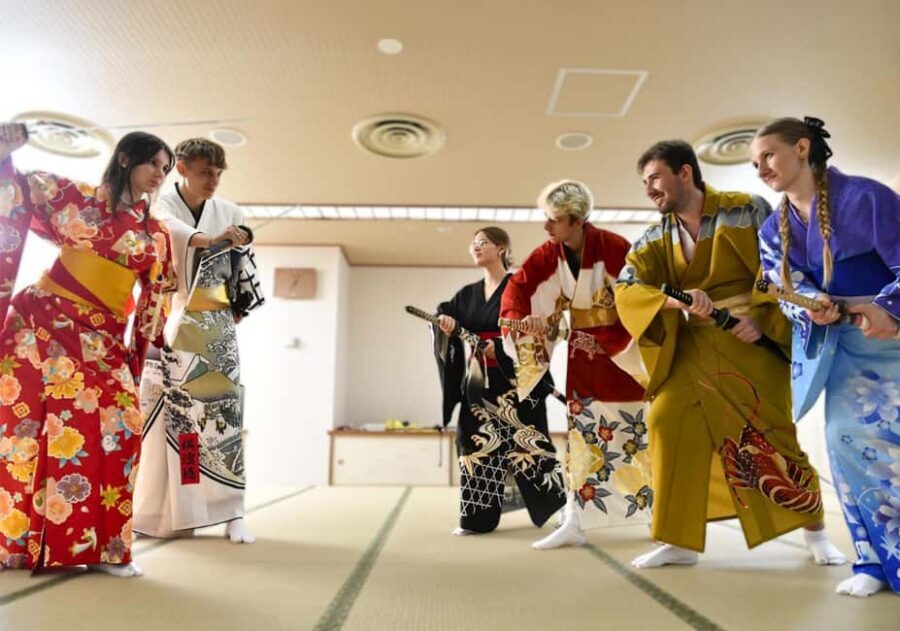
- Hands-on choreography, not a test: fan dance and chanbara sword movement geared for fun and participation.
- Katana + sensu lesson in kimono: you practice with the same props that drive the show’s visual energy.
- Close-up performance style: the format keeps you feeling part of the action, not stuck at a distance.
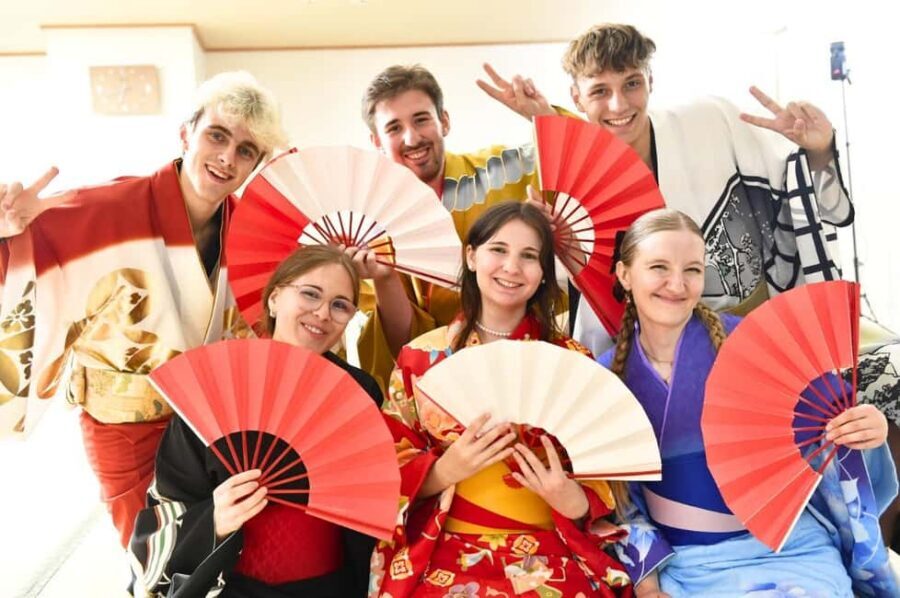
- Included photo keepsakes: you end with kimono commemorative photos made for real mementos.
Taishu Engeki in Asakusa: Why this theater format works
Tokyo has lots of stage options. This one clicks because Taishu Engeki is built to be easy to enjoy even if you don’t read Japanese.
Taishu Engeki (popular theater) blends several ingredients at once: drama, music, expressive movement, and swordplay-style action. The story delivery leans heavily on body language and performance rhythm, so you get swept along by what you can see and hear, not just what you can translate.
I also like the fact that the tradition includes the onnagata element, where male performers portray female roles with elegance and poise. That’s a powerful visual skill to watch closely, and it helps the evening feel like theater with real craft rather than a simple demonstration.
There’s also a big practical bonus for you: the show and workshop are related. You watch Taishu Engeki’s style first, then you practice pieces of it right after, which makes the cultural context stick.
A few more Tokyo tours and experiences worth a look
Mokubakan Theater: The small-room advantage for real connections
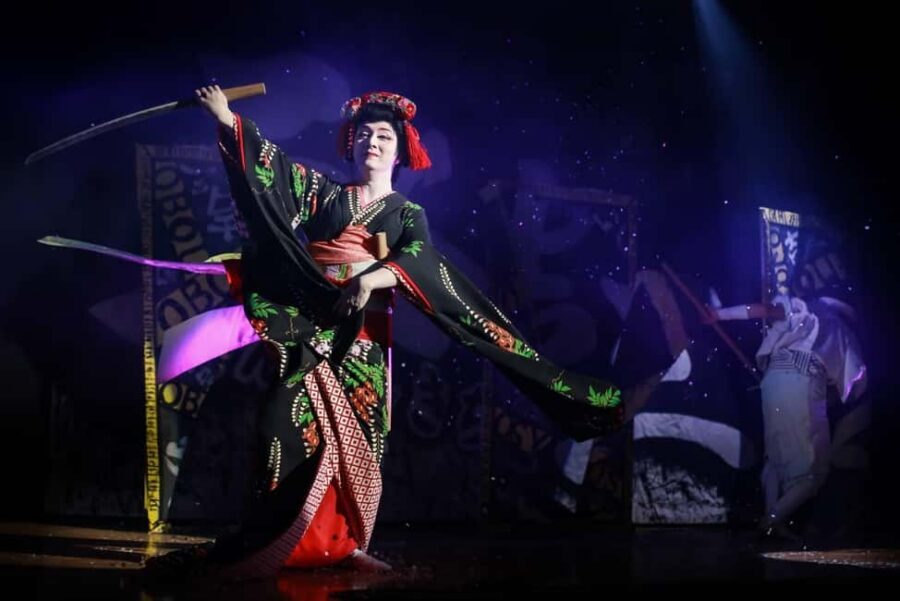
Your experience takes place at the Mokubakan theater in Asakusa, a venue dedicated exclusively to Taishu Engeki since 1977. That matters because you’re not trying to fit a cultural lesson into a venue that primarily does something else.
A dedicated Taishu Engeki space usually means the staff and performers have refined the whole flow: how the show is paced, how the audience is handled, and how participation is encouraged. The result is an evening with better continuity than many multi-stop cultural tours.
And because the group is limited to 6 participants, you’re more likely to get attention during the workshop and guidance during the photo moment. It’s also just less chaotic than the bigger groups you may see around Asakusa’s famous lanes.
Two schedules: the 2:20 afternoon flow vs the 5:40 evening flow
This experience runs in two versions depending on the slot you choose. Both are three hours, but the order changes.
- Afternoon slot (meeting time 2:20pm): you start with a welcome and briefing, watch the professional show, then take a short walk (about 5–7 minutes) to the separate workshop venue for kimono dressing and the fan/sword lesson. You finish with your commemorative photos.
- Evening slot (meeting time 5:40pm): the schedule reverses. You start with the workshop portion, then move to the performance afterward.
Why that order matters: starting with the show helps you understand what you’re going to practice. Starting with the workshop can feel more energetic, like you’re warming up your body first and then watching how the professionals scale it up. Either way, you’re getting both halves: performance and hands-on participation.
Welcome, the offer-custom, and what happens during the show
You meet your international program leader in front of the Asakusa Mokubakan Theater. There’s a short welcome and briefing so you know what Taishu Engeki is, how the theater works, and what customs you’ll encounter during the performance.
A small detail with cultural meaning is the program’s guidance around the custom of tipping or offering small gifts to performers, often described as お花を贈る (ohana o okuru). The program also includes a small token of appreciation as part of your fee, so there’s a built-in way to participate respectfully.
Then comes the professional Taishu Engeki performance. This is the part where you really feel what makes the form fun for people without language skills. The show uses powerful music and expressive physical storytelling, and the swordplay-and-dance elements are staged for maximum visual clarity.
Important note for you: the professional performance uses flashing lights and loud sounds. The workshop segments don’t use those effects, so if you’re sensitive, you can still participate in the hands-on part. If you’re unsure, contact the provider beforehand and they can help you plan around it.
The short walk to the workshop and your quick kimono moment
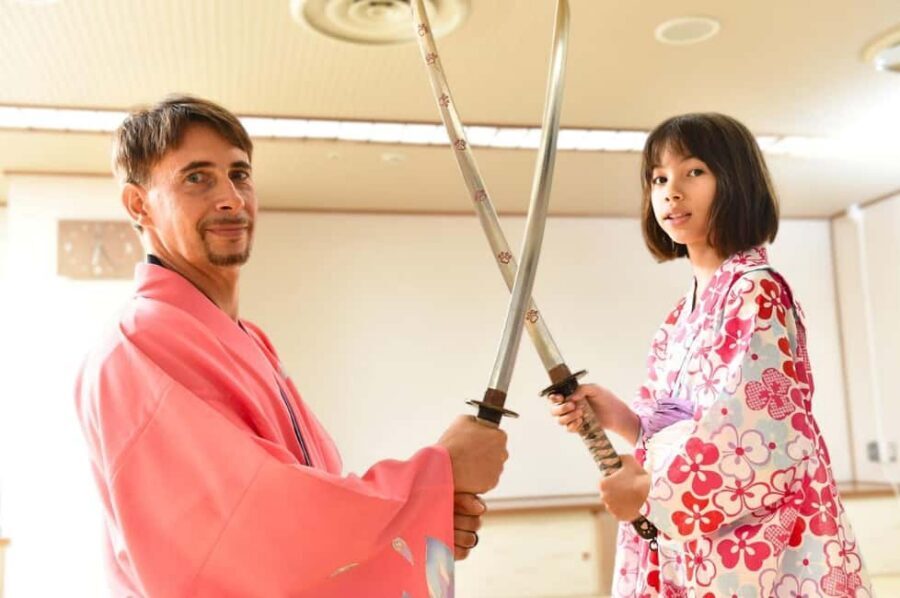
After the show (in the afternoon slot), or after the workshop (in the evening slot), you’ll move to a separate cultural venue. The walk is short, listed as about 5–7 minutes, so don’t plan on needing to navigate with complicated transit.
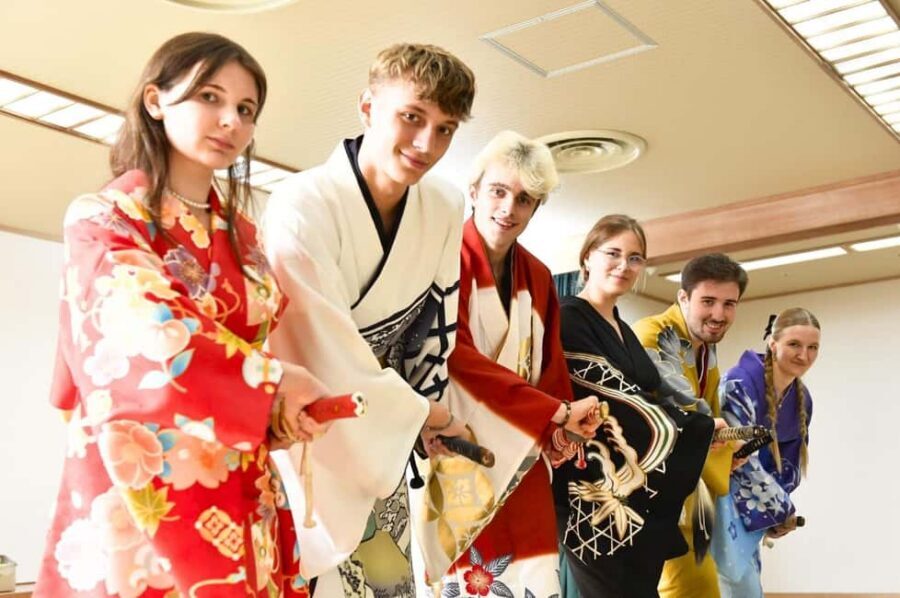
Then you switch into a kimono. This is not a long, formal costume ceremony, but it’s still a real cultural highlight because it changes how you physically move and how the experience feels in your senses. You’re not just watching tradition from outside; you’re stepping into the look and rhythm of the performance world.
From there you head into the workshop setting, typically a tatami room. Tatami plus kimono plus fan-and-sword instruction is a specific sensory combo. It’s one reason the workshop feels memorable even if you only learn a short choreography section.
A few more Tokyo tours and experiences worth a look




Fan dance and chanbara sword movement: fun, guided, and physical
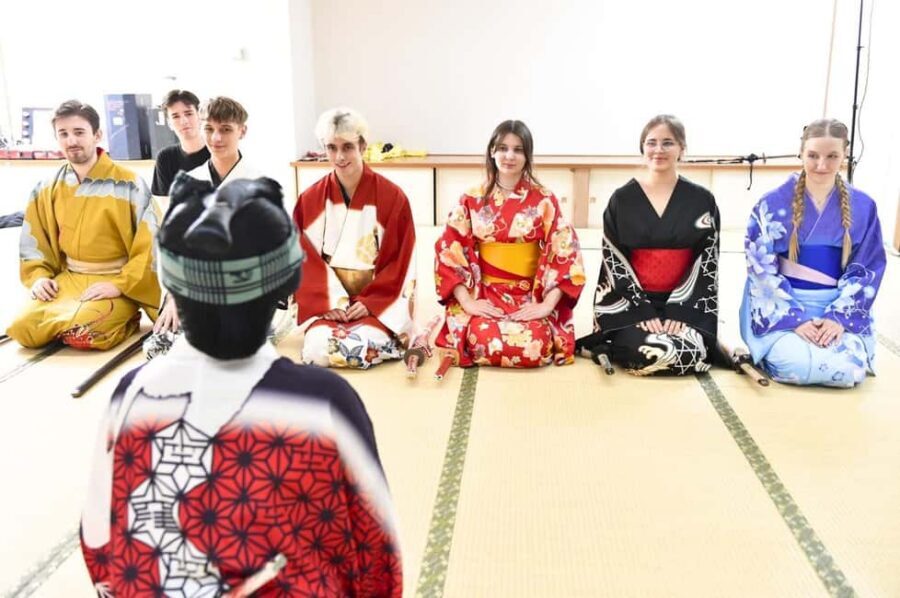
This is where the experience turns from spectator to participant.
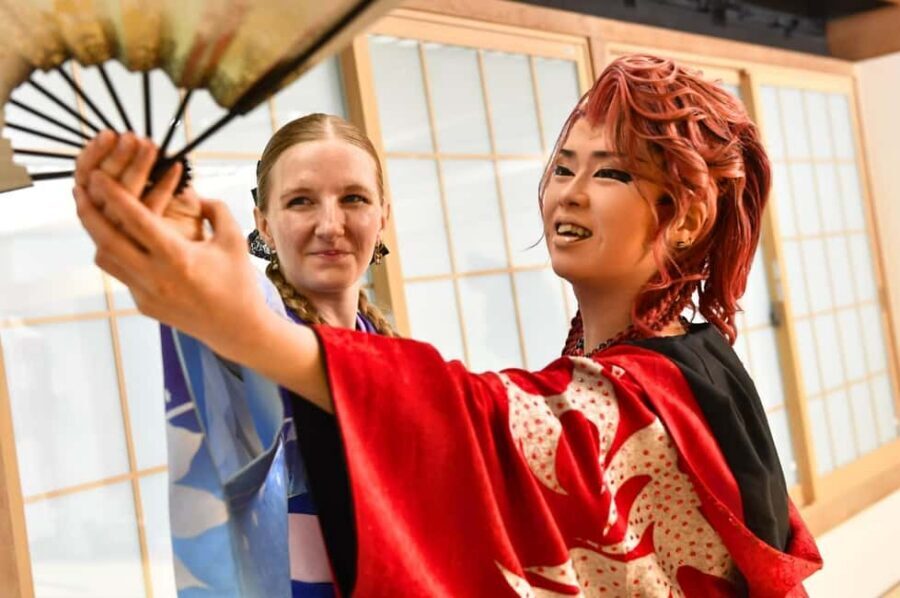
Once you’re dressed, you get instruction directly from a local professional dancer. The workshop includes two connected elements:
- Fan dance with a folding sensu
You’ll learn graceful fan movements tied to the performance style. The choreography is designed to be enjoyable and approachable, not something you need prior training to survive.
- Samurai swordplay style (chanbara)
You practice thrilling, choreographed combat dance movements. Again, this is staged-style action for learning and fun, not real fighting.
The program is designed for enjoyment rather than difficulty. The point is to help you understand the timing, posture, and expressive intent behind the theater’s action.
Safety matters because this is physically active. If you feel dizzy or unwell, you should notify staff right away. Also, the program explicitly doesn’t allow alcohol and drugs, which helps keep the workshop experience safe and focused.
And if you’re sensitive to the show’s lighting effects: you’re still allowed to participate fully in the workshop portion, since the strobe and loud sound effects are used during the professional theatre performance only.
Commemorative photos in kimono: how to get the most out of them
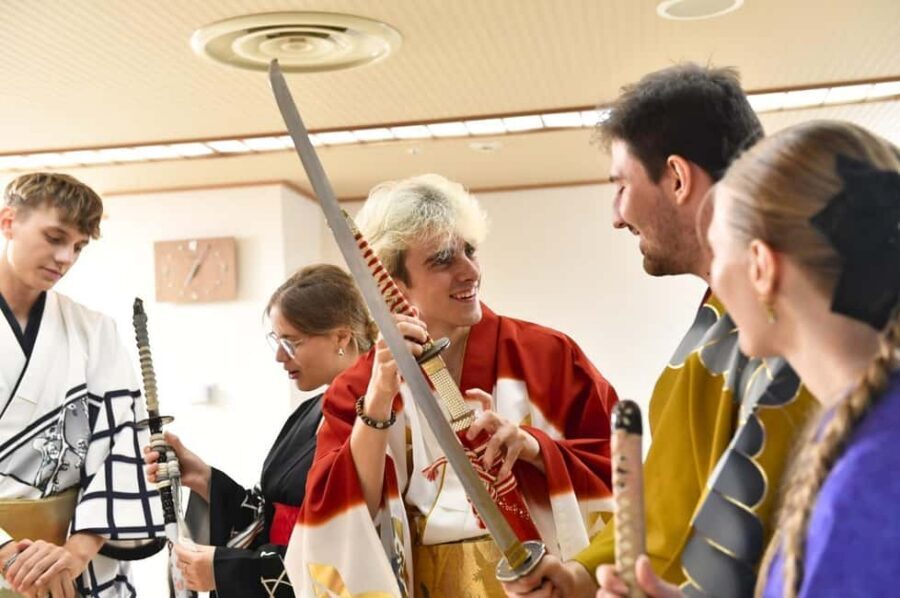
The experience ends with commemorative photos in your kimono. This isn’t just you taking a quick selfie; it’s a guided photo moment with staff support.
From the way the program is described, you’ll get help with photos and you’ll be able to keep the memory. That matters because kimono fit and posing can feel confusing if you’ve never worn one. Staff support reduces the stress so you can focus on looking natural and enjoying the moment.
Quick practical tip for you: plan to wear comfortable underlayers that make getting dressed easier. You’ll be moving between the theater and workshop spaces, and you’ll want to stay comfortable during the fan/sword practice too.
Price and value: what $12 buys you in real terms
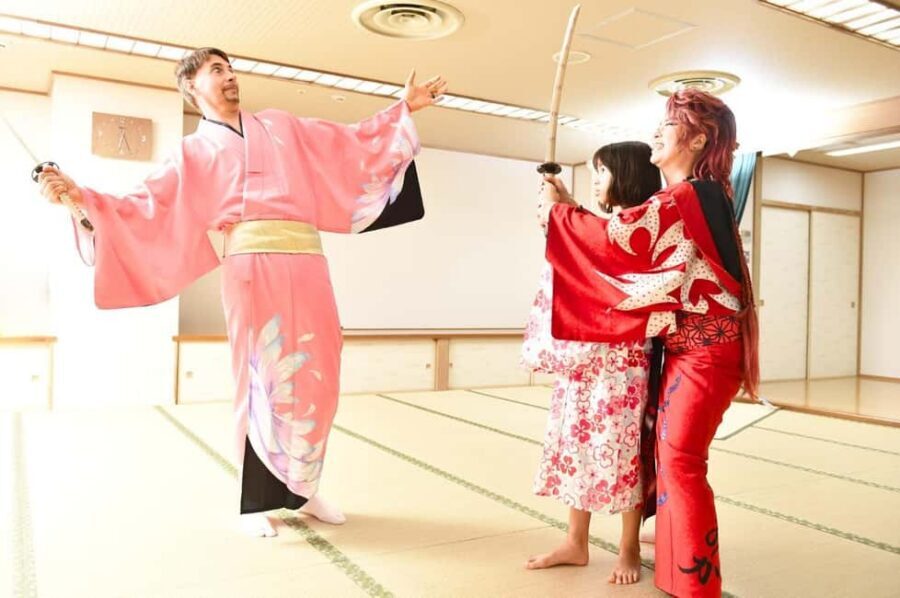
At $12 per person for a three-hour program, you’re getting an unusually packed set of elements for the money: a live Taishu Engeki show, kimono dressing, a guided workshop using a fan and sword movements, and commemorative photos.
What makes the price feel fair is the inclusion of several “separate activities” in one. Many Tokyo experiences charge separately for costume time, lesson time, and show time. Here, they’re stitched together into one flow, and the small group size (max 6) supports a more personal experience.
You also have a language advantage: instruction is offered in English and German. If you learn best by asking questions or following verbal cues, that’s a real plus.
One possible extra consideration: because you’re guided to participate in the ohana o okuru custom, you may want to be ready for that cultural moment. The program doesn’t list a specific amount in the details provided, so treat it as optional and follow what your leader guides you to do.
Who this Taishu Engeki experience suits best
This program is a strong match if you want a cultural night that feels fun and hands-on, not rigid and lecture-heavy.
You’ll likely enjoy it if:
- you like live performance and want something other than the more famous tourist-heavy theater options
- you want a short workshop where you can participate without needing prior skill
- you’re curious about how swordplay and fan movement translate into stage story
It may not fit if:
- you’re pregnant (the program isn’t suitable for pregnant women)
- you’re very sensitive to flashing lights and loud sounds, since those effects are used during the professional performance
- you’re looking for a totally passive experience (this workshop asks you to move)
Also remember: punctuality matters. The program is built as a sequence, and arriving late can cut into your kimono dressing and workshop time.
Should you book this Taishu Engeki show with kimono and sword lesson?
I’d book it if you want a genuine “one-evening story” that blends watch-and-do. For the price, the mix is tough to beat: live Taishu Engeki at Mokubakan, kimono dressing, a guided fan and chanbara-style lesson with local instruction, and a photo finish.
Skip or reconsider if the show’s strobe/loud sound part is a deal-breaker for you, or if you’re not comfortable with a physically active workshop. If those issues aren’t a concern, this is the kind of experience you can recommend to friends because it feels specific to Asakusa and to Taishu Engeki, not just generic Japan entertainment.
FAQ
What is the duration of the Tokyo Taishu Engeki show and workshop?
The program runs for about 3 hours.
Where do I meet the group for the evening slot?
For the evening program, the meeting point is 1 Chome-38-6 Asakusa, Taito City, Tokyo 111-0032. Your leader is in front of the Asakusa Mokubakan Theater with the Meeting Point sign.
Is the schedule the same for the afternoon and evening slots?
No. In the afternoon slot (meeting time 2:20pm), you start with the performance and then do the workshop and kimono dressing. In the evening slot (meeting time 5:40pm), the workshop and kimono come first, followed by the performance.
Do I need experience with dance or sword choreography?
No prior experience is required. The workshop focuses on enjoyment and easy participation, with guidance from a local professional dancer.
What languages are available for instruction?
Instruction is offered in English and German.
Does the performance use special lighting or loud audio?
Yes. The professional theatre performance portion uses flashing lights and loud sounds. The workshop segments do not use those effects.
Is the workshop physically demanding?
It is physically active. If you feel dizzy, sick, or unwell, you should notify staff right away.
Can I bring alcohol or drugs?
No. Alcohol and drugs are not allowed.
Who is this experience not suitable for?
The program is not suitable for pregnant women.
Can I cancel or pay later?
Yes. You can cancel up to 24 hours in advance for a full refund, and you can reserve now and pay later.