REVIEW · HIROSHIMA
Hiroshima Country Cycling: Explore Rural Life 1 HR from City
Book on Viator →Operated by Oasa Mobility Station · Bookable on Viator
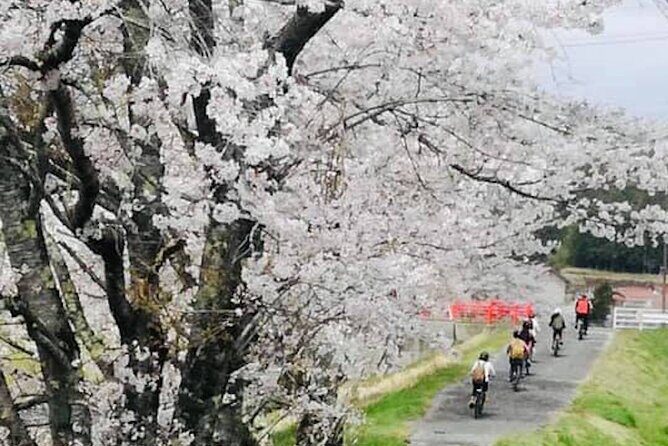
Quiet country roads, one electric push away. This small-group Hiroshima Country Cycling e-bike tour takes you out from the Oasa area into farming villages, where the pedal-assist makes even steep bits feel manageable. I like the way the route is built around real rural life instead of quick photo stops, and I like that your guide turns what you see into something you can actually understand.
You should note one consideration: you still need to be able to ride a bike on your own. Also, the experience depends on good weather, so if conditions turn ugly, you’ll want to be flexible and prepared for a change in plans.
A big plus is the planned lunch stop at Ainosato Herb Garden (and in winter months, a sushi option), plus options for vegan meals with advance request. And yes, there’s a rain factor baked into the day—on wet visits, the guide can help you stay comfortable.
In This Review
- Key highlights you’ll care about
- Electric assist e-bikes and why the pace feels right
- Price and value: what $85.39 includes (and what it doesn’t)
- Hitting the countryside from Oasa: how the route plays out
- Stop 1: Kakeyama and the e-bike hill advantage
- Stop 2: Doitaya farming community and the quiet scenes
- Lunch at Ainosato Herb Garden: vegetables, edible flowers, and winter sushi
- Stop 4: Oasa main street—old buildings, quieter life
- Your guide matters: Jonah’s role and the rain-proof mindset
- Who should book this e-bike ride
- Quick practical tips before you go
- Should you book Hiroshima Country Cycling: Explore Rural Life 1 HR from City?
- FAQ
- What is the duration of the Hiroshima Country Cycling tour?
- What time does the tour start and where does it meet?
- How many people are in the group?
- Are the e-bike and helmet included?
- Is lunch included, and do you offer vegan options?
- Do I need to pay for transportation between Hiroshima and Oasa?
Key highlights you’ll care about
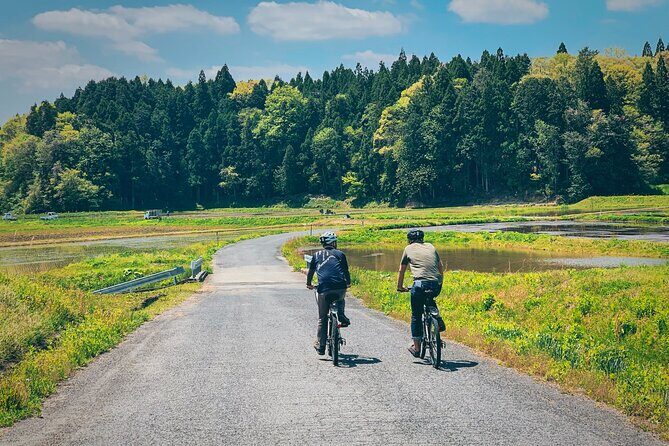
- Electric assist for steep hills so you’re moving through the countryside without punishing climbs
- Small group (max 8) that keeps the pace relaxed and questions easy to ask
- Kakeyama and Doitaya farming stops focused on traditional scenery and everyday life
- Ainosato Herb Garden lunch stop with locally grown produce and edible flowers; winter sushi option
- Water refill stations along the route (bring your own bottle)
- Vegan lunch available if you request it at least 3 days ahead
Electric assist e-bikes and why the pace feels right
This tour’s main trick is simple: you get a top electric bike and use it to cover distances you’d otherwise skip. That matters because Hiroshima’s countryside isn’t flat like a treadmill—you’ll hit small climbs and uneven road feel. With the pedal-assist doing the heavy lifting, you stay in control, you’re not cooked by the hills, and you can actually enjoy the ride instead of focusing on sweat management.
The format also helps. It’s a small-group outing, not a crowded bus-to-bus shuffle. That means you can pause when you want, ask questions without waiting, and absorb how locals actually live at a slower speed. The route is paced in about four hours total, with planned time at each stop so the day doesn’t feel rushed.
If you’ve never ridden an e-bike before, it’s still approachable. The tour is designed so first-timers can handle the basics, and the assist helps you get through climbs that would normally force you to dismount. The only real requirement is that you can ride a bike under your own control—think balance, steering, and staying comfortable in traffic-free or lightly trafficked lanes.
You can also read our reviews of more cycling tours in Hiroshima

Price and value: what $85.39 includes (and what it doesn’t)
At $85.39 per person, the headline price is easier to swallow when you look at what’s covered. You get bike use, a helmet, the guide fee, and accident insurance coverage. That’s not a small add-on in Japan, especially with e-bikes.
What’s separate is food and some transportation. The lunch is connected to the herb garden stop, but the tour information lists the lunch cost separately, including a herb garden meal range (900–1,250 JPY per person) and a winter sushi lunch price (2,000 JPY per person). So I’d treat lunch as an extra you should budget for, and confirm what your booking includes at checkout.
Getting to the start point also has its own cost if you’re not already there. The highway bus fare between Hiroshima and Oasa is listed as 3,560 JPY round trip, and that isn’t included. In other words: the tour price covers the experience gear and guidance; you cover your way in and your meal.
One more value point: site entry at each stop is listed as free. That keeps your day from turning into a line-up or extra-ticket day.
Hitting the countryside from Oasa: how the route plays out
The day starts at 10:00 am at Oasa I.C. Bus Stop (Shinjō, Kitahiroshima, Yamagata District, Hiroshima). It ends back at the same meeting point. You’re riding, stopping, and learning in a loop that stays focused on one theme: daily life and rural rhythms around Oasa, not distant sightseeing marathons.
Timing-wise, the structure is straightforward: you’ll spend about an hour at each main stop—Kakeyama, Doitaya, the lunch at Ainosato Herb Garden, and then Oasa town. That hour-by-hour pacing is part of why this tour works well. You get enough time to look around, take photos if you want, and ask questions without the day feeling like a checklist.
Also, plan for a bike day mindset. The tour assumes moderate physical fitness, not couch-to-marathon fitness. You’re not expected to sprint up hills; you’re expected to ride, stop, look, and keep moving at a calm travel pace.
Stop 1: Kakeyama and the e-bike hill advantage
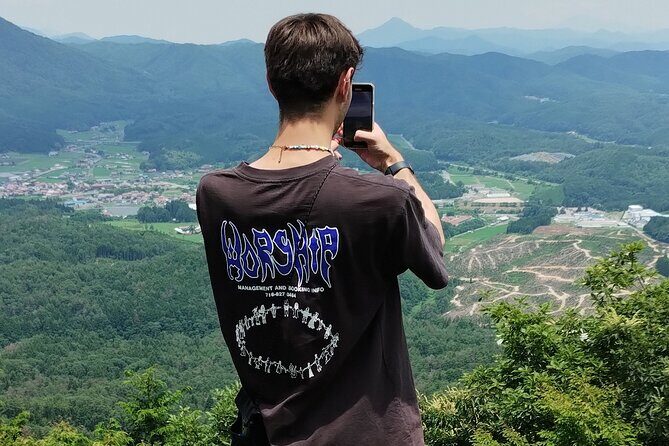
Kakeyama is your first real “okay, this works” moment. The area includes steep hills, and that’s exactly where the pedal-assist earns its keep. The point isn’t speed—it’s keeping you moving comfortably so you can experience the area instead of spending the day fighting for traction and breathing hard.
This stop is also a good psychological warm-up. If you’re worried about riding an e-bike, Kakeyama is where the assist makes the bike feel like part of the ride rather than a gimmick. You should expect to slow down, take in the view, and get your bearings before you roll into the more rural neighborhood feel.
What to consider: even with the assist, you’ll be riding at a real-enough pace that you’ll feel it in your legs. If you’re someone who hates sustained saddle time, this may still feel like an active half day. But for most people with moderate fitness, it’s an “active, not punishing” sweet spot.
Stop 2: Doitaya farming community and the quiet scenes
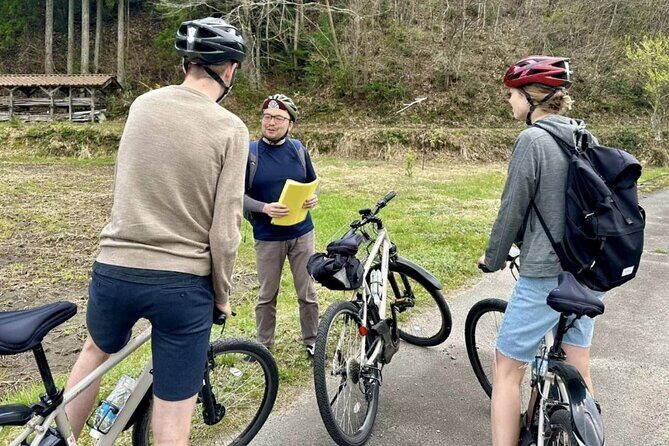
Doitaya is where the tour shifts from “ride mode” to “rural life mode.” This farming community keeps a traditional look from the past, with quaint houses and plenty of rice fields. You’re also told to expect streams and wildlife, so it’s not just flat visuals. It’s a layered rural environment that feels lived-in rather than curated.
This is one of the most valuable parts of the tour because it changes what rural Japan looks like in your mind. Instead of thinking of farms as distant farmland, you see how villages organize around agriculture—how homes sit next to fields, how the water lines show up in daily life, and how nature is right there, not in a far-off nature reserve.
One practical note: this stop is still part of an e-bike day, so you’ll be walking only as needed between viewing points. If you want to fully explore on foot for a long time, you may find the stop length fairly tight. But for the format—cycle, stop, learn, move on—it fits.
You can also read our reviews of more city tours in Hiroshima
Lunch at Ainosato Herb Garden: vegetables, edible flowers, and winter sushi
The Ainosato Herb Garden lunch stop is built for a very specific kind of traveler. If you like food that doesn’t taste like it came from a vending machine or a tourist menu, this is the break that makes the whole ride feel complete.
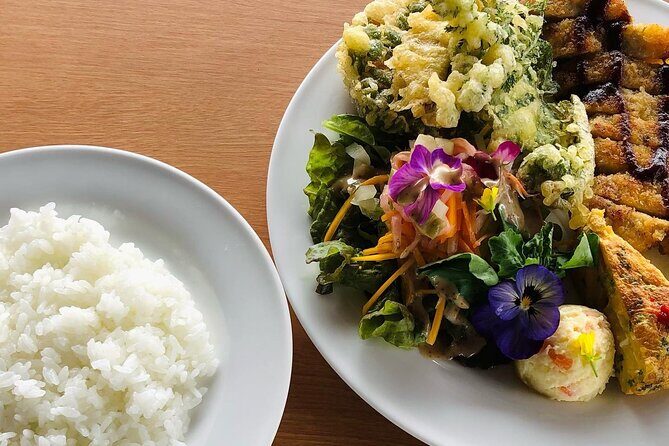
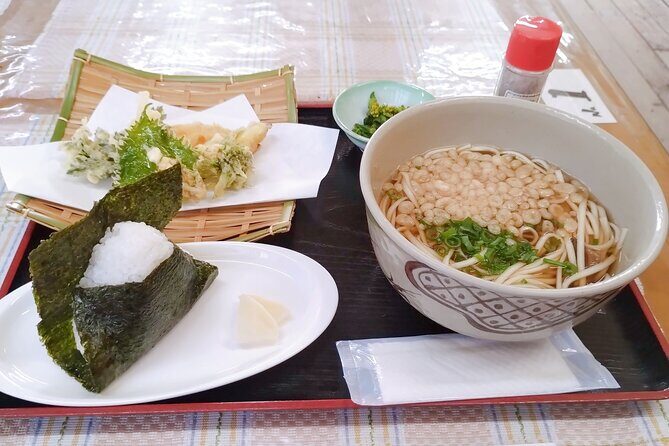
The lunch here focuses on fresh, locally grown vegetables and edible flowers. The herb garden restaurant is described as using produce free of harmful pesticides, which matters if you pay attention to how ingredients are grown. You’ll also likely appreciate the change of pace: after hours on a bike, sitting down for a real meal is where the day starts to feel like a trip, not just transport between photo locations.
Season changes things. From December to March, the option shifts to a sushi lunch at the farm house. If you’re traveling in winter, ask what’s available for your date when you book, because this can affect both taste and cost.
Two important value points:
- Vegan lunch is available on request if you book at least 3 days in advance.
- Lunch may be an additional cost, since the tour information lists lunch pricing separately. Budget for it so you don’t get surprised.
If it’s raining: you’re still going to want something warm and filling. This stop helps the day keep its rhythm even when weather doesn’t cooperate.
Stop 4: Oasa main street—old buildings, quieter life
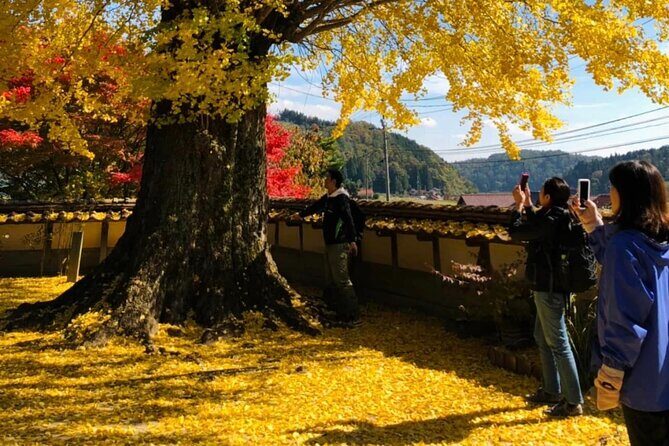
Oasa is the ending flavor of the tour: quieter, slower, and more “daily town” than “destination town.” The main street used to be a busier hub of people and shops, but now it moves at an unhurried pace. What’s left—old buildings—works like a time marker for how prosperity changed over the years.
This stop is where you’ll probably notice how much of Japan’s countryside is about continuity. Not constant novelty. Not staged attractions. Just the ongoing presence of structures, routines, and people doing ordinary things.
The tour still leaves room to browse the small number of shops that remain. The goal isn’t shopping for the sake of it; it’s seeing how a small town continues after the big-city energy fades.
What to expect: you’ll get a guided look, but it’s not a long walking excursion. If you want a deeper wander on your own, this is a good place to add extra time after the tour ends.
Your guide matters: Jonah’s role and the rain-proof mindset
The best tours handle two things at once: the logistics and the meaning. In this tour, Jonah is specifically praised for being a strong guide, with lots of information and a smooth handle on schedule and pick-up timing. That matters because it reduces the mental load. You show up, you’re guided, and you don’t spend your energy figuring out the day.
Jonah also shows up in the small details that make a trip feel cared for. On rainy days, the guide brought a poncho for at least one guest, and that’s a nice clue about how the operation thinks. Even if weather ruins your mood, you should still be able to enjoy the ride and stops without feeling like you’re stuck.
It’s also a good sign that people mention the tour staying informative without becoming a lecture. You’re learning about local life in the places you’re actually riding through—rice fields, streams, town streets—so the information sticks.
Who should book this e-bike ride
This is a great match if you want:
- A half-day active outing that isn’t too athletic
- Rural sights tied to how people actually live
- A guide-led pace that helps you notice details you might miss on your own
- E-bike comfort even if you’re new to e-bikes
It may not be ideal if:
- You’re looking for a very long, walking-heavy village exploration
- You dislike riding bicycles and would rather be fully on foot or in a vehicle
- You expect lunch to be fully included in the base price without extra payment
Good news: the group size cap of 8 keeps the vibe calm. You’re not squeezed next to strangers, and the guide has enough attention to handle questions and pace adjustments.
Quick practical tips before you go
These are the small things that make the difference between a smooth ride and a distracted one:
- Bring your own water bottle. There are multiple refill stations on the route, so you can top up along the way.
- Wear practical shoes and clothing for a bike ride. You’ll want grip and comfort, especially if roads are damp.
- Don’t ignore the height rule: you need to be at least 140 cm to ride.
- Vegan lunch requires planning. If you want it, request it 3 days in advance.
Also consider timing. This tour is often booked about 61 days in advance on average, so if your dates are fixed, don’t wait until the last minute.
Should you book Hiroshima Country Cycling: Explore Rural Life 1 HR from City?
I think this is an easy yes if you’re the type of traveler who enjoys quiet places where daily life is the main attraction. The mix of electric bike ease, a small-group feel, and a lunch stop that actually sounds worth stopping for makes it good value. Plus, the day stays focused: Kakeyama, Doitaya, Ainosato Herb Garden, then Oasa.
Before you book, just do two reality checks:
1) Confirm how lunch is handled for your specific booking so you’re not surprised by extra charges.
2) Be honest about your bike comfort. The e-bike helps, but you still ride.
If you want a countryside day that feels local and not overly staged, this one deserves a spot on your Hiroshima-area plans.
FAQ
What is the duration of the Hiroshima Country Cycling tour?
The tour runs for about 4 hours.
What time does the tour start and where does it meet?
It starts at 10:00 am at Oasa I.C. Bus Stop.
How many people are in the group?
The tour has a maximum of 8 travelers.
Are the e-bike and helmet included?
Yes. The tour includes bicycle use and a helmet.
Is lunch included, and do you offer vegan options?
Lunch is associated with the Ainosato Herb Garden stop (with a sushi option in December to March). The tour information lists lunch prices separately, and vegan lunch is available on request if you book at least 3 days in advance.
Do I need to pay for transportation between Hiroshima and Oasa?
The highway bus fare between Hiroshima and Oasa is listed as not included (3,560 JPY round trip).