REVIEW · TOKYO
Tokyo: Asakusa Temple & Shrine Walking Tour with Local Guide
Book on GetYourGuide →Operated by Sunrise Adventure · Bookable on GetYourGuide
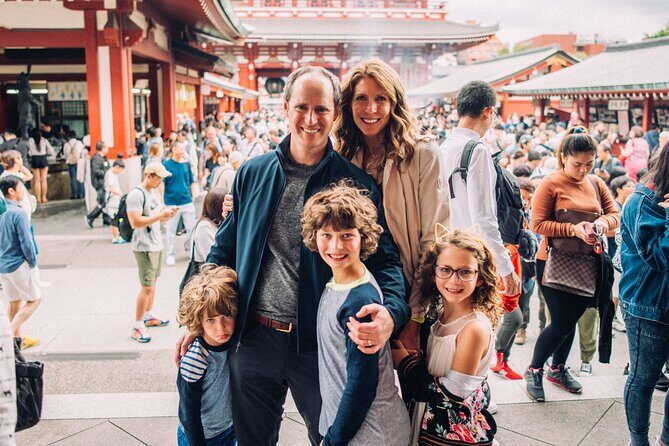
Asakusa makes religion feel personal. In just 2 hours, this small-group walk turns Senso-ji and Asakusa Shrine into something you can actually follow. I love the small-group vibe and the hands-on ritual guidance.
What makes it work is the way your local guide explains what you’re seeing and what to do with your body and attention. You’ll start by the river at Azumabashi Bridge, then move through the classic gates and shopping streets, ending with practical lessons at the temples. One thing to consider: this is a walking tour, and it is not a good fit if you have mobility limits or low stamina.
If you’re lucky with your guide, it gets even better. Names that come up in recent tour groups include Nicolas (often spelled Nico on the day), Erik, Lino, Diane, Nana, and Joe, and the common theme is clear explanations with lots of room for questions. It’s relaxed, but you do need comfortable shoes and patience for crowded streets.
In This Review
- Key takeaways before you go
- Why this Asakusa tour feels better than going solo
- Azuma Bridge start: Skytree views and the river-level mood
- The Asakusa Tourist Information Center viewpoint: a quick route to better photos
- Kaminarimon Gate: the 700kg lantern story you’ll actually remember
- Nakamise Shopping Street: sweets with meaning and souvenir logic
- Hōzōmon Gate and the temple approach: where etiquette starts
- Sensō-ji Temple: learning the Buddhist prayer style
- Asakusa Shrine: spotting Shinto rules next to Buddhism
- The interactive rituals: temizu, omikuji, and healing incense
- Photo stops and the small-group edge
- Price and value: why $30 feels fair for what you get
- Practical details that affect your comfort
- Who this tour suits best
- Should you book this Asakusa Temple & Shrine walk?
- FAQ
- How long is the Asakusa Temple & Shrine walking tour?
- What is the group size limit?
- What languages are the guides available in?
- Where does the tour meet?
- What should I bring?
- Is there a dress code or restrictions on tattoos?
- Are there any rules about smoking or drones?
Key takeaways before you go
- Small group (max 8): enough time to ask questions without feeling rushed
- Shinto and Buddhism side by side: you learn the differences by doing the actions correctly
- Rituals you practice: temizu hand washing, omikuji fortune telling, and incense offerings
- Real photo help: your guide points out viewpoints and asks you to look for specific angles
- Temple etiquette in plain steps: bowing, where to stand, and how torii gates work
Why this Asakusa tour feels better than going solo
Asakusa can overwhelm you fast. You arrive, you see the lanterns, you take photos, and then you realize you missed half the meaning. This tour fixes that by giving you a simple map for what you’re seeing and why it matters.
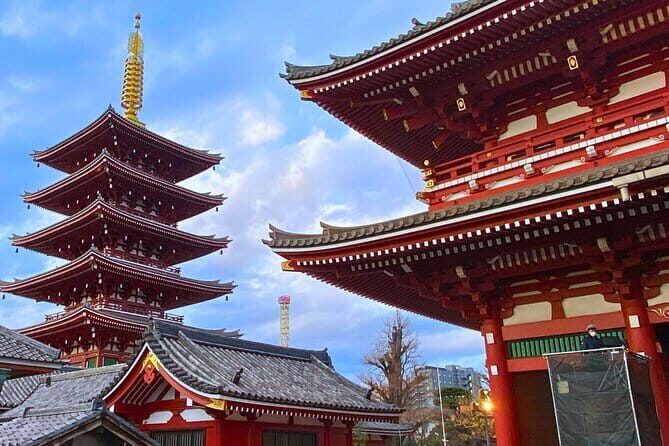
I especially like that it’s not only big-name sights. Yes, you go to Sensō-ji Temple and Asakusa Shrine, but the experience is built around the mix—how Shinto and Buddhism share the neighborhood and share the same streets without feeling like a contradiction. Your guide also brings in practical details, like how you should move through gates and how prayer works at each place.
The pacing is also forgiving for a 2-hour walk. Even with a small group, you still get time at key stops, and you can ask questions even when it’s not strictly about the temples. Recent groups note a relaxed pace and a guide who answered everything without making you feel like you were slowing things down.
You can also read our reviews of more walking tours in Tokyo
Azuma Bridge start: Skytree views and the river-level mood
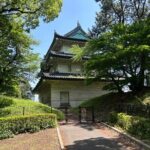
You begin at Azumabashi Bridge, with the Sumida River doing what it does best: calming the eyes before you hit crowds. This is also where you get one of the easiest “first Tokyo landmark” setups, with riverside views and the Tokyo Skytree in the mix.
There’s a fun local nickname here too. Your guide points out what locals call the golden poop—yes, that phrase comes up—and explains what you’re actually looking at. It’s the kind of small cultural detail that makes the whole area feel less like a postcard and more like a living neighborhood.
This first segment is only about 10 minutes of focused walking and a photo stop, but it sets the tone. You’re not just arriving at a temple; you’re entering Asakusa with context.
The Asakusa Tourist Information Center viewpoint: a quick route to better photos
Next you head to the top of the Asakusa Tourist Information Center for a higher view of the temple area. If you’ve ever stood in the courtyard and wondered where the key angles are, this helps immediately.
From that viewpoint, you can “read” the layout. You’ll understand where the gates sit, how the approach works, and why certain crowd flow patterns make sense. It’s also a great place to confirm what you’ll see a few minutes later at Kaminarimon and the shopping street leading toward the gates.
One practical note: if it’s hot, this is where having water matters. The tour covers a lot in a short time, and you’ll be outside and moving for most of it.
Kaminarimon Gate: the 700kg lantern story you’ll actually remember
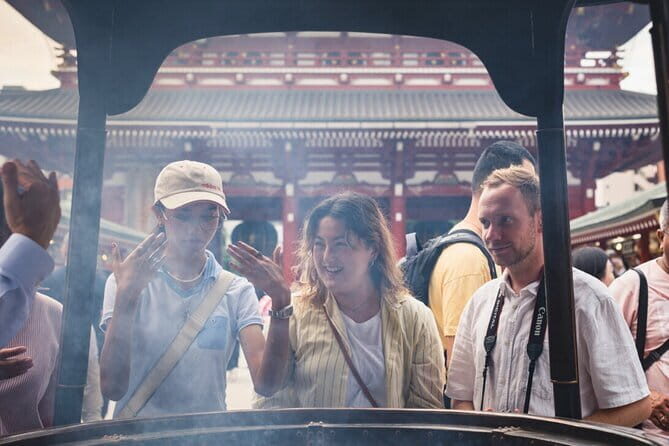
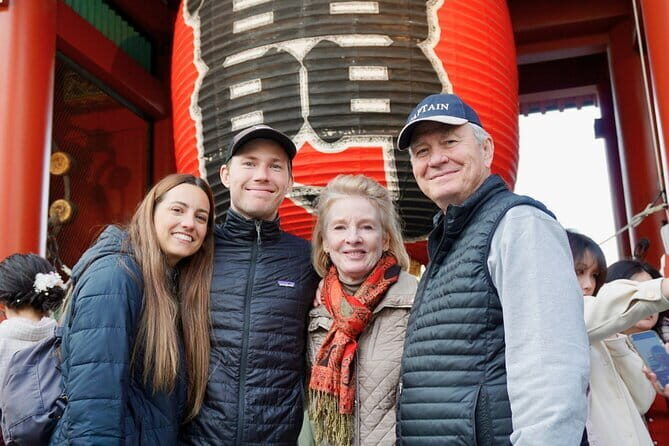
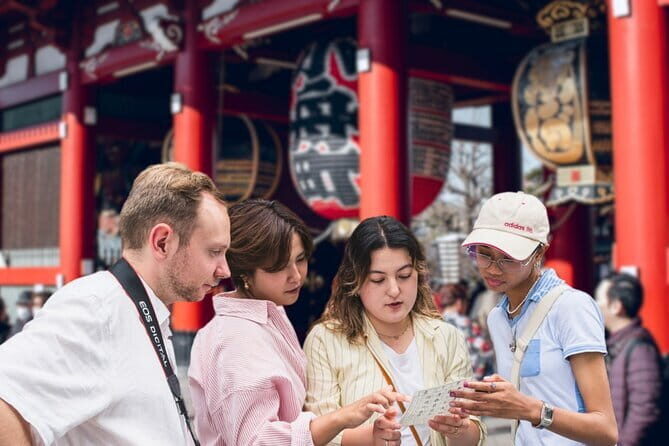
At Kaminarimon Gate, you meet one of Asakusa’s most recognizable silhouettes: the massive red lantern. Your guide shares the story behind its 700kg weight and connects it to the gate’s name, known for the idea of thunder.
This is a good example of why a guide helps. Standing under that lantern without explanation is just a photo moment. Hearing why it’s there turns it into a symbol you can recognize and repeat back later.
You’ll also learn the tone of the area. Asakusa isn’t trying to be quiet and museum-like. It’s an active place of practice—people come here to do specific rituals, not just to sightsee. That changes how you move through the entrance.
Nakamise Shopping Street: sweets with meaning and souvenir logic
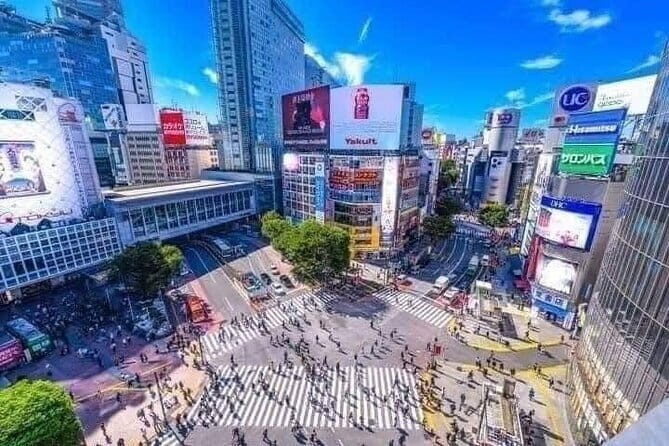
Then you’ll walk through Nakamise Shopping Street, the famous corridor of snacks and souvenirs. I love that the tour treats this street like more than a shopping hallway.
Your guide explains the cultural significance behind common treats and small gifts, so you’re not just guessing what to buy. You’ll also get help with translation if you want it, which is useful because shop names and product labels can be cryptic if you don’t read Japanese.
A nice benefit here: your guide can help you find what’s actually good versus what’s only there because it’s visible to tourists. Recent tour groups mention guides who gave recommendations for what to do next in the area too, like pointing people toward Kappabashi shopping after the tour.
This section is about 15 minutes, but it can feel like longer because you’re absorbing street-level history while deciding what to taste or buy.
You can also read our reviews of more guided tours in Tokyo



Hōzōmon Gate and the temple approach: where etiquette starts
After Nakamise, you approach Hōzōmon Gate and move through the entry flow that leads toward the main temple spaces. This is where your guide’s “how to do it” instruction really matters.
You’ll learn about the expectations of behavior inside, including how to walk relative to the gates and how to show respect. Even if you’re not a “rules person,” this makes your experience easier. Instead of worrying about what’s right, you follow your guide and focus on the meaning.
You’ll also get stop-and-look time. The tour includes multiple short photo and sight stops between gates and the main temple area, so you’re not rushing through like you’re on a conveyor belt.
Sensō-ji Temple: learning the Buddhist prayer style
Inside Sensō-ji Temple, the biggest value is that you learn how to properly pray in the Buddhist style, not just where to stand for a picture. Your guide explains the steps so you can follow along without guessing.
Another helpful detail: you learn how the process differs from the neighboring Shinto space later on. That contrast is the point. If you only do the “main temple” routine, you miss the idea that Tokyo’s religious life isn’t one single script—it’s a shared set of practices with different rules.
You’ll also have time for guided sightseeing. One thing that comes up in recent groups is that guides take time to explain what most people don’t notice about the blend of traditions. That “small observation” shift is what makes the temple stop feel fresh even if you’ve seen photos online.
Asakusa Shrine: spotting Shinto rules next to Buddhism
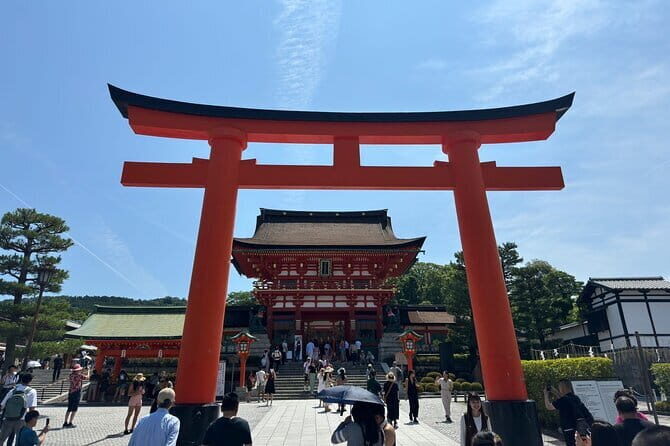
Then it’s time for Asakusa Shrine, where Shinto practice comes into focus. Your guide walks you through how what you did at the Buddhist temple differs here, especially in terms of the ritual flow and basic etiquette.
This part matters if you’re the type who wants to understand Japan beyond famous buildings. You’ll see how the neighborhood holds both traditions with everyday normalcy. It doesn’t feel like an academic comparison. It feels like two systems living side by side.
You’ll get additional sight time at this stop, about 15 minutes, so you can absorb the shrine space without being yanked along.
The interactive rituals: temizu, omikuji, and healing incense
A major reason people rate this tour so highly is that you don’t just watch rituals. You do them.
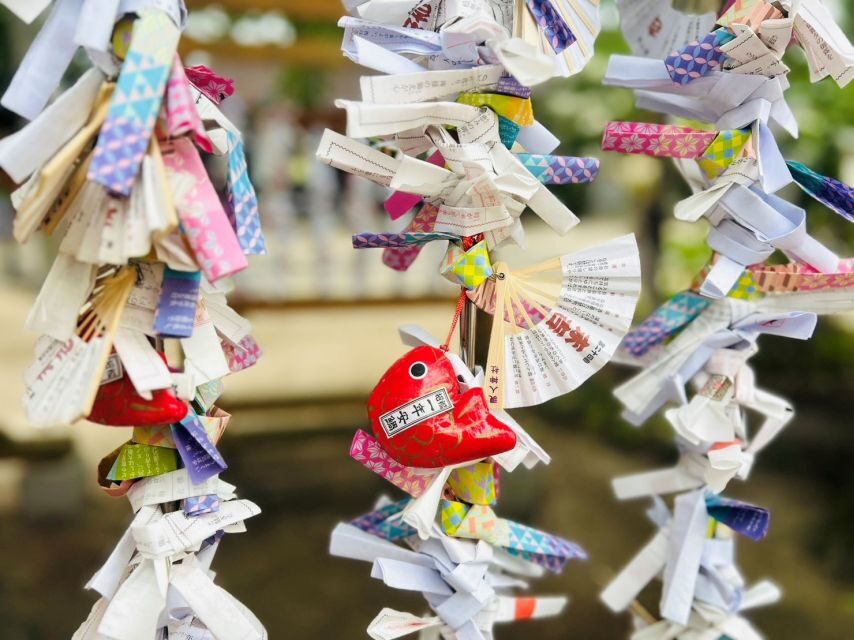
You’ll practice temizu, the hand washing ritual, which is about purification before entering sacred spaces. Next comes omikuji, fortune telling. Your guide explains how it works so you understand it as a cultural ritual rather than random tourist theater.
Then there’s incense smoke for healing—your guide connects it to both physical and mental well-being. That’s important. In Japan, ritual often serves practical emotional purposes, not only spiritual ones. Even if you don’t treat it as a personal belief system, you’ll understand why people still do it.
If you’re traveling with kids, this tour’s “do it together” format is also a win. Recent groups highlight guides who stayed patient with children and made explanations easy enough to follow.
If you prefer a quieter experience, this is still respectful. The guide keeps you on track and tells you what the ritual actions are for, which reduces uncertainty.
Photo stops and the small-group edge
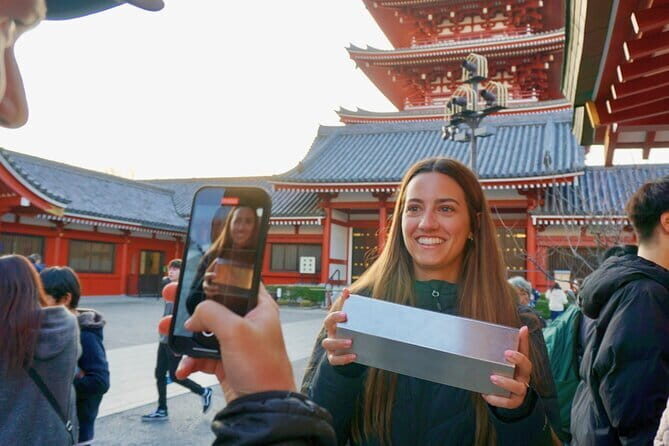
You’ll have several photo opportunities built into the route, including at Azuma Bridge and the viewpoint at the tourist center. Your guide also shares the best photo angles, and the key detail is that they encourage you to ask.
In a crowd-heavy area like Asakusa, that guidance can save a lot of time. Instead of chasing viewpoints that are blocked, you know where to stand and when to move. Some recent groups also mention guides who adjusted for busy moments, keeping the pace relaxed and helping avoid the worst bottlenecks when possible.
Group size matters here. With a limit of 8 people, you get a little more attention per person. It’s easier to ask questions and easier to follow instructions without losing your place.
Price and value: why $30 feels fair for what you get
At $30 per person for 2 hours, you’re paying for more than walking. You’re paying for explanations, ritual instruction, and translation help. For Asakusa, those are the things that slow you down when you go alone.
If you’re a first-time visitor, this cost is often worth it because it helps you avoid the common mistakes:
- you don’t know what to do at temples
- you focus on photos and miss cultural meaning
- you don’t understand the Shinto-versus-Buddhism contrast
If you’re traveling with a family, the “do the rituals together” aspect can save energy. It’s also easier for kids when the guide turns temple rules into something you can participate in.
Could it be cheaper somewhere else? Probably. But if you want an experience that’s more than a highlights walk, this one is priced in a sensible place.
Practical details that affect your comfort
This is a walking tour, and it’s not designed for wheelchair users or people with mobility impairments. If walking for the full 2 hours is tough for you, choose another plan.
Wear comfortable shoes. Bring water, especially on hot days. Vending machines are available during the tour, but you’ll feel better if you start hydrated.
There’s no strict dress code, and tattoos are welcome. That said, you should still dress for comfort and the weather since the tour runs rain or shine.
Rules you need to follow: no smoking and no drones. Standard temple-area respect applies.
One optional add-on you might consider: the tour mentions a partnership for kimono rental with a store about 2 minutes from the meeting point. If that’s your plan, ask your guide ahead so you don’t scramble last-minute.
Who this tour suits best
This is an excellent fit for:
- first-time Tokyo visitors who want a meaningful introduction to Asakusa
- couples who like a mix of culture and good photo stops
- families with kids (especially those who enjoy interactive activities)
- solo travelers who don’t want to worry about etiquette alone
It may be less ideal if:
- you have limited mobility or low walking stamina
- you hate guided structure and want total freedom
Should you book this Asakusa Temple & Shrine walk?
If you want Asakusa in the most human way—rituals, etiquette, and the Shinto-Buddhism mix—you should book it. The combination of small group, clear guide instruction, and hands-on practice is what makes this more than just sightseeing.
I’d skip it only if your priority is pure spontaneity and you’re confident handling temple etiquette without guidance. Otherwise, for $30 and about two hours, you’ll leave with a stronger feel for what you just saw—and you’ll enjoy future visits much more because you’ll know what to look for.
FAQ
How long is the Asakusa Temple & Shrine walking tour?
It lasts 2 hours.
What is the group size limit?
The small group is limited to 8 participants.
What languages are the guides available in?
The live tour guide speaks English and French.
Where does the tour meet?
The meeting point may vary depending on the option you book.
What should I bring?
Wear comfortable shoes and bring water.
Is there a dress code or restrictions on tattoos?
There is no dress code, and tattoos are welcome.
Are there any rules about smoking or drones?
Smoking is not allowed, and drones are not allowed.