REVIEW · TOKYO
Gyoza Making from Scratch- Tokyo Ultimate Cooking Class
Book on Viator →Operated by Patia's Japanese Cooking Class · Bookable on Viator
Gyoza from scratch in central Tokyo. In this hands-on class at Patia Kitchen, you make gyoza wrappers and filling from fresh ingredients, learn the fold, then cook yaki-gyoza and enjoy them with multiple dipping sauces. You’ll also compare handmade wrappers to store-bought so you can taste the difference in texture right away.
I especially like that the session is built around real technique: kneading dough, crafting a filling that stays juicy, and getting the fold down with step-by-step guidance from a friendly English-speaking instructor. The class also covers the full plate, not just dumplings—there’s soup and a side dish to round things out, plus English recipe materials and digital photos after.
One thing to keep in mind: there’s no hotel pickup, so you’ll want to plan your own trip to the central studio. Also, if you want chicken instead of the default pork, you need to request it more than 48 hours ahead.
In This Review
- Key points to know before you go
- A practical Tokyo gyoza class built around real technique
- Price, time, and what you’re really paying for
- Finding Patia Kitchen in central Tokyo (and planning your route)
- What happens first: dough, wrappers, and why starting from scratch matters
- Filling basics: the secret to juicy gyoza
- Folding practice: learning the shape that helps the bite
- Pan-fried yaki-gyoza: crisp bottoms, tender tops
- Don’t skip the soup and side dish
- Dipping sauces: tasting your way to the right bite
- The English recipe and the digital photos after class
- How to get the most out of your gyoza class
- Who this class is best for (and who might want a different format)
- The booking reality: when to secure your spot
- Should you book this gyoza class?
- FAQ
- Is the class in central Tokyo?
- How long is the experience?
- What’s the price per person?
- Do I need hotel pickup?
- Is there a mobile ticket?
- How big is the group?
- What will I make during the class?
- Are different dipping sauces included?
- Can I request chicken instead of pork?
- Is an English recipe included?
- Can I cancel for a refund?
Key points to know before you go
- From dough to wrappers: You make gyoza wrappers from scratch, then cook with both homemade and store-bought for comparison.
- Juicy filling lessons: You learn the practical “how” behind a filling that stays moist, not dry.
- Pan-fried yaki-gyoza cooking: You’ll practice the technique for crisp-bottom dumplings.
- Sauces, soup, and a side dish: You don’t just eat gyoza—you learn how people build a full bite.
- Small group size: Maximum of 12 travelers keeps the pace teachable and the room comfortable.
- Take-home tools: You get an English recipe and later-downloadable digital photos.
A practical Tokyo gyoza class built around real technique
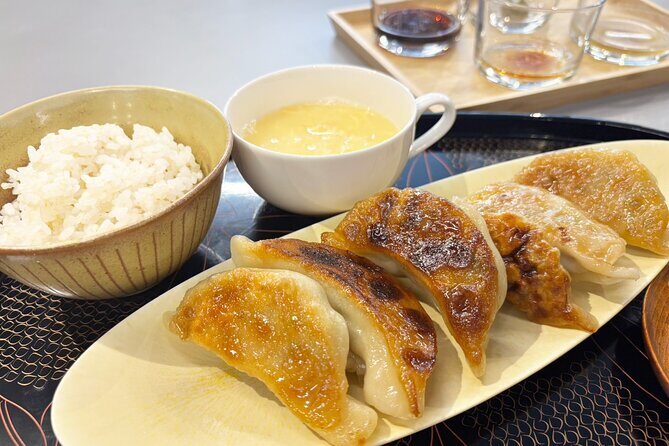
If you like food that’s both comfort-fast and detail-precise, gyoza is a great pick. The appeal here isn’t just eating dumplings—it’s learning why they turn out the way they do. This class is designed so you work through the whole process: wrappers, filling, folding, pan-frying, and then pairing with soup, sides, and dipping sauces.
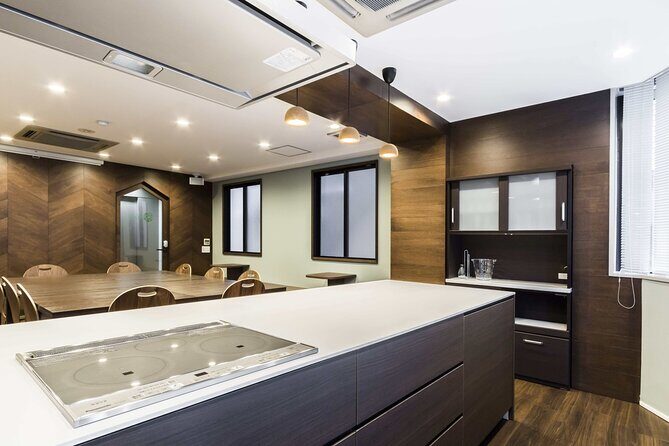
The setting also matters. The class moves to Patia Kitchen studios in central Tokyo, which are described as modern, spacious, and fully equipped. That’s a big deal in cooking classes. You want clean, well-organized stations because you’re working with dough and a filling that needs careful handling. A good workspace turns a “fun activity” into actual skills you can repeat at home.
And there’s another smart touch: the class includes a comparison between handmade and store-bought wrappers. Even if you’re an absolute beginner, tasting the texture differences makes the technique feel concrete instead of abstract.
You can also read our reviews of more cooking classes in Tokyo
Price, time, and what you’re really paying for
At $92.24 per person for about 1 hour 50 minutes, the price can feel steep until you look at what’s included. You’re not just watching or assembling. You’re making wrappers and filling from scratch, learning folding methods, cooking yaki-gyoza, and finishing with soup and a side dish, plus multiple dipping sauces.
You also get two important “value boosters” that many cooking classes skip:
- an English recipe you can use later
- later-downloadable digital photos from the experience
If you’re the type who likes to recreate a meal at home, those take-home pieces help justify the cost. And if you’re traveling with limited time, the tight duration is useful—you leave with skills and a full meal without losing half a day.
One more timing note: this experience is often booked about 35 days in advance on average. That’s not a hard rule, but it’s a good sign the class is popular. If gyoza-making is on your “must do” list, book early to avoid scrambling later.
Finding Patia Kitchen in central Tokyo (and planning your route)
The class takes place in central Tokyo at Patia Kitchen studios. The important practical detail is transportation: no hotel pickup or drop-off is included. That means you should plan to reach the meeting point near public transportation on your own.
This is easier than it sounds if you’re already comfortable using transit in Tokyo. Also, the tour/activity notes a mobile ticket, which usually makes entry smoother (you don’t need to print anything).
Because it’s a working kitchen class, I’d also plan for a calm arrival. Give yourself a few minutes buffer for finding the studio, getting settled, and washing up before you start kneading dough. Cooking classes move at a teaching pace—being rushed can make the whole experience less fun.
What happens first: dough, wrappers, and why starting from scratch matters
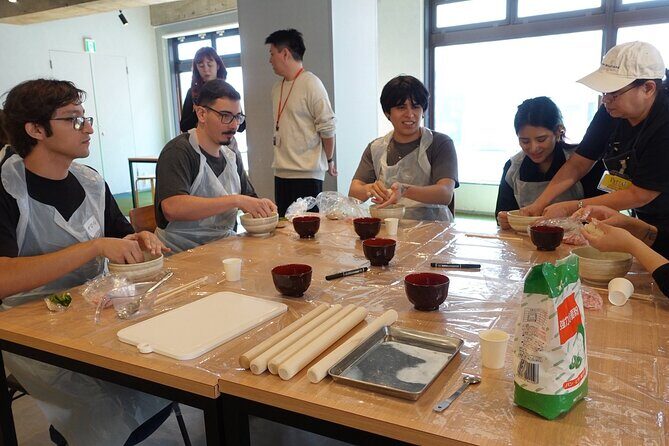
The class walks you through making gyoza wrappers from the ground up—starting with kneading dough. That may not sound glamorous, but it’s exactly where your understanding begins.
When you make wrappers yourself, you get a feel for:
- how dough responds as it’s worked
- how thin you can stretch it without tearing
- what the right texture feels like before you add filling
That’s the difference between knowing a recipe and actually learning a method. And because you’ll later compare homemade wrappers to store-bought wrappers, you’ll be able to connect technique to outcome. You’ll taste the structural difference too: how thickness and texture affect bite and overall mouthfeel after pan-frying.
This is the kind of lesson that sticks. Even if you never make wrappers again, you’ll still understand what makes gyoza feel light but sturdy enough to hold filling.
Filling basics: the secret to juicy gyoza
Once the wrappers are handled, you shift to the filling. The experience description is pretty clear that the class focuses on “the secret to making juicy gyoza filling.”
That phrase matters. Many dumplings go wrong for two reasons: either the filling is too dry, or it loses moisture during cooking. A class that explicitly teaches “juicy” filling is signaling that you’ll learn how to balance ingredients and handling so the dumplings don’t turn rubbery or bland.
You’ll also fold handmade dumplings and cook them, so the filling lesson isn’t theoretical. You’ll see the result.
Chicken filling is available upon request if you let the operator know more than 48 hours in advance. If you’re sensitive to pork or just prefer chicken, plan ahead. Last-minute requests may not be accepted, so don’t assume you can switch on the day.
A few more Tokyo tours and experiences worth a look



Folding practice: learning the shape that helps the bite
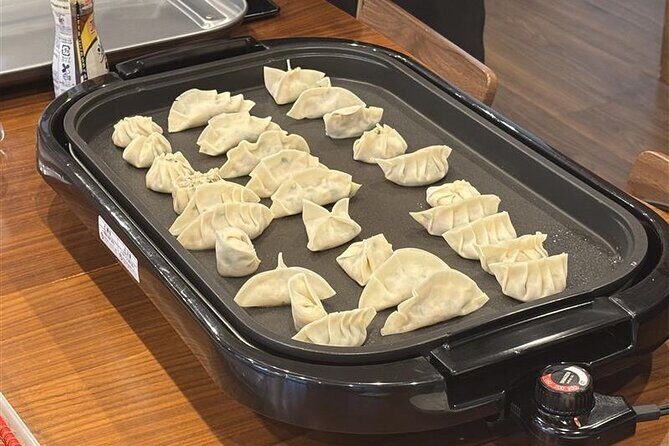
Folding sounds simple until you try it. This class includes hands-on time to learn folding techniques so you can seal dumplings properly.
There are two real benefits to learning the fold here:
- Better structure: A good seal keeps filling from leaking while cooking.
- Better cooking: The shape influences how dumplings sit in the pan, which affects crisping.
You’ll practice folding as part of the class, then cook both handmade and store-bought wrappers. That makes folding less like a craft project and more like a cooking skill you can measure.
If you’ve never made dumplings before, don’t stress about getting perfect shapes. The goal is consistency and seal integrity. And with a maximum of 12 travelers, you should have enough attention from the instructor to correct mistakes as they happen.
Pan-fried yaki-gyoza: crisp bottoms, tender tops
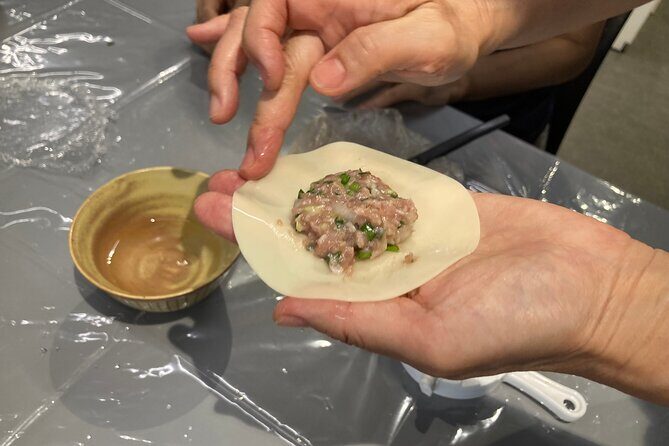
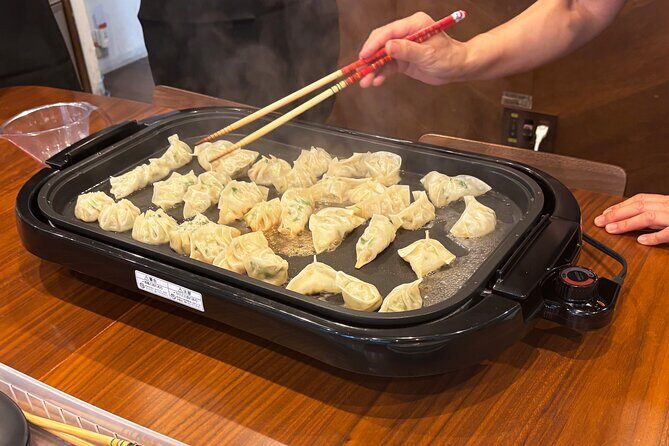
After folding, you’ll cook pan-fried (yaki-gyoza). This is where flavor gets built fast: browning at the bottom plus steam inside from the way dumplings are cooked.
For you, this is the payoff moment. You’ll go from raw dough and filling to a cooked dumpling in a short, satisfying sequence. It also gives you a chance to compare results—how homemade vs store-bought wrappers behave when exposed to heat and moisture.
The class also includes enough structure to keep things from becoming chaotic. When everyone is working at the same pace in a fully equipped studio kitchen, you’re not stuck watching other people. You’re cooking.
Don’t skip the soup and side dish
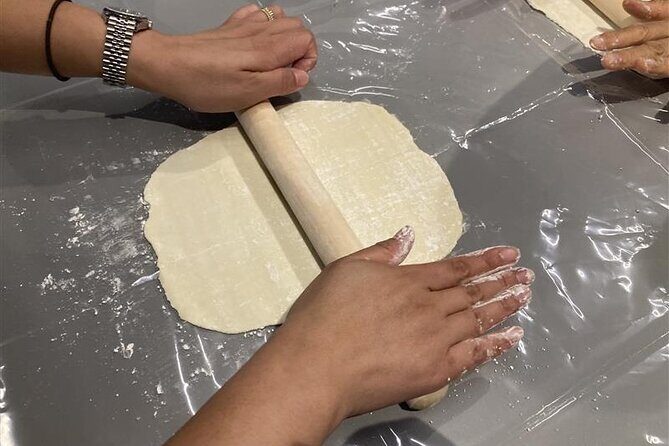
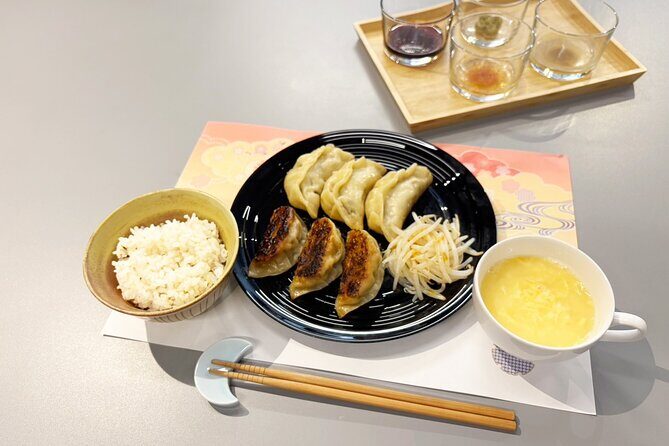
Many dumpling classes focus only on dumplings. This one includes soup and a side dish so you can eat gyoza as part of a complete meal.
Why this matters: dipping sauces alone can get one-note, and gyoza is savory enough that you need something to balance the plate. The soup and side dish help with that. Even if you’re learning cooking technique, pairing food is part of learning Japanese eating habits.
I like that this class doesn’t treat gyoza like a standalone stunt. It gives you a practical meal model you could recreate later—dumplings plus the supporting elements that make the meal feel finished.
Dipping sauces: tasting your way to the right bite
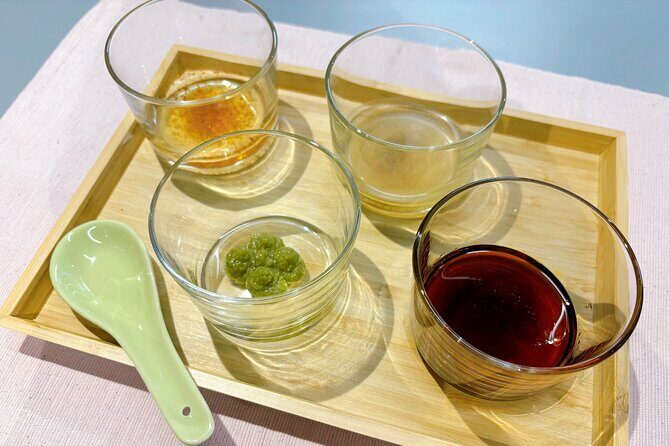
You’ll get to enjoy your gyoza with several different dipping sauces. That’s more useful than it sounds.
When you taste dumplings with different sauces, you learn how seasoning interacts with:
- the wrapper’s texture
- the filling’s flavor balance
- the crisp vs tender bite
This is also where the class helps beginners. Rather than telling you there’s a single correct sauce, the experience lets you experiment and find what you like. If you’ve ever wondered why gyoza tastes different in different places, this kind of tasting gives you the answer.
The English recipe and the digital photos after class
After you finish cooking and eating, you’ll receive an English recipe to recreate gyoza at home. That’s important because dumpling technique relies on small details—dough texture, filling consistency, fold/seal, and cooking method.
The later-downloadable digital photos are also a fun practical bonus. You can compare your finished dumplings to the class result and remember what you were aiming for with shape and browning.
These take-home pieces turn a one-time meal into a repeatable skill. If you travel and then come back home to cooking—this is the kind of souvenir that keeps paying off.
How to get the most out of your gyoza class
Here are a few things I recommend you do to maximize the value—based on the way the class is designed.
- Go hungry. You’ll make and cook multiple components—wrappers, dumplings, plus soup and side dish. Eating experience is part of the lesson.
- Pay attention during the wrapper comparison. Taste both and mentally label what feels different (thickness, chew, bite).
- Watch the fold and seal. If you fix one thing, fix your closure. That’s what protects the filling and helps cooking.
- If you want chicken, plan ahead. Request it more than 48 hours before the class so the switch can be made.
- Take your English recipe seriously. Use it soon after your class while the process is still fresh.
Who this class is best for (and who might want a different format)
This cooking class is a good fit for a wide range of ages, from young children to seniors. It’s also structured for beginners because you start from scratch and get step-by-step guidance.
You’ll enjoy it most if:
- you want a hands-on food experience rather than a tasting-only event
- you care about learning technique (wrapping, folding, pan-frying)
- you want a meal model you can repeat at home (English recipe plus sauce/soup pairing)
You might prefer a different kind of activity if:
- you want a long cultural lecture rather than a working kitchen session
- you’re hoping for hotel pickup or a guided tour around Tokyo streets (this one focuses on cooking)
The booking reality: when to secure your spot
With a small maximum group size (up to 12), classes like this can fill. The listing notes that it’s booked on average 35 days in advance, which means waiting too long could shrink your options.
If your travel dates are fixed, booking early is a smart move. If your schedule is flexible, you can still shop for timing and choose a class that fits your day without stress.
Should you book this gyoza class?
I think it’s a strong booking if your goal is practical skill, not just a food photo. The big reasons are clear: from-scratch wrappers, explicit lessons for juicy filling, hands-on folding and yaki-gyoza cooking, and a complete meal with soup, side dish, and multiple dipping sauces. Then you get an English recipe and photos—so the experience doesn’t vanish the next morning.
If you dislike cooking classes that require you to handle your own transport, or you’re looking for a more passive experience, then it may not fit. But for most food-minded travelers who want to learn something repeatable, this is an efficient, high-return choice.
FAQ
Is the class in central Tokyo?
Yes. The gyoza-making class takes place at Patia Kitchen studios in central Tokyo.
How long is the experience?
It runs for about 1 hour 50 minutes.
What’s the price per person?
The price is $92.24 per person.
Do I need hotel pickup?
No. Hotel pickup and drop-off are not included, so you’ll arrange your own transport to the studio.
Is there a mobile ticket?
Yes. You’ll receive a mobile ticket.
How big is the group?
The class has a maximum of 12 travelers.
What will I make during the class?
You’ll make gyoza wrappers and the filling from scratch, fold the dumplings, and cook pan-fried yaki-gyoza. You’ll also prepare soup and a side dish.
Are different dipping sauces included?
Yes. You’ll enjoy your gyoza with several different dipping sauces.
Can I request chicken instead of pork?
Chicken filling is available upon request if you notify the provider more than 48 hours in advance.
Is an English recipe included?
Yes. You’ll receive an English recipe to recreate gyoza at home.
Can I cancel for a refund?
Yes, there is free cancellation. You can cancel up to 24 hours in advance for a full refund. If you cancel less than 24 hours before the experience starts, the amount paid is not refunded.