REVIEW · KYOTO
Kyoto: Private Aerial Yoga Class
Book on GetYourGuide →Operated by SUNNY YOU Yoga Studio · Bookable on GetYourGuide
Weightlessness, right in Kyoto. This private aerial yoga class at SUNNY YOU Yoga Studio lets you choose a low hammock setup or a waist-height option, so the practice can match your comfort level and goals.
I especially like that you get a class tailored to where you’re at physically and mentally, not a one-size-fits-all routine. I also love that instruction is fully in English, which makes it easier to relax and actually understand what you’re doing in the air. One drawback to consider: aerial yoga isn’t for everyone—people with vertigo, altitude sickness, or certain health conditions should skip it, and the studio has clothing rules (no shorts, no sleeveless tops).
In This Review
- Key Points I’d Plan Around
- Entering Sunny You Yoga Studio in Omuro (and why location helps)
- Picking Low Aerial Yoga: calm, supported, and close to the mat
- Choosing Basic (Waist-Height) Aerial Yoga: the classic weightless feel
- How a 1-hour private class stays focused (and doesn’t waste your time)
- What to bring (and what Kyoto clothing rules actually mean)
- Safety and who should skip aerial yoga here
- The $61 price: what you’re really paying for
- Walking out feeling looser (and where to go next)
- Should you book Kyoto Private Aerial Yoga?
- FAQ
- Where is the meeting point?
- How long is the class?
- What are the differences between low aerial yoga and basic aerial yoga?
- Is the instruction available in English?
- What should I bring, and what clothing is not allowed?
- Who should not take this class?
Key Points I’d Plan Around
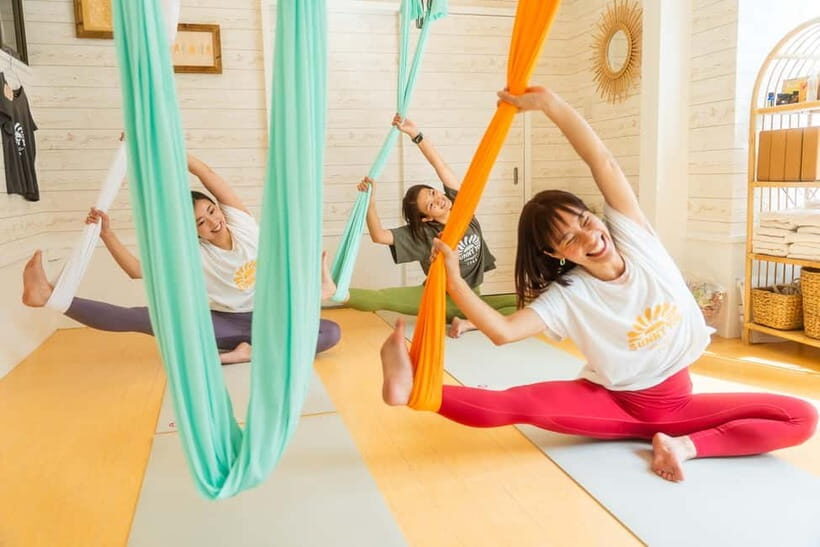
- Two heights, real choices: low aerial yoga keeps you supported close to the mat; the regular-height option lifts you into classic “in-air” poses
- Beginners are welcome: both options are described as suitable for beginners, with low aerial recommended first-timers
- English-only class: you won’t have to guess cues or safety instructions
- Private pacing: the instructor adapts to your current physical and mental state
- Equipment handled for you: you get a yoga mat, plus hammock support based on the option you choose
Entering Sunny You Yoga Studio in Omuro (and why location helps)
Your first win here is simple: the studio is easy to reach once you know the landmark. The meeting point is a small yoga studio with a yellow brick-style look, with a sign out front reading SUNNY YOU Yoga Studio. If you’re arriving by taxi, the street right in front is one-way, so hop out right away so you’re not stuck trying to cross or circle.
Getting there on public transit is also straightforward. From Arashiden’s Omuro Ninnaji Station, it’s about a 3-minute walk. From the city bus stop for Omuro Ninnaji Station, it’s roughly 5 minutes on foot. That matters because your class is only 1 hour, so you’ll appreciate not spending half the experience in transit.
The neighborhood is a bonus. One of the nicest things about doing this in Kyoto (instead of squeezing it into your day somewhere else) is that after your class, you can walk around the Omuro Ninnaji area before you head back to your hotel. The vibe feels calmer than some busier parts of the city, and it’s a good match for the “slow down and connect” style of yoga.
You can also read our reviews of more private tours in Kyoto
Picking Low Aerial Yoga: calm, supported, and close to the mat
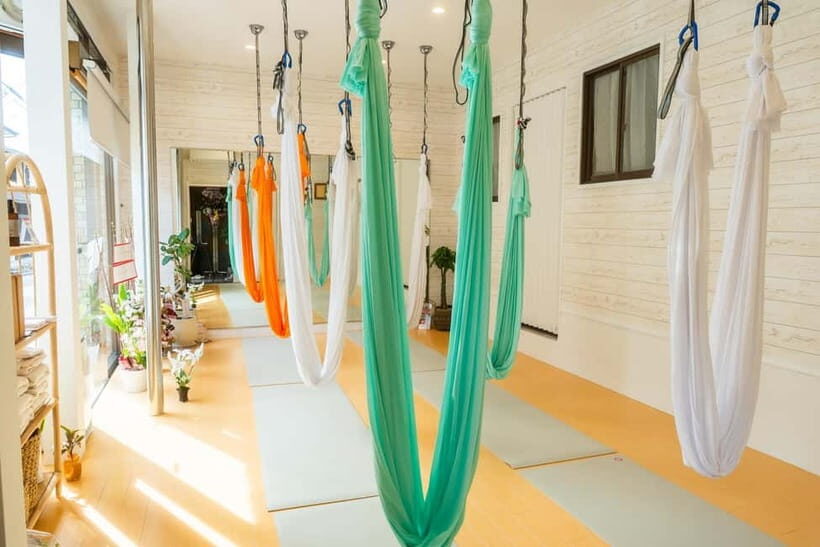
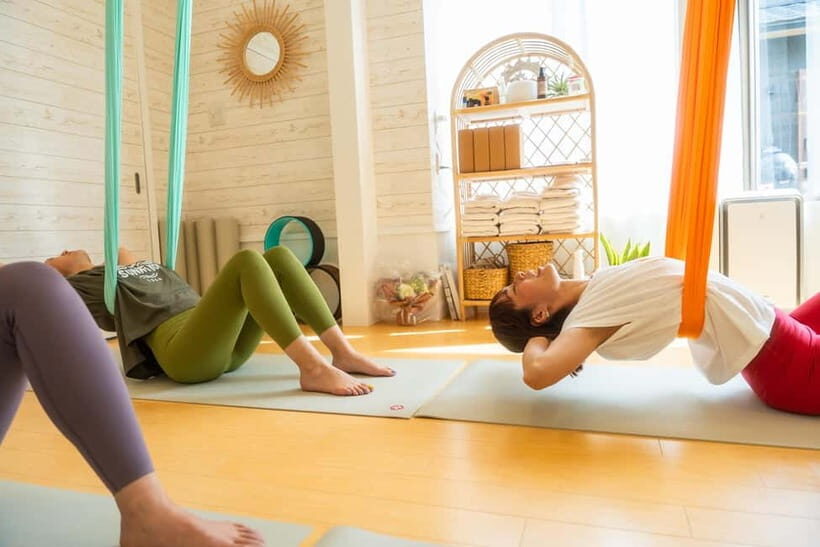
If you’re new to aerial yoga, the low-altitude option is the one to pick. Here’s the key setup: the hammocks are hung close to the ground, and you can keep part of your body on the mat while you move. That support changes the whole experience. You still get the hammock-assisted stretching and gentle “lifting” feeling, but you aren’t constantly worrying about being completely off the ground.
Low aerial yoga is also specifically recommended for people who:
- are new to aerial yoga,
- have a fear of heights,
- deal with motion sickness.
I like this option because it makes the practice feel less like a stunt and more like a guided stretching session with extra help. If your body feels stiff (or you just want a smoother start), that hammock support can help you relax into poses instead of tensing up.
You’ll also notice the psychological effect. When you’re not fully suspended, you can focus on breathing and form. That means you can get the stretch and lengthening benefits without the mental load of wondering whether you’ll wobble or feel unsteady.
For many people, this is the best “first chapter” of aerial yoga: you learn how the hammock works, how your body moves in it, and what you should feel during each pose—without going straight to the most intense version.
Choosing Basic (Waist-Height) Aerial Yoga: the classic weightless feel
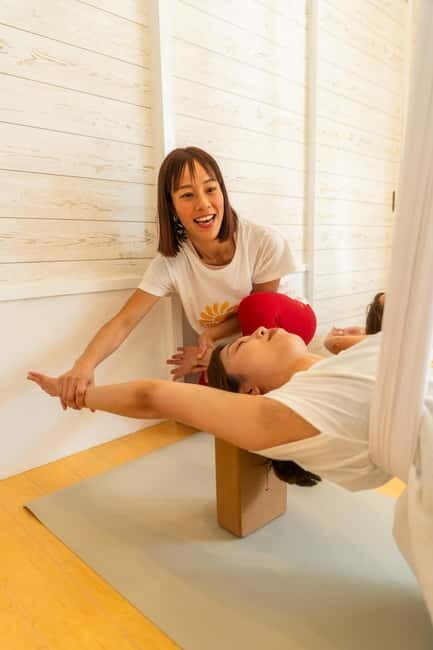
If you’re comfortable with the idea of being more supported but still lifted, the basic aerial yoga option is your next step. In this setup, the hammocks sit at waist height. That difference matters: you’ll feel more of the classic aerial effect, where your body feels lighter and you’re working in a different balance system than on the floor.
This option is described as great for:
- strengthening your core,
- improving flexibility,
- helping posture and circulation,
- and finishing with a relaxation element.
I think of it like this: low aerial yoga teaches your body to trust the hammock. Waist-height aerial yoga asks your body to do more in the air—without turning it into a chaotic scramble. Because the class is private, the instructor can adjust how far you go in each pose based on your comfort.
Also, even though it’s more “in-air,” the class is still framed as beginner-friendly. So if your goal is to get a fun weightless experience without feeling pushed beyond your limit, this option can hit the sweet spot—especially if you tell the instructor you want to move gradually.
How a 1-hour private class stays focused (and doesn’t waste your time)
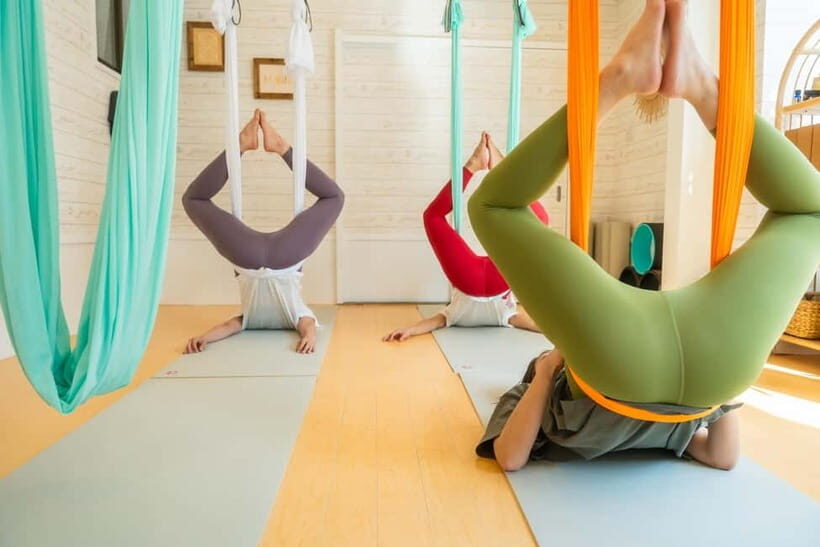
A big reason to book this as a private group is that your time isn’t diluted. With only a 1-hour session, every minute should matter—and a private format helps the instructor lead with intention instead of trying to manage a larger class pace.
You’re also not locked into a rigid routine. The class is designed to be tailored to your current physical and mental state. That’s important in aerial yoga because you’ll often feel different from day to day. Some days you might be tight and cautious; other days you might feel springier and ready to progress. The instructor’s job here is to meet you in that moment.
And because the class is conducted entirely in English, you can actually follow the cues without mental translation. That makes a difference in safety and comfort. It’s much easier to relax when you understand what the instructor wants you to do—especially when you’re learning how the hammock supports your movement.
You’ll also have a yoga mat included. That sounds small, but it helps you arrive prepared. You can keep your energy for the session instead of worrying about gear.
From what I’d expect in a well-run private class, you should leave with two wins: a body that feels looser and a mind that feels calmer. One review described it as a beautiful start to the morning, which fits the overall “connect with yourself” angle of this experience.
What to bring (and what Kyoto clothing rules actually mean)
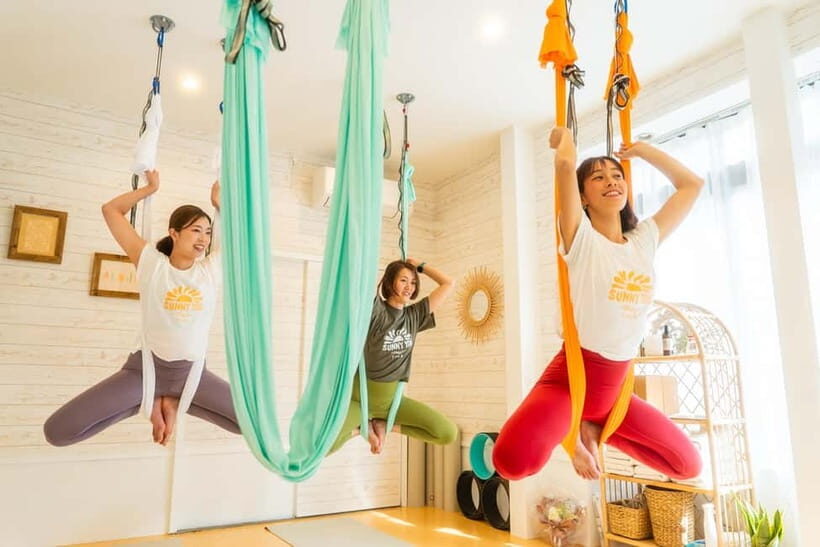
This is the kind of class where what you wear really affects how comfortable you feel. Here’s what you should bring:
- a towel
- water
- comfortable clothes
- a T-shirt
- long pants
Clothing rules matter. Shorts and sleeveless shirts are not allowed. That’s not about style—it’s about comfort and safety while you’re working in and around the hammock.
A practical tip: pack a simple outfit you can move in easily. Think soft and not too slippery. You want clothing that stays comfortable when you’re stretching and switching positions during aerial work.
If you’re wondering whether you need your own yoga mat: you don’t. The class includes a yoga mat. You’re basically showing up with water, towel, and the right outfit, then letting the studio handle the hammock setup.
A few more Kyoto tours and experiences worth a look



Safety and who should skip aerial yoga here
Aerial yoga can be friendly, but it’s not casual for everyone. The “know before you go” info is very clear about who this is not suited for. You should not book this class if you have:
- vertigo,
- altitude sickness,
- high blood pressure,
- a strong fear of heights,
- or if you’re over 70 years old,
- or over 209 lbs (95 kg).
That list is important because aerial yoga changes how your body feels in space. Even if you consider yourself generally healthy, the hammock can affect balance and sensation. So if you’re in a risk group, skipping is the smart move.
If your main concern is heights but you still want to try aerial yoga, that’s where the low aerial option can help. It’s specifically recommended for fear of heights and motion sickness, because you’re closer to the ground and can keep part of your body on the mat.
In other words: this isn’t an all-or-nothing activity. You can choose the version that fits your comfort and physical limits. The instructor’s tailoring also helps, since they can adjust within the structure of the class.
The $61 price: what you’re really paying for
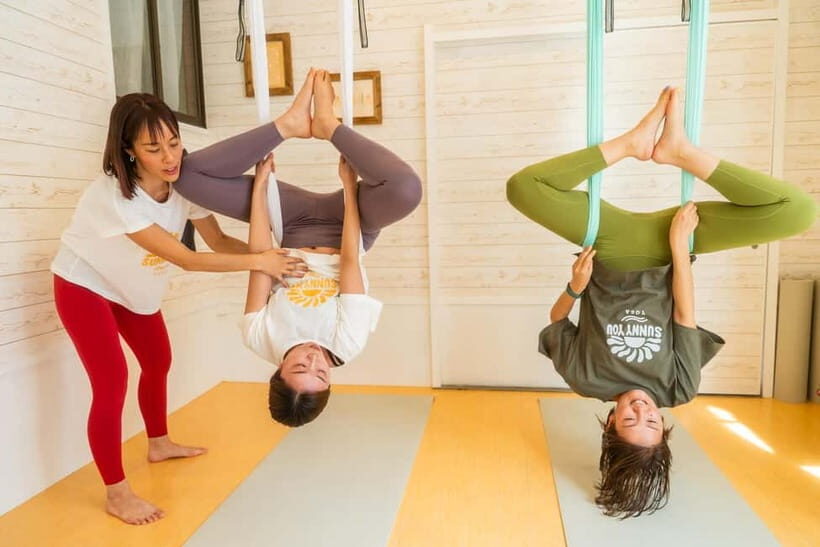
At $61 per person for 1 hour, this class is priced like an experience with real instruction and equipment—not a basic stretching session you could copy at home.
Here’s why the value makes sense:
- You get private guidance (not a large group where you get only brief attention).
- The instructor teaches in English, so you aren’t stuck guessing cues.
- You can choose between low and waist-height setups depending on your comfort.
- The studio provides the yoga mat and handles the hammock setup.
- The class is tailored to your physical and mental state, which can be hard to recreate solo.
Could you do yoga for free or cheaper in Kyoto? Sure. But aerial yoga is a specific skill set, and doing it safely requires teaching and support. You’re paying for someone to guide you through the hammocks and keep the session effective in a short time.
Also, the “nice morning start” feeling matters. When you do this early, it can genuinely reset your day. One review mentioned that the studio felt beautiful and the class was a great way to begin the morning. That’s not a pricing metric, but it’s real-life value—because you’re buying how you’ll feel afterward.
Walking out feeling looser (and where to go next)
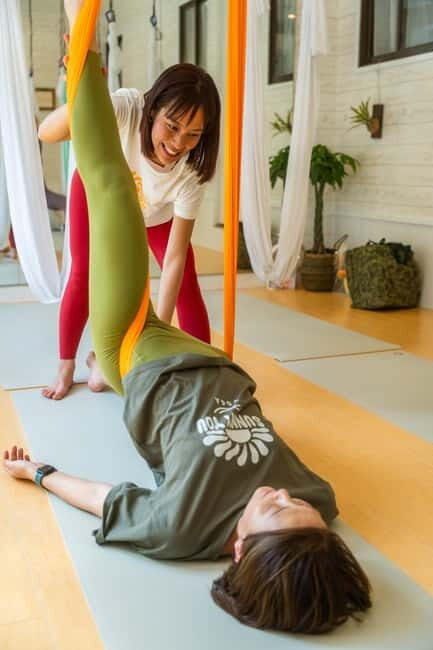
After your session, you’ll likely want something that matches your reset mood. The Omuro Ninnaji area is a good choice. Since the studio is close to a station and in a neighborhood with temples within walking distance, you can keep the momentum without rushing.
What you should do right after class:
- hydrate (you brought water for a reason),
- move gently if your body feels worked,
- and take a slow walk rather than jumping straight into aggressive sightseeing.
Aerial yoga can make you more aware of your core and posture. A short, easy walk helps you translate that “alignment” feeling into your day without pushing your body too hard.
If you have other Kyoto plans, this is also a nice way to break up your itinerary. It gives you a mental pause in a city that can sometimes feel nonstop.
Should you book Kyoto Private Aerial Yoga?
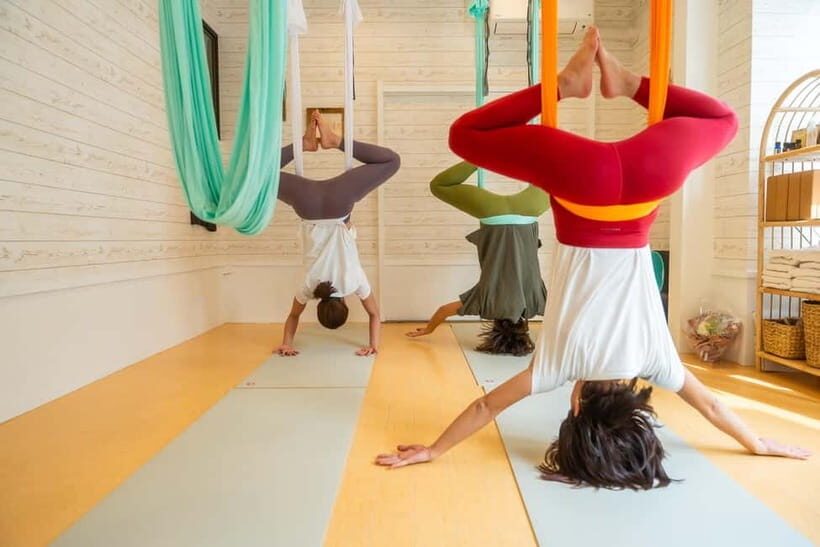
Yes, if you want a calmer, more guided yoga experience in Kyoto and you like the idea of aerial movement—but you also want control over comfort and safety.
Book it if:
- you’re a beginner and want aerial yoga with support,
- you prefer English instruction,
- you want a private class that adapts to you,
- you’d rather feel safe and supported than pushed into the deep end.
Consider skipping or switching to low aerial if:
- heights make you nervous,
- you’ve had issues with vertigo, altitude sickness, or high blood pressure,
- or you fall outside the stated age/weight limits.
If you’re the type who likes your travel experiences to be active but not stressful, this is a strong bet. You’ll get the weightless feeling, the stretch, and the kind of instruction that makes a short class feel complete.
FAQ
Where is the meeting point?
The studio is a small yellow brick-style yoga studio with a sign out front that says SUNNY YOU Yoga Studio. The street in front is one-way, so if you take a taxi, get out right away. It’s about a 3-minute walk from Arashiden Omuro Ninnaji Station and about a 5-minute walk from the city bus Omuro Ninnaji Station.
How long is the class?
The class is 1 hour.
What are the differences between low aerial yoga and basic aerial yoga?
Low aerial yoga uses hammocks set close to the ground, so you can keep part of your body on the mat. It’s recommended for beginners, people afraid of heights, and those prone to motion sickness. Basic aerial yoga uses hammocks at waist height, where you do poses in the air to support core strength, flexibility, posture, circulation, and relaxation.
Is the instruction available in English?
Yes. The class is conducted entirely in English.
What should I bring, and what clothing is not allowed?
Bring a towel, water, comfortable clothes, a T-shirt, and long pants. Shorts and sleeveless shirts are not allowed.
Who should not take this class?
It is not suitable for people with vertigo, altitude sickness, high blood pressure, or a strong fear of heights. It also isn’t recommended for people over 70 years old or over 209 lbs (95 kg).