REVIEW · TOKYO
Sushi Cooking Class: AKEMI’s SUSHiKiTCHEN in Tokyo
Book on Viator →Operated by Akemi's Sushikitchen · Bookable on Viator
Sushi starts with rice, and this class gives you the why. You cook in Akemi’s Tokyo home with small-group guidance, plus you get the food-culture context you usually miss in restaurants. It’s practical, English-friendly, and built around making four types of sushi you’ll actually eat.
I especially love the ingredient quality angle: the rice is specially ordered blended sushi rice from Hachidaime Gihey in Kyoto, and the fish (neta) comes from the Toyosu and Tsukiji markets. The only drawback I’d flag is that this is a short 2.5-hour lesson focused on four styles, so if you’re looking for a long variety tasting menu, you may want an extra food stop after.
In This Review
- Key Highlights You’ll Care About
- Inside Akemi’s Sushikitchen: A Tokyo Home Class, Not a Restaurant Demo
- What You’ll Cook: Four Sushi Types in a Tight 2.5-Hour Window
- Sushi Rice and Neta: Why the Ingredient Sourcing Matters
- The Technique Coaching: Edomae-Style Hands-On Learning
- The Sushi Culture Lesson You Can Actually Use
- From Cooking to Eating: The Meal Is the Payoff
- Price and Value: Is $105.68 Worth It?
- Who This Tokyo Sushi Cooking Class Is Best For
- Quick Practical Tips Before You Go
- Should You Book Akemi’s SushiKitchen?
- FAQ
- How long is the Sushi Cooking Class?
- What’s the price per person?
- How many people are in the class?
- What will I learn to make?
- What ingredients does the class use?
- Is the instruction available in English?
- What’s the meeting point?
Key Highlights You’ll Care About
- A real residential Tokyo cooking setup in a quiet Shibuya neighborhood, not a commercial studio
- Small class size (max five students for the lesson) so corrections happen while your hands are still learning
- Edomae technique training + English instruction from Akemi, including Edomae Sushi Technique Acquisition Course credentials
- Kyoto sushi rice source from Hachidaime Gihey, ordered specifically for the class
- Fresh neta from Toyosu and Tsukiji markets, handled through the lesson timeline
- Etiquette and terminology lesson so you can order, eat, and talk about sushi with confidence
Inside Akemi’s Sushikitchen: A Tokyo Home Class, Not a Restaurant Demo
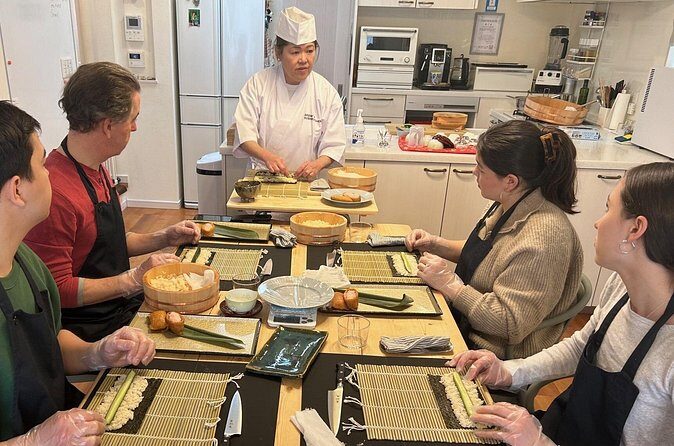
This experience feels like someone invited you into their kitchen and then took teaching seriously. You meet at Tamanosato Sasazukaten, 1-chōme-56-18 Sasazuka, Shibuya, Tokyo 151-0073, and you’ll end back there when it’s done. The location is close to public transportation, and you use a mobile ticket, which keeps the day simple.
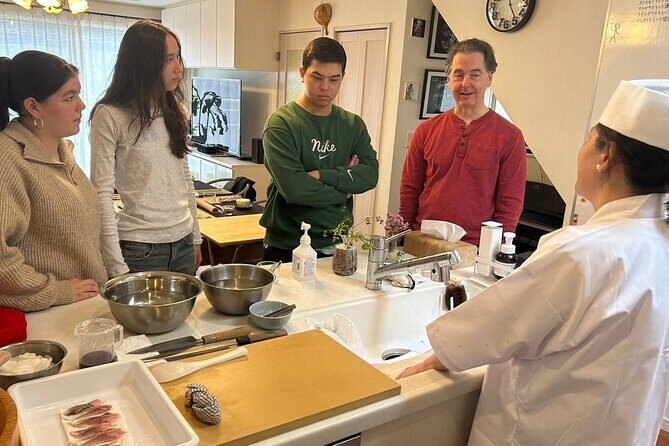
Once you’re inside, the vibe is calm and residential. That matters because sushi is detail work: hand pressure, rice temperature, blade pace, and seasoning all change fast. In a small home setting, you’re more likely to slow down and do it the right way instead of rushing through a performance.
The class is also set up for interaction, not just watching. With a limit of up to five students for the lesson (and a max of six travelers overall), you can ask questions while you cook instead of waiting until the end.
You can also read our reviews of more cooking classes in Tokyo

What You’ll Cook: Four Sushi Types in a Tight 2.5-Hour Window
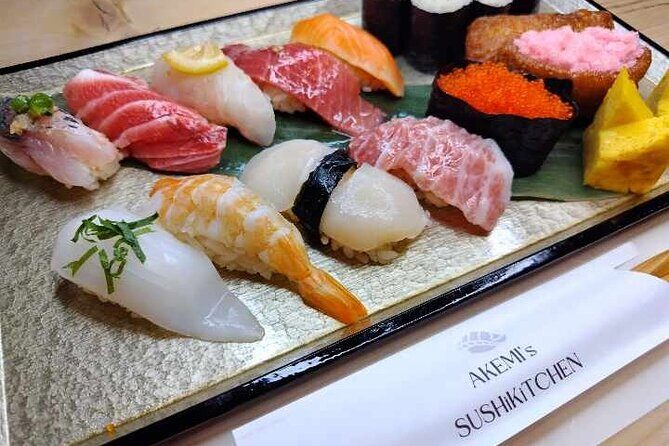
The lesson culminates in a meal you make yourself, and the focus is on four types of sushi. You’ll learn the techniques behind the pieces rather than just copying shapes, which is the part that helps you later when you want to recreate the results.
A useful way to think about the pacing: sushi lessons often fail when students spend too much time on rice only, then rush the rest. Here, the timing is designed for a complete arc—learn, practice, and finally eat what you produced—so you leave with food in your stomach and skills in your head.
Also, don’t underestimate how helpful “just four types” can be for beginners. When you’re new, too many styles can blur what matters most: rice handling, how fish is cut, and how toppings and seasonings work. This class gives you a focused foundation you can build on.
Sushi Rice and Neta: Why the Ingredient Sourcing Matters
The rice is the heart of sushi, and this class treats it like it’s sacred. The sushi rice is a blended type specially ordered from Hachidaime Gihey in Kyoto, and that’s a big deal because rice consistency is what makes rolls taste right instead of just looking right.
You’ll also work with fresh fish, known as neta. The fish is sourced directly from markets in Toyosu and Tsukiji, which is exactly where you want the supply chain to start if you care about flavor and texture. Fresh neta also means you learn how fish changes once it’s cut and handled, not after it’s been sitting.
For you, the practical value is confidence. When your rice and fish are top quality, your mistakes show up clearly, and you can improve quickly. If ingredients were average, it’d be harder to tell whether your roll issue came from technique or from the raw materials.
The Technique Coaching: Edomae-Style Hands-On Learning
Akemi has seven years of restaurant experience in Japan, and she’s completed the Edomae Sushi Technique Acquisition Course at the Tokyo Sushi School. Even if you’re starting from zero, the important part is how that training turns into coaching: you’re not just collecting facts, you’re learning repeatable motions.
In sushi, the “how” is everything. The lesson covers cooking techniques and how to handle ingredients with care, and the small-group size helps you get personalized guidance instead of generic tips. If your rice is too warm or your hand pressure is off, you can correct it right away.
Because the instruction is in English, you can focus on technique instead of translation. That reduces the friction that often makes food classes stressful for non-Japanese speakers. Your best results usually come when you’re fully present with the food process, and this class supports that.
The Sushi Culture Lesson You Can Actually Use
This isn’t only about rolling. You’ll also learn the history of sushi, plus essential terminology you can use when you’re talking about it or ordering it later. Learning the words matters more than it sounds, because sushi has specific terms for parts and methods, and it helps you understand what you’re tasting.
You’ll also get traditional sushi eating etiquette. The point isn’t to turn you into a stiff dinner robot. It’s to help you understand the logic behind common rules—how you handle soy sauce, how you pace bites, and why certain approaches are preferred.
One extra benefit: this kind of context helps you connect the class to real sushi counters. After the lesson, you’ll be able to recognize techniques you’ve practiced and understand why a certain slice or rice style is served the way it is.
A few more Tokyo tours and experiences worth a look



From Cooking to Eating: The Meal Is the Payoff
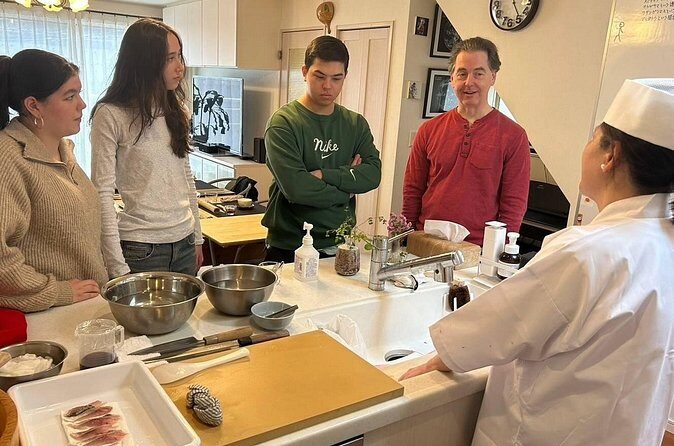
The class ends with a delicious meal made by you. That’s where the learning stops being theoretical. You get to test your own sushi immediately, and the feedback loop is fast: you’ll notice texture, balance, and seasoning as you eat.
There’s also something satisfying about finishing a homemade meal in a Japanese home environment. It feels different from leaving a restaurant and hoping the taste sticks with you. Here, the meal is the proof that the process worked.
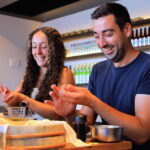
And yes, the hosts’ friendliness helps a lot. Akemi and Dan come across as super friendly, which keeps nervous beginners relaxed and keeps the mood steady as you handle raw fish and hot rice.
Price and Value: Is $105.68 Worth It?
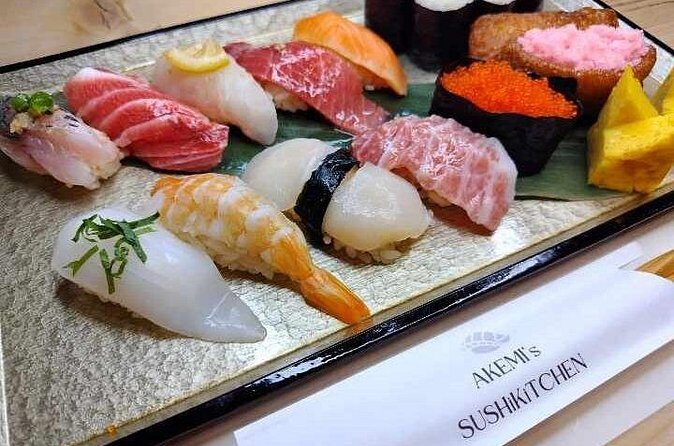
At $105.68 per person for about 2 hours 30 minutes, the value comes from what’s included: instruction, high-quality ingredients, and a meal you cook yourself. This isn’t a quick snack workshop; you’re paying for guided skill-building and the actual materials to practice.
A couple value signals stand out. First, you get ingredient sourcing that’s specific and “real” (rice from Hachidaime Gihey and fresh neta sourced from Toyosu and Tsukiji). Second, the lesson limits the group size so you’re not stuck watching other people cook while your own skills wait.
If you compare it to typical restaurant spending, you’re paying for a hands-on learning experience rather than just eating. For many people, that’s the point: you leave with both dinner and a repeatable method.
Who This Tokyo Sushi Cooking Class Is Best For
This works well if you want sushi training in English, without the intimidation of a busy counter. It’s also a great fit if you’re the type who loves learning food details—history, terminology, and etiquette—because that’s baked into the lesson.
It’s especially good for first-timers. The experience is designed so even if you’ve never tried sushi before, you’ll still end up with a meal you can enjoy. Beginners benefit most from small-group attention and ingredient quality, because technique corrections have a bigger impact early on.
You might look elsewhere if you want a longer class, more variety than four sushi types, or a bigger tasting spread. This one is focused, efficient, and meant to teach core skills.
Quick Practical Tips Before You Go
Go in ready to work with rice and fresh fish. That usually means being comfortable with mess in small amounts and following instructions closely. Bring curiosity, not perfectionism.
Also, plan your schedule so you have time to digest after. Sushi texture and flavors make more sense when you’re not rushing immediately to something else.
Finally, book early if your dates are firm. The experience averages about 49 days in advance, and it’s highly rated, so popular weeks can go sooner than you expect.
Should You Book Akemi’s SushiKitchen?
Yes—if you want a small-group Tokyo sushi cooking class with real ingredient quality and serious teaching. The home setting, the Edomae-focused training background, and the hands-on meal make it more than a photo-friendly activity.
Book it when you care about learning, not just eating. If your priority is a long, wide variety food crawl, you might find this too focused. But if you want a practical sushi skill set you can use again, this is a strong choice.
FAQ
How long is the Sushi Cooking Class?
The class lasts about 2 hours 30 minutes.
What’s the price per person?
The price is $105.68 per person.
How many people are in the class?
The lesson is limited to a maximum of five students, and the activity has a maximum of six travelers.
What will I learn to make?
You’ll learn how to make four types of sushi, and the lesson ends with a meal you make yourself.
What ingredients does the class use?
The class uses specially ordered sushi rice from Hachidaime Gihey in Kyoto, and fresh fish (neta) sourced directly from markets in Toyosu and Tsukiji.
Is the instruction available in English?
Yes. Akemi teaches using her English proficiency as part of the sushi cooking lesson.
What’s the meeting point?
You’ll meet at Tamanosato Sasazukaten, 1-chōme-56-18 Sasazuka, Shibuya, Tokyo 151-0073, Japan, and the activity ends back at the meeting point.