REVIEW · KYOTO
Treasures of Kyoto: Geishas & Traditions Private Tour
Book on Viator →Operated by Withlocals · Bookable on Viator
Kyoto can overwhelm fast. This private, backstreet-focused stroll keeps you moving through the right places without the guesswork. You get a local guide and a route that links Gion traditions with temples, shrines, and even theatre history in just 2 hours 30 minutes.
I especially love that the stops are walkable and close together, so you spend time looking at Kyoto instead of timing trains or hunting addresses. I also like the way your guide can explain the meaning behind what you’re seeing, including the mix of Shinto and Buddhism you’ll notice at places like Tatsumi Daimyojin Shrine.
One possible drawback: there’s no hotel pickup, so you’ll need to get yourself to the start point in Higashiyama—and you’ll do some stairs and uneven sidewalks along the way.
In This Review
- Quick hits: what makes this Kyoto tour different
- Why this tour clicks if your Kyoto days feel too short
- Where you start in Higashiyama—and how the route is set up
- Izumo no Okuni: kabuki origins before the Gion postcard
- Minamiza Theatre: early Edo roots you can actually picture
- Gion Shinbashi and the streets that explain geisha life
- Tatsumi Daimyojin Shrine: the Shinto–Buddhism blend in plain view
- Chion-in: steps, gardens, and a better viewpoint
- Maruyama Park: a breather that keeps the story moving
- Yasaka Shrine’s legend, then Shijō Dori’s meaning on your feet
- Nene-no-Michi and the Kodaiji Temple connection
- Finishing near Yasaka no To: sweeping views and a café break
- Price and value: is $135.45 worth it?
- Who should book this Kyoto geisha traditions private tour?
- The guide factor: what I’d look for in your tour experience
- Should you book Treasures of Kyoto: Geishas & Traditions Private Tour?
- FAQ
- How long is the Kyoto private tour?
- Is this tour private or shared?
- Where is the meeting point?
- Where does the tour end?
- Do I get hotel pickup or drop-off?
- Are tickets or admission fees required at the stops?
- Is food included in the price?
- What kind of ticket do I receive?
- Is the tour carbon neutral?
- Is there free cancellation?
- Is the tour okay for me if I’m not very mobile?
Quick hits: what makes this Kyoto tour different
- Private, exclusive pacing for just your party, so questions don’t get rushed
- Gion Shinbashi and Shijo Dori viewpoints that go beyond the main photo stops
- Kabuki and theatre connections at Izumo no Okuni and Minamiza Theatre
- Shinto meets Buddhism at Tatsumi Daimyojin Shrine and in the temple stops
- A clear ending with Yasaka no To views plus time for a local café break
- Carbon neutral tour design and a mobile ticket for low-friction logistics
Why this tour clicks if your Kyoto days feel too short
Kyoto is famous for big, iconic sights—but the city’s magic is often in the small connections. This tour is built around that idea: geisha-era neighborhoods, religious sites, and historic street names that help you understand how all these pieces fit together.
You’ll cover a lot in 2 hours 30 minutes, but it doesn’t feel like a sprint. The pacing is designed for walking with frequent stops, so you can look closely, ask questions, and keep your momentum.
The private format is the real advantage. Instead of fighting a group rhythm, you set your own pace within the route, and your guide can tailor explanations to your interests—culture, religion, theatre history, or just what to notice while you walk through Gion.
You can also read our reviews of more private tours in Kyoto


Where you start in Higashiyama—and how the route is set up
You’ll meet in Kawabatacho, Higashiyama Ward. The tour ends in Yasaka Kamimachi, Higashiyama Ward, around Yasaka no To temple, which is a nice finishing point because it’s easy to continue your day afterward.
No hotel pickup or drop-off means you’ll want to plan your arrival to the meeting area carefully. You’re also near public transportation, which helps if you’re coordinating with the rest of your Kyoto schedule.
Expect moderate walking. You’ll also encounter stairs—especially when you move up for viewpoints at temple and shrine areas—so this is best if you’re comfortable with short uphill stretches and uneven pavement.
Izumo no Okuni: kabuki origins before the Gion postcard
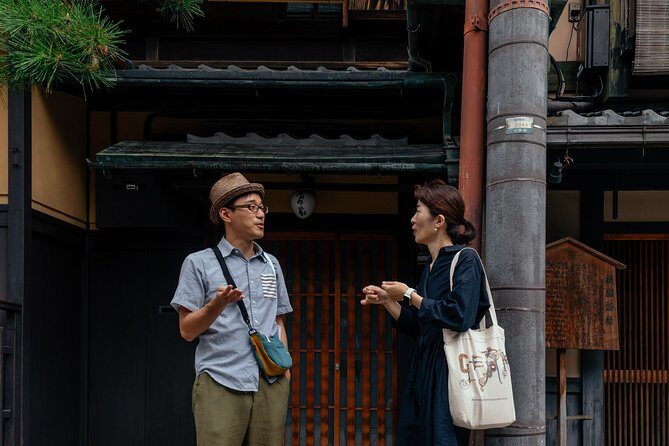
The first stop centers on Izumo no Okuni, credited as the originator of kabuki theatre. This is a smart opener because it changes how you think about performance in Japan: it’s not just entertainment, it’s history, identity, and social change.
You’ll get context before you enter the geisha districts. That matters, because geisha and theatre culture were part of the same larger world of music, performance, and refined public life. Even if kabuki isn’t your main interest, the framing makes the rest of the walk feel more connected.
The stop is short and free of admission costs, which keeps the morning or afternoon from getting bogged down before you reach the heart of Gion.
Minamiza Theatre: early Edo roots you can actually picture
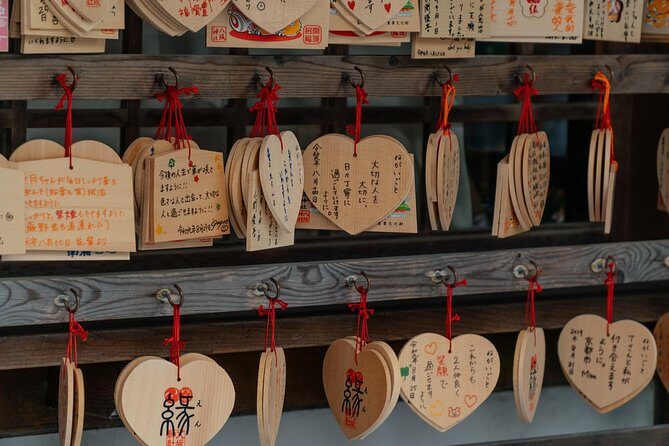
Next up is Minamiza Theatre, tied to the early Edo period (dated here as 1596–1615). If you’ve ever wondered why Kyoto can feel both old and theatrical at the same time, this stop helps connect those dots.
Minamiza is the kind of place where a local guide can turn a name on a map into a living story. You’ll spend enough time to get the historical thread without rushing through it.
Again, admission is listed as free, so you can treat it as a cultural warm-up rather than a ticketed add-on. It’s also a good break in the walking rhythm.
Gion Shinbashi and the streets that explain geisha life
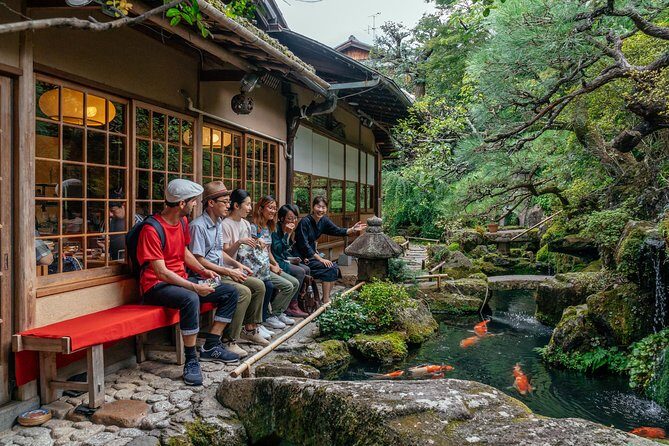
Then you enter the big zone: Gion. The tour focuses on areas described as traditional preservation zones and historical scenery areas, including the region around Gion Shinbashi.
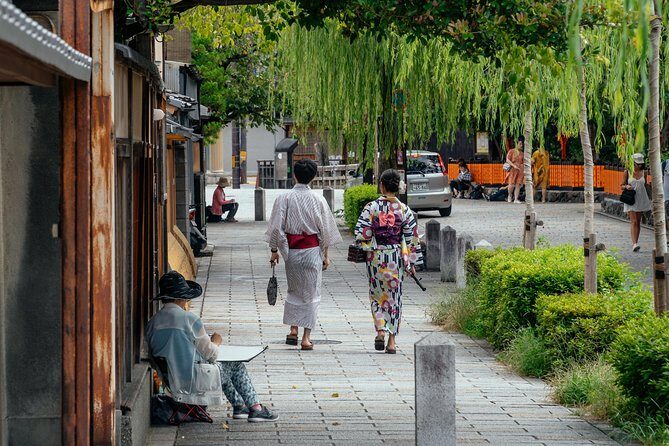
Here’s what makes this more than a sightseeing loop: you’re guided to look at what the street tells you. In Shinbashi Dori, you’ll stand outside traditional banquet buildings and learn how geisha would entertain customers. That kind of explanation turns architecture into a clue—what you’re seeing isn’t random, it reflects how social life worked.
You’ll also get a chance to notice details at street level. Reviews highlight that guides often steer the walk to avoid crowd crush, which can make a huge difference in Gion, especially when you’re trying to learn instead of just snap photos.
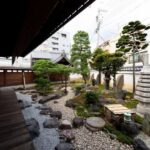

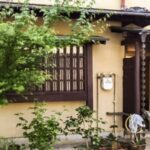
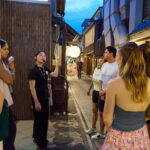
Tatsumi Daimyojin Shrine: the Shinto–Buddhism blend in plain view
One of the most useful stops is Tatsumi Daimyojin Shrine. The tour description emphasizes a blend of Shinto and Buddhism, which is exactly the kind of nuance that’s easy to miss if you’re just visiting temples on your own.
You’ll spend time hearing how Japanese religion can show up as overlap rather than strict separation. It’s not about turning you into a scholar—it’s about helping you interpret what you see so you don’t have to guess.
Admission is free here too, and the time on site (about 20 minutes) is long enough to pause, take in the vibe, and get your guide to answer the inevitable follow-up questions.
Chion-in: steps, gardens, and a better viewpoint
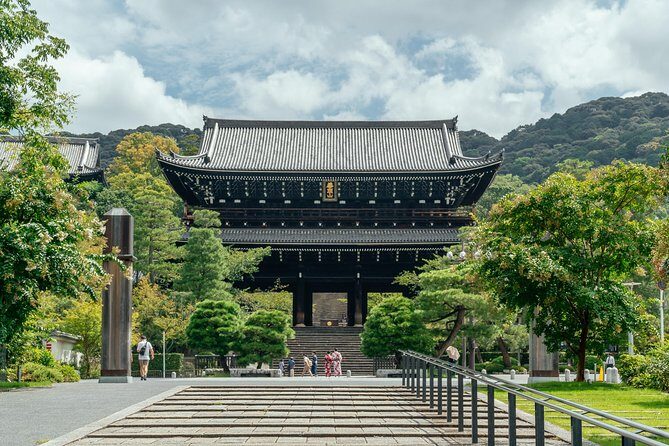
After the shrine, you’ll head to Chion-in Temple. The key detail is that you’ll walk up the steps for a better view and to see the garden area.
This is one of those stops where “look closer” really pays off. A guide can help you understand what you’re seeing from the viewpoint you reach, and the garden component gives the experience a calmer tone after the street scenes of Gion.
Time on site is short (about 10 minutes), so treat it as a quick reset: slow down, look around, and absorb what’s different about this place compared to the merchant-and-performance streets you’ve just walked.
Maruyama Park: a breather that keeps the story moving
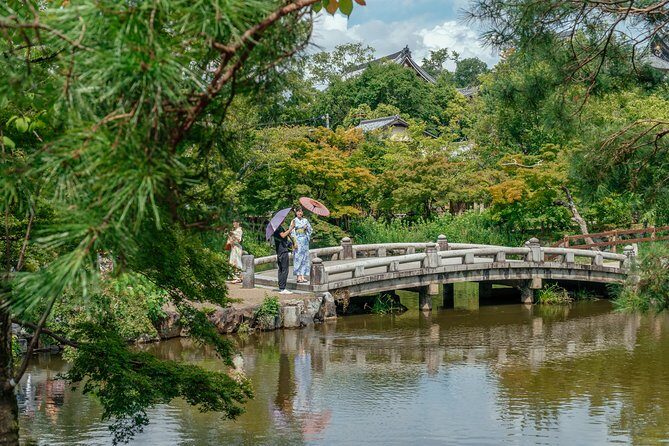
From Chion-in, you walk toward Maruyama Park. It’s not a heavy-historical stop; instead, it gives you a transition space—green, open, and a change in pace that helps your brain reset after temples and shrines.
Spending about 20 minutes here also helps keep the tour from feeling like nonstop checkpoints. If you like people-watching and quiet breaks, this is where you can do it without feeling like you’re abandoning the route.
Admission is listed as free, so this is a no-regret part of the walk. Use it for a short rest and a few photos with fewer rules than a typical landmark interior.
Yasaka Shrine’s legend, then Shijō Dori’s meaning on your feet
The tour then moves to Yasaka Shrine. One highlight is the shrine’s legend of deep historical roots, stated here as possibly going back before the Heian era, referencing AC656 and Emperor Seimei.
What I like about including a legend in a real walking route is that it gives you a mental hook. You’re not just looking at structures—you’re connecting the setting to time.
From there, you’ll walk on Shijō Dori, explained as the Fourth Avenue of Heian-kyō, Kyoto’s ancient capital. That’s a great moment for practical sightseeing: when a guide ties street names to the original city grid, you start to feel your bearings instead of walking blind through neighborhoods.
Nene-no-Michi and the Kodaiji Temple connection
You’ll also pass through Nene-no-Michi. The tour ties this street to Kodaiji Temple, built in 1605 at the behest of Nene—exactly why the street later carried her name.
This is the kind of detail that turns a pleasant walk into a “wait, I get it” moment. Kyoto rewards curiosity, but you need the right clues. This stop provides one.
And because the time is about 10 minutes, it doesn’t slow the tour down. It slots in naturally as you move toward the final temple area.
Finishing near Yasaka no To: sweeping views and a café break
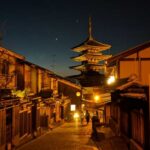
You’ll end around Yasaka no To temple, described here as a picturesque five-story Buddhist pagoda with sweeping views from the top. Ending with height makes sense: after strolling through street life, you get to look back over the city and land the story visually.
The tour also notes that you finish in a local café nearby, which is a practical way to wrap up. It’s a good moment to review what you learned—religion, performance culture, and why street names and architecture matter—while sitting down with something simple.
If you’re planning the rest of your day, the ending location is convenient for continuing around Higashiyama.
Price and value: is $135.45 worth it?
At $135.45 per person for about 2 hours 30 minutes, this isn’t a bargain-basement outing. But it’s also not trying to be one. The value comes from three things you rarely get together: privacy, a focused route, and context.
You’re paying for:
- A private guide instead of sharing time with strangers
- A route designed to connect Gion traditions + religious sites + theatre history
- Free admission at the listed stops, so you’re not stacking ticket costs
- A tour offered with mobile ticket convenience and carbon neutral positioning
If you’re traveling as a couple, this often feels easier to justify than a group tour because you’re buying time and attention. If you’re solo, it can still be worth it when you want explanations and a route that prevents you from wandering in circles.
Also, the average booking timing (around 47 days in advance) suggests the tour is popular. If you’re traveling in peak seasons, earlier booking can help you avoid missing your preferred time slot.
Who should book this Kyoto geisha traditions private tour?
This tour is a strong fit if you:
- Want Gion context without spending hours researching streets and meanings
- Have limited time and still want more than “temple photo, shrine photo”
- Like learning about the overlap between religion, performance culture, and neighborhood life
- Prefer a relaxed walking pace where you can ask questions without feeling rushed
It may not be ideal if you hate walking, dislike stairs, or prefer large-scale landmarks over neighborhood detail. The route is built for cultural interpretation, not for big museum-style hours.
Family groups can work too; multiple guides are noted as handling kids well in conversations and adapting explanations.
The guide factor: what I’d look for in your tour experience
The names showing up in strong feedback—Ted-san, Maha, Kako, Shohei, and Ahmed—all share a pattern: they turn history into story and treat the geisha culture with care and respect.
In practical terms, that means you should expect explanations that cover:
- How geisha life connected to entertainment spaces like traditional banquet buildings
- The difference and overlap between Shinto and Buddhism as you move through shrines and temples
- Why certain streets matter, such as Shijō Dori and Nene-no-Michi
When booking, I’d also consider what you want most. If you’re most interested in religion, you’ll appreciate the shrine and temple stops. If you’re most curious about performance culture, the kabuki and Minamiza connections are the start of that thread.
Should you book Treasures of Kyoto: Geishas & Traditions Private Tour?
I’d book it if you want a structured, respectful, neighborhood-centered Kyoto experience with private time and cultural explanations that make the streets and shrines feel meaningful. It’s especially good for first-time Kyoto visitors who feel overwhelmed and need a route that stays coherent.
Skip it if you’re chasing only the biggest “must-see” mega-sites, or if you’re not comfortable with a walking route that includes stairs. Also, if you’d rather design your own itinerary without guidance, you might find less value in paying for the context.
If you’re trying to see Kyoto in a short window, this tour does one key thing well: it helps you understand what you’re seeing while still keeping the day light enough to enjoy.
FAQ
How long is the Kyoto private tour?
The duration is about 2 hours 30 minutes.
Is this tour private or shared?
It’s a private tour. Only your group will participate.
Where is the meeting point?
The meeting point is Kawabatacho, Higashiyama Ward, Kyoto, 605-0076, Japan.
Where does the tour end?
It ends at Yasaka Kamimachi, Higashiyama Ward, Kyoto, 605-0827, Japan, near Yasaka no To temple.
Do I get hotel pickup or drop-off?
No. Hotel pickup and drop-off are not included.
Are tickets or admission fees required at the stops?
The listed stops show admission tickets as free.
Is food included in the price?
Food and beverages are not listed as inclusions.
What kind of ticket do I receive?
You’ll receive a mobile ticket.
Is the tour carbon neutral?
Yes, this tour is listed as carbon neutral.
Is there free cancellation?
Yes. Free cancellation is available if you cancel up to 24 hours in advance for a full refund.
Is the tour okay for me if I’m not very mobile?
It’s rated as requiring moderate physical fitness level, and there are steps at some stops, so it’s best if you can handle short stair climbs.